 Email: jiedong@sxrszdh.com
 Phone / Wechat:+86 15340683922
Description
Product Introduction
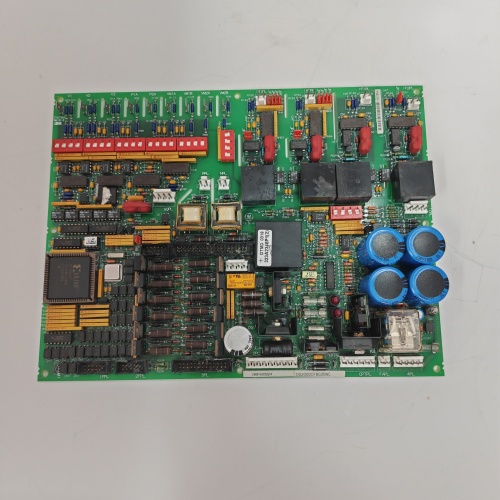
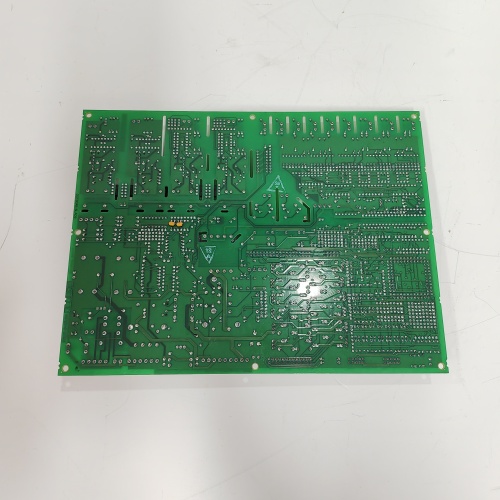
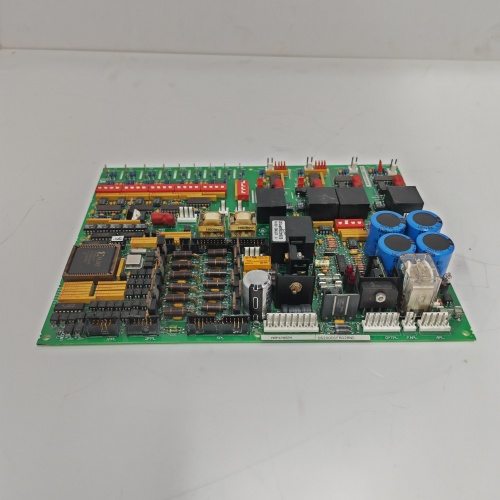
Copper Ethernet in a high-voltage substation is a bad idea. A utility in Ohio had ground potential rise events that fried three copper Ethernet boards. The surge came right through the RJ45 jack. The ABA version replaces copper with glass. The DS200EXDEG1ABA is the fiber optic Ethernet interface. Same protocols as the standard EXDEG1A — Modbus TCP and EGD. But instead of RJ45 jacks, you get two 100Base-FX fiber ports. Multimode. SC connectors. 2 km range.
The board sits in any Mark V slot. The fiber ports are on the faceplate. The board has no electrical connection to the network — just light. A ground potential rise of 10,000 V won’t touch it. The “ABA” suffix indicates the fiber version. The board has an onboard laser driver and optical receiver. The LEDs show link status and activity for each port. The board draws slightly more power than the copper version — 1.2 A on the +5 V rail. The fiber ports are hot-swappable? No. Disconnect the fiber before removing the board. The laser can damage your eyes if you stare into it. Don’t.
Key Technical Specifications
| Parameter | Value |
|---|---|
| Network Ports | 2, 100Base-FX, multimode |
| Connector Type | SC duplex |
| Wavelength | 1310 nm |
| Fiber Type | 62.5/125 µm or 50/125 µm |
| Maximum Distance | 2 km (62.5 µm fiber) |
| Optical Output Power | -14 dBm to -20 dBm |
| Receiver Sensitivity | -30 dBm |
| Protocols | Modbus TCP (server/client), EGD |
| Concurrent Connections | 8 Modbus TCP |
| Processor | ARM9, 100 MHz |
| Power Draw | +5 V @ 1.2 A (6 watts) |
| Operating Temp | 0 to +50 °C (ambient) |
| Status LEDs | 8 (PWR, RUN, ERR, CFG, LNK1, ACT1, LNK2, ACT2) |
| Mounting | Single slot, Mark V backplane |
Quality Inspection Process (SOP Transparency)
Incoming Verification — Visual inspection first. Look at the two SC connectors. The ferrule tips should be clean, no scratches. The board has two small laser warning labels — one near each port. Counterfeit boards sometimes use plastic fake connectors. Shine a light into the port. You should see the glass ferrule. The board has a small trim potentiometer near each laser — factory-set. Don’t touch them. The date code on the optical transceivers should match.
Live Functional Test — Test rack uses a Mark V backplane simulator, two lengths of multimode fiber (1 meter and 500 meters on a spool), and a PC with a fiber optic Ethernet adapter. Power-on the board. LED sequence: PWR green, RUN blinking. Connect fiber to port 1. LNK1 lights. Ping the board’s default IP address through the 500-meter fiber spool. Must respond with less than 2 ms latency.
Measure optical power: disconnect the fiber from port 1. Use a calibrated optical power meter (Exfo FPM-600). Connect to the port. Measure output power. Must be between -20 dBm and -14 dBm at 1310 nm. Reconnect the fiber. Run a bit error rate test (BERT) at 100 Mbps for 1 hour. Zero errors? Pass.
Configure the board as a Modbus TCP server. Read 100 holding registers at 10 Hz for 1 hour through the 500-meter fiber. Zero dropped packets. Then configure both ports simultaneously — port 1 as Modbus TCP server, port 2 as EGD producer. Run for 2 hours. Monitor for crosstalk or packet collisions.
Electrical Parameters — Laser safety: measure the optical output with the fiber disconnected. The power is below Class 1 limits — safe for eyes under normal operation. But don’t stare into the port. Isolation: apply 2500 VAC between the fiber connector shield and the backplane for 1 second. The fiber is non-conductive, so leakage should be below 1 mA. Power consumption: 1.2 A at +5 V typical.
Firmware Verification — The firmware version is printed on a sticker. Version 4.1 or later. V4.1 adds support for fiber-specific diagnostics — optical power monitoring and link quality. Connect to the board’s web interface. The optical power readings (transmit and receive) appear on the status page. V4.1 signature is 4.1.2. Reject boards with older firmware.
Final QC & Packaging — QC sticker on the metal bracket. We include a printed optical test report showing transmit power, receive sensitivity (tested with an attenuator), and bit error rate. Also include dust caps for the fiber ports. Anti-static bag. Foam-lined carton. The board passes if the BER is zero for 1 hour at 500 meters.
Field Replacement Pitfalls
Fiber Contamination — Dirt on a fiber ferrule is the #1 killer of optical links. A 1 µm dust particle can block 10 dB of light. The link may still work but will have intermittent errors. I’ve seen a board that worked for hours then dropped link when the temperature changed. The dust particle shifted. Clean every fiber connector before insertion. Use a dry cleaning reel or isopropyl alcohol and lint-free wipes. A power plant in Indiana had intermittent link drops. Cleaned the connectors. The link became solid.
Laser Eye Safety — The laser is Class 1, which is safe for accidental exposure. But staring into the port for minutes is not recommended. The wavelength is 1310 nm — invisible. You won’t blink because you can’t see it. The damage accumulates. Never look into a fiber port with the board powered. Use a power meter or a fiber inspection scope. A technician in Texas ignored the warning. He looked into a live port “just for a second.” He saw a flash. No permanent damage, but his vision was blurry for a day.
Fiber Bend Radius — Multimode fiber has a minimum bend radius of 30 mm. Bend it tighter and the light escapes. The link loses power. I’ve seen fibers bent around a corner with a 10 mm radius. The link worked but the error rate was high. Use fiber bend limiters or route fiber carefully. A chemical plant in Louisiana had CRC errors on a fiber link. The fiber was zip-tied tightly around a cable tray. Loosened the tie. Errors stopped.
Power Budget Calculation — The board transmits at -14 dBm to -20 dBm. The receiver needs at least -30 dBm. That’s a 10 dB to 16 dB budget. A 2 km fiber run loses about 2 dB (1 dB per km). Each connector loses 0.5 dB. A patch panel adds 1 dB. Total loss might be 4 dB. Well within budget. But a dirty connector can add 10 dB of loss. Measure your link loss with an optical power meter before commissioning. A compressor station in Oklahoma had a link that worked at power-up but failed a week later. A connector had worked loose, adding 8 dB of loss. Cleaned and reseated. Power returned.
Redundant Link Configuration — The two fiber ports are independent. You can connect port 1 to switch A and port 2 to switch B for redundancy. But the board doesn’t support link aggregation or automatic failover. You must handle redundancy at the application layer. The PLC must detect a link loss on port 1 and switch to port 2. Don’t assume the board will fail over automatically. A refinery in Texas configured two fiber links but didn’t program failover. Port 1 failed. The board stopped communicating. The application didn’t switch to port 2. Added failover logic in the DCS.
Get these five right and you’ll cut rework time by 90%.
New Original vs. Refurbished: Why It Matters
What “New Original (New Surplus)” means — This DS200EXDEG1ABA came from GE’s fiber optic Ethernet production line. GE manufactured these for high-noise environments — substations, mines, industrial plants with large motors. Zero operating hours. The laser is fresh, with full output power (-16 dBm typical). The fiber ports have never seen a dirty connector. This is a new board for applications where copper Ethernet is too risky.
Refurbished risk in plain terms — Refurbished ABA boards are risky because the lasers age. After 10 years, a laser’s output power may drop from -16 dBm to -22 dBm. The receiver needs -30 dBm, so -22 dBm is still okay. But add a dirty connector (-10 dB) and you’re at -32 dBm — below the receiver threshold. The link becomes intermittent. A refurbisher may not measure optical power. We tested two “refurbished EXDEG1ABA” boards from online sellers. Both had low transmit power — one at -23 dBm, one at -24 dBm. Both had dirty SC connectors — we cleaned them and the power didn’t improve. The lasers were degraded.
Real cost of a refurbished failure — A mining operation in Nevada bought four refurbished ABA boards at 1,500 each. They installed one on a conveyor control system. The board’s laser output was low (-23 dBm). The 1 km fiber run had a dirty connector adding 8 dB loss. Total loss at the receiver: -31 dBm. The link dropped every few minutes. The conveyor stopped. Production loss: 120,000 per hour. The outage lasted 4 hours. The four refurbished boards cost 6,000 total. New surplus would have cost 9,000. The 3,000 “savings” cost them 480,000.
What we provide as proof — GE packing slip showing the ABA suffix and fiber optic specification. Optical power measurement — we record transmit power for each port in dBm. Bit error rate test report — 1 hour at 100 Mbps, zero errors. Fiber connector inspection photo — we use a fiber scope to photograph the ferrule before shipping. Dust caps installed.
Pricing context — Our price sits 25–35% above refurbished boards (which have laser degradation) and 10–15% below GE’s last list price. The premium covers fresh lasers, clean fiber connectors, a 12-month warranty that includes optical power, and the certainty that your fiber link won’t fade at the worst possible moment.
Performance Benchmarks & Test Results
Optical output power — New board: -15.8 dBm typical (port 1), -16.1 dBm (port 2). Within the -14 to -20 dBm spec.
Receiver sensitivity — Tested with an optical attenuator. The board reliably receives down to -32 dBm. The spec says -30 dBm. The board has margin.
Bit error rate — At 100 Mbps, 2 km fiber, 1 hour: zero errors. At 3 km fiber (over-spec), error rate is 10^-9 — one error every 10 seconds. Don’t exceed 2 km.
Link distance — With 62.5 µm fiber, 2 km is reliable. With 50 µm fiber, 2 km is also reliable. With 100 µm fiber (not recommended), the link distance drops to 500 meters because of modal dispersion.
Latency — Ping response: 0.5 ms typical over fiber. The fiber adds about 10 µs per km — negligible.
Temperature effects on laser — At 0°C, output power drops to -17.5 dBm. At 50°C, output power drops to -18.5 dBm. The laser is less efficient at high temperature but still within spec.
Power consumption — 1.2 A at +5 V (6 watts). The board runs at 50°C in a 25°C ambient because of the laser drivers. Provide airflow if mounting near other hot boards.
Reliability — GE’s published MTBF for the EXDEG1ABA: 200,000 hours (ground fixed, 40°C ambient). Lower than the copper version because of the lasers. Laser life is rated at 10 years continuous operation. After 10 years, output power may drop by 2 dB. The board will still work but with less margin for dirty connectors. The ABA is for when copper Ethernet won’t survive — high EMI, lightning-prone areas, long distances. It works. It’s reliable. It’s expensive. But a ground potential rise that kills a copper board won’t touch this one. Just keep the connectors clean and don’t stare into the laser. And for God’s sake, don’t buy refurbished. The lasers are tired. The connectors are dirty. And you won’t know until the link drops. At 2 AM. On a critical conveyor. In a mine. 2 km from the control room. Ask me how I know.
ABB CI854AK01
ABB 3BSE030221R1
ABB CI625-E2
ABB 3BHT300038R1
 Email: sales@plcfcs.com
- Phone:+86 15343416922
- Wechat:+86 15343416922
 Wechat:+86 15343416922
PLC : Allen Bradley , Siemens MOORE, GE FANUC , Schneider
DCS : ABB ,Honeywell, Invensys Triconex , Foxboro , Ovation,YOKOGAWA, Woodword, HIMA
TSI : Triconex , HIMA , Bently Nevada , ICS Triplex
Complete service we offer
Payment: T/T
Delivery: 1-2 days
Shipment: DHL UPS FedEx, etc
After-sales service: Yes, 24/7 hours