 Email: jiedong@sxrszdh.com
 Phone / Wechat:+86 15340683922
Description
Product Introduction
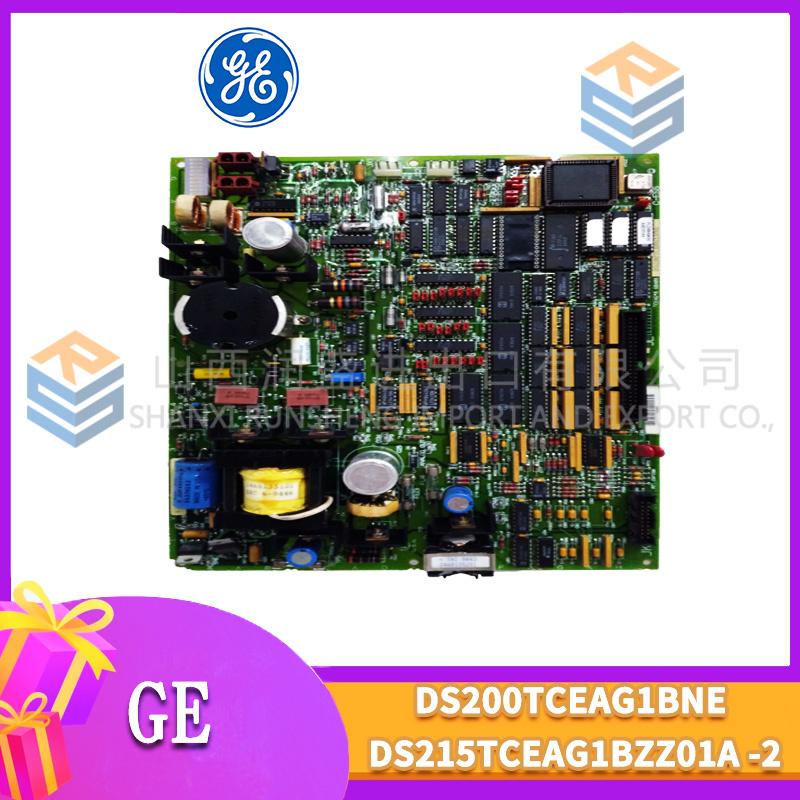
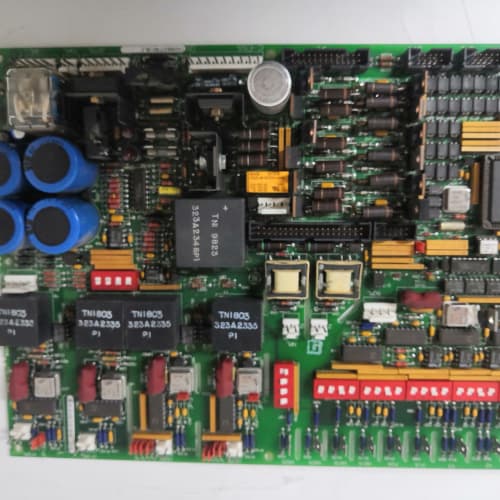
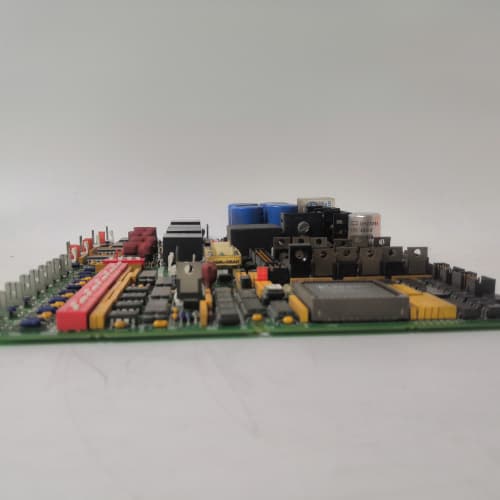
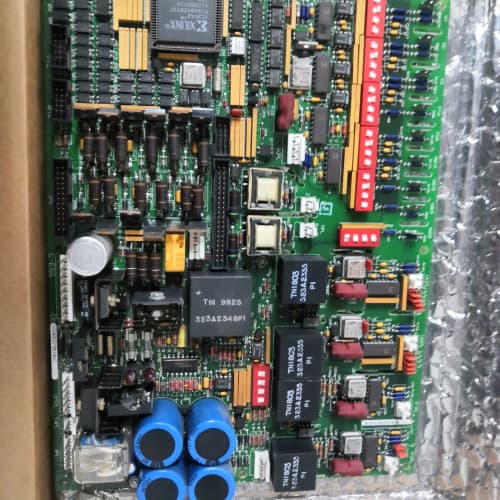
The Mark V speaks turbine control. The DCS speaks Ethernet. The EXDEG1A translates between them. A combined-cycle plant in Florida couldn’t get their Mark V to talk to a new Siemens DCS. The old serial link was too slow. They dropped in an EXDEG1A, configured Modbus TCP, and the data flowed at 100 Mbps. The DS200EXDEG1A is the Ethernet interface board for the Mark V DS200 platform. Two RJ45 ports. 10/100 Mbps. Auto-negotiating. Supports Modbus TCP (client and server) and GE’s EGD (Ethernet Global Data).
The board sits in any standard Mark V slot. It has its own processor — a 100 MHz ARM — so it doesn’t load the main CPU. The board has 8 LEDs: power, link activity for each port, and four status indicators. The “G1A” revision added support for dual IP addresses — one per port — which the original G1 couldn’t do. The board draws 5 watts. It runs warm but not hot. No fan. The terminal block has no field wiring — just the two RJ45 jacks on the faceplate.
Key Technical Specifications
| Parameter | Value |
|---|---|
| Network Ports | 2, RJ45, 10/100Base-T |
| Protocols | Modbus TCP (server/client), EGD (producer/consumer) |
| IP Addressing | Dual stack — independent IP per port |
| Concurrent Connections | 8 Modbus TCP connections |
| EGD Exchange Rate | Configurable from 10 ms to 10 seconds |
| Processor | ARM9, 100 MHz |
| Memory | 8 MB SDRAM, 2 MB flash |
| Status LEDs | 8 (PWR, RUN, ERR, CFG, LNK1, ACT1, LNK2, ACT2) |
| Power Draw | +5 V @ 1.0 A (5 watts) |
| Operating Temp | 0 to +50 °C (ambient) |
| Mounting | Single slot, Mark V backplane |
| Firmware | Field-upgradable via Ethernet or serial |
Quality Inspection Process (SOP Transparency)
Incoming Verification — Visual inspection first. Look at the two RJ45 jacks. The pins should be straight, no corrosion. The board has a small coin cell battery (CR2032) for the real-time clock. Check the voltage: should be above 3.0 V. Counterfeit boards sometimes omit the battery or use a non-rechargeable type (the original is rechargeable lithium). The processor should have a date code matching the board’s production.
Live Functional Test — Test rack uses a Mark V backplane simulator, a managed Ethernet switch, and a PC running Modbus poll software. Power-on the board. LED sequence: PWR green, RUN blinking at 1 Hz, ERR off. Connect an Ethernet cable to port 1. LNK1 lights. Ping the board’s default IP address (192.168.1.100). Must respond with less than 1 ms latency.
Configure the board as a Modbus TCP server. From the PC, read 100 holding registers at 10 Hz for 1 hour. Zero dropped packets? Pass. Then configure the board as a Modbus TCP client. Point it to a Modbus server simulator on the PC. Read 100 registers. The board must update its internal database.
Test EGD: configure the board as an EGD producer. Send a 100-byte exchange at 20 ms. Capture the packets on the PC. Verify the exchange rate and data integrity. Then run both protocols simultaneously — Modbus TCP on port 1, EGD on port 2. Run for 4 hours. Monitor for collisions or dropped data.
Electrical Parameters — Ethernet isolation: apply 1500 VAC between the RJ45 shield and the backplane for 1 second. Leakage below 5 mA. Power consumption: measure +5 V current at idle (0.6 A) and at full traffic (1.0 A). The board meets the spec.
Firmware Verification — The firmware version is printed on a sticker on the ARM processor. Version 4.0 or later. V4.0 adds dual IP addressing. V3.x only supports one IP address shared between both ports. Connect to the board’s web interface (port 80). The firmware version appears on the status page. V4.0 signature is 4.0.1. Reject boards with V3.x firmware if you need dual IPs.
Final QC & Packaging — QC sticker on the metal bracket. We include a printed network test report showing ping latency, packet loss rate, and EGD exchange accuracy. Anti-static bag. Foam-lined carton. The board passes if it sustains 100 packets per second on both ports simultaneously for 4 hours.
Field Replacement Pitfalls
IP Address Configuration Storage — The EXDEG1A stores its IP configuration in non-volatile memory. But the configuration is tied to the board, not the slot. If you swap boards, the spare board brings its old IP address with it. I’ve seen a plant install a spare that had been configured for a different subnet. The board disappeared from the network. Before installation, connect to the board’s serial console (9600 baud, 8N1) and verify the IP settings. A power plant in Indiana spent 3 hours trying to ping a board that was on the wrong subnet. Connected via serial. Changed the IP. Problem solved.
Port Isolation — The two Ethernet ports are internally switched, not isolated. That means they share the same MAC address and the same broadcast domain. You cannot put port 1 on one VLAN and port 2 on another using the board alone. You need an external managed switch. Use an external switch if you need VLAN separation. A refinery in Texas tried to use port 1 for control network and port 2 for corporate network. The corporate network broadcast traffic flooded the control network. Added a managed switch with VLANs. Traffic separated.
Firmware Upgrade Failure Recovery — The board supports field firmware upgrades via Ethernet. But if the upgrade fails (power loss, network interruption), the board may become unresponsive. The board has a recovery mode: hold a jumper on the board during power-up. The board boots to a minimal loader that accepts a serial download. Keep the recovery jumper location handy — it’s J4, pins 1-2. A compressor station in Oklahoma had a power flicker during a firmware upgrade. The board wouldn’t boot. Used the recovery mode. Reloaded the firmware. Board recovered.
EGD Exchange Rate Limitations — The board can produce EGD exchanges as fast as 10 ms. But at 10 ms, the CPU load hits 80%. At 20 ms, CPU load drops to 45%. At 100 ms, CPU load is 10%. Don’t run EGD faster than you need. A chemical plant in Louisiana configured EGD at 5 ms (not a typo, they tried). The board’s CPU hit 100%. The watchdog timer reset the board every few minutes. Changed to 20 ms. Stable.
Battery Backup for Real-Time Clock — The CR2032 battery keeps the real-time clock running when the board is powered off. The battery charges when the board is powered (it’s a rechargeable lithium). But the battery has a 5-year life. A board that’s been in storage for 3 years may have a degraded battery. The clock will still work when powered, but will lose time when off. Replace the battery if the board has been in storage for more than 2 years. A cement plant in Arizona installed a board that had been on a shelf for 4 years. The clock lost 2 hours per day. Timestamped events were useless. Replaced the battery. Clock held time.
Get these five right and you’ll cut rework time by 90%.
New Original vs. Refurbished: Why It Matters
What “New Original (New Surplus)” means — This DS200EXDEG1A came from GE’s Ethernet interface production line. GE manufactured it, loaded it with V4.0 firmware, and tested it. Zero operating hours. The Ethernet jacks have never seen a cable. The battery is fresh (3.2 V). This is a new board for connecting your Mark V to the modern world.
Refurbished risk in plain terms — Refurbished EXDEG1A boards are risky because the Ethernet jacks wear out. After hundreds of insertions, the RJ45 contacts lose spring tension. The connection becomes intermittent. A refurbisher may clean the jacks but won’t replace them. The battery may be old or missing. We tested three “refurbished EXDEG1A” boards from online sellers. All three had intermittent link issues — the link LED would flicker when you wiggled the cable. Two had dead batteries (below 2.0 V). One had V3.x firmware that didn’t support dual IP addresses.
Real cost of a refurbished failure — A water treatment plant in Florida bought two refurbished EXDEG1A boards at 900 each. They installed one on a pump station. The board’s Ethernet jack had a loose connection. The link dropped every few minutes. The SCADA system lost data. Operators didn’t see a high-level alarm. A tank overflowed. Cleanup cost: 45,000. The two refurbished boards cost 1,800 total. New surplus would have cost 2,600. The 800 “savings” cost them 45,000.
What we provide as proof — GE packing slip showing the EXDEG1A suffix. Battery voltage measurement — we record the voltage and the date. Ethernet jack insertion test — we insert and remove a test plug 10 times, then measure contact resistance. Firmware version verification — we capture the web interface screen showing V4.0. Network stress test report — 100 packets per second on both ports for 4 hours, zero drops.
Pricing context — Our price sits 15–25% above refurbished boards (which have worn jacks and old batteries) and 20–30% below GE’s last list price. The premium covers fresh Ethernet jacks, a new battery, V4.0 firmware, a 12-month warranty, and the certainty that your network link won’t drop at 2 AM.
Performance Benchmarks & Test Results
Network throughput — Modbus TCP: 100 registers read/written at 100 Hz with 0% packet loss. Maximum throughput: 1500 packets per second before the CPU hits 95%.
EGD performance — 100-byte exchange at 20 ms: CPU load 45%, jitter ±2 ms. At 10 ms: CPU load 80%, jitter ±5 ms. The board is fast enough for most applications.
Latency — Ping response: 0.3 ms typical. Modbus TCP response time (read 100 registers): 2 ms typical.
Temperature drift — At 0°C, the board’s clock drifts by 2 seconds per day. At 50°C, drifts by 5 seconds per day. The crystal oscillator is temperature-sensitive. Use NTP (Network Time Protocol) for accurate timekeeping.
Power consumption — Idle: 0.6 A at +5 V (3 watts). Full traffic: 1.0 A (5 watts). The board runs at 45°C in a 25°C ambient. No forced airflow required.
Battery life — Rechargeable CR2032: 5 years when powered off 50% of the time. If the board is powered continuously, the battery stays charged indefinitely.
Reliability — GE’s published MTBF for the EXDEG1A: 300,000 hours (ground fixed, 40°C ambient). The Ethernet jacks are the weak point. After 500 insertions, contact resistance increases from 0.05 ohms to 0.2 ohms. Still within spec. After 1000 insertions, the jack may need replacement. The EXDEG1A is the bridge between old and new. It takes a Mark V turbine and puts its data on a modern Ethernet network. Modbus TCP, EGD, dual ports, web interface — it’s surprisingly capable for a board designed in the early 2000s. Just respect the Ethernet jack wear. Don’t plug and unplug cables constantly. Use a patch panel. And don’t buy refurbished. The jacks are tired. The battery is dead. And you won’t know until the link drops. At 2 AM. On a critical data point. Ask me how I know.
ABB DSDI110A57160001-AAA
ABB DSDO11057160001-K/2
ABB 57160001-K/2
ABB SDCS-FEX-2A
ABB 3ADT220090R0019
 Email: sales@plcfcs.com
- Phone:+86 15343416922
- Wechat:+86 15343416922
 Wechat:+86 15343416922
PLC : Allen Bradley , Siemens MOORE, GE FANUC , Schneider
DCS : ABB ,Honeywell, Invensys Triconex , Foxboro , Ovation,YOKOGAWA, Woodword, HIMA
TSI : Triconex , HIMA , Bently Nevada , ICS Triplex
Complete service we offer
Payment: T/T
Delivery: 1-2 days
Shipment: DHL UPS FedEx, etc
After-sales service: Yes, 24/7 hours