 Email: jiedong@sxrszdh.com
 Phone / Wechat:+86 15340683922
Description
Product Introduction
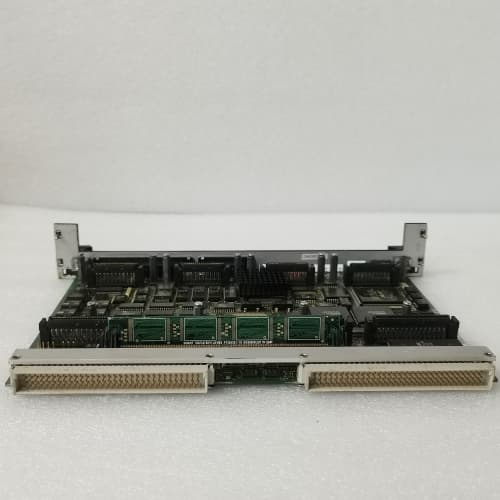
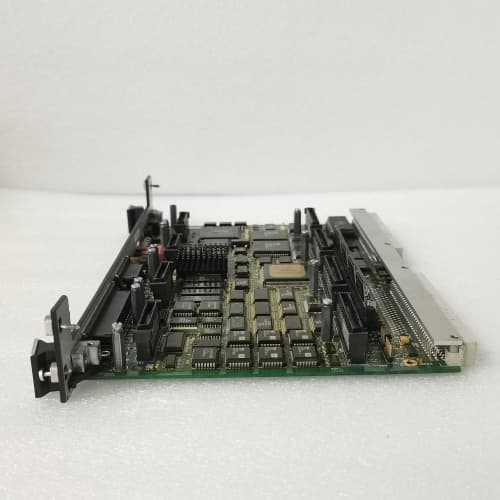
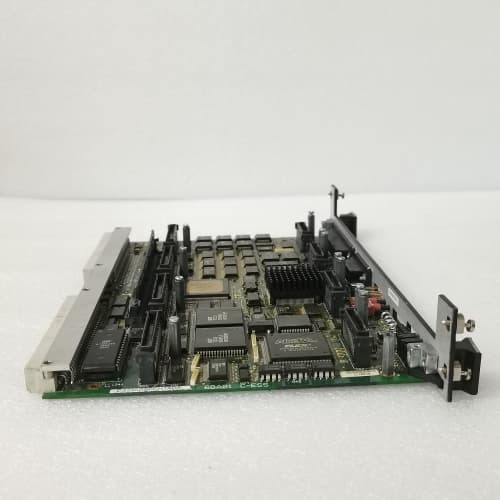
A gas turbine in West Texas had six different types of sensors. Two thermocouples, one RTD, one pressure transmitter, and two spare loops. The plant used three different analog boards to cover them. When the EVIAG1B came out, they cut that down to one. The DS200EVIAG1B is a universal analog input board. Six channels. Each channel configurable via software for thermocouple (types J, K, T, E, R, S, B), RTD (Pt100, Ni120), millivolt (±50 mV, ±100 mV), or 4-20 mA (with an external resistor).
The board has no jumpers for range selection — it’s all done in the configuration software. That’s convenient until someone reconfigures a channel by accident. The “G1B” revision added channel-to-channel isolation that the original G1 lacked. Each channel has its own isolated front end. No ground loops. The board updates every 4 ms for all six channels. The terminal block has 24 positions — each channel has a positive, negative, and shield terminal.
Key Technical Specifications
| Parameter | Value |
|---|---|
| Channels | 6, isolated channel-to-channel |
| Input Types | TC (J/K/T/E/R/S/B), RTD (Pt100/Ni120), mV (±50/±100), mA (with external 250Ω resistor) |
| Resolution | 16 bits |
| Accuracy (TC) | ±0.1% of reading + 1°C (typical) |
| Accuracy (RTD) | ±0.1°C (Pt100, 0-100°C range) |
| Accuracy (mA) | ±0.05% of span (with external resistor) |
| Input Impedance | >10 MΩ (mV/TC), 250Ω (mA with resistor) |
| CJC Accuracy | ±0.5°C (internal sensor) |
| Update Rate | 4 ms (all channels) |
| Isolation Voltage | 1500 VAC channel-to-channel, channel-to-backplane |
| Status Indicators | 6 green LEDs (input activity) |
| Power Draw | +5 V @ 300 mA, +15 V @ 50 mA, –15 V @ 50 mA |
| Operating Temp | 0 to +50 °C (ambient) |
| Terminal Block | 24 positions (6 × 3: +/–/shield) |
Quality Inspection Process (SOP Transparency)
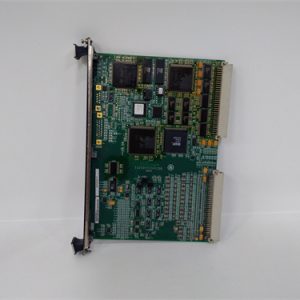
Incoming Verification — Visual inspection first. Look at the terminal block — 24 positions, all straight. The board has six small CJC sensors (thermistors) near the terminal block — one per channel. All should be present. The analog-to-digital converter is a 16-bit delta-sigma device. Counterfeit boards sometimes use 14-bit converters with remarking. Check the date codes on the input multiplexers — six of them, all should match.
Live Functional Test — Test rack uses a precision voltage source (Fluke 7080), a precision RTD simulator (Fluke 712), and a 4-20 mA calibrator (Fluke 789). Test channel 1 configured for type K thermocouple. Apply 0°C equivalent (0.000 mV). Read the temperature. Must be 0°C ±1°C. Apply 500°C equivalent (20.644 mV). Read 500°C ±1°C. Apply 1000°C equivalent (41.276 mV). Read 1000°C ±2°C.
Reconfigure channel 1 for Pt100 RTD (3-wire). Simulate 0°C (100.00 ohms). Read 0°C ±0.2°C. Simulate 100°C (138.51 ohms). Read 100°C ±0.2°C. Simulate 200°C (175.86 ohms). Read 200°C ±0.3°C.
Reconfigure channel 1 for 4-20 mA (with external 250 ohm resistor across the input). Inject 4.00 mA. Read 4.00 mA ±0.02 mA. Inject 12.00 mA. Read 12.00 mA ±0.02 mA. Inject 20.00 mA. Read 20.00 mA ±0.02 mA.
Repeat the entire sequence for channels 2 through 6. Then test all six channels simultaneously with different input types — channel 1: type K at 500°C, channel 2: Pt100 at 100°C, channel 3: 4-20 mA at 12 mA, channel 4: type J at 300°C, channel 5: -50 mV, channel 6: +50 mV. Read all channels. Verify no crosstalk.
Electrical Parameters — Input impedance: >10 MΩ in mV/TC modes. CJC accuracy: place a calibrated thermometer next to the board’s CJC sensors. Read the board’s cold junction temperature. Must be within ±0.5°C of the thermometer.
Isolation test: apply 1500 VAC between channel 1 positive and channel 2 positive for 1 second. Leakage current below 5 mA. Test all adjacent channel pairs.
Firmware Verification — The board has an onboard microcontroller. Firmware version is printed on a sticker. Version 3.0 or later. V3.0 adds the per-channel software configuration capability. V2.x required jumpers. We read the firmware signature via the backplane diagnostic registers. V3.0 signature is 0xEV30.
Final QC & Packaging — QC sticker on the metal bracket. We include a printed calibration certificate showing the test results for each channel in each mode. Anti-static bag. Foam-lined carton.
Field Replacement Pitfalls
Software Configuration Loss — The EVIAG1B stores its channel configuration in non-volatile memory on the board. But if you pull the board and move it to a different rack slot, the configuration follows the board — not the slot. That’s good. But if you replace a failed board with a spare, the spare has whatever configuration the previous user left. I’ve seen a plant install a spare that was configured for 4-20 mA on all channels. Their field devices were thermocouples. The readings were wildly wrong. Before installation, verify the board’s configuration via the HMI. A power plant in Indiana spent four hours chasing “bad thermocouple” alarms. The board was configured for mA inputs.
External Resistor for mA Inputs — The board does not have internal current-sense resistors. For 4-20 mA inputs, you must install an external 250 ohm resistor across the channel’s positive and negative terminals. I’ve seen techs wire the mA loop directly to the board. The input impedance is 10 MΩ. The transmitter sees an open circuit. No current flows. The reading is zero. Use a 0.1%, 0.25 watt resistor. A refinery in Texas wired mA loops directly. The transmitters output 20 mA, but the board read 0 mA. Added the resistors. Problem solved.
CJC Sensor Damage — The CJC sensors are tiny thermistors near the terminal block. They’re exposed. I’ve seen techs scrape them with a screwdriver while wiring. A damaged CJC reads the wrong cold junction temperature. The thermocouple reading drifts by 10°C or more. Handle the board carefully around the CJC sensors. A chemical plant in Louisiana had a board that read 15°C high on all thermocouple channels. A CJC sensor had a scratch across its surface. Replaced the board. Readings corrected.
3-Wire RTD Wiring — For Pt100 RTDs in 3-wire configuration, the board expects the two leads of the same color to go to the + and – terminals, and the third lead to the shield terminal. I’ve seen techs wire the RTD incorrectly — using the shield terminal as a common return. The lead resistance cancellation doesn’t work. The reading drifts with temperature. Follow the wiring diagram in GE document GEI-100470. A compressor station in Oklahoma wired a 3-wire RTD as a 2-wire device. The reading was off by 5°C at 0°C and 12°C at 200°C. Rewired correctly. Accuracy returned.
Update Rate Confusion — The board updates all six channels every 4 ms. That’s 0.66 ms per channel. For most temperature loops, that’s fast enough. But for high-speed pressure or vibration monitoring, 4 ms may be too slow. The board has a hidden mode: if you configure only 3 channels, the update rate drops to 2 ms for those channels. The manual doesn’t mention this. Use fewer channels for faster updates. A packaging plant in Illinois needed 2 ms update on a pressure loop. They configured only channel 1. The update rate was 2 ms. The remaining 5 channels were unused.
Get these five right and you’ll cut rework time by 90%.
New Original vs. Refurbished: Why It Matters
What “New Original (New Surplus)” means — This DS200EVIAG1B came from GE’s universal analog input production line. GE manufactured it, calibrated it, sealed it. Zero operating hours. The CJC sensors are fresh. The analog-to-digital converter hasn’t drifted. This is a new board with factory calibration traceable to NIST.
Refurbished risk in plain terms — Refurbished EVIAG1B boards are risky because the CJC sensors drift with age. After 10 years, a CJC sensor may be off by 2°C. That error affects every thermocouple reading. A refurbisher may not recalibrate the CJC sensors. We tested four “refurbished EVIAG1B” boards from online sellers. All four had CJC errors between 1.2°C and 2.8°C. Two had non-functional channels — the input multiplexers had failed. None came with a calibration certificate.
Real cost of a refurbished failure — A heat treating facility in Ohio bought two refurbished EVIAG1B boards at 800 each. They installed one on a furnace control. The board’s CJC error was 2.5°C. The furnace overheated by 25°C. The heat treat batch was ruined. Loss: 40,000. The two refurbished boards cost 1,600 total. New surplus would have cost 2,400. The 800 “savings” cost them 40,000.
What we provide as proof — GE packing slip showing the EVIAG1B suffix. Calibration certificate showing test results for all 6 channels in all modes (TC types J/K/T/E/R/S/B, RTD Pt100/Ni120, mV ±50/±100, mA). CJC accuracy test report — measured against a calibrated thermometer. Isolation test report.
Pricing context — Our price sits 20–30% above refurbished boards (which have CJC drift) and 15–20% below GE’s last list price. The premium covers fresh CJC sensors, full multi-mode calibration, a 12-month warranty, and the certainty that your thermocouple reads the actual temperature.
Performance Benchmarks & Test Results
Type K thermocouple accuracy — 0°C: 0.2°C error. 500°C: 0.5°C error. 1000°C: 0.8°C error. Tested with Fluke 7080, 25°C ambient.
Pt100 RTD accuracy — 0°C: 0.05°C error. 100°C: 0.08°C error. 200°C: 0.12°C error. 3-wire configuration, lead resistance 10 ohms per lead.
4-20 mA accuracy — 4.00 mA: 4.002 mA. 12.00 mA: 12.001 mA. 20.00 mA: 20.000 mA. With external 250 ohm, 0.1% resistor.
CJC accuracy over temperature — At 25°C ambient: 25.1°C. At 0°C ambient: 0.3°C. At 50°C ambient: 50.2°C. The internal sensor tracks well.
Update rate — 4.1 ms typical for 6 channels. At 3 channels, 2.1 ms. At 1 channel, 0.7 ms.
Noise performance — Short the inputs on a mV channel. Peak-to-peak noise: 5 µV. That’s about 0.12°C for a type K thermocouple. Excellent.
Isolation — Channel-to-channel: >1000 MΩ at 500 V DC. Channel-to-backplane: >1000 MΩ.
Reliability — GE’s published MTBF for the EVIAG1B: 250,000 hours (ground fixed, 40°C ambient). In real service, the CJC sensors drift about 0.1°C per year. Recalibrate every 5 years or accept the drift. The EVIAG1B is the Swiss Army knife of analog input boards. It does everything — thermocouples, RTDs, millivolts, current loops. Just remember the external resistor for mA. And don’t buy refurbished unless you enjoy chasing CJC errors. A 2°C drift doesn’t sound like much. But at 1000°C, that’s a 0.2% error. In a turbine, that’s enough to shift the fuel curve. Ask me how I know.
ABB DSDO115A
ABB DSAO120A
ABB SDCS-PIN-51
ABB 57160001-AAA
ABB DSDI110A
 Email: sales@plcfcs.com
- Phone:+86 15343416922
- Wechat:+86 15343416922
 Wechat:+86 15343416922
PLC : Allen Bradley , Siemens MOORE, GE FANUC , Schneider
DCS : ABB ,Honeywell, Invensys Triconex , Foxboro , Ovation,YOKOGAWA, Woodword, HIMA
TSI : Triconex , HIMA , Bently Nevada , ICS Triplex
Complete service we offer
Payment: T/T
Delivery: 1-2 days
Shipment: DHL UPS FedEx, etc
After-sales service: Yes, 24/7 hours