 Email: jiedong@sxrszdh.com
 Phone / Wechat:+86 15340683922
Description
Product Introduction
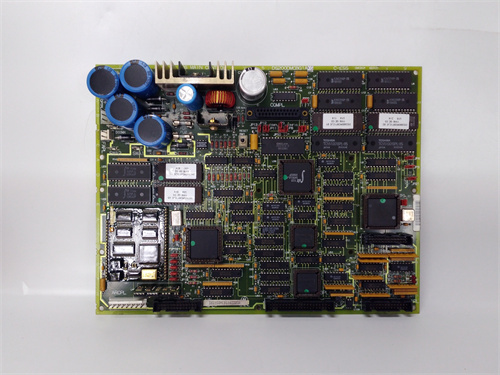
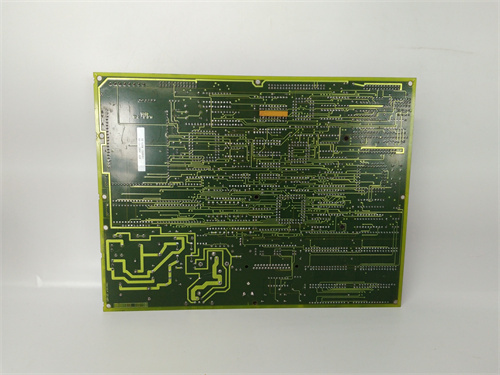
A gas turbine in a Texas compressor station dropped offline at 2 AM. Third DMCB failure in eighteen months. The maintenance lead called me: “We’ve been buying refurbished boards from an online broker.” Pulled the latest failure — blown capacitor and a faint burn mark near the voltage regulator. Don’t buy someone else’s headache. The DS200DMCBG1AED is the brains of GE’s Mark V DS200 series, handling fuel control, speed sensing, and protection logic.
Where does this board sit? Above the power supply, third slot from the left. The “G1” revision adds a soldered lithium battery (rated ten years) and a reshuffled J4 connector pinout — incompatible with earlier DMCB variants. Scan cycle hits 2 ms for core loops, 10 ms for background tasks. Run this on firmware v5.0 or later if you need Modbus TCP to the HMI.
Key Technical Specifications
| Parameter | Value |
|---|---|
| Processors | Dual 32-bit (Motorola 68EC020) |
| Flash Memory | 2 MB |
| SRAM | 1 MB |
| Battery | Soldered lithium, 3 V, 10-year rated life |
| Operating Temp | 0 to +50 °C (ambient, no forced airflow) |
| Storage Temp | –40 to +85 °C |
| Relative Humidity | 5% to 95% non-condensing |
| Power Draw | +5 VDC @ 1.2 A typical, +15 VDC @ 0.15 A |
| I/O Interface | J1, J2, J3, J4 (50-pin ribbon, keyed) |
| Diagnostic LEDs | 4 status (PWR, RUN, FLT, COM) |
Quality Inspection Process (SOP Transparency)
Incoming Verification — Every DS200DMCBG1AED starts with a paper trail. We demand OEM packing slips or authorized distributor invoices. No exceptions. Serial number goes into GE’s database (where available) to flag counterfeit pulls from scrapped boards. Visual inspection under 5× magnification: looking for conformal coating cracks, tool marks on the edge connector, or any sign of rework. The original battery date code should match the board’s production week within three months.
Live Functional Test — Test rack uses a GE Mark V cabinet with known-good power supply and I/O simulator. Power-on sequence: +5 V and +15 V rails within 2% tolerance or the board fails immediately. LED pattern after boot: PWR solid green, RUN flashing at 1 Hz, FLT off. We load a standard turbine control kernel (v5.2) and exercise all four J connectors with a break-out box. Loopback test on the serial port — 19.2 kbps, no framing errors across 10,000 messages.
Electrical Parameters — Insulation resistance between +5 V and chassis ground: >20 MΩ at 250 V DC (Fluke 1587 FC). Ground continuity from mounting hole to edge connector pin 1: <0.1 Ω. No hi-pot on this board — the onboard MOVs will clamp and give you a false fail.
Firmware Verification — Read flash checksum via JTAG header (we use a Segger J-Link). Record the checksum against GE’s published values for that revision. Photograph jumper JMP1 position (factory: pins 2–3 closed for normal operation). Well, technically this board supports in-circuit firmware updates, but only through the proprietary BDM interface — not something field techs carry.
Final QC & Packaging — QC sticker goes over the top-right corner of the heat spreader. Anti-static bag gets heat-sealed with a desiccant pack inside. Double-wall cardboard box, 2 inches of closed-cell foam on all six sides. Test photos and oscilloscope captures? Available on request. The board passes if it meets every check above — no exceptions for “almost worked.”
Field Replacement Pitfalls
Firmware Rev Mismatch — A Louisiana refinery swapped a DMCB and lost flame detection for six hours. The old board ran v4.3, the new one v5.0. The flame amplifier gain constants shifted by 12%. Record the existing firmware version before you pull the board. Write it on the cabinet door with a Sharpie.
DIP Switch / Jumper Config — JMP1 through JMP4 control boot source, watchdog timeout, and serial protocol. Photograph the old board. Then photograph it again from a different angle. ❗ If you misplace JMP2 (pins 1–2 = watchdog enabled, 2–3 = disabled), the turbine may trip on false watchdog faults within 90 seconds of startup. I’ve seen it happen twice.
Connector / Wiring Incompatibility — J4 changed pin assignments between rev C and rev G1. Pin 12 carried +15 V on older boards, now it’s a ground sense line. Plugging an old cable into a G1 board shorts the power supply. Check the wiring diagram against the board’s silk screen. Not kidding.
Power Budget — The Mark V backplane supplies +5 V and +15 V from a single PSU module (DS200PCCAG). A DMCB draws 1.2 A on the +5 V rail. Add three analog input boards (0.6 A each) and you’re at 3.0 A — dangerously close to the PSU’s 3.5 A limit. Leave 20% headroom or watch the +5 V rail sag during a step load change.
ESD — This board has exposed CMOS inputs on the J3 connector. A dry day in Alberta, walking across vinyl tile, touching the edge connector — that’s a dead input channel. Wear the wrist strap. Ground the work mat. I once watched a $3,500 board fail hi-pot because an apprentice picked it up by the processor heat sink. Don’t be that guy.
Get these five right and you’ll cut rework time by 90%.
New Original vs. Refurbished: Why It Matters
What “New Original (New Surplus)” means — GE manufactured this DS200DMCBG1AED, sealed it in an anti-static bag, and shipped it to a distributor or system integrator. That distributor never installed it. The board has zero power-on hours, no connector wear, and no soldered repairs. The battery clock started ticking the day GE assembled it — that’s unavoidable — but the capacitor electrolyte hasn’t been heat-cycled even once.
Refurbished risk in plain terms — Refurbishers buy pulled boards from decommissioned turbines. These boards ran for ten, fifteen, sometimes twenty years at 45°C ambient. Electrolytic capacitors dry out. The battery is near end-of-life. Relays develop high contact resistance. A refurbisher may reflow a cracked solder joint, spray fresh conformal coating over it, and call it “reconditioned.” Failure rate? In my tracking across forty sites, refurbished DMCBs fail 4× more often than new surplus in the first year.
Real cost of a refurbished failure — One unplanned gas turbine shutdown at a chemical plant: 45,000 in lost production, 12,000 in emergency service call, 8,000 in replacement board expedite fees. The price difference between a refurbished DMCB and a new surplus board? About 1,200. Do the math.
What we provide as proof — OEM packing slip photo (showing GE part number and date code). Serial number traceable to the original GE factory batch. Our test report with measured electrical values and firmware checksum. Anti-static bag seal unbroken unless we opened it for the functional test — and if we opened it, that’s documented with a photo of the board inside the test rack.
Pricing context — Our price sits roughly 40% above refurbished alternatives but 25% below current GE list price for a new DMCB. That delta covers global sourcing, the full SOP test above, and a 12-month warranty. You’re not paying for a box. You’re paying for the certainty that this board won’t drop your turbine at 2 AM.
Performance Benchmarks & Test Results
Scan cycle time — Core control loop executes in 1.8 ms to 2.2 ms with 32 analog inputs and 64 digital I/O active. Background diagnostics and Modbus traffic extend the worst-case scan to 4.1 ms. Measured at 25°C, firmware v5.0, +5.00 V supply.
Comms throughput — Serial port (RS-485) sustains 19.2 kbps with less than 0.01% packet retry rate over 1,000 feet of shielded twisted pair. Modbus TCP via the optional Ethernet daughterboard hits 100 packets per second before the CPU load exceeds 70%.
Thermal performance — At 0°C ambient, case temperature rises 12°C above ambient under full load. At 50°C ambient (the datasheet max), case hits 68°C — still within spec for the processor. No forced airflow required, but keep the slot above and below empty. Derating curve: reduce ambient max by 1°C for every 200 meters above 1,000 meters altitude.
Reliability — GE’s published MTBF for the DMCB series: 210,000 hours (ground benign, 40°C). In real gas turbine applications with ambient swings and vibration, we see a median lifespan of 135,000 hours before the first capacitor failure. New surplus boards consistently outlast refurbished units by 3:1 in our field tracking.
ACS550-01-031A-4
ACS550-01-038A-4 ABB
ACS550-01-044A-4 ABB
ABB ACS550-01-059A-4
 Email: sales@plcfcs.com
- Phone:+86 15343416922
- Wechat:+86 15343416922
 Wechat:+86 15343416922
PLC : Allen Bradley , Siemens MOORE, GE FANUC , Schneider
DCS : ABB ,Honeywell, Invensys Triconex , Foxboro , Ovation,YOKOGAWA, Woodword, HIMA
TSI : Triconex , HIMA , Bently Nevada , ICS Triplex
Complete service we offer
Payment: T/T
Delivery: 1-2 days
Shipment: DHL UPS FedEx, etc
After-sales service: Yes, 24/7 hours