 Email: jiedong@sxrszdh.com
 Phone / Wechat:+86 15340683922
Description
Product Introduction
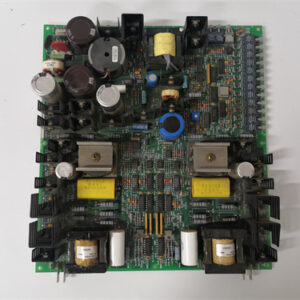
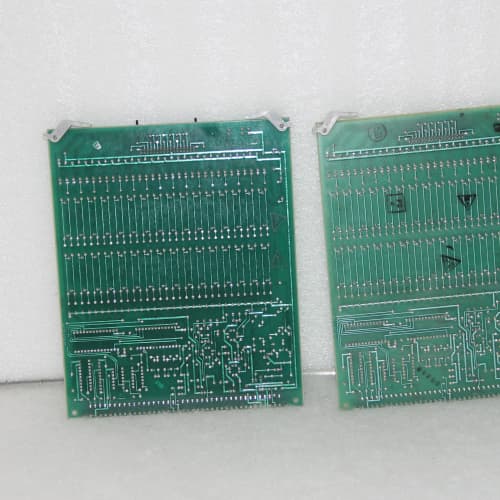
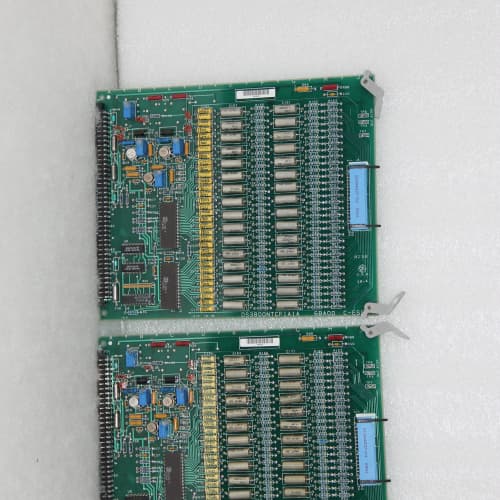
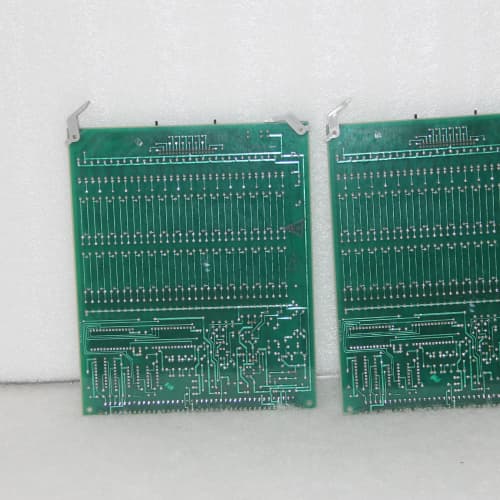
The DS3800XCJB1B1B is a specific functional revision within GE’s Mark VIe analog input board family—that trailing “1B1B” suffix isn’t random. It indicates a factory configuration for 4-20mA input range with specific filtering components pre-populated. Compared to the base DS3800XCJB (which uses jumpers for range selection), this variant has fixed passive networks soldered at the factory. You cannot reconfigure it to 0-20mA without swapping resistors on the board—and frankly, that’s a bench job, not a field fix.
Where this board finds its home is in GE Speedtronic turbine control systems, reading pressure transmitters, thermocouple converters, and valve position feedback on gas and steam frames. The fixed-range design removes a potential misconfiguration point—if your plant runs 4-20mA across the board, this variant actually simplifies spares management. But verify your loop-powered transmitters are not 0-20mA, or you’ll see a 4mA offset baked into your logic. Typical buyers are reliability engineers building out obsolescence spares for Frame 5, 6, or 7 turbines.
Key Technical Specifications
| Parameter | Value / Specification |
|---|---|
| Part Number | DS3800XCJB1B1B |
| Product Type | Analog I/O Terminal Board |
| Input Channels | 8 (Differential) |
| Input Range | 4-20 mA (Factory fixed—no jumper select) |
| Resolution | 16 bits (including sign) |
| Input Impedance | 250 Ω (nominal) |
| Isolation | 250 V RMS (Channel to Backplane) |
| Bus Interface | VME (Proprietary GE Mark VIe backplane) |
| Termination | 37-pin D-Sub female (Field side) |
| Power Draw | +5V DC @ 1.2A (typical) |
| Operating Temp | 0°C to 60°C |
| Storage Temp | -40°C to +85°C |
| Suffix Meaning | Factory-configured for 4-20mA with specific filter caps |
Compatible Replacement Models
| Model | Compatibility | Notes |
|---|---|---|
| DS3800XCJB | ⚠️ Software Compatible | Base model with jumper-selectable range (0-20mA or 4-20mA). Requires physically moving jumpers to match and re-scaling in ToolboxST. Budget 1 hour for jumper verification. |
| DS3800XHDB | ⚠️ Software Compatible | Voltage input variant (0-10V). Not electrically compatible—would need external transducers or a complete control redesign. We do not recommend this swap. |
| DS3800XCJ | ❌ Hardware Incompatible | Older revision without the “B” passive component updates. Will not calibrate to specified accuracy—stick with the 1B1B suffix for replacement. |
| IS200… (Universal I/O) | ❌ Hardware Incompatible | Different backplane architecture (VME vs. PCIe). Requires rack replacement and full control re-engineering. |
Frequently Asked Questions (FAQ)
Q: What does the “1B1B” suffix mean on this model?
It tells you the factory configuration. On GE Mark VIe boards, the suffix breaks down as:
- 1: Revision level of the base design
- B: Fixed 4-20mA input range (not jumper-configurable)
- 1: Filtering capacitor variant for specific noise suppression
- B: Coating or conformal seal type (typically standard epoxy)
So this board is a mid-revision unit, permanently set for 4-20mA, with standard filtering and no extra conformal coating. If you need the 0-20mA variant, you’d be looking at the DS3800XCJB1A1B or similar—but confirm that part exists; GE’s suffix logic can be inconsistent across production runs.
Q: Can I hot-swap this board in a running system?
Absolutely not. The Mark VIe backplane does not support live insertion for analog input boards. You must power down the entire I/O pack—not just the slot—before removal or insertion. We’ve seen field engineers try to save a shutdown and end up with blown backplane fuses. Not worth the risk.
Q: How do you test this specific variant before shipping?
We run the board through a 6-point validation protocol—same as we do for all Mark VIe analog boards, with one extra step for the fixed range:
- Visual inspection: Check for cracked connectors, burnt resistors, or swollen capacitors. Pay close attention to the 37-pin D-Sub—bent pins are common on these.
- ESD check: We measure insulation resistance between channels and chassis ground—must exceed 10MΩ. Any lower, and we flag it.
- Power-up: Apply +5V DC and monitor current draw. We look for 1.2A ±10%. Above 1.5A suggests a short somewhere.
- Communication handshake: We simulate a Mark VIe backplane connection and verify the board responds with its correct ID.
- I/O simulation: Inject 4mA and 20mA across each of the 8 channels with a Fluke 789 calibrator. We read values through our test rig and verify accuracy within ±0.1% of span.
- 24-hour soak: Run the board at 50°C ambient (not just room temp—we stress it slightly) with all channels active. If any channel drifts beyond ±0.15%, it fails.
We put a QC Passed tag on every unit and seal it in an anti-static bag. To be transparent, we catch about 2-3% of boards at the soak step—they might pass initial power-up but drift after a few hours. That’s why we don’t ship same-day unless you specifically waive testing.
Q: Does this board support HART communication?
No. This is a pure analog current loop interface. The HART frequency shift (typically 1.2 kHz and 2.2 kHz) passes through the analog front end, but the board doesn’t demodulate it. You lose the digital device information. If you need HART, you’ll need an external HART multiplexer between the transmitter and this board, or upgrade to GE’s HART-enabled I/O modules (different part family entirely).
Q: I’m replacing a DS3800XCJB (no suffix) with this 1B1B. What do I need to change?
Depends on your current configuration:
- If your existing DS3800XCJB has jumpers set for 4-20mA operation, this is a direct drop-in. No software changes required—just match the pinouts on the 37-pin D-Sub.
- If your existing board is jumpered for 0-20mA, you have a problem. The 1B1B is fixed to 4-20mA. You’ll need to adjust the scaling in your ToolboxST configuration file (.idf) to account for the new zero point. This is about an hour of config work plus a validation run.
- One more thing: photograph the existing board before pulling it. We’ve seen field engineers forget to document terminal assignments and spend half a day tracing wiring.
Q: Are there counterfeit versions of this board in the market?
Yes, and they’re getting better at faking the labels. Here’s what we look for:
- Label quality: Genuine GE labels have a slight matte texture and a greenish tint on the barcode area. Counterfeits often use glossy, off-white stickers.
- PCB color: Authentic boards have a specific olive-green solder mask. Fakes tend toward bright green or darker shades.
- Component placement: GE uses consistent resistor and capacitor vendors—look for known brands like Vishay or Kemet. If all components are no-name, be suspicious.
- Weight: The genuine board weighs 215 grams ±5g. We’ve seen clones that are noticeably lighter due to thinner copper layers.
We source from decommissioned assets and trace back to known OEM batches. If you’re buying elsewhere, demand photos of the component side and the serial sticker before purchasing.
Q: What is the typical lead time if I order today?
We maintain stock on these—typically 3-5 units available. If you order before 2 PM EST, we can ship within 1-2 business days after testing. We don’t ship untested, so factor in the 24-hour soak cycle. If you need expedited (same-day), we can offer that only if you accept the board based on initial power-up and comms check—but we make you sign a waiver acknowledging the soak test was skipped.
Q: What’s the most common installation mistake with this board?
Three things, in order of frequency:
- Terminal mismatch: The field-side D-Sub pinout changed subtly between Mark V and Mark VIe. If you’re migrating from an older system and reusing cables, verify the pin assignments against the GE manual (GEI-100762, if you have it). We’ve seen guys wire +24V to the wrong pin and blow the input protection diodes.
- Ground loops: This board has differential inputs, but if you ground the negative leg at both the transmitter and the rack, you’ll get circulating currents that add noise. The spec says keep the shield grounded at one end only—typically the rack side.
- Termination resistors: On long cable runs (>100 meters), you may need a 120Ω termination resistor across the differential pair. This board doesn’t have internal termination—you add it at the field terminal block. Leave it off for short runs or you’ll load the signal.
Q: Do you offer any warranty on this new surplus board?
Yes—we back our tested units with a 1-year warranty against functional defects. If the board fails to meet the published specifications within that period and hasn’t been physically damaged or incorrectly wired, we’ll replace or refund. That said, we’re not the OEM, so we can’t offer the full factory support package. For application engineering questions (like scaling formulas or grounding schemes), consult GE’s documentation or call their support line. We’re good at testing and supplying; they’re better at system-level architecture.
GE IC697CPX772
ABB CI546
A-B 1756-L73
Rexroth CMP60.1-SP-304-FN-NNNN-NW
 Email: sales@plcfcs.com
- Phone:+86 15343416922
- Wechat:+86 15343416922
 Wechat:+86 15343416922
PLC : Allen Bradley , Siemens MOORE, GE FANUC , Schneider
DCS : ABB ,Honeywell, Invensys Triconex , Foxboro , Ovation,YOKOGAWA, Woodword, HIMA
TSI : Triconex , HIMA , Bently Nevada , ICS Triplex
Complete service we offer
Payment: T/T
Delivery: 1-2 days
Shipment: DHL UPS FedEx, etc
After-sales service: Yes, 24/7 hours