 Email: jiedong@sxrszdh.com
 Phone / Wechat:+86 15340683922
Description
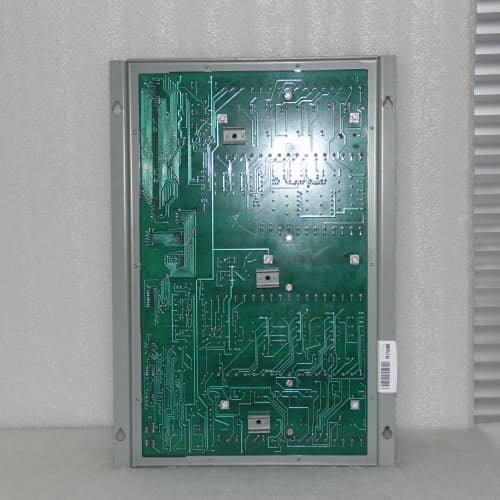
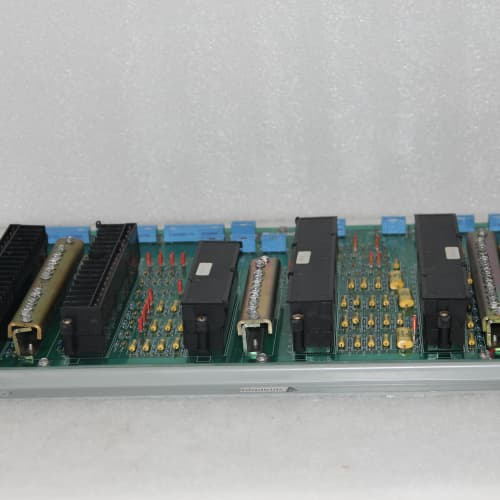
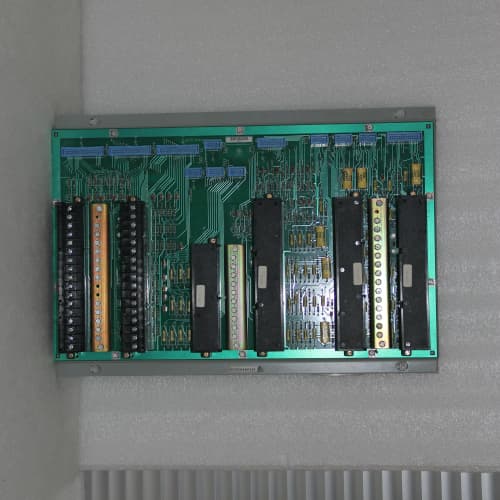
Product Introduction
The DS3800HFXD1F1E is the high-resolution version of the pulse output board, offering 14-bit frequency resolution instead of the standard 12-bit. The “1F” suffix provides locking spring-cage terminals for secure field wiring, and the “1E” suffix gives you mixed 2.5A/0.8A fusing—2.5A on Bank 1 for long cable runs and 0.8A on Bank 2 for shorter runs. The 14-bit resolution allows for finer frequency control, making this board suitable for applications that require precise pulse generation, such as high-accuracy speed simulation, precision timing, and advanced control algorithms.
We’ve used the HFXD1F1E in a calibration lab where we needed to generate precise frequency signals for testing turbine speed sensors. The 14-bit resolution allowed us to set frequencies with 0.001Hz precision, which was essential for verifying the sensors’ accuracy. The locking terminals on the 1F suffix ensured the test leads remained secure despite frequent reconnections. The mixed fusing allowed us to use the 2.5A bank for the long cable runs to the test fixture and the 0.8A bank for the short connections to the oscilloscope. The board’s performance was exceptional—the frequency accuracy remained within ±0.05% of setting throughout the calibration campaign.
Key Technical Specifications
| Parameter | Value / Range |
|---|---|
| Model Suffix | 1F1E (factory termination and fusing config) |
| Pulse Output Channels | 8 (MOSFET outputs) |
| Output Voltage Range | 10-30V DC (24V nominal) |
| Frequency Range | 0-10kHz |
| Frequency Resolution | 14-bit (16384 steps) |
| Frequency Accuracy | ±0.05% of setting (typical) |
| Output Current | 0.5A per channel (max) |
| Terminal Block Type | Spring-cage with locking tab, pitch 5.08mm |
| Wire Gauge Capacity | 0.2mm² to 2.5mm² (24-14 AWG) |
| Field Supply Fusing | Bank 1: 2.5A slow-blow / Bank 2: 0.8A slow-blow |
| On-Resistance | < 0.2Ω |
| Isolation Voltage | 1500V AC (field-to-logic) |
| Logic Supply Voltage | 5 VDC (from backplane) |
| Backplane Current Draw (5V) | 0.9A (max) |
| Channel Status Indicators | Green LEDs per channel |
| Operating Temperature | 0°C to 55°C (derate above 45°C) |
Compatible Replacement Models
| Model | Compatibility Class | Notes & Caveats |
|---|---|---|
| DS3800HFXD1D1E | ⚠️ Software Compatible | Same 14-bit resolution and 24V DC outputs, but with 1D terminals (standard lock) and mixed fusing. The 1F suffix has locking terminals (enhanced lock). No software changes needed. |
| DS3800HFXC1F1E | ⚠️ Software Compatible | 12-bit version (0-100kHz). The HFXD has higher resolution (14-bit) but lower frequency range (0-10kHz). |
| DS3800HFXB1F1E | ⚠️ Software Compatible | 12-bit, 0-10kHz version. The HFXD is an upgrade for resolution. |
| DS3800HFXD1F1D | ⚠️ Software Compatible | Same locking terminals and 14-bit resolution, but with 2.5A/1A mixed fusing. The 1E has 2.5A/0.8A. No software changes needed. |
| DS3800HFXD (no suffix) | ⚠️ Software Compatible | No factory fusing or termination. Not recommended for field use. |
| DS3800HFXD1F1E (same suffix) | ✅ Drop-in Replacement | Exact match on all hardware, firmware, and suffix. No adjustments required. |
| DS3800HEDB1F1E | ❌ Hardware Incompatible | Discrete output board, not frequency output. |
Frequently Asked Questions (FAQ)
Q: What’s the advantage of the 14-bit resolution on the HFXD compared to the 12-bit HFXC?
A: The 14-bit resolution provides finer frequency control—16384 steps compared to 4096 steps. This allows you to set frequencies with higher precision, which is essential for calibration applications, precision timing, and control algorithms that require fine frequency adjustment. For example, at 10kHz, a 12-bit board has a step size of about 2.44Hz, while a 14-bit board has a step size of about 0.61Hz—a fourfold improvement. The frequency accuracy also improves from ±0.1% to ±0.05% of setting.
Q: Why does the HFXD1F1E have mixed fusing (2.5A and 0.8A)?
A: The mixed fusing allows you to size protection appropriately for different cable runs. The 2.5A bank is for longer cable runs (over 100 meters) where cable capacitance can cause inrush currents. The 0.8A bank is for shorter runs (under 100 meters) where lower fuse ratings are sufficient. The outputs themselves draw minimal current—it’s the cable capacitance that drives the need for higher fuse ratings.
Q: What’s the advantage of the locking terminals on the 1F suffix?
A: The locking terminals have a plastic latch that prevents the wire from pulling out under vibration. This is particularly important for frequency outputs, where intermittent connections can cause pulse dropouts or frequency errors. The locking mechanism is a simple but effective solution for high-vibration environments.
Q: Can I use the HFXD1F1E to simulate a speed sensor signal with high precision?
A: Yes, the HFXD1F1E is ideal for speed sensor simulation. The 14-bit resolution allows you to set the frequency with fine precision, enabling accurate simulation of turbine speed signals. The 24V DC output matches the voltage of modern speed sensors, and the frequency range (0-10kHz) covers the typical speed range of 60Hz turbines (up to 7.2kHz for a 120-tooth gear).
Q: How do I program the frequency on the HFXD1F1E?
A: The frequency is set by the Mark V controller. The controller sends a frequency value to the HFXD via the backplane, and the board generates the corresponding pulse output. The 14-bit resolution means the Mark V sends a 14-bit value to the board. The specific register mapping is in GE’s application manual (GEI-100876). You’ll need to configure the Mark V to output the appropriate frequency values.
Q: The HFXD1F1E has a 0.9A backplane current draw. Is that higher than the HFXC?
A: The HFXD1F1E draws 0.9A, which is the same as the HFXC. The extra current for the higher resolution is offset by the lower frequency range (0-10kHz vs 0-100kHz). If your rack is near the power supply limit, check your total backplane current. The Mark V power supply is typically rated at 6A on the 5V rail. If you have multiple HFXD boards, we recommend keeping total backplane current below 5.5A for margin.
Q: Does the HFXD1F1E have conformal coating?
A: Not by default. The 1F1E suffix indicates locking terminals and mixed fusing, not coating. If you need conformal coating for harsh environments, look for a suffix with a “G” (e.g., DS3800HFXD1G1E). The standard HFXD1F1E is suitable for indoor environments. If your plant has high humidity or corrosive conditions, consider a coated variant.
GE DS200TCPDG1B
GE DS200TCPDG2B
GE DS200TCPDG3B
 Email: sales@plcfcs.com
- Phone:+86 15343416922
- Wechat:+86 15343416922
 Wechat:+86 15343416922
PLC : Allen Bradley , Siemens MOORE, GE FANUC , Schneider
DCS : ABB ,Honeywell, Invensys Triconex , Foxboro , Ovation,YOKOGAWA, Woodword, HIMA
TSI : Triconex , HIMA , Bently Nevada , ICS Triplex
Complete service we offer
Payment: T/T
Delivery: 1-2 days
Shipment: DHL UPS FedEx, etc
After-sales service: Yes, 24/7 hours