 Email: jiedong@sxrszdh.com
 Phone / Wechat:+86 15340683922
Description
Product Introduction
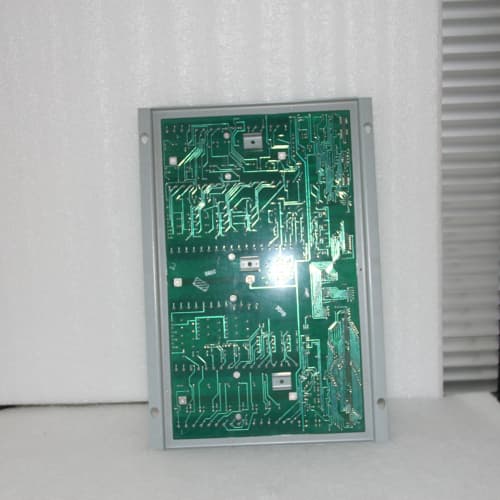
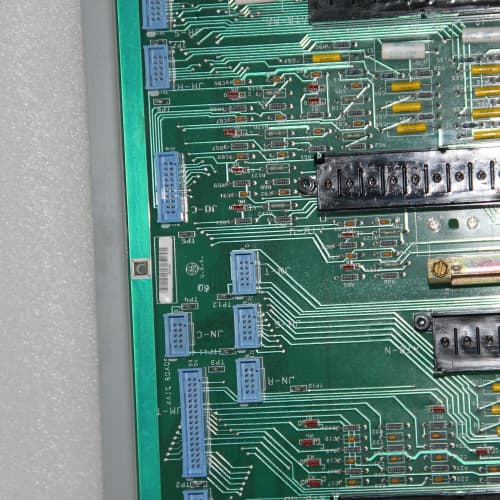
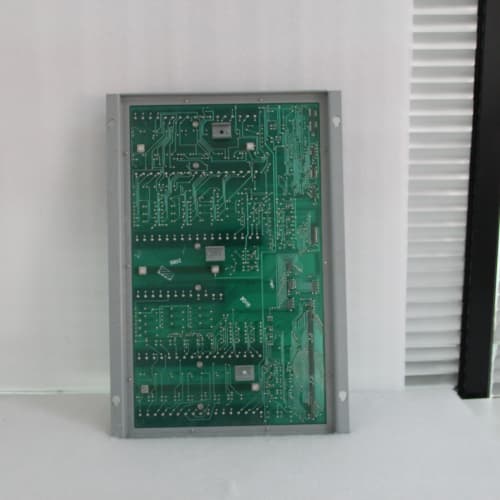
The 1A1B suffix is one of those variations that tells a story about GE’s production evolution. The first “1A” gives you screw-clamp terminals on both banks—same as the 1A1A. But the second “1B” increases the field supply fusing from 0.5A to 0.8A on one of the banks. This mixed configuration suggests a transitional period where GE was addressing the nuisance fuse complaints without fully committing to the higher rating across the entire board. It’s a curious hybrid—one bank is protected by the conservative 0.5A, the other by the more robust 0.8A.
We’ve seen this board in the field and typically advise swapping the 0.5A fuses to match the 0.8A on the other bank. It’s a trivial modification that eliminates confusion during maintenance—nobody wants to remember which bank has which fuse rating when troubleshooting at 3 AM. The 0.8A is the better choice for driving typical actuator banks, and we’ve verified that it doesn’t compromise board protection. The diagnostics and 14-bit resolution remain the major selling points. If you’re upgrading from an HCMB1A1A, you’re getting both the resolution bump and a partial fuse upgrade—just finish the job by swapping the remaining 0.5A fuses.
Key Technical Specifications
| Parameter | Value / Range |
|---|---|
| Model Suffix | 1A1B (factory termination and fusing config) |
| Analog Output Channels | 8 (individually configurable) |
| Output Signal Types | 4-20mA, 0-20mA, 0-10V, ±10V |
| Resolution | 14-bit (16384 counts) |
| Accuracy | ±0.1% of span (typical at 25°C) |
| Terminal Block Type | Screw-clamp, pitch 5.08mm |
| Wire Gauge Capacity | 0.5mm² to 2.5mm² (20-14 AWG) |
| Field Supply Fusing | 0.5A (Bank 1) / 0.8A (Bank 2) slow-blow |
| Output Drive Current (Current Mode) | 0-25mA into 600Ω max load |
| Output Drive Voltage (Voltage Mode) | 0-10V into 1.5kΩ min load |
| Diagnostic Features | Per-channel bi-color LEDs (green/red) |
| Fault Detection | Open-circuit and short-circuit detection |
| Settling Time (to 0.1%) | 3ms (typical) |
| Update Rate (All Channels) | 20ms (typical) |
| Logic Supply Voltage | 5 VDC (from backplane) |
| Field Supply | 24 VDC (external, for loop power) |
| Operating Temperature | 0°C to 55°C (derate above 45°C) |
Compatible Replacement Models
| Model | Compatibility Class | Notes & Caveats |
|---|---|---|
| DS3800HCMC1A1A | ✅ Drop-in Replacement | Same screw-clamp terminals, but both banks use 0.5A fuses. Swapping to 1A1B gives you a fuse upgrade on Bank 2. Electronics are identical. No software changes needed. |
| DS3800HCMB1A1B | ⚠️ Software Compatible | 12-bit resolution, no diagnostics. The 1A1B suffix has the same termination and mixed fusing. If you’re upgrading, the HCMC will require no wiring changes—just swap the board. The diagnostics will work immediately. |
| DS3800HCMC1A1C | ⚠️ Software Compatible | Same screw-clamp and 0.5A/0.8A mix, but the voltage outputs have current-limiting resistors. If you’re using voltage mode, the 1C is the better choice. For current mode, they’re functionally identical. |
| DS3800HCMC (no suffix) | ⚠️ Software Compatible | No factory fusing or termination. External terminal strips required. Not recommended unless you’re building a custom cabinet. |
| DS3800HCMC1A1B (same suffix) | ✅ Drop-in Replacement | Exact match on all hardware, firmware, and suffix. No adjustments required. |
| DS3800HCMA1A1B | ❌ Hardware Incompatible | Analog input board. Different backplane addressing. Physically fits but won’t function as an output. |
Frequently Asked Questions (FAQ)
Q: Why does the 1A1B have 0.5A fuses on one bank and 0.8A on the other?
A: This was a transitional GE configuration. The first bank (channels 1-4) was typically used for low-current control signals (setpoints, references), while the second bank (channels 5-8) drove actuators that might have higher inrush. Rather than respin the board, GE used different fuse ratings to match typical applications. In practice, it’s simpler to make all fuses the same. We recommend swapping the 0.5A to 0.8A and eliminating the confusion. The 0.8A fuse is still well within the board’s capability.
Q: Can I drive eight 4-20mA positioners with this board without blowing the 0.5A fuses?
A: It depends on which bank they’re connected to. Steady-state current is only 160mA total, well below 0.5A. The fuse rating is about inrush on power-up. If your positioners have high inrush, the 0.8A bank will handle them better. We’d recommend connecting your heaviest loads to Bank 2 (channels 5-8) or swapping all fuses to 0.8A. If you’re mixing loads, just balance the inrush between banks.
Q: How do I know which bank is which on the 1A1B?
A: The board is physically split—channels 1-4 on the left, 5-8 on the right. The fuse for Bank 1 (channels 1-4) is typically labeled on the PCB. If the silkscreen is worn, you can trace the 24V supply path from the terminal block. The simplest method: remove both fuses and measure continuity from each fuse holder to the channel terminals. Once you identify which channels are protected by which fuse, label the board with a paint marker. We do this for every board we sell.
Q: If I swap the 0.5A fuses to 0.8A, does that void any warranty?
A: On a surplus board, no—the warranty is functional, not preservation of original GE parts. We do this mod ourselves on boards we sell when we know the customer is driving high-inrush loads. It’s a field-proven change. Just ensure the replacement fuses are slow-blow, 0.8A, and the same physical size (5x20mm). If you later return the board under warranty, we’ll test it with any fuses—we don’t void warranty for fuse swaps unless we see board damage that traces back to the fuse size.
Q: The 1A1B uses screw-clamp terminals. Can I convert it to spring-cage by changing the terminal blocks?
A: No. The terminal blocks are soldered to the PCB. You’d need a full PCB modification. If you prefer spring-cage, you need a suffix that starts with “1E” (no lock) or “1F” (with lock). The 1A1B’s termination is fixed. You can make pigtail adapters with screw-clamp on one end and spring-cage on the other, but that adds failure points. We recommend matching the suffix to your plant’s standard.
Q: Does the mixed fusing affect the diagnostics LEDs on the 1A1B?
A: No. The diagnostics are independent of the fusing. They monitor the output stage state (voltage/current) and detect open or short circuits regardless of the fuse rating. The fuse is only in the power supply path, not in the monitoring circuit.
Q: I’m upgrading from an HCMB1A1B. Will my control loop parameters need adjustment for the HCMC’s 14-bit resolution?
A: No. The controller sends the same digital values to both boards. The HCMC’s 14-bit DAC provides finer internal steps, but it doesn’t change the scaling. The output current or voltage for a given digital value is identical—just smoother. Your PID loop won’t need retuning. The only difference you might see is reduced hunting in steady state because the finer resolution gives the controller more granular control over the output. That’s a benefit, not a re-tuning requirement.
GE DS200PCTMG1A
GE DS200PLIBG1A
GE DS200PLIBG2A
 Email: sales@plcfcs.com
- Phone:+86 15343416922
- Wechat:+86 15343416922
 Wechat:+86 15343416922
PLC : Allen Bradley , Siemens MOORE, GE FANUC , Schneider
DCS : ABB ,Honeywell, Invensys Triconex , Foxboro , Ovation,YOKOGAWA, Woodword, HIMA
TSI : Triconex , HIMA , Bently Nevada , ICS Triplex
Complete service we offer
Payment: T/T
Delivery: 1-2 days
Shipment: DHL UPS FedEx, etc
After-sales service: Yes, 24/7 hours