 Email: jiedong@sxrszdh.com
 Phone / Wechat:+86 15340683922
Description
Product Introduction (Anti-Template)
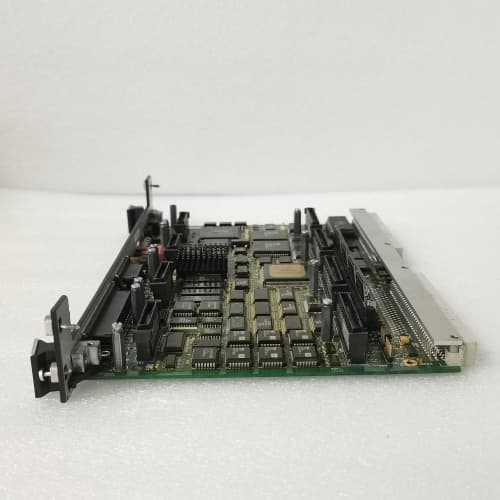
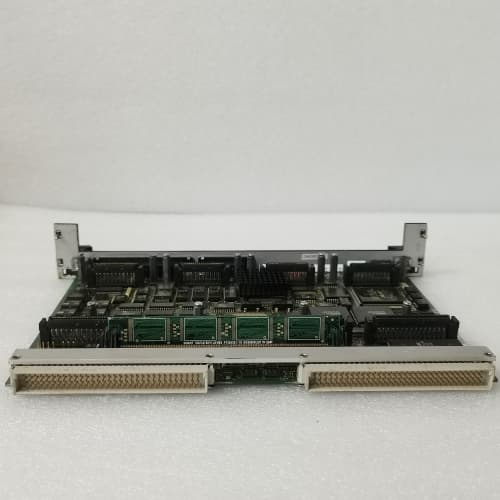
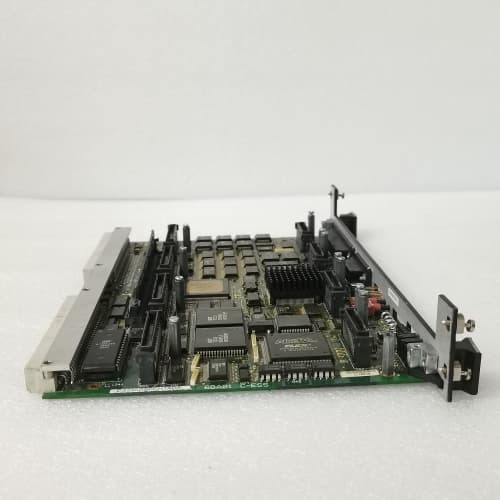
Here’s a termination board that actually gives you visual feedback—the DS200TBPXG1A has a green LED for each of its 24 channels that illuminates when the discrete input is active. That’s a feature you don’t appreciate until you’re troubleshooting a limit switch at 2 AM and you can see right on the board which channel is energized instead of chasing signals with a multimeter.
Beyond the LEDs, this board is designed specifically for discrete (digital) signals—24V DC, 48V DC, or 125V DC depending on your system configuration. The ‘X’ in the part number distinguishes it from the ‘P’ series (mixed-signal TBPAG1A) and the ‘C’ series (analog TBCAG1A). Compared to using a mixed-signal board for digital-only applications, the TBPXG1A gives you cleaner signal routing (no analog circuits to couple noise) and the status indicators. Those LEDs alone can cut troubleshooting time by about 50% because you can visually identify a stuck input without opening ToolboxST.
Key Technical Specifications
| Parameter | Value / Range |
|---|---|
| Manufacturer | General Electric (GE) |
| Part Number | DS200TBPXG1A |
| Board Type | Discrete Termination Board |
| Number of Channels | 24 (discrete inputs or outputs) |
| Voltage Compatibility | 24, 48, or 125 VDC (configurable via connected I/O card) |
| LED Indicators | Green LED per channel (illuminates when channel is active) |
| Terminal Type | Screw clamp (accepts 14-24 AWG) |
| Current Rating | 2A per terminal (maximum) |
| Isolation | None (passive; isolation by connected discrete I/O cards) |
| Mounting | VME rack (fits standard Mark VI backplane) |
| Operating Temp | -20°C to +65°C |
| Dimensions | 6U VME form factor |
| Connectors | 24-position terminal block (screw type); 1 x 96-pin DIN backplane connector |
| Backplane Pinout | Discrete-specific assignment—verify slot compatibility |
Compatible Replacement Models
Replacement options depend on whether you need the status LEDs.
✅ Drop-in Replacement: The DS200TBPXG1 (no ‘A’ suffix) is a direct drop-in—same pinout, same 24 channels. The only difference: the ‘A’ version has improved LED drivers (brighter, more reliable) and slightly better labeling. The non-‘A’ board works fine—just be aware that the LEDs may be dimmer and harder to see in bright control room lighting.
⚠️ Software Compatible: The DS200TBPAG1A (mixed-signal) fits the rack and can handle discrete signals, but it lacks the status LEDs. If you swap a TBPAG1A into a slot wired for a TBPXG1A, the discrete signals will work but you lose the visual indication—you’ll need to rely on ToolboxST to see channel states. Not a functional issue, but a troubleshooting downside.
❌ Hardware Incompatible: The DS200TBCAG1A (analog-only) uses a different pinout—the discrete signals won’t route correctly. Plugging a discrete input into an analog board can damage the analog input circuitry if the discrete voltage exceeds the analog card’s range (which it will at 24V DC).
❌ Hardware Incompatible: The DS200TBCBG1A (thermocouple) and DS200TBXAG1A (older digital) use different backplane assignments. The TBXAG1A has a similar name but a different pinout—verify before swapping.
Frequently Asked Questions (FAQ)
What’s the difference between the TBPXG1A and the TBPAG1A?
The TBPAG1A is a mixed-signal board that supports both analog and discrete signals. The TBPXG1A is discrete-only. The key differences:
- LEDs: TBPXG1A has an LED per channel; TBPAG1A does not.
- Signal paths: TBPXG1A routes all channels to discrete I/O cards; TBPAG1A routes some to analog cards, some to discrete cards.
- Voltage tolerance: TBPXG1A supports 24, 48, and 125 VDC; TBPAG1A is typically limited to 24V DC on its discrete channels.
If you’re building a digital-only panel, the TBPXG1A is the better choice. The LEDs alone justify the cost difference (typically 5-10% more than the mixed-signal board).
How do the status LEDs work?
Each of the 24 channels has a green LED driven by the discrete signal voltage. When the channel is energized (24V DC present, for example), the LED illuminates. When the channel is de-energized, the LED is off. The LED is powered directly from the input signal—no external power supply is needed. This is a passive circuit, so the LEDs are reliable but dim slightly at lower voltages (at 24V they’re bright; at 125V they’re still visible but might need a darker room).
Can I use this board with a Mark VIe controller?
No—same platform limitation as other Mark VI boards. The TBPXG1A uses the older Mark VI backplane pinout. Mark VIe uses a different assignment and typically uses the IS200TBPXG1A (or similar discrete termination board) for this application. If you plug a Mark VI board into a Mark VIe rack, the discrete signals will map incorrectly. Re-mapping in ControlST is possible but time-consuming; use the Mark VIe-specific board for new installations.
How do I test this board before installation?
Testing a discrete termination board is straightforward:
- Visual inspection: Check the terminal block for stripped screws. Look for cracked LEDs—they’re small and can be damaged during board handling.
- Continuity: Verify each of the 24 terminals shows <0.5Ω to its corresponding backplane pin. Terminal 1 to pin A1, terminal 2 to A2, up to terminal 24 (pin C8).
- Insulation: Measure between adjacent terminals—should be >10MΩ. Discrete boards can see higher voltages (up to 125V DC), so good insulation is critical.
- LED test: Apply 24V DC to terminal 1 (positive to the terminal, negative to the board’s common—typically terminal 25). The channel 1 LED should illuminate. Repeat for all 24 channels if you have time. (If you’re on a tight bench test schedule, test every 4th channel—it’s a reasonable compromise.)
What’s the most common failure on this board?
Two issues specific to the discrete board:
- LED failure. The green LEDs are reliable but can fail over time—typically after 10-15 years of operation. An LED that stays on regardless of signal state, or never illuminates, indicates a failed LED or its drive circuit. Since the board is passive and the LEDs are powered by the input signal, a failed LED doesn’t affect the signal path—the discrete input will still work—but you lose the visual feedback.
- Terminal block damage from higher voltages. If your system uses 125V DC, the terminal block can arc between adjacent terminals if the screw spacing is contaminated. This is rare but happens in dusty environments. The arc creates carbon tracks that can permanently short the terminals. Inspect the terminal block for any black marking between screws.
If I’m upgrading from a TBPXG1 to the A version, do I need to re-terminate my wires?
No—the terminal positions are identical. The ‘A’ revision simply adds improved LED drivers (brighter LEDs) and better labeling. Your wires transfer directly by matching channel numbers. The board’s form factor is the same—no physical changes.
What’s the lead time for a replacement TBPXG1A?
These boards are moderately common because discrete signals are everywhere in turbine control:
- New surplus: 1-3 weeks. The LEDs make them popular—expect a 5-10% premium over the TBPAG1A mixed-signal board.
- Refurbished: 1-2 weeks. Ensure the refurbisher tests the LEDs as well as the signal path. Some only test continuity and ignore the LEDs.
- Used/as-is: Available, but inspect the LEDs carefully. Used boards often have dim or failed LEDs from years of operation.
Is there a direct Mark VIe equivalent?
Yes—the IS200TBPXG1A (Mark VIe version). But as with all cross-platform moves, the backplane pinout is different, and the Mark VIe board may use a different LED scheme (some use red LEDs for faults instead of green for active). If you’re migrating to Mark VIe, plan to replace all discrete termination boards as part of the rack conversion. For existing Mark VI systems, the TBPXG1A is the right board.
Can I use this board with any Mark VI discrete I/O card?
The TBPXG1A has a pinout that matches the DS200TCXDG1 and DS200TCXFG1 discrete I/O cards. It also works with other Mark VI discrete cards that use the standard 24-channel discrete pinout. However, if you’re using a card that supports 125V DC (some Mark VI cards have voltage-specific configurations), verify that the termination board’s terminal block is rated for that voltage (it is—the TBPXG1A is rated to 125V). Always check your specific I/O card manual for voltage compatibility.
KPS600/20-ESC 00-111-846
00-106-290 ESC-CI V1.40 PLC DCS
00-127-755 ESC-CI V1.20 PLC DCS
 Email: sales@plcfcs.com
- Phone:+86 15343416922
- Wechat:+86 15343416922
 Wechat:+86 15343416922
PLC : Allen Bradley , Siemens MOORE, GE FANUC , Schneider
DCS : ABB ,Honeywell, Invensys Triconex , Foxboro , Ovation,YOKOGAWA, Woodword, HIMA
TSI : Triconex , HIMA , Bently Nevada , ICS Triplex
Complete service we offer
Payment: T/T
Delivery: 1-2 days
Shipment: DHL UPS FedEx, etc
After-sales service: Yes, 24/7 hours