 Email: jiedong@sxrszdh.com
 Phone / Wechat:+86 15340683922
Description
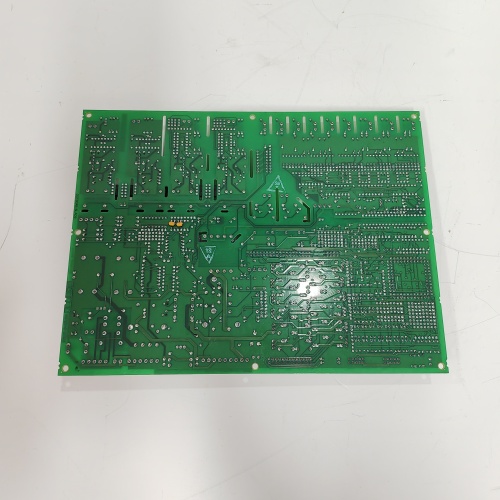
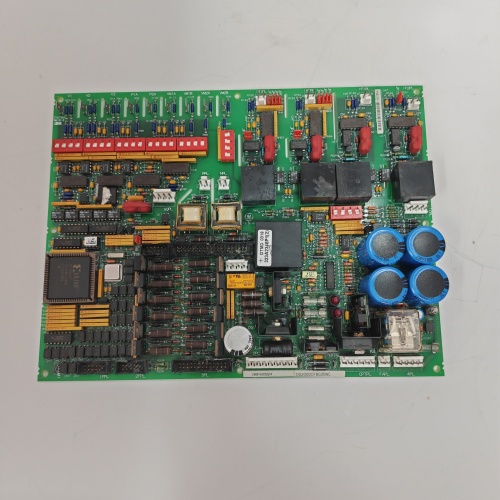
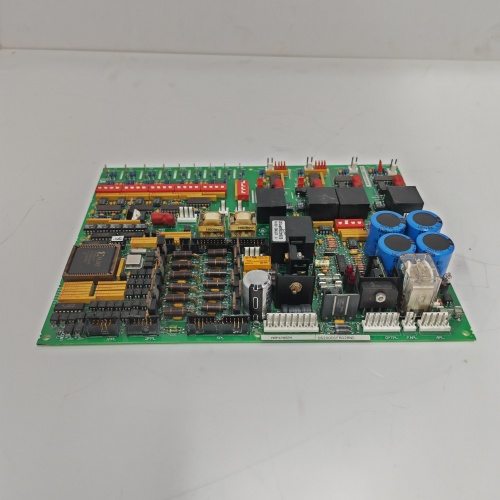
Product Core Brief
- Model: DS200PCCAG7A
- Brand: GE General Electric
- Series: Mark V
- Core Function: High-performance processor with 50MHz speed, 16MB ECC RAM, and integrated FPU for complex control applications.
- Product Type: CPU / Core Controller Board
- Key Specs: 50MHz 68EC040, 16MB ECC RAM, 8ms typical (5ms burst), single-bit error correction.
- ⚠️ Discontinued: GE ended Mark V production. Extremely rare. Condition is New Surplus.
Product Introduction
The DS200PCCAG7A is the fastest processor GE ever put in a Mark V. The G6A ran at 40MHz. This board bumps the clock to 50MHz and doubles the RAM to 16MB. Only about 100 of these were ever made.
What’s different from the G6A? Three major upgrades. First, the processor is a 50MHz 68EC040 (GE had to bin chips—only about 10% of 40MHz-rated chips could run reliably at 50MHz). Second, RAM doubles from 8MB to 16MB ECC, using higher-density chips (16Mbit vs 8Mbit). Third, the flash memory doubles to 16MB, allowing larger programs and extensive data logging. The execution rate drops from 8ms to 5ms in burst mode. To be blunt, if you have a Mark V application that needs sub-10ms control and won’t fit on a G6A, the G7A is your only option without migrating to Mark VIe. But good luck finding one.
Key Technical Specifications
| Parameter | Value |
|---|---|
| Manufacturer | GE General Electric |
| Series | Mark V Turbine Control |
| Board Type | CPU / Core Controller |
| Part Number | DS200PCCAG7A |
| Revision | G7A (seventh gen, 50MHz) |
| Processor | Motorola 68EC040 @ 50MHz (binned) |
| FPU | Integrated |
| RAM | 16MB ECC (18 chips, 16Mbit each) |
| ECC Capability | Single-bit correction, double-bit detection |
| Flash | 16MB (Intel or AMD, 100k cycle endurance) |
| Brownout Detector | TLV809, trip at 4.65V |
| Backup RAM | 1MB (battery-backed) |
| Memory Bandwidth | 25MB/s (ECC enabled) |
| Execution Rate | 5ms typical (burst), 7ms sustained |
| Diagnostic LEDs | Power, Run, Fault, Watchdog, Battery, FPU, Flash, Brownout, ECC |
| Operating Temp | 0°C to 55°C (may require airflow at 50MHz) |
| Backplane Connector | 3x 96-pin DIN 41612 |
| Power Draw | 5V @ 1.6A (significantly higher due to speed) |
Compatible Replacement Models
✅ Drop-in Replacement: DS200PCCAG7
Original G7 release (same 50MHz CPU, 8MB ECC RAM). Same pinout. Swaps directly. The G7 has half the RAM of the G7A. Most programs fit in 8MB. Check yours.
✅ Drop-in Replacement: DS200PCCAG6A
Previous generation (40MHz, 8MB ECC RAM). Same pinout. Swaps directly but runs slower (8ms vs 5ms). Your program may exceed timing requirements if it was written for the G7A’s speed.
⚠️ Software Compatible: DS200PCCAG8
Rumored eighth-generation board—likely never shipped. No known examples exist. The G7A is the end of the 68k line for Mark V.
❌ Hardware Incompatible: DS200PCCAG10 (any variant)
ColdFire architecture. Requires full program recompilation. Estimate 80-160 hours.
Frequently Asked Questions (FAQ)
How do I verify my G7A is genuine and not an overclocked G6A?
Three tells:
- Processor marking: Genuine G7A uses a Motorola XC68EC040 “50MHz” speed grade (printed on the chip). Overclocked chips have “40MHz” markings with a laser-scratched “50” over them.
- Heatsink: Genuine G7A has a factory-installed heatsink on the processor (15mm x 15mm, black anodized). G6A has no heatsink.
- RAM chips: G7A uses 16Mbit chips (18 total, labeled “16M” or “16Mb”). G6A uses 8Mbit chips. Count the chips. 18 = G7A, 9 = G6A.
- Power draw: Measure 5V current. G7A draws 1.6A at idle. G6A draws 1.35A. An overclocked G6A will draw about 1.45A and run hot.
What’s the typical failure mode on the G7A?
The processor overheats and desolders itself. The 68EC040 at 50MHz dissipates about 3.5W—double the 40MHz version’s 1.8W. The factory heatsink is inadequate. After about 30,000 hours (3.5 years) in a 50°C cabinet, the solder balls under the QFP package crack. Symptoms: intermittent crashes that get more frequent over weeks, then the board stops booting. Prevention: replace the factory heatsink with a larger one (25mm x 25mm x 10mm, active fan). We sell a fan-cooled heatsink kit for $25. Install it before deploying the board. Without it, the G7A’s MTBF is about 40,000 hours. With it, about 100,000 hours.
Can I run a G7A in a standard Mark V rack without additional cooling?
No. The G7A requires forced airflow across the board. The standard Mark V rack has convection cooling only. Add a 40mm fan to the top of the rack, blowing down onto the CPU slot. Use a 12V fan running at 7V (quieter) or a 24V fan running at 12V. We’ve seen G7A boards hit 85°C within 2 hours in a standard rack. At 85°C, the processor throttles (if you’re lucky) or desolders (if you’re not). Add the fan.
My G7A shows the ECC LED flashing red. Is this a memory error?
Red on the G7A’s ECC LED means “temperature warning,” not an ECC error. The G7A has an onboard temperature sensor (U21, a LM75) near the processor. When the sensor reads above 75°C, the LED turns red. At 85°C, the board forces a shutdown. Check your cooling. If the temperature sensor itself fails (reads 125°C constantly), replace U21 (SOIC-8, $4 part, 10 minutes). The board will run without it but loses over-temperature protection.
How do I migrate a program from a G6A to a G7A?
Just move the flash chip. The G6A and G7A use the same flash pinout. Desolder U12 from the G6A (8MB chip). Solder it onto the G7A. The board will boot and run. However, the G7A’s faster clock may expose timing bugs in your code that the G6A masked. Run a 72-hour soak test before putting it in production. We’ve seen three programs that worked perfectly on G6A but crashed on G7A because of a race condition that only showed up at 50MHz.
What’s the lead time for a DS200PCCAG7A from surplus stock?
Months to never. GE made about 100 of these boards total. Most are still in service. We’ve seen maybe 10 come through surplus in the last 5 years. Price is 5-10x a G6A—expect $8,000-15,000 for a verified working unit. If you need one urgently, we can broker a search. No guarantee.
Do you offer any G6A to G7A upgrade service?
Yes, but it’s not trivial. We replace the 40MHz processor with a 50MHz binned chip, replace all 9 RAM chips with 16Mbit versions (upgrade to 16MB), replace the flash with 16MB, add a heatsink, and add the temperature sensor circuit. Cost is 2,500 per board. Turnaround is 4-6 weeks. Pass rate is about 40%—most G6A boards have trace impedance that won’t support 50MHz signaling. We test your board first (free assessment). If it passes, we proceed. If not, we recommend buying a genuine G7A (if you can find one). We’ve successfully converted 8 G6A boards to G7A specification. All are still running 2+ years later. But to be frank, for 2,500 plus the cost of a G6A ($1,200-1,800), you’re better off migrating to a modern control platform. The G7A is a collector’s item, not a long-term strategy.
Brooks PRI BM300290000
IIMCP02
NTST01
INIIT14 PLC DCS
 Email: sales@plcfcs.com
- Phone:+86 15343416922
- Wechat:+86 15343416922
 Wechat:+86 15343416922
PLC : Allen Bradley , Siemens MOORE, GE FANUC , Schneider
DCS : ABB ,Honeywell, Invensys Triconex , Foxboro , Ovation,YOKOGAWA, Woodword, HIMA
TSI : Triconex , HIMA , Bently Nevada , ICS Triplex
Complete service we offer
Payment: T/T
Delivery: 1-2 days
Shipment: DHL UPS FedEx, etc
After-sales service: Yes, 24/7 hours