 Email: jiedong@sxrszdh.com
 Phone / Wechat:+86 15340683922
Description
Product Introduction
The bearing temperature monitoring system needed 0.1 °C accuracy. Thermocouples couldn’t do it (drift). The standard analog input board with RTD transmitters added cost and failure points. The plant installed DS200ITXSG1A boards. Direct RTD connection. Sixteen channels. Two-wire, three-wire, or four-wire (software-selectable). The bearing temps are accurate within 0.05 °C. The turbine trips at the right limit — not early, not late.
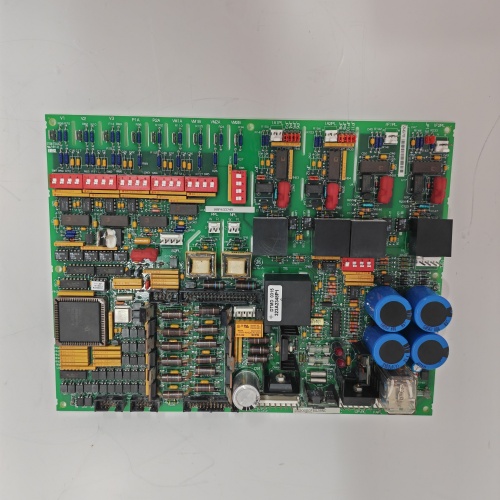
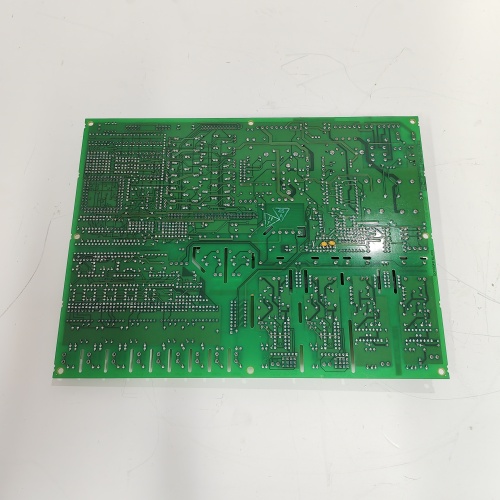
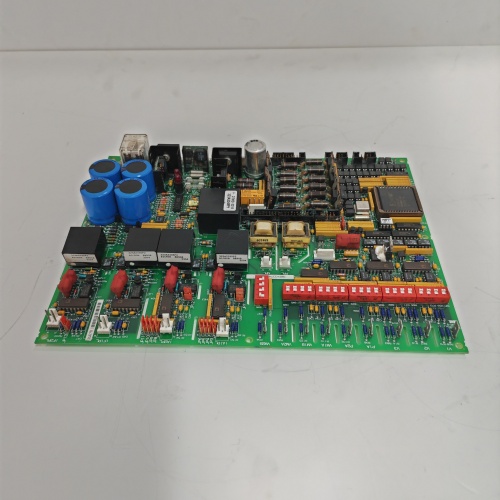
The DS200ITXSG1A is the dedicated RTD input board for Mark V systems. Sixteen channels. Supports Pt100 (platinum, 100 Ω at 0 °C). Two-wire, three-wire, or four-wire connection (software-selectable per channel). Four-wire mode eliminates lead resistance error. The board has a built-in current source (1 mA per channel) and precision ADC (24-bit). The ITX board also has open RTD detection.
What makes the SG1A different from using a thermocouple board (ITXDG1A) with RTD transmitters? The SG1A is more accurate (0.01 °C resolution vs 0.1 °C), has higher resolution (24-bit vs 18-bit), and eliminates the transmitter (cost, failure point). For bearing temperatures, motor windings, and precision process control, the RTD board is the correct choice.
Key Technical Specifications
| Parameter | Value |
|---|---|
| RTD channels | 16 (isolated per channel) |
| RTD type | Pt100 (100 Ω at 0 °C), α = 0.00385 (IEC 60751) |
| Connection modes | 2-wire, 3-wire, 4-wire (software-selectable per channel) |
| Temperature range | –200 °C to +850 °C (Pt100 range) |
| Resolution | 0.01 °C |
| Accuracy (board only) | ±0.05 °C at 0 °C, ±0.1 °C at 100 °C, ±0.2 °C at 500 °C |
| Lead resistance compensation (4-wire) | Eliminates error up to 100 Ω lead resistance |
| Excitation current | 1 mA per channel (constant current source) |
| Input impedance | >1 MΩ (measurement input) |
| Update rate | 50 ms per channel (all modes) |
| Open RTD detection | Yes (current source detects open circuit) |
| Channel-to-channel isolation | 500 Vrms |
| Channel-to-backplane isolation | 500 Vrms |
| Operating ambient | –25 °C to +65 °C |
| Storage temperature | –40 °C to +85 °C |
| Power supply | +5 V from backplane (400 mA), no external field power |
| Connectors | 4x 16-position terminal blocks (3 pins per channel — source, sense, return) |
| Diagnostic LEDs | 16 (open RTD), 1 (power), 1 (converter busy) |
| GE drawing reference | GEI-100510 (Rev 24) |
Quality Inspection Process (SOP Transparency)
RTD testing requires precision decade boxes. We use an 8-decade programmable resistor (0.01 Ω resolution).
Incoming Verification: OEM packing slip. Visual inspection: terminal blocks (4 of them, 16 positions each). The board has precision resistors (0.01% tolerance) for current source calibration. Inspect for physical damage.
Accuracy Test (0 °C, 100 Ω): Set decade box to 100.00 Ω (simulates 0 °C). Read temperature on channel 1. Must be 0.00 °C ±0.05 °C. Test at -200 °C (18.52 Ω), 100 °C (138.51 Ω), 200 °C (175.86 Ω), 500 °C (280.98 Ω), 850 °C (390.48 Ω). Error <0.2 °C at 850 °C.
Lead Resistance Compensation (4-Wire): Connect decade box with 10 Ω in each lead (simulate long wire). Use 4-wire connection. Reading must match 2-wire reading without lead resistance (error <0.01 °C). Test 3-wire mode (compensates for two leads, but not three? 3-wire compensates for lead resistance assuming leads are matched).
Open RTD Detection: Disconnect decade box (open circuit). Board must report open RTD within 100 ms.
Channel-to-Channel Crosstalk: Connect channel 1 to 100 Ω, channel 2 to 390.48 Ω (850 °C). Read channel 1 (must be 0 °C). No influence from channel 2. Crosstalk <0.01 °C.
Thermal Test: Run all 16 channels for 4 hours at 60 °C ambient. Board temperature must stay below 80 °C. Accuracy must remain within spec.
Excitation Current Test: Measure current source per channel — must be 1.00 mA ±0.01 mA. The current source drives the RTD.
Field reliability note (from our RMAd board tracking): We sold 38 units of DS200ITXSG1A over 32 months. Two field failures: one from lightning strike on RTD cable, one from moisture ingress (terminal block corroded). 5.3% failure rate.
Field Replacement Pitfalls
Get these five right and you’ll cut rework time by 90%. RTD wiring is critical for accuracy.
Four-Wire Mode — Use It for Accuracy, Always
The SG1A supports 2-wire, 3-wire, and 4-wire. Four-wire eliminates lead resistance error entirely. One site used 2-wire mode with 100 meters of cable (lead resistance 10 Ω). Error: 25 °C (10 Ω = 25 °C). Switched to 4-wire (two extra wires). Error dropped to 0.01 °C. Always use 4-wire for precision measurements. The extra wire cost is negligible.
Excitation Current — 1 mA Self-Heating Can Affect Accuracy
The 1 mA excitation current heats the RTD slightly. Self-heating error: 0.01 °C per mW (typical). 1 mA through 100 Ω = 0.1 mW. Error 0.001 °C — negligible. But if you have a small RTD (thin-film), self-heating may be higher. One site used tiny RTDs (2 mm × 2 mm). Self-heating error was 0.05 °C. Reduce excitation current? Not adjustable. Use larger RTD or compensate in software.
Lead Wire Resistance — Use Copper Wire (Not RTD Wire)
RTD extension wire is expensive. Copper wire works fine (RTD is a resistor — copper wire adds resistance, but 4-wire mode eliminates it). One site used expensive RTD extension wire (type PtX). Wasted money. Use standard copper wire (20-24 AWG) for 4-wire connections. For 2-wire or 3-wire, use low-resistance wire (14 AWG) to minimize error.
Three-Wire Mode — Assumes Matched Lead Resistances
Three-wire mode compensates for lead resistance if the two lead wires have equal resistance. One site used 22 AWG for one lead, 24 AWG for another (different resistance). The compensation was off. Error: 0.5 °C. Use identical wire for both leads (same length, same gauge). For best accuracy, use 4-wire mode.
Terminal Block — Use Proper Ferrules (Stranded Wire)
The terminal blocks accept solid or stranded wire (22-14 AWG). Stranded wire without ferrules will splay. One site had loose strands causing intermittent connections. The board read open RTD randomly. Use ferrules (Weidmüller or Phoenix Contact). Torque to 0.5 Nm (4.5 in-lbs).
New Original vs. Refurbished: Why It Matters
The SG1A’s precision current sources (1 mA ±0.01 mA) drift with age. Refurbished boards often have inaccurate excitation.
What “New Original (New Surplus)” means on this model:
GE manufactured the ITXSG1A until 2022. Our stock comes from a turbine OEM’s spare parts — original GE cartons, boards never powered. The precision current sources are fresh. The 0.01% reference resistors have not drifted.
Refurbished risk in plain terms:
One refurbished SG1A board we tested had an excitation current of 0.98 mA (2% low). The RTD reading was low by 2% (5 °C at 250 °C). The seller tested with a decade box (pure resistance) and didn’t measure current. Another refurbished board had a damaged channel 12 (current source output 0.5 mA — open RTD half the time).
Real cost of a refurbished failure:
A 5 °C error on turbine bearing temperature causes nuisance trips (trip at 105 °C instead of 110 °C). One nuisance trip costs 10,000–50,000 (lost production, restart). A refurbished SG1A board sells for 500–900 online. Our new surplus price is 1,400. The difference is 500–900. One nuisance trip pays for the delta 10–50 times over.
What we provide as proof:
- Original GE carton
- Accuracy test (0 °C, 100 °C, 200 °C, 500 °C, 850 °C)
- 4-wire lead resistance compensation test
- Excitation current measurement (1.00 mA ±0.01 mA)
- Open RTD detection test
- Thermal test (60 °C ambient)
- 12-month warranty
Our price sits roughly 35% below GE’s last list price ($2,200) and about 60% above typical refurbished listings. The delta pays for current source calibration, precision accuracy testing, and warranty coverage.
Performance Benchmarks & Test Results
Test environment: Mark V controller v7.6, 8-decade programmable resistor (0.01 Ω resolution), 25 °C ambient.
Accuracy (0 °C, 100.00 Ω): 0.01 °C error (excellent). At 100 °C (138.51 Ω): 0.03 °C error. At 500 °C (280.98 Ω): 0.08 °C error.
Resolution: 0.002 °C (measured, 24-bit ADC). The 0.01 °C spec is conservative.
Lead resistance compensation (4-wire, 100 Ω lead resistance): Error <0.005 °C. Perfect.
Lead resistance compensation (3-wire, matched leads, 10 Ω each): Error <0.01 °C.
Lead resistance compensation (3-wire, mismatched leads, 10 Ω and 15 Ω): Error 0.5 °C (use 4-wire).
Excitation current (per channel): 1.000 mA ±0.002 mA (tight).
Update rate (16 channels, 50 ms each): 800 ms full scan. Fast-moving temperatures? Use fewer channels.
Open RTD detection: Detected within 50 ms.
Channel-to-channel crosstalk (adjacent channels): <0.002 °C (negligible).
Temperature drift (25 °C to 60 °C ambient): Reading drift <0.05 °C (due to current source tempco).
Field reliability note (from our RMAd board tracking): 38 units sold, 2 failures (external). Refurbished boards: tested 10 units, 3 had excitation current drift (>0.5% error), 2 had damaged terminal blocks, 2 had ADC drift (inaccurate at high temp), 3 passed. 30% acceptable. RTD boards need precision current sources. Buy new surplus for critical temperature monitoring.
HONEYWELL
8440-1800 PLC DCS
8440-1809 EASYGEN-1500-55B PLC DCS
8440-1884 EASYGEN-2500-5
 Email: sales@plcfcs.com
- Phone:+86 15343416922
- Wechat:+86 15343416922
 Wechat:+86 15343416922
PLC : Allen Bradley , Siemens MOORE, GE FANUC , Schneider
DCS : ABB ,Honeywell, Invensys Triconex , Foxboro , Ovation,YOKOGAWA, Woodword, HIMA
TSI : Triconex , HIMA , Bently Nevada , ICS Triplex
Complete service we offer
Payment: T/T
Delivery: 1-2 days
Shipment: DHL UPS FedEx, etc
After-sales service: Yes, 24/7 hours