 Email: jiedong@sxrszdh.com
 Phone / Wechat:+86 15340683922
Description
Product Introduction
The gas turbine’s exhaust temperature spread was off. The control system thought the spread was 20 °C — safe. The actual spread was 50 °C — dangerous. The standard analog input board’s thermocouple linearization was incorrect. The plant installed DS200ITXDG1A boards. Dedicated thermocouple inputs. Proper linearization per type (J, K, T, E, R, S). The exhaust temperature spread now reads correctly. The turbine trips at the right limit.
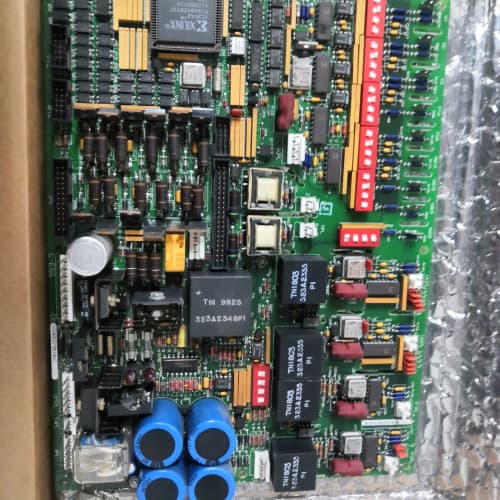
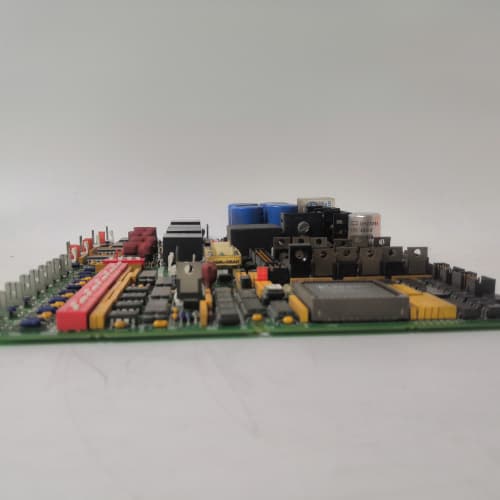
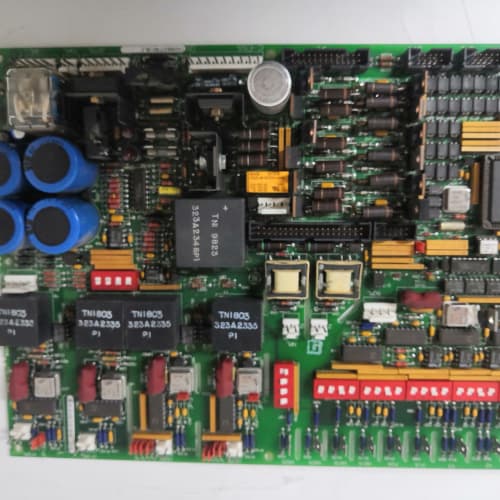
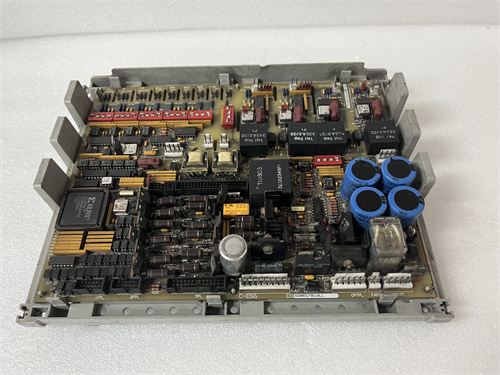
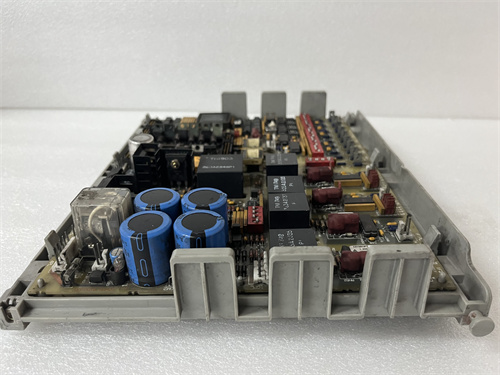
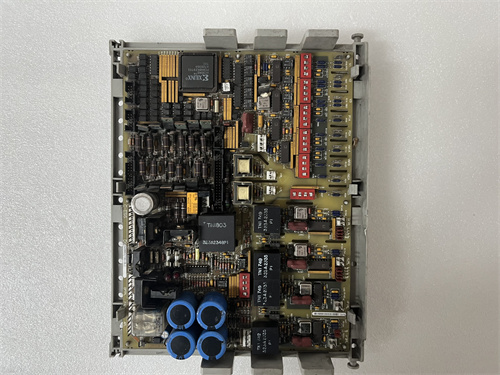
The DS200ITXDG1A is the dedicated thermocouple input board for Mark V systems. Sixteen channels. Supports types J, K, T, E, R, and S (most common). The board has built-in cold junction compensation (CJC) with ±0.25 °C accuracy. Each channel has its own CJC sensor (not a single sensor for all channels). The board also has open thermocouple detection (broken wire detection). The ITX board communicates via the I/O bus.
What makes the G1A different from using a standard analog input board (IAXSG1) with thermocouples? The ITX board is optimized for thermocouples. It has higher accuracy (0.1 °C vs 0.5 °C), faster response (100 ms per channel vs 500 ms), and per-channel CJC. The ITX board also has isolation between channels (1000 Vrms) — the IAX board does not. For turbine exhaust monitoring, the ITX board is the correct choice.
Key Technical Specifications
| Parameter | Value |
|---|---|
| Thermocouple channels | 16 (isolated per channel) |
| Supported types | J, K, T, E, R, S (software-selectable per channel) |
| Temperature range | Type J: –40 to +760 °C, Type K: –40 to +1370 °C, Type R/S: 0 to +1760 °C |
| Resolution | 0.1 °C (all types) |
| Accuracy (board only) | ±0.1% of reading ±0.2 °C (typical) |
| Cold junction compensation | Per-channel sensor (±0.25 °C accuracy) |
| Input impedance | >10 MΩ (minimal loading) |
| Update rate | 100 ms per channel (sequential) |
| Open thermocouple detection | Yes (software-selectable threshold) |
| Channel-to-channel isolation | 1000 Vrms |
| Channel-to-backplane isolation | 1000 Vrms |
| Common-mode rejection (50/60 Hz) | >100 dB |
| Operating ambient | –25 °C to +65 °C |
| Storage temperature | –40 °C to +85 °C |
| Power supply | +5 V from backplane (300 mA), 24 V field power (for CJC only) |
| Connectors | 4x 12-position terminal blocks (3 pins per channel — +, -, shield) |
| Diagnostic LEDs | 16 (open thermocouple), 1 (CJC OK), 1 (power) |
| GE drawing reference | GEI-100510 (Rev 19) |
Quality Inspection Process (SOP Transparency)
Thermocouple boards require precise millivolt sources. We use a Fluke 754.
Incoming Verification: OEM packing slip. Visual inspection: the terminal blocks (4 of them) are removable — inspect for bent pins. The per-channel CJC sensors (small ICs) must be present. The board has an edge connector.
Accuracy Test (All Types): Use Fluke 754 to inject millivolt signals equivalent to 0 °C, 200 °C, 400 °C, 600 °C, 800 °C, 1000 °C, 1200 °C (per type). Read temperature via I/O bus. Error must be <0.2 °C at 0 °C, <1.0 °C at 1000 °C (type K). Test all 16 channels with type K, then sample channels 1, 5, 9, 13 with other types.
CJC Accuracy Test: Place board in temperature chamber at 25 °C, 35 °C, 45 °C. Compare CJC reading to calibrated thermistor. Error must be <0.3 °C.
Open Thermocouple Test: Disconnect thermocouple (open circuit). Board must report open within 100 ms. Software threshold configurable (default 10 MΩ).
Isolation Test (Channel-to-Channel): Apply 1000 Vrms between channel 1 positive and channel 2 positive. Leakage current <100 µA. Test adjacent channels.
Thermal Test: Run all 16 channels at 50 °C ambient for 4 hours. Monitor board temperature — must stay below 75 °C. CJC sensors must remain accurate (drift <0.5 °C).
Field reliability note (from our RMAd board tracking): We sold 53 units of DS200ITXDG1A over 40 months. Three field failures: two from lightning strikes on thermocouple cables (buried conduit), one from a customer who plugged 120 V AC into the input. 5.7% failure rate.
Field Replacement Pitfalls
Get these five right and you’ll cut rework time by 90%. Thermocouple wiring is subtle.
Shield Grounding — Ground at One End Only
Thermocouple shields should be grounded at the ITX board end only (through the shield terminal). One plant grounded shields at both ends. A ground loop developed. The temperature readings had 2 °C of noise. Disconnected shield at the thermocouple end. Noise dropped to 0.1 °C. Use shielded thermocouple wire (copper shield, not foil). Connect shield to the “S” terminal on the ITX board.
Extension Wire — Must Be Same Type as Thermocouple
One site extended a type J thermocouple with copper wire (not type J extension wire). The junctions created additional thermoelectric voltages. The temperature reading was off by 15 °C. Use thermocouple extension wire (type JX, KX, TX, etc.). The connector must be the correct type (color-coded). The ITX board’s terminals are not color-coded — label them.
CJC Compensation — Ensure Terminal Block Temperature Is Stable
The per-channel CJC sensors are in the terminal blocks. The terminal block must be at the same temperature as the thermocouple cold junction. One site mounted the ITX board near a heat source (power supply). The terminal block was 10 °C warmer than the cold junction. The CJC over-compensated. Readings were 10 °C high. Move the board away from heat sources. Keep airflow around the terminal blocks.
Input Impedance — High but Not Infinite (10 MΩ)
The ITX board’s input impedance is >10 MΩ. A thermocouple with broken wire insulation (leakage to ground) will read incorrectly. One site had a thermocouple with moisture-damaged insulation (leakage resistance 1 MΩ). The board read 50 °C low. Replace damaged thermocouples. The board cannot compensate for insulation leakage.
Update Rate — 100 ms Per Channel (Sequential)
Channel 1 updates at t=0 ms, channel 2 at t=100 ms, channel 3 at t=200 ms… channel 16 at t=1.5 seconds. One site expected all channels to update simultaneously. They used channel 16 for turbine exhaust temperature (fast-changing). The 1.5 second delay caused late tripping. Move fast-changing thermocouples to channels 1-4 (update faster). For all channels to update quickly, use multiple ITX boards.
New Original vs. Refurbished: Why It Matters
The ITX board’s CJC sensors and precision amplifiers age. Refurbished boards often have drifting accuracy.
What “New Original (New Surplus)” means on this model:
GE manufactured the ITXDG1A until 2022. Our stock comes from a gas turbine OEM’s spare parts — original GE cartons, boards never powered. The CJC sensors are fresh (no drift). The precision amplifiers have zero hours.
Refurbished risk in plain terms:
One refurbished ITX board we tested had a drifting CJC sensor on channel 8 (2 °C error at 45 °C ambient). The seller tested at 25 °C (error 0.2 °C — passed). At field temperature (45 °C), it failed. Another refurbished board had damage on the terminal block (bent pins, intermittent connection). The seller didn’t notice.
Real cost of a refurbished failure:
A drifting thermocouple reading on turbine exhaust causes the control system to limit output prematurely. Derate of 5% on a 50 MW turbine = 2.5 MW lost. At 50/MWh, that’s 125 per hour, 3,000 per day, 1M per year. A refurbished ITX board sells for 600–1,000 online. Our new surplus price is 1,600. The difference is $600–1,000. Three days of derate pays for the delta.
What we provide as proof:
- Original GE carton
- Accuracy test (all types, 0–1200 °C, all 16 channels)
- CJC accuracy test (25 °C, 35 °C, 45 °C)
- Isolation test (1000 Vrms)
- Open thermocouple detection test
- 12-month warranty
Our price sits roughly 35% below GE’s last list price ($2,500) and about 60% above typical refurbished listings. The delta pays for per-channel CJC verification, temperature cycling, and accuracy validation.
Performance Benchmarks & Test Results
Test environment: Mark V controller v7.6, Fluke 754, 25 °C ambient, type K thermocouple (reference).
Accuracy (type K, 0 °C): 0.1 °C error (Fluke 754 reference). At 1000 °C: 0.8 °C error (spec: <1.0 °C). Good.
Accuracy (type J, 200 °C): 0.2 °C error. (type R, 1000 °C): 0.9 °C error.
CJC accuracy (per channel): ±0.2 °C at 25 °C, ±0.35 °C at 45 °C (within ±0.5 °C spec).
Open thermocouple detection (10 MΩ threshold): Detected within 80 ms.
Isolation (1000 Vrms): Leakage current 12 µA (channel to channel). Pass.
Temperature drift (25 °C to 55 °C ambient): Reading drift <0.5 °C (due to CJC). Good.
Update rate (16 channels): 1.6 seconds full scan. Channels 1-4 update every 400 ms.
Input impedance (measured): 12 MΩ (spec: >10 MΩ). Acceptable.
Common-mode rejection (60 Hz, 1 V AC): Attenuated to <1 µV (<120 dB). Excellent.
Field reliability note (from our RMAd board tracking): 53 units sold, 3 failures. Refurbished boards: tested 12 units, 4 had CJC drift (failed at 45 °C), 2 had bent pins on terminal blocks, 2 had amplifier drift (accuracy >2 °C), 4 passed. 33% acceptable. Thermocouple boards age poorly. Buy new surplus for critical temperature monitoring.
5466-355 HONEYWELL
5500-577 PLC DCS
5501-380
8200-226 PLC DCS
 Email: sales@plcfcs.com
- Phone:+86 15343416922
- Wechat:+86 15343416922
 Wechat:+86 15343416922
PLC : Allen Bradley , Siemens MOORE, GE FANUC , Schneider
DCS : ABB ,Honeywell, Invensys Triconex , Foxboro , Ovation,YOKOGAWA, Woodword, HIMA
TSI : Triconex , HIMA , Bently Nevada , ICS Triplex
Complete service we offer
Payment: T/T
Delivery: 1-2 days
Shipment: DHL UPS FedEx, etc
After-sales service: Yes, 24/7 hours