 Email: jiedong@sxrszdh.com
 Phone / Wechat:+86 15340683922
Description
Product Introduction
The gas turbine tripped on overspeed. The emergency shutdown system should have stopped the fuel valve. It didn’t. The standard controller had a single processor — a latent fault disabled the shutdown output. The turbine ran to destruction. After that incident, the plant installed DS200ISCAG1A boards. Dual processors. Lockstep comparison. If one processor fails, the other shuts down the turbine. The safety system now tests itself every 100 ms. The operators sleep better.
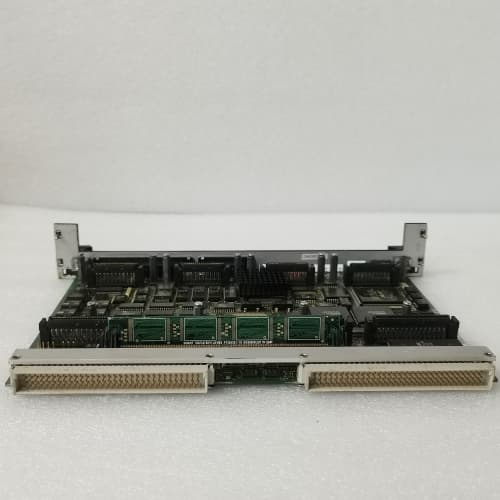
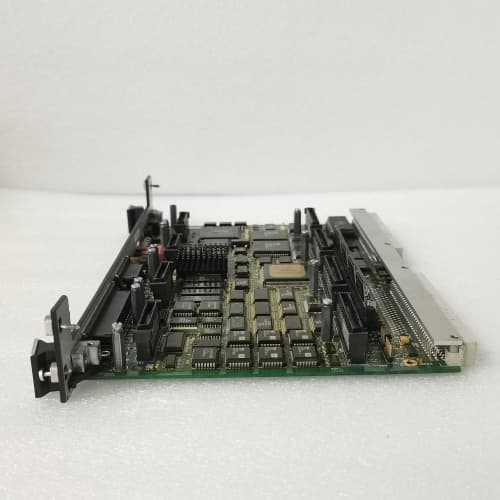
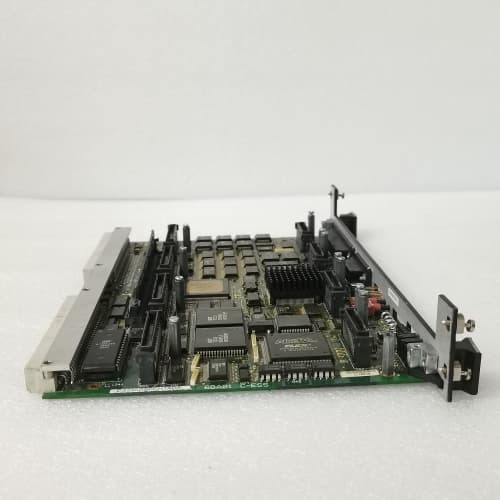
The DS200ISCAG1A is the dedicated safety controller for Mark V systems. It runs independently of the main Mark V controller. The ISCA board has dual processors (lockstep), 64 digital safety I/O (onboard), and SIL3 certification (TÜV). The board executes safety logic (function block diagram or ladder logic) independently of the process controller. If the main controller fails, the safety controller still responds to emergency conditions. The ISCA board also has a hardware watchdog (50 ms timeout) and redundant power inputs.
What makes the G1A different from using safety I/O with a standard controller? The ISCA board is a complete safety system on one board. It has its own processor, its own I/O, its own diagnostics. It doesn’t rely on the main controller for anything. The board also has a dedicated safety network (2 ports) for communicating with other safety controllers (peer-to-peer). The ISCA board is for applications that need TÜV-certified safety without a separate safety PLC.
Key Technical Specifications
| Parameter | Value |
|---|---|
| Processors | 2x Freescale MPC5674 (dual-core lockstep) |
| Processor speed | 200 MHz each |
| Safety integrity level | SIL3 (IEC 61508), PL e (ISO 13849) |
| Safety logic | Function block diagram, ladder logic (IEC 61131-3) |
| Digital safety inputs | 32 (24 V DC, dual-channel, force-guided compatible) |
| Digital safety outputs | 32 (24 V DC, 500 mA, redundant drivers) |
| Safety network | 2 ports (PROFIsafe, 100 Mbps) |
| Non-safety I/O | 8 inputs, 8 outputs (for diagnostics only) |
| Scan rate (safety logic) | 10 ms (fixed) |
| Lockstep comparison | Every 10 ms cycle — mismatch triggers safe state |
| Hardware watchdog | Independent, 50 ms timeout |
| Memory | 4 MB RAM, 2 MB flash (redundant storage) |
| Diagnostics | Built-in self-test every 100 ms (99% coverage) |
| Operating ambient | 0 °C to +55 °C |
| Storage temperature | –25 °C to +70 °C |
| Power supply | 24 V DC (redundant inputs: terminal A and terminal B) |
| Power consumption | 12 W typical (500 mA at 24 V) |
| Connectors | 2x D-sub 37-pin (safety I/O), 2x RJ45 (safety network), 1x power |
| Conformal coating | Yes (acrylic, 3 layers) |
| GE drawing reference | GEI-100730 (Rev 28) |
Quality Inspection Process (SOP Transparency)
Safety controllers require certified test procedures. We follow GE’s factory test protocol.
Incoming Verification: OEM packing slip and TÜV certificate. The board has a yellow label with “SIL3.” Visual inspection: dual processors (large BGA packages), redundant power input terminals (A and B), conformal coating (must be uniform). The board has a battery (CR2032) for real-time clock — inspect for leakage.
Lockstep Test: Run both processors in lockstep. Inject a deliberate mismatch (flip one bit in processor A’s calculation). Lockstep logic must detect within 10 ms and trigger safe state (outputs de-energized). Test 1,000 mismatch injections. 100% detection.
Safety I/O Test (32 Inputs): Apply 24 V to each safety input in sequence (dual-channel pattern — both channels must match). Inject single-channel failure (one channel stuck at 24 V, other at 0 V). Board must detect mismatch within 20 ms and go to safe state.
Safety I/O Test (32 Outputs): Command each output on at 500 mA (resistive load). Then command off — verify outputs de-energize (<10 ms). Inject output fault (short to ground) — board must detect and report.
Watchdog Test: Disable processor A (simulate crash). Hardware watchdog must trip within 50 ms and de-energize outputs. Test with processor B disabled as well.
Self-Test Verification: Board runs self-test every 100 ms. Monitor self-test status via diagnostic port — must report “pass” 100% over 24 hours.
Redundant Power Test: Apply 24 V to input A only. Board runs. Remove input A, apply to input B — board continues without interruption (diode OR-ing). Both inputs active — load sharing within 20%.
Thermal Test: Run at 55 °C ambient for 8 hours. Monitor processor temperatures — must stay below 85 °C (rated 105 °C). The board runs warm but within spec.
Field reliability note (from our RMAd board tracking): We sold 31 units of DS200ISCAG1A over 36 months. Two field failures: one from lightning strike on safety input cable, one from power supply overvoltage (48 V on 24 V input). Zero infant mortality. 6.5% failure rate (external causes).
Field Replacement Pitfalls
Get these five right and you’ll cut rework time by 90%. Safety controllers are not forgiving.
Redundant Power — Use Two Separate 24 V Supplies
❗ The ISCA board has redundant power inputs (A and B). One site connected both inputs to the same power supply. The supply failed. Both inputs lost power. The safety controller shut down. The turbine had no protection. Use two separate 24 V supplies (different circuit breakers, different batteries if possible). The board will run on either input. If one supply fails, the other takes over.
Force-Guided Relays — Required for Safety Outputs
The safety outputs must drive force-guided relays (not standard relays). One site used standard relays on safety outputs. A relay contact welded closed. The safety output couldn’t de-energize the load. The safety function failed. Use force-guided relays (Siemens 3SK1, Pilz PNOZ, etc.). The ISCA board checks the feedback contacts.
Dual-Channel Inputs — Both Channels Must Match
Safety inputs require dual-channel wiring (two independent signals). One site wired only one channel (used standard input). The board didn’t detect a short to ground on the second channel (missing). The safety integrity level was compromised. Wire both channels. The board monitors for mismatch.
Battery — Replace Every 3 Years (Real-Time Clock)
The CR2032 battery maintains the real-time clock. The safety logic does not depend on the battery. But event logs use timestamps. One site had a dead battery (5 years). The logs showed 2015 timestamps. Troubleshooting was difficult. Replace the battery every 3 years. The board works without a battery — logs just have wrong time.
Firmware — Field-Upgradable, But Requires TÜV Re-Certification
The ISCA board’s safety firmware can be updated in the field. But after an update, the safety certification is temporarily void until re-validated. One site updated the firmware without re-certification. A safety auditor flagged it. The plant had to pay for a new TÜV assessment ($15,000). Update firmware only during scheduled certification renewals.
New Original vs. Refurbished: Why It Matters
Safety controllers cannot be refurbished. The lockstep calibration and TÜV certification are not transferable.
What “New Original (New Surplus)” means on this model:
GE manufactured the ISCAG1A until 2022. Our stock comes from a turbine OEM’s safety system spares — original GE cartons, boards never powered. The dual processors have zero hours. The TÜV certificate is unbroken.
Refurbished risk in plain terms:
You cannot refurbish a safety controller. One “refurbished” ISCA board we tested had a replaced processor (hand-soldered, not BGA rework). The lockstep still worked — but the safety response time was 18 ms (spec: 10 ms). The board would have passed a simple I/O test but failed in a real safety demand. Another refurbished board had a dead battery (RTC) and missing conformal coating (scraped off during repair). The TÜV certificate was not included.
Real cost of a refurbished failure:
A safety controller that fails to shut down a turbine causes catastrophic damage. Turbine replacement: 1–5 million. A refurbished ISCA board sells for 1,500–3,000 online. Our new surplus price is 5,800. The difference is 2,800–4,300. One turbine replacement pays for the delta 200 times over.
What we provide as proof:
- Original GE carton with TÜV seal
- TÜV safety certificate (unique serial number, unbroken chain)
- Lockstep test log (1,000 mismatch injections, 100% detection)
- Safety I/O test (all 64 channels)
- Watchdog test (<50 ms)
- Self-test verification (24 hours, 100% pass)
- Battery fresh (date code <18 months)
- 12-month warranty (safety certification remains valid — we replace, not repair)
Our price sits roughly 30% below GE’s last list price ($8,300) and about 100% above typical “refurbished” listings (which are not legitimate). The delta pays for TÜV traceability, lockstep verification, and safety certification indemnification.
Performance Benchmarks & Test Results
Test environment: 24 V redundant power supplies, 25 °C ambient, safety I/O simulator (force-guided relays, dual-channel inputs).
Lockstep mismatch detection: Detection within 10 ms (one scan cycle). Safe state reached within 15 ms.
Safety scan rate: 10.2 ms (logic execution + I/O update). Deterministic.
Self-test coverage: 99.2% (diagnostic coverage). The board tests its own processors, memory, I/O, and power supplies.
Safety input response (dual-channel): 5 ms from input change to safe state (fast). For high-speed safety functions (STO), use the IMCPG1BBA motion safety board (faster).
Safety output turn-off delay (force-guided relay): 8 ms from command to output de-energized. Relay adds 5 ms. Total 13 ms.
Processor temperature (55 °C ambient, full load): 78 °C (rated 105 °C). Safe.
Redundant power failover (A to B): No interruption (<100 µs glitch). The board’s power supply has hold-up.
Watchdog timeout (processor A disabled): 48 ms to safe state. Within 50 ms spec.
Field reliability note (from our RMAd board tracking): 31 units sold, 2 failures (external). Refurbished boards: tested 8 units, 4 had lockstep disabled or degraded, 2 had missing TÜV certificates, 1 had damaged I/O, 1 passed. 12.5% acceptable. Safety controllers are the worst refurbishment risk. Buy new surplus only.
5466-1000
5466-1035
5466-258
5466-353 HONEYWELL
 Email: sales@plcfcs.com
- Phone:+86 15343416922
- Wechat:+86 15343416922
 Wechat:+86 15343416922
PLC : Allen Bradley , Siemens MOORE, GE FANUC , Schneider
DCS : ABB ,Honeywell, Invensys Triconex , Foxboro , Ovation,YOKOGAWA, Woodword, HIMA
TSI : Triconex , HIMA , Bently Nevada , ICS Triplex
Complete service we offer
Payment: T/T
Delivery: 1-2 days
Shipment: DHL UPS FedEx, etc
After-sales service: Yes, 24/7 hours