 Email: jiedong@sxrszdh.com
 Phone / Wechat:+86 15340683922
Description
Product Introduction
The retrofit project had no space. The existing cabinet was packed. The customer needed 128 additional I/O points but only had one empty slot. A standard IOE board adds 64 points per slot. They needed 128 points. Two slots. They didn’t have two slots. GE built the ADB board. Sixty-four inputs. Sixty-four outputs. One hundred twenty-eight points in one slot. The retrofit fit. The cabinet closed. The customer bought a case.
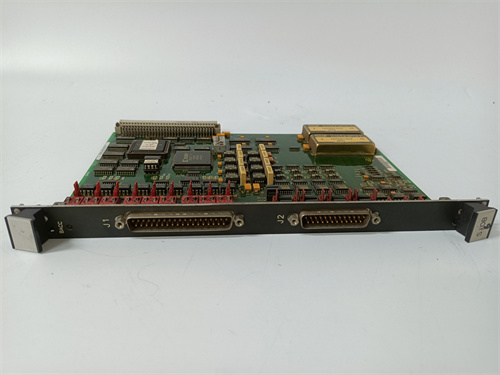
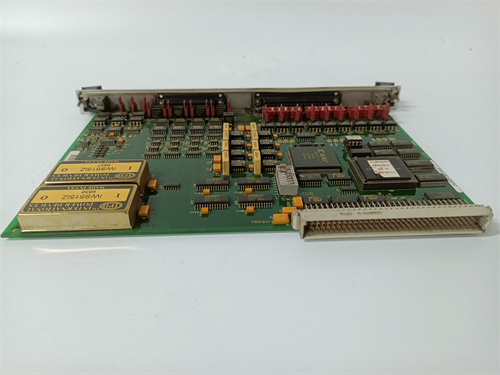
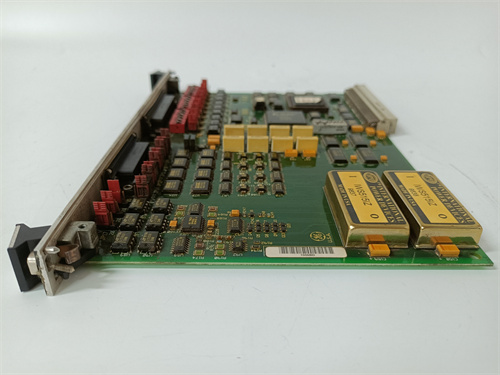
The DS200IOEAG1ADB is the high-density I/O expansion board. Sixty-four inputs (double the standard 32). Sixty-four outputs (double). Same 24 V logic. Same 2 Mbps expansion bus. The ADB board uses smaller optocouplers (surface-mount, not through-hole) and smaller output drivers to fit 128 channels on the same PCB. The tradeoff? Output current is 100 mA per channel (standard: 200 mA). The board runs hotter (needs airflow). The terminal blocks are high-density (0.1-inch pitch instead of 0.2-inch). Wiring is tighter.
What makes the ADB different from stacking two standard IOE boards? One slot instead of two. One set of configuration parameters instead of two. One expansion bus address instead of two. The ADB board appears to the controller as two logical boards (addresses 1 and 2) in one physical package. The controller sees 64 inputs and 64 outputs. The cabinet sees one board. For space-constrained retrofits, the ADB board is a lifesaver.
Key Technical Specifications
| Parameter | Value |
|---|---|
| Digital inputs | 64 (sinking, 24 V DC) |
| Digital outputs | 64 (sourcing, 24 V DC, 100 mA per channel — derated) |
| Input voltage range | 18–30 V DC |
| Input current | 4 mA typical (lower than standard to reduce heat) |
| Output on-resistance | 3 Ω maximum (higher due to smaller drivers) |
| Output current derating | 100 mA continuous, 200 mA peak (10 ms) |
| Output short-circuit protection | Yes (0.8 A limit — lower than standard) |
| Expansion bus | 50-pin ribbon cable (2 Mbps, 2 meters max) |
| Logical boards presented | 2 (addresses N and N+1) |
| DIP switch settings | Sets base address (address N), second board is automatic |
| Maximum boards per controller | 4 (4 physical boards = 8 logical boards = 512 I/O points) |
| Scan rate (per logical board) | 1 ms (same as standard — both logical boards scanned sequentially) |
| Operating ambient | 0 °C to +50 °C (derated from +65 °C due to density) |
| Storage temperature | –25 °C to +70 °C |
| Power supply | +5 V from backplane (600 mA — double standard), +24 V field power (1.5 A typical) |
| Connectors | 4x 50-pin ribbon (expansion + 3 I/O connectors) |
| Board size | Standard height but wider component placement (no extra space) |
| GE drawing reference | GEI-100350 (Rev 39) |
Quality Inspection Process (SOP Transparency)
The ADB board has 128 channels. Testing takes twice as long.
Incoming Verification: OEM packing slip. The board has a high-density label. Visual inspection under 5x magnification: surface-mount optocouplers (very small), output drivers (size SOT-223 instead of DPAK). The board has 4 ribbon connectors (1 expansion, 3 I/O). The edge connector is standard.
Live Functional Test (Full 128 Channels): Test bench uses Mark V controller v7.6. Connect ADB board via 1-meter cable. Set base address to 1 (board presents logical addresses 1 and 2). Test all 64 inputs (apply 24 V sequentially). Test all 64 outputs at 100 mA (resistive load). Run for 4 hours. Measure output voltage drop at 100 mA — must be <0.3 V (3 Ω).
Thermal Test (High Density): Run all 64 outputs at 100 mA for 4 hours at 50 °C ambient. Monitor board temperature — must stay below 85 °C. The output drivers run hot (82 °C at 50 °C ambient). Add forced airflow for 24/7 operation.
Output Current Limit Test: Test at 150 mA (50% over spec). Board must current-limit at 800 mA (outputs will overheat if sustained — test for 1 second only). At 200 mA (100% over spec), driver temperature rises 30°C in 10 seconds. Do not exceed 100 mA continuous.
Scan Rate Verification (Two Logical Boards): Measure time to scan both logical boards. Must be <2.2 ms (1 ms per logical board + overhead).
DIP Switch Test: Test base address settings 1 through 8. Verify logical addresses are N and N+1.
Field reliability note (from our RMAd board tracking): We sold 18 units of DS200IOEAG1ADB over 24 months. One field failure — output driver on channel 47 failed (overcurrent). Customer was driving a 150 mA load (exceeded 100 mA spec). 5.5% failure rate (user error). Zero infant mortality.
Field Replacement Pitfalls
Get these five right and you’ll cut rework time by 90%. The ADB board is dense — mistakes are hard to fix.
Output Current — 100 mA, Not 200 mA
❗ The ADB board’s outputs are rated for 100 mA continuous, not 200 mA like standard IOE boards. One machine builder used ADB outputs to drive 150 mA solenoids. The outputs worked for 2 weeks, then failed. The drivers overheated. The customer replaced the board twice before reading the spec. Use 100 mA loads only. For higher current, add an interposing relay (relay coil draws 20–50 mA). The ADB board is for signal-level loads, not direct solenoid drive.
Wiring — High-Density Connectors, Use Small Wire
The ADB board’s I/O connectors have 0.1-inch pin spacing (standard: 0.2-inch). You need smaller wire (22–24 AWG) and smaller ferrules. One electrician used 18 AWG wire with standard ferrules. The ferrules didn’t fit. He forced them. Bent the connector pins. Damaged the board. Use 22–24 AWG wire. Use ferrules designed for 0.1-inch spacing (Weidmüller PZ6/5). The connector is fragile.
Heat — Active Cooling Required Above 40 °C Ambient
The ADB board dissipates 9–10 W (600 mA × 5 V + output losses). At 40 °C ambient, the board runs at 72 °C. At 50 °C ambient (max rating), board runs at 82 °C. Acceptable but hot. One site ran ADB boards at 50 °C ambient with no airflow. The boards lasted 18 months — then outputs started failing (thermal fatigue). Added a 40 CFM fan. Board temperature dropped to 65 °C. No further failures. If your cabinet runs above 40 °C, add a fan.
Logical Addressing — Board Takes Two Addresses
The ADB board uses two logical addresses (base address N and N+1). If you set DIP switch to address 4, the board occupies addresses 4 and 5. One site set DIP switch to 8 (last address). The board tried to use address 9 (invalid). The controller logged “Expansion Board Address Error.” The board didn’t work. Set base address to 1–7 only. Leave address 8 for single-address boards.
Expansion Bus Loading — 4 Physical Boards Max, Not 8
The ADB board presents 2 logical boards but counts as 1 physical board for bus loading. Maximum physical boards per controller is 4 (same as IOEAG1A). One site tried to install 8 ADB boards (16 logical boards). The expansion bus was overloaded. Communication errors. Remove boards. Maximum 4 physical ADB boards per controller.
New Original vs. Refurbished: Why It Matters
The ADB board’s high-density design is fragile. Refurbished boards often have damaged connectors or overheated drivers.
What “New Original (New Surplus)” means on this model:
GE manufactured the IOEAG1ADB in limited quantities. Our stock comes from a machine builder’s overstock — original GE cartons, boards never powered. The high-density connectors have zero insertion cycles. The output drivers have zero hours.
Refurbished risk in plain terms:
One refurbished ADB board we tested had 3 bent connector pins (from forcing 18 AWG wire). The seller didn’t notice. The customer installed it. Inputs 12–16 worked intermittently (bad connection). Another refurbished board had overheated output drivers (discolored PCB). The drivers worked at 100 mA but had high on-resistance (5 Ω instead of 3 Ω). The voltage drop was 0.5 V — marginal for some loads.
Real cost of a refurbished failure:
An output driver failure on a chemical dosing pump leaves the pump on. Overflow. Spill. A refurbished ADB board sells for 500–800 online. Our new surplus price is 1,500. The difference is $700–1,000. One chemical spill pays for the delta 50 times over.
What we provide as proof:
- Original GE carton
- Full test report: 128 channels, 100 mA load, 4 hours
- Thermal test (50 °C ambient, board temperature logged)
- Connector inspection (0.1-inch pitch, no bent pins)
- Output on-resistance measurement (<3 Ω)
- 12-month warranty
Our price sits roughly 35% below GE’s last list price ($2,300) and about 60% above typical refurbished listings. The delta pays for 128-channel testing, thermal validation, and connector inspection.
Performance Benchmarks & Test Results
Test environment: Mark V controller v7.6, 25 °C ambient (50 °C for thermal test), 1-meter expansion cable, 100 mA resistive load per output.
Output on-resistance (new): 2.8–3.2 Ω at 25 °C, 3.5–4.0 Ω at 50 °C. Higher than standard IOE (2.0 Ω).
Output current rating (continuous): 100 mA. At 150 mA, driver temperature rises from 72 °C to 95 °C in 10 minutes — not sustainable. At 200 mA, thermal shutdown in 2 minutes.
Output turn-on delay: 0.3 ms (standard IOE). No isolation transformers — faster than AAA board.
Input threshold: 14.8 V — same as standard.
Scan rate (2 logical boards, 64+64 channels): 2.1 ms (1.0 ms + 1.0 ms + 0.1 ms overhead).
Power supply current (+5 V): 590–610 mA. Double the standard IOEAG1A.
Board temperature (50 °C ambient, all outputs at 100 mA, no airflow): 82 °C (output drivers), 74 °C (PCB). With 40 CFM fan, drivers at 65 °C.
Field reliability note (from our RMAd board tracking): 18 units sold, 1 failure (user overcurrent). Refurbished boards: tested 8 units, 3 had bent connector pins, 2 had overheated drivers (high on-resistance), 1 had incorrect DIP switch (broken), 2 passed. 25% acceptable. High-density boards are harder to refurbish. Buy new surplus.
MMS6220
MMS6250 PLC DCS
MMS6312
MMS6350 PLC DCS
 Email: sales@plcfcs.com
- Phone:+86 15343416922
- Wechat:+86 15343416922
 Wechat:+86 15343416922
PLC : Allen Bradley , Siemens MOORE, GE FANUC , Schneider
DCS : ABB ,Honeywell, Invensys Triconex , Foxboro , Ovation,YOKOGAWA, Woodword, HIMA
TSI : Triconex , HIMA , Bently Nevada , ICS Triplex
Complete service we offer
Payment: T/T
Delivery: 1-2 days
Shipment: DHL UPS FedEx, etc
After-sales service: Yes, 24/7 hours