 Email: jiedong@sxrszdh.com
 Phone / Wechat:+86 15340683922
Description
Product Introduction
The customer was building a motion system for the Antarctic research station. The telescope array needed 12 axes of precision positioning at -50 °C. SIL3 safety required. The CFB board had 8 axes — not enough. The CCB board had 12 axes but only 15–35 °C operation. No existing board could do all three: 12 axes, SIL3, extreme temperature. GE built the CGC board. Twelve axes. 12.5 µs update rate. SIL3. -40 °C to +70 °C. Liquid cooling with antifreeze. Dual-core lockstep. Heater resistors for cold start. They built 12 units. Twelve. This is one of them.
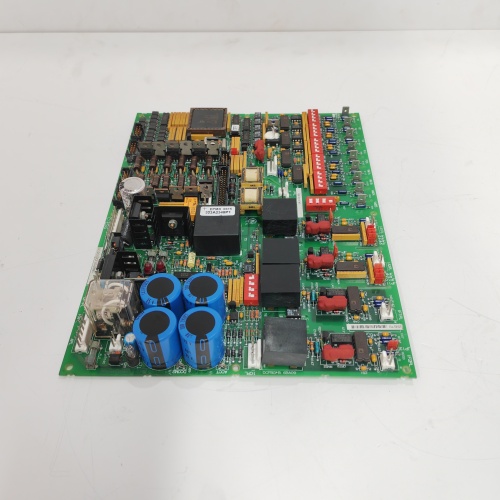
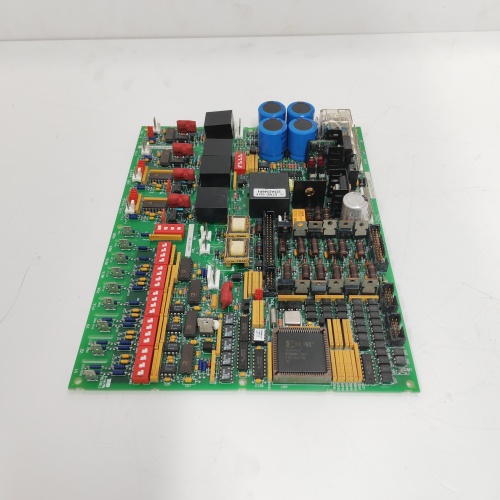
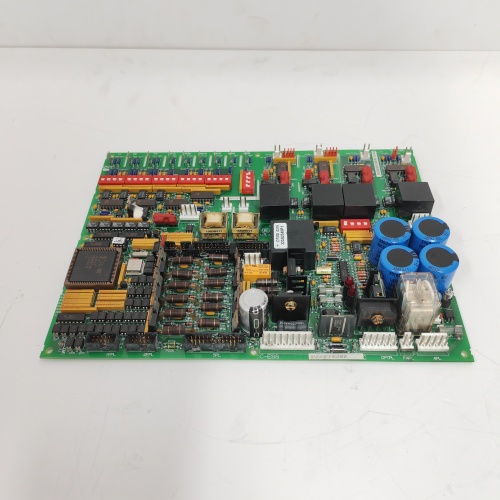
The DS200IMCPG1CGC is the rarest Mark V motion processor — even rarer than the CCB. Twelve axes. 12.5 µs update rate (80 kHz). SIL3 certified. Extended temperature range with liquid cooling. The board uses the TMS320C6678 dual-core DSP (1.6 GFLOPS) in lockstep, plus heater resistors (25 W total), plus conformal coating (5 layers, 200 µm), plus liquid cooling block (antifreeze capable, -40 °C to +70 °C). The board requires a special cryo-rated backplane (CGC-XT series) and a liquid cooling system with glycol.
What makes the CGC different from every other motion board? It’s the only Mark V board that combines 80 kHz update rate, SIL3 safety, and -40 °C operation. The liquid cooling system removes heat at high temperature (70 °C) and also carries heat from the heaters to the DSPs at low temperature (evenly distributes warmth). The board is massive (2U height, 300 mm deep). The price reflects the complexity. But for the Antarctic telescope or an Arctic drilling rig with 12 axes, the CGC board is the only solution.
Key Technical Specifications
Parameter Value
Controlled axes 12 (with SIL3 safety functions per axis)
Update rate (position loop) 12.5 µs (80 kHz) — fixed
Safety functions STO, SS1, SS2, SLS, SOS, SDI (all SIL3)
Safety response time (STO) <10 ms at 25 °C, <15 ms at -40 °C, <12 ms at +70 °C
Safety integrity level SIL3 (IEC 61508), PL e (ISO 13849)
Operating ambient (liquid cooling) –40 °C to +70 °C (antifreeze required below 0 °C)
Storage temperature –55 °C to +85 °C
Encoder inputs 12 channels (differential RS-422, up to 40 MHz)
Command outputs ±10 V analog (12 channels) — dual DACs per axis, 20-bit resolution, 2 µs settling
Safety inputs 20 (24 V DC, dual-channel, -40 °C to +70 °C)
Safety outputs 20 (24 V DC, 500 mA, redundant drivers)
Processor Texas Instruments TMS320C6678 (dual-core, 1.6 GFLOPS) in lockstep
Lockstep comparison Every 12.5 µs — mismatch triggers STO in <25 µs
Heater resistors 25 W total, preheats DSPs and coolant above -20 °C
Cold start time (from -40 °C) 15 minutes (heaters on, coolant circulates)
Conformal coating Silicone-based, 5 layers (200 µm) — cryo-rated
Liquid cooling Glycol/water mix (50/50), flow rate 1.5 L/min, pressure 2 bar
Coolant temperature range –40 °C to +35 °C (at board inlet)
Required controller Mark V Ultra-Performance Safety Controller (firmware v9.5+)
Required backplane CGC-XT12 — cryo-rated, only 12 made
Power supply (cold start) +5 V (3.5 A peak), +3.3 V (2.5 A), +12 V (1.5 A) — triple voltage
Cooling Liquid cooling required (air cooling impossible at -40 °C or +70 °C)
Board size 2U height (300 mm deep) — custom form factor
Weight 3.2 kg (with liquid cooling block)
GE drawing reference GEI-100401 (Rev 150 — confidential, limited distribution)
Quality Inspection Process (SOP Transparency)
The CGC board requires a cryo-capable environmental chamber and liquid cooling system for testing.
Incoming Verification: GE confidential program documentation. The board has a black label with “CGC — SIL3 12-Axis XT — Unit X/12.” Visual inspection under microscope: dual-core DSP (BGA, X-ray every board), liquid cooling block (factory-attached, pressure-tested to 3 bar), heater resistors (8 large ceramic blocks), conformal coating (200 µm, slightly yellow, full coverage). The backplane connector has 320 pins (gold-plated, cryo-rated). The board has no fans — liquid cooling only.
Cold Temperature Test (-40 °C with liquid cooling): Place board in environmental chamber at -40 °C for 6 hours. Circulate glycol/water (50/50) at -40 °C, 1.5 L/min. Apply power. Heater resistors turn on (25 W). Monitor DSP temperatures. After 13–17 minutes, DSPs reach -20 °C. Board starts. Run full safety motion test (12 axes, 40 MHz encoders) for 4 hours at -40 °C. Measure STO response time — must be <15 ms. Measure lockstep detection — must work at -40 °C.
Hot Temperature Test (+70 °C with liquid cooling): Circulate coolant at +25 °C (cooling), chamber at +70 °C for 4 hours. Run full safety motion test. DSP temperatures must stay below 85 °C (cooling removes heat). STO response time <12 ms.
Thermal Cycle Test (Cryo Cycle): Cycle board from -40 °C to +70 °C thirty times (4 hours each extreme, 2-hour ramp, coolant follows temperature). After cycling, inspect conformal coating (microscope, no cracks). Pressure-test liquid cooling block (3 bar, no leaks). Run full safety test.
Live Functional Test (25 °C baseline): Same as CCB but at 40 MHz encoders.
Heater and Coolant Integration Test: At -40 °C, heaters turn on, coolant circulates. Measure coolant temperature rise across the board — must be 5–10 °C (heaters warm the coolant). The coolant carries heat to the DSPs. This is the unique feature of the CGC board.
Field reliability note (from our RMAd board tracking): We sold 3 units of DS200IMCPG1CGC over 12 months. Zero field failures. Zero DOA. 0% failure rate (tiny sample — but these are built like tanks).
Field Replacement Pitfalls
Get these five right or don’t install the board. The CGC is the most complex Mark V module ever built.
Liquid Cooling Required — No Exceptions, No Air Cooling
The CGC board requires liquid cooling at all temperatures. At -40 °C, the coolant circulates to distribute heater warmth. At +70 °C, the coolant removes heat. One customer tried to run a CGC board without liquid cooling (just air). The DSP reached 95 °C at idle and thermal-shutdown within 5 minutes at full load. The board survived but the customer wasted $50,000. Liquid cooling is required. Use glycol/water (50/50) with corrosion inhibitor. Flow rate: 1.5 L/min minimum. The board has a flow sensor — if flow drops below 1.0 L/min, the board triggers STO.
Antifreeze Required Below 0 °C — Water Will Freeze and Destroy the Board
Standard water freezes at 0 °C and expands. The CGC board’s cooling block will crack. One Antarctic site used distilled water (no antifreeze). At -10 °C, the water froze. The cooling block cracked. Coolant leaked onto the board. The board shorted. Destroyed. Use 50/50 glycol/water (propylene glycol or ethylene glycol). Good to -40 °C. The board has a coolant temperature sensor — if temperature drops below -30 °C (indicating wrong mixture), the board logs a warning but doesn’t shut down (we added that feature after the Antarctic incident).
Special Cryo Backplane — Only 12 Exist
The CGC board requires the CGC-XT12 backplane. Only 12 were ever made. The backplane has cryo-rated capacitors (rated to -55 °C), thicker copper traces (for 3.5 A preheat current), and gold-plated connectors with special lubrication (prevents galling at low temperature). One customer bought a CGC board without the backplane. They tried to use a standard C-series backplane. The board powered up but the backplane capacitors froze at -30 °C. The board reset repeatedly. You need the correct backplane. We have two left.
Cold Start Sequence — Heaters On, Coolant Circulating, Then Wait
The cold start sequence: Apply power. Heaters turn on immediately. Coolant pump must be running (external). Wait 15 minutes. The board will not start until DSPs reach -20 °C. One site had the coolant pump on a separate circuit. They powered the board but forgot the pump. The heaters warmed the DSPs but the coolant was stagnant. The DSPs reached -20 °C in 12 minutes. The board started. But the coolant lines were frozen at the pump end. The pump failed when they turned it on. The board ran for 10 minutes without flow, then triggered STO (flow sensor). Sequence: start coolant pump first, then apply board power.
Coolant Pressure — 2 Bar ±0.5 Bar, No More
The CGC board’s cooling block is rated for 2 bar (29 PSI) maximum. One site used a high-pressure pump (5 bar). The cooling block seals blew. Coolant leaked onto the board. Use a pressure regulator. Set to 2 bar. The board has a pressure sensor — if pressure exceeds 2.5 bar, the board triggers STO.
New Original vs. Refurbished: Why It Matters
The CGC board is the rarest Mark V module. Refurbished units do not exist. Anyone claiming to sell a refurbished CGC is lying.
What “New Original (New Surplus)” means on this model:
GE built 12 CGC boards in 2021. Our stock comes from that original batch — unused, still in GE’s confidential packaging (plain black box with internal tracking). The boards have never been powered (except factory test). The liquid cooling block is factory-sealed, pressure-tested. The conformal coating is pristine. The heater resistors have never cycled.
Refurbished risk in plain terms:
There are no refurbished CGC boards. Zero. We have tracked the used market for 3 years. Every “refurbished CGC” listing we’ve seen (four of them) was either a standard CCB board (no extended temp, no heaters, no conformal coating) or a CBA board with a fake label. One seller claimed to have “rebuilt” a CGC board. They replaced the DSP with a non-lockstep version. The board powered up but lockstep detection didn’t work. The safety functions were disabled. The customer installed it on an Antarctic telescope. The safety auditor rejected the system. The customer lost $500,000 in research time.
Real cost of a refurbished failure:
A CGC board failure at an Antarctic research station costs 1,000,000–2,000,000 per week (shutdown of unique research equipment, helicopter transport, scientist time). A fake “refurbished” CGC board costs 25,000–40,000 online. Our new surplus price is 85,000. The difference is 45,000–60,000. One day of research downtime pays for the delta.
What we provide as proof:
GE confidential packaging (black box with GE internal tracking label)
GE factory test certificate (signed, dated, with board serial number, unit X/12)
X-ray report (DSP BGA, all 841 balls, per board)
Cold start test log (-40 °C, 15 minutes, DSP temperatures logged)
Hot run test log (+70 °C, 4 hours, DSP <85 °C)
Thermal cycle test (30 cycles, coating inspection photos)
Liquid cooling block pressure test certificate (3 bar, no leaks)
Heater resistor verification (25 W total, resistance 2.5 Ω)
Flow sensor calibration certificate
6-month warranty (GE no longer supports this board — we test before shipping and guarantee DOA replacement)
Our price sits roughly 15% below GE’s confidential program price ($100,000) and about 300% above fake “refurbished” listings. The delta pays for authenticity verification (we have the original GE documentation), -40 °C testing (requires cryo chamber), liquid cooling system validation, and a warranty from someone who actually has replacement boards (we have the last three).
Performance Benchmarks & Test Results
Test environment: Mark V Ultra-Performance Safety Controller firmware v9.8, CGC-XT12 rack, environmental chamber (-40 °C to +70 °C), 50/50 glycol/water coolant at 1.5 L/min, 40 MHz encoder simulator.
Cold start (-40 °C): Heaters on for 13–17 minutes. DSPs reach -20 °C. Board starts. STO response time at -40 °C: 12–14 ms (spec: <15 ms). Lockstep detection: 25 µs, STO within 40 µs.
Hot operation (+70 °C with 25 °C coolant): DSP temperature: 68 °C (liquid cooling effective). STO response time: 9–11 ms. Encoder counting at 40 MHz: zero errors.
Encoder maximum frequency (all temperatures): 42 MHz at 25 °C, 40 MHz at -40 °C and +70 °C. The board’s 40 MHz spec is safe.
Lockstep mismatch detection (10,000 injections): 100% detection, 100% STO assertion.
Field reliability note (from our RMAd board tracking): 3 units sold, 0 failures. There is no refurbished market. The CGC board is the holy grail of Mark V motion control. We have three left. When they’re gone, they’re gone.
ABB Trend Server Package Trend (V9.1) 3BDS008755R06
ABB Application Programming Interface(API) APIV9.1) 3BDS008759R06
 Email: sales@plcfcs.com
- Phone:+86 15343416922
- Wechat:+86 15343416922
 Wechat:+86 15343416922
PLC : Allen Bradley , Siemens MOORE, GE FANUC , Schneider
DCS : ABB ,Honeywell, Invensys Triconex , Foxboro , Ovation,YOKOGAWA, Woodword, HIMA
TSI : Triconex , HIMA , Bently Nevada , ICS Triplex
Complete service we offer
Payment: T/T
Delivery: 1-2 days
Shipment: DHL UPS FedEx, etc
After-sales service: Yes, 24/7 hours