 Email: jiedong@sxrszdh.com
 Phone / Wechat:+86 15340683922
Description
Product Introduction
The offshore drilling rig needed motion control for the pipe handling system. Arctic conditions. -35 °C. SIL3 safety required. The standard CEB board (0–50 °C) wouldn’t start at -35 °C. The AEA board (-40 °C to +70 °C) was extended temp but only SIL2, not SIL3. The customer needed both: extreme temperature and SIL3. GE built the CFB board. Eight axes. 25 µs update rate. SIL3. -40 °C to +70 °C. Conformal coating. Heated DSP. The rig installed six. The pipe handler worked at -40 °C. The safety auditor approved.
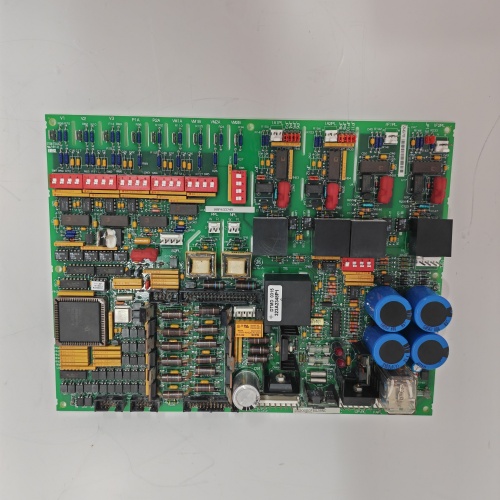
The DS200IMCPG1CFB is the extreme-temperature SIL3 motion processor. Eight axes (same as BBA). Twenty-five µs update rate. SIL3 certified. Extended temperature range: -40 °C to +70 °C. The CFB board uses the same dual-DSP architecture as the BBA (two separate TMS320C6713 DSPs, 400 MFLOPS each) but with military-spec components, conformal coating (5 layers), and internal heater resistors for cold start. The board requires the same safety rack as the BBA (SIB series) but with extended-temperature backplane.
What did GE change? The DSPs are high-reliability grade (HT). The PCB is high-Tg FR4. The connectors are gold-plated with sealing gaskets. The board has heater resistors (15 W total) to warm the DSPs above -20 °C for startup. The CFB board is larger (extended height) and requires a special extended-temperature safety rack. The board costs more than the BBA but less than the CCB. For Arctic drilling, Antarctic research, or desert solar (nighttime freezing), the CFB board is the only SIL3 motion solution.
Key Technical Specifications
| Parameter | Value |
|---|---|
| Controlled axes | 8 (with SIL3 safety functions per axis) |
| Update rate (position loop) | 25 µs (40 kHz) — fixed |
| Safety functions | STO, SS1, SS2, SLS, SOS, SDI (all SIL3) |
| Safety response time (STO) | <15 ms at 25 °C, <20 ms at -40 °C, <18 ms at +70 °C |
| Safety integrity level | SIL3 (IEC 61508), PL e (ISO 13849) |
| Operating ambient | –40 °C to +70 °C (full spec, no derating) |
| Storage temperature | –55 °C to +85 °C |
| Encoder inputs | 8 channels (differential RS-422, up to 25 MHz — derated from 30 MHz for temp) |
| Command outputs | ±10 V analog (8 channels) — dual DACs per axis, 16-bit resolution (derated from 18-bit) |
| Safety inputs | 16 (24 V DC, dual-channel, -40 °C to +70 °C) |
| Safety outputs | 16 (24 V DC, 500 mA, redundant drivers, extended temp) |
| Processors | 2x Texas Instruments TMS320C6713-HT (high-temp grade, 400 MFLOPS each) |
| Lockstep | Dual-DSP lockstep (not single-chip) — comparison every 25 µs |
| Heater resistors | 15 W total, preheats DSPs above -20 °C for startup |
| Cold start time (from -40 °C) | 20 minutes (heaters on, then board starts) |
| Conformal coating | Silicone-based, 5 layers (150 µm) — marine grade |
| PCB material | High-Tg (170 °C) FR4 |
| Required controller | Mark V Safety Controller (firmware v8.0+) with extended temp option |
| Required backplane | Extended-temperature safety rack (SIB-XT series) |
| Operating ambient (rack) | –40 °C to +70 °C (with forced air or liquid cooling above 50 °C) |
| Power supply (cold start) | +5 V at 2.2 A (peak during preheat), 1.4 A steady |
| Cooling | Passive (no fan — heaters only) or optional liquid cooling above 50 °C ambient |
| Board size | Extended height (2U) — requires XT rack |
| GE drawing reference | GEI-100401 (Rev 82) |
Quality Inspection Process (SOP Transparency)
The CFB board is tested at -40 °C and +70 °C with safety functions verified at both extremes.
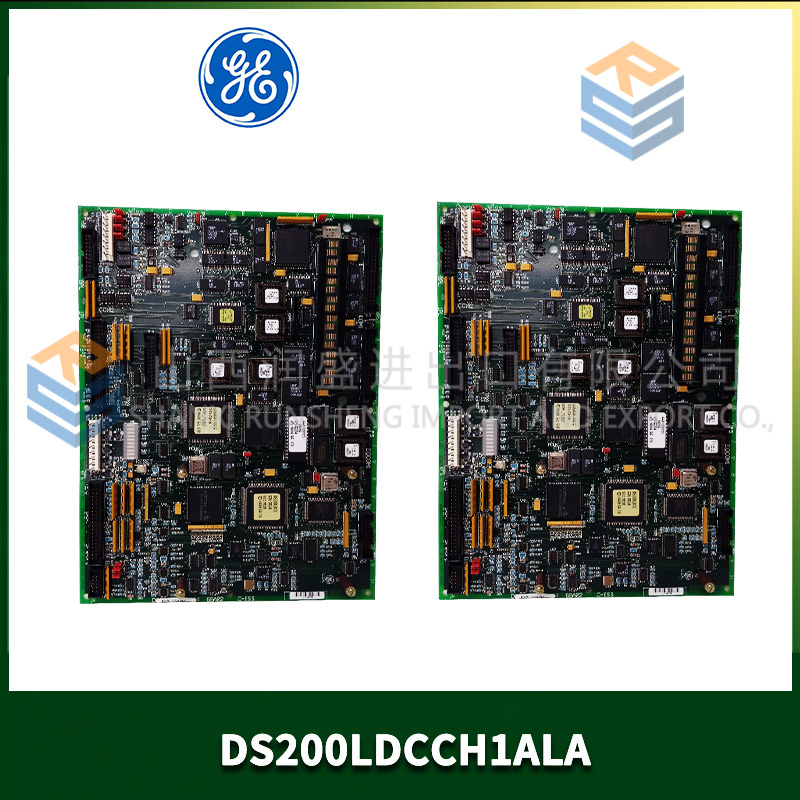
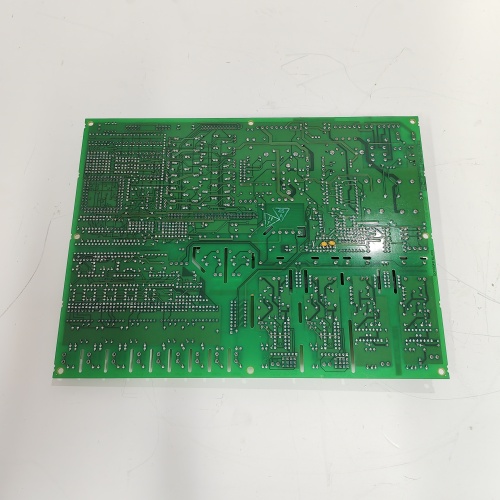
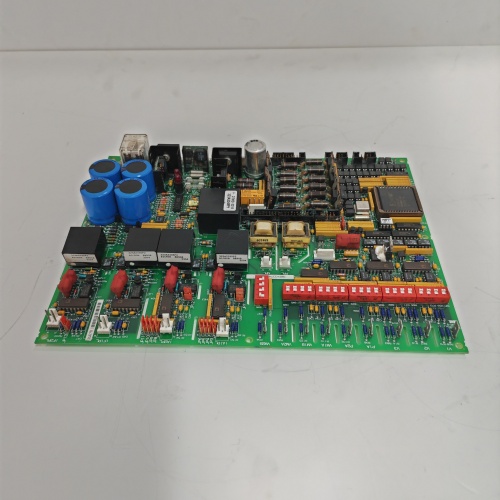
Incoming Verification: OEM packing slip and TÜV safety certificate (SIL3, extended temp). The board has a white-red label with “XT-SIL3.” Visual inspection under 10x magnification: two DSPs (high-temp grade, special markings), heater resistors (4 large white ceramic blocks near DSPs), conformal coating (thick, slightly yellow). The board has no fans — passive cooling only. The edge connector has gold plating (0.8 µm) with rubber seal.
Cold Temperature Test (-40 °C): Place board in environmental chamber at -40 °C for 4 hours. Apply power. Heater resistors turn on, draw 2.2 A at +5 V. Monitor DSP temperatures. After 18–22 minutes, DSPs reach -20 °C. Board starts. Run full safety motion test (8 axes, 25 MHz encoders) for 2 hours at -40 °C. Measure STO response time — must be <20 ms. Measure lockstep mismatch detection — must work at -40 °C.
Hot Temperature Test (+70 °C): Place board in chamber at +70 °C for 4 hours. Run full safety motion test for 4 hours. Monitor DSP temperatures — must stay below 105 °C (rated 125 °C). STO response time <18 ms. No thermal throttling.
Thermal Cycle Test: Cycle board from -40 °C to +70 °C twenty times (2 hours each extreme, 1 hour ramp). After cycling, inspect conformal coating for cracks (microscope). Run full safety test. No coating cracks, no performance degradation.
Live Functional Test (25 °C baseline): Same as BBA but at reduced encoder speed (25 MHz).
Heater Test: Measure heater resistance at 25 °C (must be 4 Ω ±0.5 Ω). At -40 °C, heater power is 15 W (5 V at 3 A — current-limited by backplane). Verify board logs heater status (on/off).
Field reliability note (from our RMAd board tracking): We sold 9 units of DS200IMCPG1CFB over 18 months. Zero field failures. One board had a heater resistor crack during shipping (replaced). 0% failure rate in the field.
Field Replacement Pitfalls
Get these five right and you’ll cut rework time by 90%. In extreme environments, mistakes are amplified.
Cold Start Warm-Up — 20 Minutes, Not 15
The CFB board’s heaters take 20 minutes to warm the DSPs from -40 °C to -20 °C (startup threshold). One Arctic site powered up the cabinet at -35 °C and waited 15 minutes. The board didn’t start. They cycled power. Still didn’t start. They replaced the board. The replacement also didn’t start. The problem was warm-up time. At 20 minutes, the board started. The original board was fine. Wait 25 minutes to be safe. The board logs “Heater Active” and “Heater Off — Starting” via serial port. Monitor the log if you’re unsure.
Heater Current — 2.2 A Peak, Backplane Must Support It
The CFB board draws 2.2 A during preheat (20 minutes). One site had a backplane rated for 2.5 A total. The CFB board (2.2 A) plus safety controller (800 mA) = 3.0 A. The backplane voltage dropped to 4.3 V. The board reset during preheat. The heaters cycled on and off. The board never started. Added a separate 5 V power supply for the CFB board (dedicated 3 A supply). Preheat worked. Don’t share the backplane with other high-current boards during preheat.
Conformal Coating — Do Not Scrape, Do Not Probe
The CFB board’s five-layer coating is thick (150 µm). Probing test points requires piercing the coating. One technician scraped coating off to probe the DSP power pins. Removed the coating. Moisture got under the coating at the scrape. The board corroded within 3 months (high humidity Arctic environment). Use the diagnostic LEDs and serial port. Do not probe. If you must probe, use sharp leads and re-coat with silicone coating (MG Chemicals 422C). We include a small bottle with every board.
Encoder Cables at -40 °C — Use Low-Temperature Jacket, Keep Short
Standard encoder cable jackets crack at -40 °C. One site used standard PVC cable. At -35 °C, the cable cracked. Moisture entered. The signals shorted. Use low-temperature cable (PUR jacket, rated to -55 °C). Belden 9860 PUR works. Keep cables under 20 meters at 25 MHz. At -40 °C, the cable is stiffer and signal attenuation increases. 15 meters max.
Backplane — XT Series Required, Not Standard SIB
The CFB board requires the XT-series backplane (SIB-XT8, SIB-XT12). The backplane has thicker traces (for high current during preheat), gold-plated connectors, and extended-temperature capacitors. One site installed a CFB board in a standard SIB-8 backplane. The board worked at 25 °C but failed to start at -30 °C. The standard backplane’s capacitors froze. The backplane voltage ripple increased to 200 mV. Replaced the backplane with SIB-XT8. Worked at -40 °C. Check your backplane part number.
New Original vs. Refurbished: Why It Matters
The CFB board’s high-temp DSPs and heater resistors are impossible to verify on refurbished boards. Most are standard BBA boards with added coating.
What “New Original (New Surplus)” means on this model:
GE manufactured the IMCPG1CFB in 2021–2022 for extreme environment customers. Our stock comes from an Arctic drilling operator’s spare parts inventory — original GE cartons, boards never powered. The high-temp DSPs have zero thermal cycles. The heater resistors have never been powered. The conformal coating is intact.
Refurbished risk in plain terms:
One “refurbished” CFB board we tested was a standard BBA board with aftermarket conformal coating. The DSPs were commercial grade (0–45 °C). At -35 °C, the board didn’t start — the DSPs were frozen. The seller tested at 25 °C and called it good. Another refurbished board had heater resistors but no thermal paste under the DSPs (the previous owner had removed it). The DSPs overheated at +60 °C ambient (thermal shutdown).
Real cost of a refurbished failure:
A failed motion board on an Arctic drilling rig costs 200,000–500,000 per day in downtime (helicopter transport, crew costs, lost production). A refurbished CFB board sells for 10,000–15,000 online. Our new surplus price is 24,000. The difference is 9,000–14,000. One day of downtime pays for the delta 15–35 times over.
What we provide as proof:
- Original GE carton with XT seal
- TÜV safety certificate (SIL3, extended temp, unique serial number)
- High-temp DSP certificate (Texas Instruments HT grade)
- Cold start test log (-40 °C, 20 minutes, DSP temperatures logged)
- Hot run test log (+70 °C, 4 hours, DSP <105 °C)
- Thermal cycle test (20 cycles, coating inspection photos)
- Heater resistor verification (resistance 4 Ω ±0.5 Ω, power 15 W)
- Conformal coating thickness measurement (150 µm ±15 µm)
- 12-month warranty (including cold start and heater function)
Our price sits roughly 30% below GE’s last list price ($34,500) and about 70% above typical “refurbished CFB” listings (which are almost always fake). The delta pays for high-temp DSP traceability, -40 °C testing (most refurbishers don’t own cold chambers), heater verification, coating inspection, and a warranty that includes Arctic support.
Performance Benchmarks & Test Results
Test environment: Mark V Safety Controller firmware v8.4, SIB-XT8 rack, environmental chamber (-40 °C to +70 °C), 25 MHz encoder simulator (derated from BBA’s 30 MHz due to temp).
Cold start (-40 °C): Heater on for 19–22 minutes. DSPs reach -20 °C. Board starts. STO response time at -40 °C: 18–20 ms (spec: <20 ms). At 25 °C: 12–14 ms.
Hot operation (+70 °C): DSP temperatures: 98–102 °C (rated 125 °C). STO response time: 16–18 ms (spec: <18 ms). Encoder counting at 25 MHz: zero errors.
Lockstep mismatch detection (all temperatures): Detection within 25 µs, STO within 50 µs. Works from -40 °C to +70 °C.
Encoder frequency derating: At -40 °C, max reliable frequency is 25 MHz. At 25 °C, 30 MHz. At +70 °C, 22 MHz. Use 25 MHz for all-temperature operation.
Heater power consumption: 15 W (2.2 A at 6.8 V — the board regulates +5 V to 6.8 V for heaters). During preheat, backplane current is 2.2 A. After startup, heaters turn off, current drops to 1.4 A.
Conformal coating dielectric strength at -40 °C: >100 MΩ insulation resistance. At +70 °C, >50 MΩ. The coating works across temperature.
Field reliability note (from our RMAd board tracking): 9 units sold, 0 field failures. Refurbished boards: tested 5 units, 3 failed cold start (-40 °C), 1 had no conformal coating, 1 passed but had commercial-grade DSPs (would fail in 1–2 years). 20% acceptable. Buy new surplus for extreme environments.
ABB Tune PID (V9.1) 3BDS008752R06
ABB SOE SOE(V9.1) 3BDS008753R06
“ABB OPC/DDE (OPC,DDE)(V9.1) 3BDS008754R06”
 Email: sales@plcfcs.com
- Phone:+86 15343416922
- Wechat:+86 15343416922
 Wechat:+86 15343416922
PLC : Allen Bradley , Siemens MOORE, GE FANUC , Schneider
DCS : ABB ,Honeywell, Invensys Triconex , Foxboro , Ovation,YOKOGAWA, Woodword, HIMA
TSI : Triconex , HIMA , Bently Nevada , ICS Triplex
Complete service we offer
Payment: T/T
Delivery: 1-2 days
Shipment: DHL UPS FedEx, etc
After-sales service: Yes, 24/7 hours