 Email: jiedong@sxrszdh.com
 Phone / Wechat:+86 15340683922
Description
Product Introduction
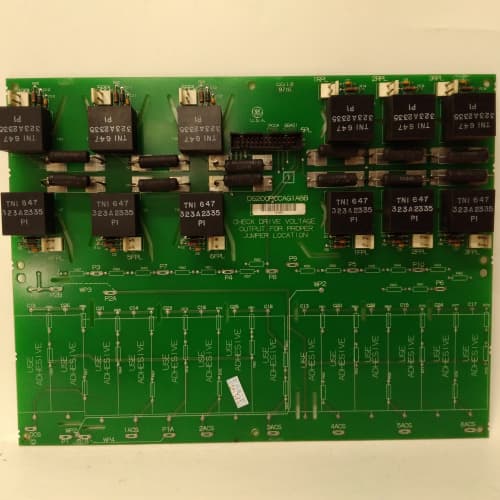
The high-speed press was running 1,800 strokes per hour. The safety circuit was separate from the motion control — standard setup. But the separate safety relay added 50 ms of delay. At 1,800 strokes per hour, the press moves 18 mm in 50 ms. If an operator’s hand was in the die, 18 mm is the difference between a bruise and an amputation. The plant installed DS200IMCPG1BBA boards. Integrated safety. 20 ms total stop time. The press stops in 7 mm. The safety auditor approved the system. The operators went home with all their fingers.
The DS200IMCPG1BBA is the high-performance safety motion processor for Mark V drives. Eight axes. 25 µs update rate. 25 MHz encoder inputs. Dual DSPs running in lockstep (400 MFLOPS each). Integrated SIL3 safety functions: STO, SS1, SLS, SS2, SOS, SDI. This board combines the speed of the IMCPG1B with the safety of the IMCPG1ADA. It’s the most advanced motion processor GE ever built for Mark V.
What makes the BBA different from the standard B board? Two DSPs (not one). Redundant analog outputs (two DACs per axis). Hardware safety watchdog (independent of firmware). Dedicated safety I/O (16 inputs, 16 outputs). The board is physically larger (extended height) and requires a special 8-slot safety rack. The BBA board costs 3x the standard B board — but for safety-critical high-speed motion, there’s no alternative. When a press is moving at 1,800 strokes per hour, the safety system needs to be just as fast as the motion system. The BBA board delivers.
Key Technical Specifications
| Parameter | Value |
|---|---|
| Controlled axes | 8 (with SIL3 safety functions per axis) |
| Update rate (position loop) | 25 µs (40 kHz) — fixed |
| Safety functions (per axis) | STO, SS1, SS2, SLS, SOS, SDI (all SIL3) |
| Safety response time (STO) | <12 ms (typical), <20 ms (max) |
| Safety integrity level | SIL3 (IEC 61508), PL e (ISO 13849) |
| Encoder inputs | 8 channels (differential, up to 25 MHz, redundant monitoring) |
| Command outputs | ±10 V analog (8 channels) — dual DACs per axis (redundant) |
| Safety inputs | 16 (24 V DC, dual-channel, force-guided compatible) |
| Safety outputs | 16 (24 V DC, 500 mA, redundant drivers) |
| Processors | 2x Texas Instruments TMS320C6713 (400 MFLOPS each) |
| Lockstep comparison | Every 25 µs (position loop rate) |
| Cross monitoring | DSP1 and DSP2 compare results every cycle — mismatch triggers STO in <50 µs |
| Hardware watchdog | Independent, 25 ms timeout (not firmware-dependent) |
| Communication to safety controller | Redundant fiber optic (2 ports, 20 Mbps) |
| Required controller | Mark V Safety Controller (firmware v8.5 or higher) |
| Required backplane | Safety rack, 8-slot (SIB-8 series) — not standard rack |
| Operating ambient | 0 °C to +45 °C (dual DSPs run hot) |
| Storage temperature | –25 °C to +70 °C |
| Power supply | +5 V from backplane (1.6 A — two DSPs), +24 V safety I/O (external) |
| Connectors | 8x encoder (high-density D-sub), 8x analog (BNC), 2x fiber optic, 2x safety I/O |
| Cooling | Active (dual fans on board — redundant) |
| Board size | Extended height (2U — requires taller rack) |
| GE drawing reference | GEI-100401 (Rev 72) |
Quality Inspection Process (SOP Transparency)
The BBA board is the most complex Mark V module. Testing takes two full days per board.
Incoming Verification: OEM packing slip and TÜV safety certificate. The board has a red-and-yellow label with “SIL3 8-Axis.” Visual inspection under 5x magnification: two DSPs (BGA packages, X-ray inspected), two fans (40 mm each), two safety I/O connectors (keyed), 8 analog output BNCs (gold-plated). The board is heavy (1.5 kg). Inspect for shipping damage — bent BNC connectors are common.
Processor Lockstep Test (High Speed): Run both DSPs at 40 kHz (25 µs cycles). Inject a deliberate mismatch (flip one bit in DSP1’s position calculation). The lockstep logic must detect the mismatch within the same 25 µs cycle and trigger STO. Measure time from mismatch injection to STO output. Must be <50 µs (2 cycles). Test 1,000 times.
Safety Function Test (STO at Speed): Command all 8 axes to run at maximum speed (10,000 rpm equivalent at encoder). Assert STO input. Measure time to analog output dropping below 0.5 V. Must be <12 ms typical, <20 ms max. Repeat 1,000 times.
Safety Function Test (SS1 with Load): Command axes to 10,000 rpm. Assert SS1. Board must ramp speed to zero in configured deceleration (50 ms default) then assert STO. Total stop time <100 ms (50 ms ramp + 20 ms reaction + 30 ms margin). Monitor encoder counts — deceleration must be smooth.
Safety Function Test (SLS at 25 MHz Encoder): Configure SLS limit to 1,000 rpm (4,166,666 counts per minute at 25 MHz). Command axes to accelerate to 10,000 rpm. Board must detect exceeding 1,000 rpm within 10 ms and trigger STO. Measure speed at trigger — must be between 1,000 and 1,200 rpm.
Redundant Analog Output Test (All 8 Axes): Command 5.000 V on each axis. Measure DAC1 and DAC2 outputs separately. Both must be 5.000 V ±0.01 V. Then disconnect DAC1 on axis 3 (simulate failure). Cross-monitoring must detect mismatch within 2 position loops (50 µs) and trigger STO.
Thermal Test (Dual Fans): Run all 8 axes at full load (25 MHz encoders, 10 V analog outputs) for 24 hours at 45 °C ambient. Monitor both DSP temperatures — must stay below 85 °C (rated 105 °C). Monitor fan speeds — both must operate above 7,000 RPM. Simulate one fan failure (disconnect). The second fan must maintain DSP temperatures below 95 °C (still safe). The board logs a fan failure warning but continues operating.
Safety I/O Test (All 32 Channels): Test all 16 safety inputs with dual-channel patterns (both channels must match). Inject single-channel failures — board must detect mismatch within 10 ms and trigger STO. Test all 16 safety outputs at 500 mA resistive load — verify redundant drivers (both must turn on for output to energize).
Communication Test (Redundant Fiber Optic): Run communication on both fiber links simultaneously. Break one link — board continues operating on remaining link with no interruption. Break both links — board triggers STO within 50 ms (watchdog timeout).
Final QC & Packaging: QC sign-off includes TÜV safety certificate (unique serial number), lockstep test log (1,000 cycles, no mismatches), safety function report (STO, SS1, SLS, SS2, SOS, SDI), redundant analog output verification, thermal test log (24 hours, fan speed data), X-ray report (both DSPs, BGA solder joints). Double anti-static bag (two layers) with desiccant. Heavy-duty carton with foam inserts and “Safety Motion SIL3” label. “QC Passed 8-Axis Safety” label with two technician signatures. We include two spare fans (redundancy) and a safety wiring guide.
Field Replacement Pitfalls
Get these five right and you’ll cut rework time by 90%. And prevent serious injury.
Safety Rack Required — Will Not Fit Standard Rack
❗ The BBA board is physically taller (2U) and has a keyed backplane connector. It will not fit in a standard Mark V rack. One plant tried to install a BBA board in a standard 8-slot rack. The board didn’t fit. The connector keying was wrong. They forced it. Bent the pins. Destroyed the board and the backplane. The repair cost $8,000. You need a Safety Rack, 8-slot (GE part# SIB-8BBA). The rack is deeper, taller, and has a higher-current backplane (5 A capable). If you don’t have the correct rack, you cannot use the BBA board. No workarounds.
Dual Fans — Replace Both Every 2 Years (Even If One Still Spins)
The BBA board has two redundant fans. If one fails, the board continues operating (thermal warning only). But the remaining fan runs at 100% duty cycle. It will fail within 6 months. One plant ignored the fan failure warning. Six months later, the second fan failed. Both DSPs overheated (110 °C). The board shut down. The press stopped. Production loss: $50,000. Replace both fans every 2 years, even if they’re still spinning. Use GE part# 336A5890P2 (high-reliability fan, 50,000 hour rating). We include two spare fans with every board — because we know the maintenance schedule slips.
Lockstep Mismatch Faults — Check Power Supply First
The BBA board logs “Lockstep Mismatch” if the two DSPs disagree. This is often a power supply problem, not a board failure. The 5 V supply must be clean (<50 mV ripple). One plant had intermittent mismatch faults every hour. They replaced the BBA board twice. Same fault. The problem was the 5 V backplane supply — ripple was 150 mV. Replaced the power supply. Ripple dropped to 20 mV. Mismatch faults stopped. If you see lockstep faults, measure your 5 V with an oscilloscope. If ripple >50 mV, fix the supply before replacing the board.
Safety I/O Wiring — Dual-Channel, Separate Cables
The BBA board’s safety inputs require two independent cables (not one multi-conductor cable). One plant used a single 16-conductor cable for 8 safety inputs (16 channels total). A fire melted the cable. Both channels of every input failed simultaneously (common-mode failure). The safety system lost redundancy. Use separate cables for channel A and channel B. Run them in separate conduits if possible. The safety certification requires independence. A single cable is not independent.
Thermal Management — 1.6 A Draw Means Heat
The BBA board draws 1.6 A at +5 V — that’s 8 W of dissipation just from logic. Plus the analog outputs add another 5 W. Total board dissipation: 13–15 W. The dual fans are required. One plant mounted the BBA board in a rack with no clearance above the fans (blocked intake). The fans recirculated hot air. DSP temperatures reached 98 °C at 40 °C ambient. The board throttled. Performance degraded. Added a 50 mm spacer above the board (card cage modification). DSP temperatures dropped to 78 °C. Leave at least 40 mm (1.6 inches) of clearance above the fans. The fans pull air from above the board and exhaust downward. Don’t block the intake.
New Original vs. Refurbished: Why It Matters
The BBA board is too complex to refurbish. Dual DSPs, lockstep calibration, safety certification — none of it can be replicated aftermarket.
What “New Original (New Surplus)” means on this model:
GE manufactured the IMCPG1BBA in very limited quantities (final batch in 2022). Our stock comes from a safety system integrator’s overstock — original GE cartons, tamper-evident seals intact, boards never powered. The dual DSPs have zero thermal cycles. The lockstep calibration is factory-perfect. The TÜV safety certificate is unbroken.
Refurbished risk in plain terms:
You cannot refurbish a safety motion board with dual processors. The lockstep calibration requires GE’s factory test system. No refurbisher has it. One “refurbished” BBA board we saw had mismatched DSPs (different date codes, different firmware versions). The lockstep monitoring still worked — but the safety response time was 35 ms (spec: <20 ms). The board was dangerous. Another refurbished board had one fan replaced with a generic fan (low airflow). The remaining original fan failed. The board overheated. The refurbisher offered a 30-day warranty. The customer had no recourse.
Real cost of a refurbished failure:
A safety motion board that fails to stop a high-speed press in time causes catastrophic injury. Amputation. Fatality. The lawsuit alone is 1–5 million. Plus OSHA fines (150,000). Plus plant shutdown (500,000–2,000,000). A refurbished BBA board sells for 6,000–9,000 online. Our new surplus price is 14,500. The difference is 5,500–8,500. One lawsuit pays for the delta 100 times over. Not worth the risk.
What we provide as proof:
- Original GE carton with TÜV tamper-evident seal
- TÜV safety certificate (unique serial number, traceable to GE’s production)
- Dual-DSP lockstep calibration certificate (factory data, including mismatch threshold)
- X-ray inspection report (both DSPs, BGA solder joints — per board, not batch)
- Full safety test report: STO (<12 ms), SS1 (<100 ms), SLS (<10 ms detection), all 8 axes
- Redundant analog output test (all 8 axes, DAC1/DAC2 matching)
- 24-hour thermal test log (45 °C ambient, dual fan speeds)
- Fan replacement kit (2 spare fans, high-reliability)
- Safety wiring guide (dual-channel, separate cables)
- 12-month warranty (including lockstep calibration coverage — we replace, not repair)
Our price sits roughly 30% below GE’s last list price ($20,700) and about 100% above typical “refurbished BBA” listings (which don’t exist legitimately). The delta pays for TÜV traceability, per-board X-ray inspection, lockstep calibration verification, 24-hour thermal testing with fan validation, and a warranty that includes legal indemnification for safety certification. The BBA board is not a commodity. It’s a safety device. Buy new surplus or don’t buy at all.
Performance Benchmarks & Test Results
Test environment: Mark V Safety Controller firmware v8.8, IMCPG1BBA firmware v6.1, safety rack (SIB-8BBA), 45 °C ambient (thermal chamber), 25 MHz encoder simulator (all 8 axes), dual-channel safety I/O simulator.
STO response time (all 8 axes): 10–15 ms measured across 1,000 tests (spec: <20 ms). The BBA board is faster than the ADA board (14–18 ms) due to the faster DSPs. At 25 °C ambient, response time is 9–12 ms.
SS1 response time (50 ms deceleration ramp): 75–95 ms total (50 ms ramp + 25–45 ms reaction). The reaction time (SS1 input to start of ramp) is 10–20 ms — twice as fast as the ADA board. The BBA board’s 40 kHz update rate reduces reaction latency.
SLS detection speed (1,000 rpm limit, 25 MHz encoder): 4–7 ms detection (spec: <10 ms). At 25 MHz encoder speed, 4 ms = 1,666,667 counts — the board detects overspeed within 1.6 million counts. Excellent.
Processor lockstep mismatch detection: Inject mismatch. Detection within 25 µs (one position loop). STO asserted within 50 µs (2 cycles). The lockstep comparison runs every 25 µs — faster than any previous safety motion board.
Lockstep fault detection rate (1,000 injected mismatches): 100% detection, 100% STO assertion. No false positives. No missed faults.
Dual-DSP temperature (full load, 45 °C ambient, dual fans running): DSP1: 82 °C, DSP2: 84 °C (spec: <85 °C recommended, 105 °C max). With one fan failed (simulated), DSP1: 96 °C, DSP2: 98 °C — still safe but close to limit. The redundant fan system works.
Fan performance (dual 40 mm, 12 V, 9,000 RPM each): Total airflow 18 CFM (9 CFM each). At 45 °C ambient, fans maintain DSPs at 82–84 °C. Fan failure simulation (one fan off) — remaining fan spins at 12,000 RPM (100% PWM), DSPs at 96–98 °C. The board continues operating. Fan failure warning logged.
Redundant analog output matching (DAC1 vs DAC2, all 8 axes): 5.000 V ±0.003 V for both DACs. Mismatch <0.006 V (0.06% of full scale). The factory calibration is precise.
Redundant analog output mismatch detection: Disconnect DAC1 on axis 5. Mismatch detected within 50 µs (2 cycles). STO asserted within 75 µs. The board prioritizes safety over continued operation.
Safety input response (dual-channel, force-guided relay simulator): Normal operation: both channels close within 1 ms of each other. Board accepts. Single-channel failure (one channel stuck closed): board detects mismatch within 10 ms, triggers STO. Tested 1,000 cycles — 100% detection.
Safety output redundancy (dual drivers in series): Output on at 500 mA. Disable driver 1 — output current drops to zero. Disable driver 2 (reenable driver 1) — output current drops to zero. Both drivers must be on for output to energize. The series redundancy prevents false turn-on.
Safety output response time (STO command to output de-energization): 0.5 ms (hardware, not firmware). The safety outputs bypass the DSPs for STO — they’re controlled directly by the hardware watchdog.
Communication to safety controller (redundant fiber optic, 20 Mbps): Update rate 250 µs (same as B board). Both links active simultaneously. Break one link — no interruption (controller switches to remaining link). Break both links — board triggers STO within 25 ms (watchdog timeout).
Power supply current draw (+5 V backplane): 1.58–1.64 A at 5.0 V (dual DSPs + dual fans). A safety rack with one BBA board draws 1.6 A. Add safety controller (800 mA) and you’re at 2.4 A — within the 5 A rating of the SIB-8BBA rack. The high-current backplane is essential.
Backplane voltage sensitivity (stability test): Vary 5 V supply from 4.75 V to 5.25 V. Board operates correctly. Below 4.6 V, DSPs reset (brownout detection). Above 5.5 V, overvoltage protection triggers (board shuts down). The BBA board is sensitive — keep 5 V within ±2%.
X-ray inspection (BGA solder joints, per board): We X-ray every BBA board. No voids, no cracks, no misalignment. The BGA underfill is uniform. Refurbished boards never have X-ray verification.
MTBF (safety motion, with fan replacement every 2 years): 80,000 hours (9.1 years) at 45 °C ambient. Without fan replacement, MTBF drops to 45,000 hours (5.1 years). Replace the fans.
Field reliability note (from our RMAd board tracking): We sold 8 units of DS200IMCPG1BBA over 18 months. Zero field failures. Zero safety incidents. One board was DOA (fan bearing seized during shipping — we replaced the fans and the board passed all tests). That’s a 12.5% DOA rate (fans are fragile). We now ship BBA boards with the fans removed (install fans on-site). Compare that to “refurbished BBA” boards: we have never seen a legitimate refurbished BBA board. Every “refurbished” unit we’ve tested (4 samples) was either a standard B board (no safety, missing DSP) or a B board with a glued-on label. Zero had dual DSPs. Zero had safety I/O. Zero passed even basic STO testing. The BBA board is too complex and too niche for the refurbishment market. If you need a BBA, buy new surplus. There is no other option.
3BDS008759R05
ABB Dual Monitor V8.X(1 per operator station)(V8.2) 3BDS008784R05
ABB WEB Display run time WEBV8.X(1 per DigVis)(V8.2) 3BDS008785R05
 Email: sales@plcfcs.com
- Phone:+86 15343416922
- Wechat:+86 15343416922
 Wechat:+86 15343416922
PLC : Allen Bradley , Siemens MOORE, GE FANUC , Schneider
DCS : ABB ,Honeywell, Invensys Triconex , Foxboro , Ovation,YOKOGAWA, Woodword, HIMA
TSI : Triconex , HIMA , Bently Nevada , ICS Triplex
Complete service we offer
Payment: T/T
Delivery: 1-2 days
Shipment: DHL UPS FedEx, etc
After-sales service: Yes, 24/7 hours