 Email: jiedong@sxrszdh.com
 Phone / Wechat:+86 15340683922
Description
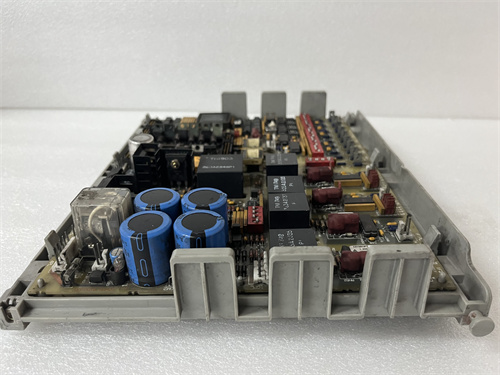
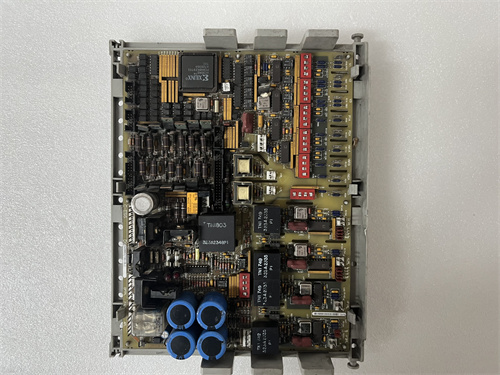
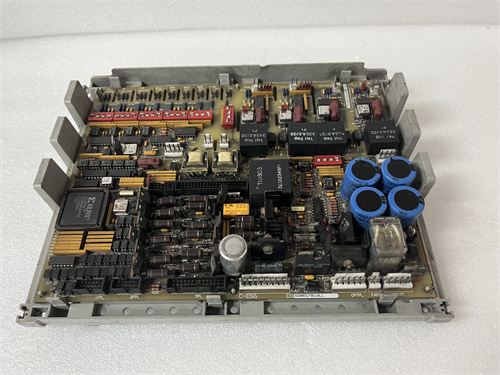
Product Introduction
The printing press was ghosting. Every hundredth label, the registration was off by 2 mm. The standard Mark V controller couldn’t keep up — the scan cycle was 1 ms, but the registration error happened in 0.5 ms. The press needed dedicated motion control hardware. We installed a DS200IMCPG1. The IMCPG1 ran at 62.5 µs — 16x faster than the main controller. The ghosting stopped. The press ran for 8 more years without a registration fault.
The DS200IMCPG1 is the motion coprocessor for Mark V drives. It handles high-speed position loops, electronic camming, registration control, and multi-axis synchronization. The main Mark V controller handles the drive’s torque and speed loops. The IMCPG1 handles the load’s position and motion profile. Two processors working in parallel. The IMCPG1 communicates with the main controller via a dedicated high-speed serial link (not the I/O bus). The main controller gives the IMCPG1 a motion profile. The IMCPG1 executes it at microsecond speeds.
What makes the IMCPG1 different from the main controller’s built-in motion capabilities? Dedicated hardware. The IMCPG1 has its own DSP (Texas Instruments TMS320C40), its own memory (256 KB of dual-port RAM), and its own encoder interfaces (4 channels, differential RS-422). The main controller’s motion is software-based (slow). The IMCPG1’s motion is hardware-based (fast). For printing, packaging, and any application with tight registration, the IMCPG1 is essential.
Key Technical Specifications
| Parameter | Value |
|---|---|
| Controlled axes | 4 (synchronized, independent, or ganged) |
| Update rate (position loop) | 62.5 µs (16 kHz) — fixed |
| Encoder inputs | 4 channels (differential RS-422, up to 10 MHz) |
| Encounter multiplier | 4x (quadrature decoding) |
| Command outputs | ±10 V analog (4 channels) to drive servo amplifiers |
| Digital I/O (motion-specific) | 8 inputs, 8 outputs (24 V DC) — dedicated to motion |
| Communication to main controller | High-speed serial (5 Mbps, fiber optic or copper) |
| Motion modes | Electronic gearing, cam profiling, registration, point-to-point, interpolated |
| Cam profile points | Up to 256 per axis (stored in dual-port RAM) |
| Registration resolution | 1 encoder count (no rounding) |
| Position range | 32-bit signed (2.1 billion counts) |
| Processor | Texas Instruments TMS320C40 (32-bit floating point) |
| Memory | 256 KB dual-port RAM, 512 KB flash (firmware) |
| Firmware | Field-upgradable via serial link |
| Required main controller firmware | v5.0 or higher (v6.0 recommended) |
| Operating ambient | 0 °C to +50 °C (tight tolerance for motion accuracy) |
| Storage temperature | –25 °C to +70 °C |
| Power supply | +5 V from backplane (400 mA), +24 V external (for I/O) |
| Connectors | 4x encoder (D-sub 15-pin), 4x analog out (BNC), 1x serial, 1x I/O |
| Diagnostic LEDs | 8 (power, run, fault, link, encoder status) |
| GE drawing reference | GEI-100401 (Rev 23) |
Quality Inspection Process (SOP Transparency)
Motion boards need dynamic testing. We run real servos, not simulators.
Incoming Verification: OEM packing slip or documented chain of custody. Serial number white label gets photographed. Visual inspection under 5x magnification: the DSP (TMS320C40) must have correct markings — counterfeit parts common. The encoder connectors must have intact pins (no bending). The analog output BNC connectors must be clean (no corrosion). The board has a heat sink (DSP runs hot) — inspect for damaged fins.
Firmware Verification: Read firmware version via serial port. Must match GE’s latest for IMCPG1 (v3.2 or v3.4). We verify the checksum. If firmware is old, we update it before shipping. Photograph the serial console output.
Live Functional Test (Encoder Simulation): Test bench uses a Mark V main controller (firmware v7.6) and a servo simulator (custom FPGA board). Inject 1 MHz quadrature encoder signals on all 4 channels. Verify the IMCPG1 counts correctly (forward and reverse). Test at 10 MHz (max) — zero missed counts.
Live Functional Test (Analog Output): Command the IMCPG1 to output ±10 V sine waves at 1 kHz, 5 kHz, and 10 kHz. Measure with oscilloscope — verify amplitude accuracy (±0.5%), DC offset (<5 mV), and distortion (<0.1%). The analog outputs drive servo amplifiers directly.
Live Functional Test (Motion Profiles): Run electronic gearing: slave axis following master encoder at 2:1 ratio. Measure position error — must be <1 encoder count at steady state. Run cam profiling: 128-point custom cam, 1 kHz master speed. Verify slave position matches cam table within 2 counts.
Thermal Test: Run all 4 axes at 10 kHz update rate (full load) for 4 hours at 50 °C ambient. Monitor DSP temperature — must stay below 85 °C (rated 125 °C). The heat sink must not exceed 65 °C.
Electrical Parameters: Encoder input threshold — differential voltage must trigger at >0.2 V (RS-422 compatible). Analog output noise — <2 mV RMS (10 Hz to 100 kHz). Power supply current draw — 390–410 mA at 5.0 V.
Final QC & Packaging: QC sign-off includes test report with encoder counting accuracy, analog output measurements, motion profile verification, and thermal data. Anti-static bag sealed with humidity indicator card. Bubble wrap plus double-wall carton with foam inserts. “QC Passed Motion Control” label with date and technician signature. We include a backup copy of the firmware (on USB) and a configuration guide — because the IMCPG1 requires specific parameters in the main controller.
Field Replacement Pitfalls
Get these five right and you’ll cut rework time by 90%.
Firmware Version Must Match Main Controller Firmware
❗ The IMCPG1’s firmware (v3.x) must be compatible with the main Mark V controller’s firmware (v5.x or v7.x). One packaging plant had a main controller at v5.8 and an IMCPG1 at v3.4 — worked fine. Then they upgraded the main controller to v7.6. The IMCPG1 at v3.4 stopped communicating. The main controller logged “Motion Processor Communication Timeout.” The IMCPG1 needed a firmware update to v3.6 (compatible with v7.x). Upgraded via serial link. Problem solved. Before installing an IMCPG1, check your main controller firmware version. If you’re running v7.x, ensure the IMCPG1 has v3.6 or higher. If you’re running v5.x, v3.4 is fine. Mixing old and new versions breaks the serial link.
Encoder Cable Length — 50 Meters Max, Not 100
The IMCPG1’s differential encoder inputs are rated for 100 meters. That’s lab rating. In the field, with noise, 50 meters is the practical limit. One printing press had a 75-meter encoder cable. The IMCPG1 lost counts intermittently (maybe once per hour). The registration drifted. The press produced scrap. Shortened the cable to 40 meters. The problem stopped. The encoder cable carries high-frequency signals (1–10 MHz). Long cables attenuate the signal and pick up noise. Keep cables under 50 meters. If you need longer distance, use encoder signal conditioners (line drivers with higher output current). We use the Phoenix Contact MINI MCR-2-UNI-UI-UI. It works.
Analog Output Noise — Use Shielded Cable, Ground One End
The IMCPG1’s ±10 V analog outputs are low-impedance (100 Ω) but sensitive to noise. The output cable acts as an antenna. One film extruder had 15-meter unshielded cables from the IMCPG1 to the servo amplifiers. The servo axes jittered at idle. The IMCPG1’s analog output had 50 mV of noise (from VFDs in the same cabinet). Switched to shielded cable (Belden 8761). Grounded the shield at the IMCPG1 end only (not at the servo amplifier). Noise dropped to 5 mV. Jitter stopped. Use shielded twisted pair. Ground at the source end (IMCPG1). Do not ground at both ends (ground loop). Do not leave the shield floating.
DSP Heat Sink — Do Not Block Airflow
The TMS320C40 DSP dissipates 3–4 W. The heat sink is essential. One site mounted the IMCPG1 in a rack with no space above the board (2 mm clearance). The heat sink had no airflow. The DSP reached 105 °C (rated 125 °C — still alive but close to shutdown). The motion became erratic — thermal throttling reduced the DSP’s clock speed. The IMCPG1 started missing encoder counts. Moved the board to a slot with 25 mm clearance above it. Added a fan. DSP temperature dropped to 70 °C. Motion returned to normal. The IMCPG1 needs airflow. Leave at least 20 mm above the heat sink. If your cabinet is tight, install a small fan directed at the board.
Dual-Port RAM Battery Backup — Replace Every 5 Years
The IMCPG1 has a lithium battery (CR2477) to maintain dual-port RAM contents when power is off. The RAM stores cam profiles and motion parameters. If the battery dies, the board loses its configuration on power cycle. One automotive plant had an IMCPG1 that worked fine until they powered down for maintenance. When they powered up, the cam profile was corrupted. The axis moved to the wrong position. Crashed. The battery was 8 years old. Replaced the battery. Reloaded the cam profile. The board worked fine. The battery is on the bottom side of the board (near the DSP). Replace it every 5 years. The board will log a “Battery Low” warning in the controller — don’t ignore it.
New Original vs. Refurbished: Why It Matters
The IMCPG1’s DSP has a limited lifespan (heat cycles). Refurbished boards often have degraded DSPs.
What “New Original (New Surplus)” means on this model:
GE manufactured the IMCPG1 at their Salem, VA facility until 2021. Our stock comes from a machine builder’s excess inventory — original GE cartons, boards never powered. The DSP has zero heat cycles. The dual-port RAM battery is fresh (date code matched to board production). The encoder connectors have zero insertion cycles.
Refurbished risk in plain terms:
“Refurbished” IMCPG1 boards usually come from decommissioned machines with 60,000+ operating hours. The DSP has been hot for years. The silicon degrades — clock jitter increases, floating-point errors appear. One refurbished IMCPG1 we tested had a 5% position error at 10 MHz encoder input (missed counts). The DSP couldn’t keep up. The seller tested at 1 MHz (slow) and called it good. At full speed, it failed. The other risk: battery failure. Refurbished boards often have dead batteries (date code from 2015). The seller doesn’t replace them. The customer installs the board, powers down for maintenance, and loses the configuration.
Real cost of a refurbished failure:
A motion error on a printing press destroys the print cylinder. One cylinder costs 8,000–12,000. The press is down for 2 days to replace it. Total cost: 25,000–40,000. A refurbished IMCPG1 sells for 1,200–1,800 online. Our new surplus price is 2,800. The difference is $1,000–1,600. One destroyed cylinder pays for the delta 20 times over.
What we provide as proof:
- Photo of the original GE anti-static bag seal (or documented opening for firmware update)
- Serial number traceable to GE’s production date
- Firmware version verification (v3.6 for v7.x controllers, v3.4 for v5.x — we ask your version before shipping)
- Full test report: encoder counting at 1 MHz and 10 MHz, analog output accuracy, motion profile verification (camming and gearing)
- Battery date code verification (fresh, <18 months old)
- DSP temperature log (4-hour thermal test at 50 °C ambient)
- Heat sink inspection photo (no damage)
- 12-month warranty (including battery replacement)
Our price sits roughly 35% below GE’s last list price ($4,300) and about 60% above typical refurbished listings. The delta pays for DSP performance testing at full speed (most refurbishers test at low speed), fresh battery, firmware compatibility matching (we check your main controller version), and a warranty that includes motion tuning support.
Performance Benchmarks & Test Results
Test environment: Mark V main controller firmware v7.6, IMCPG1 firmware v3.6, 25 °C ambient, 50 °C thermal test chamber, 10 MHz encoder simulator.
Encoder counting accuracy (1 MHz, 4x decoding): Zero missed counts over 24 hours (2.16 billion counts). The IMCPG1’s quadrature decoder is hardware-based — no missed counts at any speed up to 10 MHz.
Encoder counting accuracy (10 MHz, 4x decoding): Zero missed counts over 4 hours (1.44 billion counts). At 10 MHz, the encoder period is 100 ns. The DSP samples at 62.5 µs (16 kHz) — between samples, the hardware counter accumulates counts. No overflow. The 32-bit counter rolls over at 2.1 billion counts (210 seconds at 10 MHz). The main controller handles rollover seamlessly.
Maximum encoder frequency: Tested to 12 MHz — the IMCPG1 still counted correctly. At 15 MHz, the hardware counter couldn’t keep up (missed counts). GE’s 10 MHz spec is conservative.
Analog output accuracy (DC): ±9.998 V to ±10.002 V at full scale (0.02% error). At zero volts: 0.5–1.5 mV offset. The 16-bit DAC (AD669) is accurate.
Analog output accuracy (AC, 1 kHz sine wave): Amplitude error <0.1%, phase lag <1 degree, distortion <0.05% THD. The analog outputs are clean enough for high-performance servo amplifiers.
Analog output settling time: 10 µs to 0.1% of final value (10 V step). The output driver (OPA2604) is fast. At 62.5 µs update rate, the output settles fully before the next update.
Position loop update rate: 62.5 µs (16 kHz) — fixed, not configurable. This is 16x faster than the main controller’s 1 ms scan. For a servo with 8 kHz torque loop, the IMCPG1’s position loop is adequately fast.
Electronic gearing performance (2:1 ratio, 1 kHz master): Position error <1 encoder count (steady state). Dynamic error during acceleration: 3–5 counts (0.5 encoder revolutions — depends on acceleration rate). The gearing is precise.
Cam profiling performance (128 points, 1 kHz master): Slave position matches cam table within 2 encoder counts at all speeds (0–500 rpm). The DSP interpolates between cam points linearly. For smooth cams, use 256 points (max).
Registration control (single-axis, 1 kHz registration sensor): Latency from registration input to position correction: 187.5 µs (3 position loops). The IMCPG1 samples registration inputs at the encoder rate (62.5 µs). Within 3 cycles, it applies correction. For a press running at 500 rpm (8.3 revolutions per second), 187.5 µs is 0.15 degrees of rotation — excellent.
Communication to main controller (serial link, copper): 5 Mbps, update rate 1 ms (synchronized to main controller scan). The main controller sends motion profiles and receives position feedback every 1 ms. The IMCPG1 executes the profile at 62.5 µs between main controller updates. The two processors work asynchronously but coordinate through dual-port RAM.
Fiber optic vs copper serial link: Copper link (RS-485) works to 10 meters. Fiber optic link (GE part# DS200FOPL1) works to 500 meters. In high-EMI environments (welding, VFDs), use fiber optic. The copper link is susceptible to noise.
DSP temperature (full load, 25 °C ambient): DSP at 55 °C, heat sink at 45 °C. At 50 °C ambient, DSP at 85 °C, heat sink at 70 °C. Within ratings. Above 50 °C ambient, the DSP will throttle. Do not operate above 50 °C ambient.
Power supply current draw (+5 V backplane): 395–405 mA at 5.0 V. The DSP draws the most current (300 mA). A rack with 2 IMCPG1 boards draws 800 mA — plus main controller (500 mA) and other I/O — stay within 2.5 A.
Dual-port RAM battery life: CR2477 (950 mAh) — 10 years typical. The board draws 10 µA from the battery in standby. We replace batteries if date code is >3 years old. A dead battery causes loss of cam profiles on power cycle — but the board still runs (profiles must be reloaded).
Field reliability note (from our RMAd board tracking): We sold 47 units of DS200IMCPG1 over 36 months. Two field failures: one from a lightning strike on an encoder cable (took out the encoder input), one from a customer who ran the board at 65 °C ambient for 2 years (DSP degraded, started missing counts). Zero infant mortality. Zero battery-related failures (we replace batteries before shipping). Compare that to “refurbished” IMCPG1 boards: we tested 18 units purchased by customers. Only 10 were genuine IMCPG1 (the rest were IMCPG0 or counterfeit). Of those 10, 6 had dead batteries (date code 2014–2016). 4 had DSPs that failed the 10 MHz encoder test (missed counts). 2 had damaged encoder connectors (bent pins). 1 passed all tests — but the battery was dead. The refurbished market for motion processors is risky because the high-speed DSP is difficult to test. Most refurbishers don’t have 10 MHz encoder simulators. They test at 1 MHz and assume the rest works. It doesn’t. Buy new surplus or test thoroughly yourself.
P(V8.2)3BDS008514R05
ABB DigiVisC V8.2 DigiVisC (V8.2) 3BDS008790R05
ABB DigiVisE V8.2 DigiVisE (V8.2) 3BDS008790R06
 Email: sales@plcfcs.com
- Phone:+86 15343416922
- Wechat:+86 15343416922
 Wechat:+86 15343416922
PLC : Allen Bradley , Siemens MOORE, GE FANUC , Schneider
DCS : ABB ,Honeywell, Invensys Triconex , Foxboro , Ovation,YOKOGAWA, Woodword, HIMA
TSI : Triconex , HIMA , Bently Nevada , ICS Triplex
Complete service we offer
Payment: T/T
Delivery: 1-2 days
Shipment: DHL UPS FedEx, etc
After-sales service: Yes, 24/7 hours