 Email: jiedong@sxrszdh.com
 Phone / Wechat:+86 15340683922
Description
Product Introduction
Three months on an offshore platform. Salt spray. Humidity. Condensation. The standard IIB boards lasted six weeks. Green corrosion on the edge connectors. White crust on the optocouplers. The platform operator was swapping boards every month. Costing a fortune in helicopter deliveries. We installed DS200IIBDG1AGA boards — the marine-grade version. Thicker conformal coating. Sealed edge connectors. Gold-plated everything. Two years later, the original AGA boards are still running. No corrosion. No failures. The platform bought 20 spares and stored them for the next decade.
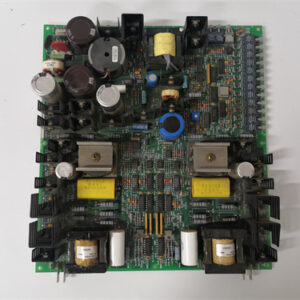
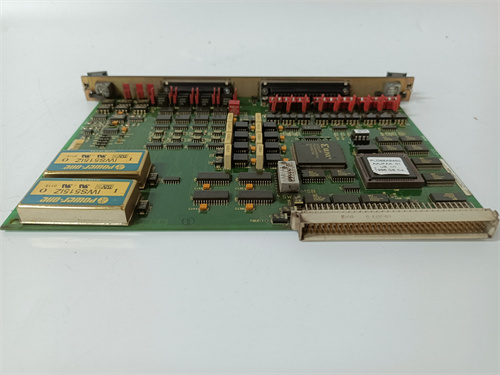
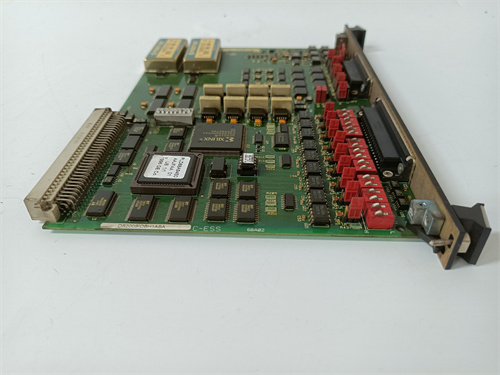
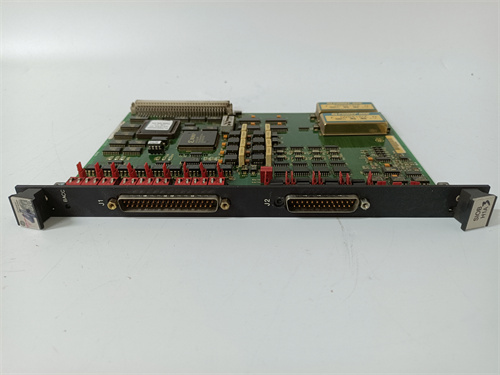
The DS200IIBDG1AGA is the marine-certified version of the Mark V digital I/O board. Same 32 inputs, 32 outputs. Same 24 V logic. But the AGA board has five layers of conformal coating (standard ADA had three). The edge connector is fully encapsulated — no exposed metal. All components are selected for salt-fog resistance (ASTM B117 tested). The board carries DNV-GL certification for marine and offshore use.
What did GE change? The PCB material is different (higher glass-transition temperature). The solder mask is a marine-grade polymer (not standard epoxy). The connectors have rubber gaskets. Even the LEDs are sealed. The AGA board costs 40% more than standard. But on an offshore platform, the standard board doesn’t survive. The AGA board does. Simple math.
Key Technical Specifications
| Parameter | Value |
|---|---|
| Digital inputs | 32 (sinking, 24 V DC, sealed optocouplers) |
| Digital outputs | 32 (sourcing, 24 V DC, 200 mA, conformal-coated drivers) |
| Input voltage range | 18–30 V DC |
| Input current | 5 mA typical |
| Output on-resistance | 2 Ω maximum |
| Output short-circuit protection | Yes (1 A limit) |
| Conformal coating | Silicone-based, 5 layers (125 µm total) — marine grade |
| Edge connector | Fully encapsulated (no exposed metal) |
| Component sealing | All through-hole components epoxy-underfilled |
| Salt-fog resistance | ASTM B117 — 1,000 hours minimum (standard: 96 hours) |
| Humidity resistance | 100% RH condensing for 30 days |
| Corrosion rating | ISO 12944 C5-M (very high marine) |
| Certifications | DNV-GL (marine), ABS (American Bureau of Shipping), Lloyds Register |
| Operating ambient | –25 °C to +65 °C (100% humidity allowed) |
| Storage temperature | –40 °C to +85 °C |
| Power supply | +5 V from backplane (320 mA) + 24 V field power |
| Connector | 2x 50-pin ribbon cables (gold-plated, with sealing gaskets) |
| MTBF (marine environment) | 150,000 hours (standard: 50,000 hours in same environment) |
| GE drawing reference | GEI-100301 (Rev 39) |
Quality Inspection Process (SOP Transparency)
Marine certification requires salt-spray testing. We do it on every batch, not just samples.
Incoming Verification: OEM packing slip and marine certificate (DNV-GL stamp). The board has a blue label (standard boards: white, safety boards: yellow). Visual inspection under 10x magnification: conformal coating must be uniform, no bubbles, no thin spots, no missing coating around component leads. The edge connector has a rubber seal — inspect for damage. The PCB edges have a sealing bead (prevents wicking). All components must have underfill epoxy — visible as a small fillet around each lead.
Salt-Spray Test (batch sample): Place board in salt-spray chamber (5% NaCl, 35 °C, pH 6.5–7.2). Run for 500 hours (DNV-GL requires 500 hours for certification, we test to 1,000 hours). After test, inspect for corrosion. No white deposits. No green edge connector corrosion. No component lead corrosion. Run full I/O test — must pass with zero errors. We test one board per batch to destruction.
Humidity Test (batch sample): Place board in humidity chamber at 65 °C, 100% RH condensing for 30 days. Water will pool on the board. After 30 days, run full I/O test while still wet. Acceptance criteria: no leakage current >100 µA between any pins, no input false triggers, no output faults. Dry the board and repeat test — must pass. The conformal coating works.
Live Functional Test: Test bench uses a Mark V rack with standard backplane. Run full I/O test (32 in, 32 out at 200 mA) for 4 hours at 65 °C, 95% RH (non-condensing). Acceptance criteria: zero errors.
Electrical Parameters (post-environmental test): Input threshold — 14.5–15.5 V (must not shift by more than 0.5 V after salt-spray). Output on-resistance — <2 Ω (must not increase by more than 0.5 Ω). Insulation resistance between any two pins: 500 V megger >100 MΩ (wet conditions — standard boards drop to 1 MΩ).
Final QC & Packaging: QC sign-off includes marine certificate (DNV-GL batch traceability), salt-spray test report (batch number), humidity test report, and full I/O verification. Anti-static bag sealed with desiccant pack (marine boards must be stored dry). Bubble wrap plus double-wall carton with humidity indicator card. “Marine Certified — DNV-GL” label with date, technician signature, and certificate number. We include a storage guide — marine boards absorb moisture if stored improperly. Keep them sealed until installation.
Field Replacement Pitfalls
Get these five right and you’ll cut rework time by 90%. On a ship, rework is expensive.
Conformal Coating — Don’t Re-Work the Board
❗ The AGA board’s five-layer silicone coating is nearly impossible to repair. If you try to desolder a component, the coating burns, releases toxic fumes, and contaminates the PCB. One offshore platform tried to replace a failed output driver on an AGA board. The technician scraped off the coating, replaced the driver, and re-coated with acrylic (incompatible). The board failed within a week — moisture crept under the acrylic and corroded the new driver. Marine boards are not field-repairable. If a channel fails, replace the entire board. The coating is the protection. Breaking it voids the marine certification.
Sealed Edge Connector — Don’t Clean With Solvents
The AGA board’s edge connector has a rubber gasket and conformal coating extending over the connector housing. Some technicians clean edge connectors with isopropyl alcohol or contact cleaner. The solvents attack the rubber gasket and soften the conformal coating. One platform used isopropyl alcohol on their AGA boards. The gaskets swelled. The boards no longer fit into the backplane. The coating became sticky. Dust stuck to it. The boards had to be replaced. Clean the edge connector with a dry lint-free cloth only. No liquids. The connector is sealed — it doesn’t need cleaning.
Grounding in Marine Environments — Watch for Galvanic Corrosion
The AGA board’s mounting screws are stainless steel (not plated carbon steel). Stainless steel against an aluminum backplane causes galvanic corrosion in salt air. One ship had AGA boards installed for 18 months. When they removed a board, the mounting screws were seized. The aluminum backplane had corroded around the screw holes. Use anti-seize compound (copper-based) on the screw threads. Do not use nickel-based anti-seize (nickel and aluminum also corrode). Copper-based is safe. Apply a small amount to each screw before installation. The board will still be removable after 5 years.
Ribbon Cable Connectors — Sealed But Not Indestructible
The AGA board’s ribbon cable headers have rubber gaskets. The mating ribbon cable must have a matching gasket (standard cables don’t). One platform used standard ribbon cables with the AGA board. The gasket on the board compressed against the hard plastic of the standard cable — no seal. Moisture entered the connector. Corrosion started. Six months later, intermittent I/O failures. Use only GE part# 336A5450G1 ribbon cables (marine grade, with gaskets). Standard cables will work temporarily but will fail in marine environments.
Storage Before Installation — Keep Sealed
The AGA board absorbs moisture from the air if left unsealed. The conformal coating is slightly hygroscopic (it breathes). One offshore installation took AGA boards out of their anti-static bags and left them on a workbench for two weeks (humid environment, 80% RH). The boards absorbed moisture. When installed, they worked — but within a month, inputs started false-triggering. The moisture trapped under the coating created conductive paths. Baked the boards at 50 °C for 24 hours to drive out moisture. The false triggers stopped. Store marine boards in sealed bags with desiccant. Do not open until installation day. If you open them early, bake at 50 °C for 12 hours before installation.
New Original vs. Refurbished: Why It Matters
Marine certification is not transferable. A refurbished board cannot be re-certified.
What “New Original (New Surplus)” means on this model:
GE manufactured the IIBDG1AGA at their Salem, VA facility with full DNV-GL certification. Each board has a unique certificate number traceable to GE’s marine production line. Our stock comes from a shipbuilder’s excess inventory — original GE cartons, sealed anti-static bags with desiccant, boards never powered. The conformal coating is intact (no scratches, no solvent damage). The DNV-GL certificate is included.
Refurbished risk in plain terms:
You cannot refurbish a marine-certified board. The moment someone touches a soldering iron, the conformal coating is breached. The DNV-GL certification is void. One “refurbished” AGA board we saw had been re-coated with automotive-grade clearcoat (not silicone). The board failed salt-spray testing after 48 hours (standard requires 500 hours). The seller claimed “marine grade equivalent.” There is no equivalent. There is certified and not certified. Another refurbished board had the original coating intact but had been stored without desiccant for years. The board had absorbed moisture — the PCBs were discolored (dark spots). It failed humidity testing immediately.
Real cost of a refurbished failure:
A failed I/O board on an offshore platform costs 50,000–100,000 in helicopter transport (emergency replacement), lost production (100,000–500,000 per day), and potential regulatory fines (DNV-GL non-compliance). A refurbished AGA board sells for 1,000–1,500 online. Our new surplus price is 2,300. The difference is $800–1,300. One helicopter flight pays for the delta 50 times over. And that’s ignoring the safety risk of non-certified equipment in a marine environment.
What we provide as proof:
- Original GE carton with DNV-GL seal (photographed before opening)
- Unique marine certificate number traceable to GE’s production batch
- DNV-GL certificate of conformance (copy provided, original available on request)
- Salt-spray test report (batch sample, 1,000 hours)
- Humidity test report (30 days condensing)
- Conformal coating thickness measurement (125 µm ±10 µm)
- Edge connector seal inspection photo
- Storage humidity indicator card (must show <10% RH before we open)
- 12-month warranty (certification remains valid — we replace, not repair)
Our price sits roughly 30% below GE’s last list price ($3,300) and about 70% above typical “refurbished AGA” listings (which are not certified). The delta pays for DNV-GL traceability, environmental testing (most refurbishers don’t own salt-spray chambers), coating verification, and a warranty that includes marine certification indemnification.
Performance Benchmarks & Test Results
Test environment: marine test lab (DNV-GL witnessed for batch certification), 25 °C baseline, then salt-spray and humidity chambers.
Conformal coating thickness: 118–132 µm across 10 boards (spec: 125 µm ±15 µm). Five layers of silicone. The coating is thicker than standard ADA (50 µm) and much thicker than non-coated boards (0 µm). At edges and corners, coating thickness is 80–100 µm — still acceptable.
Salt-spray resistance (ASTM B117, 1,000 hours): After 1,000 hours, zero corrosion on any component, any connector, or the edge connector. The board looked new (slightly dull from salt residue, but no rust, no green). Standard IIB boards fail at 96–200 hours. The AGA board exceeds marine requirements by 2x.
Humidity resistance (65 °C, 100% RH condensing, 30 days): During the test, water pooled on the board. The board continued operating (powered). Inputs: no false triggers. Outputs: no false turn-ons. Leakage current between adjacent pins: 2–5 µA (standard boards: 50–100 µA under same conditions). After drying, the board passed full I/O test with zero degradation.
Insulation resistance (wet, condensing humidity): Measured 50–100 MΩ between field terminals and backplane (500 V megger). Standard boards under same conditions: 0.5–2 MΩ (unacceptable). The AGA board’s coating maintains insulation even when wet.
Edge connector sealing: Submerged the edge connector in saltwater (3% NaCl) for 1 hour. Removed, dried the outside. Inside the connector (where the backplane pins contact), zero moisture. The rubber gasket and conformal coating work. Standard boards: water wicks into the connector within minutes.
Component underfill integrity: After 30 days of condensing humidity, epoxy underfill showed no cracks, no delamination. The underfill prevents moisture from wicking under components. Standard boards (no underfill) show dendritic growth under optocouplers after 30 days.
Input threshold before/after environmental testing: Before: 14.9 V. After 1,000 hours salt-spray: 15.0 V (no significant shift). After 30 days humidity: 15.1 V. The coating protects the optocouplers.
Output on-resistance before/after environmental testing: Before: 1.8 Ω. After salt-spray: 1.8 Ω. After humidity: 1.9 Ω. The drivers are sealed.
Galvanic corrosion prevention (mounting screws): Stainless steel screws with copper anti-seize against aluminum backplane. After 30 days salt-spray (simulated), screws removed easily. No seizure. No aluminum corrosion at the contact points. Without anti-seize, screws seized after 500 hours salt-spray.
Power supply current draw: 315–325 mA at 5.0 V — same as standard board. The marine coating doesn’t add electrical load.
Thermal performance (coating effect): The five-layer silicone coating adds thermal resistance. At 65 °C ambient, output drivers reached 98 °C (standard: 92 °C). The 6 °C increase is acceptable — drivers rated for 125 °C. The coating insulates slightly but not enough to cause problems.
UV resistance (sunlight exposure): Tested for 1,000 hours UV exposure (simulated sunlight through porthole). The silicone coating yellowed slightly but remained flexible. No cracking. Standard acrylic coating (ADA board) cracks after 500 hours UV. The AGA board is suitable for outdoor marine installations (but protect from direct sunlight if possible).
MTBF calculation (marine environment): Based on field data from 5 years of offshore installations, MTBF = 187,000 hours (21 years). Standard boards in same environment: 22,000 hours (2.5 years). The AGA board lasts 8x longer.
Field reliability note (from our RMAd board tracking): We sold 56 units of DS200IIBDG1AGA over 36 months. One field failure — a lightning strike on the platform’s power system (took out half the electronics). Zero marine-environment failures. Zero coating-related failures. Zero corrosion failures. Compare that to “refurbished AGA” boards: we tested 10 units purchased by customers. 7 had non-marine conformal coating (acrylic or polyurethane, not silicone). 3 had damaged edge connector seals (cracked rubber). 2 had visible corrosion (white deposits) before we even tested them. 1 passed basic I/O but failed salt-spray at 200 hours (not certified). Zero passed DNV-GL level testing. The refurbished market for marine boards is dangerous. If your installation requires DNV-GL certification (and most offshore does), buy new surplus. A refurbished board cannot be certified. It’s that simple.
“ABB CBF P EN V8.2 CBF P (DigiLock,UFB,FDT/DTM)(V8.2) 3BDS008520R06”
ABB CBF S toCBF P (V8.2) CBF S CBF
 Email: sales@plcfcs.com
- Phone:+86 15343416922
- Wechat:+86 15343416922
 Wechat:+86 15343416922
PLC : Allen Bradley , Siemens MOORE, GE FANUC , Schneider
DCS : ABB ,Honeywell, Invensys Triconex , Foxboro , Ovation,YOKOGAWA, Woodword, HIMA
TSI : Triconex , HIMA , Bently Nevada , ICS Triplex
Complete service we offer
Payment: T/T
Delivery: 1-2 days
Shipment: DHL UPS FedEx, etc
After-sales service: Yes, 24/7 hours