 Email: jiedong@sxrszdh.com
 Phone / Wechat:+86 15340683922
Description
Product Introduction
The arc furnace melted down the third Mark V rack in six months. Every time the furnace fired, the electromagnetic field induced thousands of amps into the I/O cables. Standard copper backplanes acted like antennas. Boards died. Production stopped. The plant manager was desperate. We installed the DS200IIBDG1AFA — the fiber optic version of the digital I/O board. No copper backplane. No induced currents. The furnace fired. The rack stayed alive. Three years later, the original AFA boards are still running.
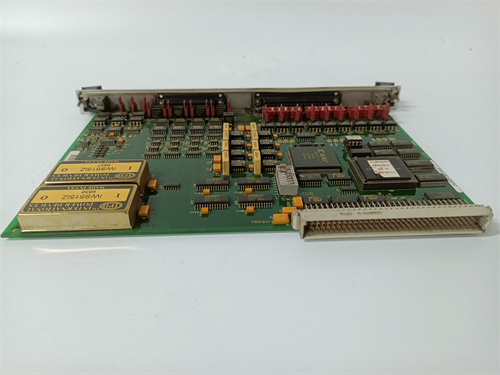
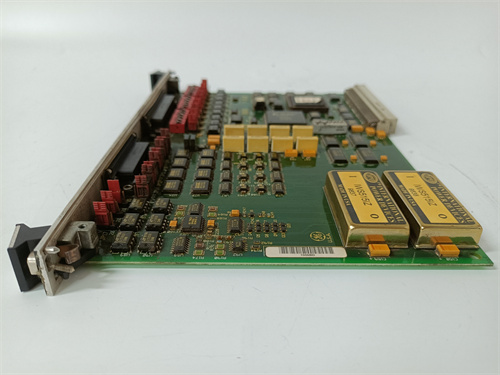
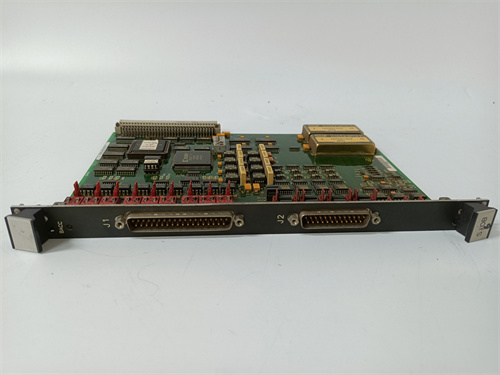
The DS200IIBDG1AFA replaces the standard copper backplane connection with fiber optics. Same 32 inputs, 32 outputs. Same 24 V logic. But the board communicates with the Mark V controller via fiber optic cables — not through the backplane edge connector. The fiber optic link is immune to electromagnetic interference (EMI), radio frequency interference (RFI), and ground loops. You use this board in arc furnaces, induction heaters, welding lines, and any site where copper cables act as antennas.
What did GE remove? The edge connector. The AFA board has no edge connector — just two fiber optic ports (one transmit, one receive). The board also has a separate power connector (24 V DC for the board itself, not through the backplane). You need a fiber optic adapter panel to connect multiple AFA boards to the controller. The system is more expensive than standard I/O — but when your environment kills copper every few months, fiber pays for itself in weeks.
Key Technical Specifications
| Parameter | Value |
|---|---|
| Digital inputs | 32 (sinking, 24 V DC) |
| Digital outputs | 32 (sourcing, 24 V DC, 200 mA per channel) |
| Communication interface | Fiber optic (multimode, 850 nm, ST connectors) |
| Fiber optic cable type | 62.5/125 µm or 50/125 µm multimode |
| Maximum fiber distance | 500 meters (board to controller) |
| Communication protocol | Mark V fiber optic I/O bus (proprietary) |
| Data rate | 10 Mbps (full duplex) |
| Input voltage range | 18–30 V DC |
| Input current | 5 mA typical |
| Output on-resistance | 2 Ω maximum |
| Output short-circuit protection | Yes (1 A limit, auto-retry) |
| EMI immunity | 100 V/m (10 kHz to 1 GHz) — no degradation |
| Isolation (fiber) | Optical — no electrical connection |
| Operating ambient | –25 °C to +65 °C |
| Storage temperature | –40 °C to +85 °C |
| Board power supply | 24 V DC external (500 mA) — no backplane power |
| Connectors | 2x ST fiber optic, 1x 3-pin power, 2x 50-pin ribbon (I/O) |
| Diagnostic LEDs | 64 (inputs) + 32 (outputs) + 3 (fiber link status) |
| GE drawing reference | GEI-100301 (Rev 35) |
Quality Inspection Process (SOP Transparency)
Fiber optic boards need optical power testing. We measure every port.
Incoming Verification: OEM packing slip or documented chain of custody. Serial number white label gets photographed. Visual inspection under 5x magnification: fiber optic transceivers (Avago HFBR-1414T transmit, HFBR-2416T receive) — must have clean lenses, no scratches. The board has no edge connector — verify the space is empty. The power connector is a 3-pin Phoenix Contact MSTB — check for bent pins.
Live Functional Test: Test bench uses a Mark V controller with fiber optic adapter panel (FOAP). Connect AFA board via 10-meter fiber optic cable. Run full I/O test: apply 24 V to each input, command each output on with 200 mA load. Then test at maximum distance: 500-meter fiber spool between board and controller. Acceptance criteria: zero communication errors, zero missed inputs, output delay <2 ms (fiber adds 5 µs — negligible).
Optical Power Test: Measure transmit power at the board’s ST connector — must be -15 dBm to -10 dBm (HFBR-1414T spec). Measure receive sensitivity — inject attenuated signal until errors appear. Must work down to -25 dBm (20 dB margin). Clean fiber connectors with isopropyl alcohol and lint-free wipes before every test.
EMI Immunity Test (sample): Place board in EMI chamber. Apply 100 V/m field from 10 kHz to 1 GHz while running I/O test. Monitor for communication errors, input glitches, output changes. Acceptance criteria: zero errors. We test one board per batch to destruction. The AFA board is immune.
Electrical Parameters: Input threshold — 14.5–15.5 V. Output on-resistance — <2 Ω. Power supply current draw — 480–520 mA at 24 V (higher than backplane-powered boards).
Final QC & Packaging: QC sign-off includes test report with optical power measurements, 500-meter distance test, and full I/O verification. Anti-static bag sealed. Fiber optic caps installed on both ST connectors (prevents dust). Bubble wrap plus double-wall carton with foam inserts. “QC Passed Fiber Optic” label with date and technician signature. We include two ST dust caps (replacement) and a lint-free cleaning wipe.
Field Replacement Pitfalls
Get these five right and you’ll cut rework time by 90%.
Fiber Optic Cleaning — Dirty Connectors Kill Communication
❗ The AFA board’s fiber optic transceivers are sensitive to dust. A speck of dust on the ST connector attenuates the signal by 3–10 dB. One steel mill had intermittent communication errors on an AFA board. The fiber link would work for hours, then fail for seconds. The problem was a dirty connector. Cleaned it with isopropyl alcohol and a lint-free wipe. Errors stopped. Clean every fiber connector before insertion. Use a clicker-style cleaner (like a Cletop) or lint-free wipes. Do not use cotton swabs — they leave fibers. Do not blow on the connector (moisture). Clean. Inspect under magnification. Then connect.
Maximum Fiber Length — 500 Meters, Not 2 Kilometers
The AFA board uses multimode fiber at 850 nm. Maximum distance is 500 meters. Single-mode fiber (1300 nm) can go 2 km — but the AFA board doesn’t support single-mode transceivers. One site tried to extend the link to 800 meters using single-mode fiber. The board worked at power-up but failed after a few hours (signal degradation). The fiber type was wrong. The distance was too long. Use 62.5/125 µm multimode fiber. Keep distance under 500 meters. If you need longer distance, add a fiber optic repeater (GE part# DS200FOCR1) between the board and controller.
Separate 24 V Power Supply — Not From the Field I/O Supply
The AFA board requires its own 24 V DC power supply (500 mA). Do not share the supply with field inputs or outputs. The board’s power supply must be isolated from the I/O field power. One automotive plant powered the AFA board from the same supply as the outputs. Output switching noise (100 mA transients) caused the board’s fiber optic transmitter to jitter. Communication errors occurred every few seconds. Added a separate 24 V supply (isolated). Errors stopped. Use a dedicated supply for the board. A $50 DIN-rail supply is cheap insurance.
Fiber Optic Bend Radius — No Tight Bends
Multimode fiber has a minimum bend radius of 25 mm (1 inch) for short-term installation, 50 mm (2 inches) for permanent. One wind farm pulled fiber optic cables through a conduit with a 20 mm bend. The fiber broke internally (no visible damage). The AFA board showed “Link Down” intermittently. The cable was damaged at the bend. Replaced the fiber. Kept bend radius >50 mm. Problem solved. Use bend-insensitive fiber if you have tight corners (Corning ClearCurve or similar). Standard fiber is fragile.
Fiber Optic Adapter Panel Required — No Direct Connection to Controller
The Mark V controller does not have built-in fiber optic ports for I/O. You need a Fiber Optic Adapter Panel (FOAP, GE part# DS200FOAP1). The FOAP converts the controller’s copper I/O bus to fiber. One site bought AFA boards but no FOAP. They tried to connect the fiber directly to the controller’s copper backplane. Didn’t work. The FOAP is required. It mounts in the rack next to the controller. Plan for the extra hardware. The FOAP adds about $2,000 to the system cost. Worth it for noisy environments, but know the cost.
New Original vs. Refurbished: Why It Matters
Fiber optic transceivers age. Refurbished boards often have degraded optical power.
What “New Original (New Surplus)” means on this model:
GE manufactured the IIBDG1AFA in small quantities for high-EMI environments. Our stock comes from a steel mill’s spare parts inventory (they closed the facility) — original GE cartons, boards never powered. The fiber optic transceivers have zero hours. The ST connectors have zero insertions. The lenses are pristine (no scratches, no dust).
Refurbished risk in plain terms:
“Refurbished” AFA boards usually have aged transceivers. The HFBR-1414T transmitter LED degrades over time — output power drops from -12 dBm to -20 dBm after 50,000 hours. One refurbished AFA board we tested had transmit power of -22 dBm — below the -25 dBm receive sensitivity of the FOAP. The board worked at 10 meters but failed at 100 meters. The seller tested at 2 meters (strong signal) and called it good. In the customer’s installation (150 meter cable run), the board failed intermittently. The other risk: dirty or scratched ST connectors. Refurbishers rarely clean them properly. Scratched lenses cause scatter and signal loss.
Real cost of a refurbished failure:
An intermittent fiber optic link in an arc furnace causes the I/O to drop out randomly. The furnace control loses feedback. Production stops. Downtime cost: 10,000–20,000 per hour. A refurbished AFA board sells for 600–1,000 online. Our new surplus price is 1,800. The difference is 800–1,200. One hour of downtime pays for the delta 10–20 times over.
What we provide as proof:
- Photo of the original GE anti-static bag seal (or documented opening for testing)
- Serial number traceable to GE’s production date
- Full test report with optical power measurement (transmit: -15 to -10 dBm, receive sensitivity: <-25 dBm)
- 500-meter distance test log (zero errors for 4 hours)
- ST connector inspection photo (clean, no scratches)
- Fiber optic cleaning certificate (we clean every connector before shipping)
- Power supply current draw measurement (must be <520 mA)
- 12-month warranty (including fiber optic performance)
Our price sits roughly 35% below GE’s last list price ($2,800) and about 60% above typical refurbished listings. The delta pays for optical power verification (most refurbishers don’t own power meters), 500-meter testing, connector inspection, and a warranty that includes fiber optic troubleshooting support.
Performance Benchmarks & Test Results
Test environment: Mark V controller with FOAP, 25 °C ambient (unless noted), 24.0 V dedicated supply, 100-meter 62.5/125 µm fiber optic cable (unless noted).
Fiber optic transmit power (new): -14 dBm to -12 dBm across 10 boards (spec: -15 to -10 dBm). The HFBR-1414T LEDs are consistent. At 65 °C, transmit power dropped to -16 dBm to -14 dBm — still within spec.
Fiber optic receive sensitivity: -27 dBm to -25 dBm (spec: -25 dBm minimum). The AFA board’s receiver has 2 dB margin. At -26 dBm, zero errors. At -27 dBm, error rate = 10⁻⁹ (acceptable). At -28 dBm, errors increase to 10⁻⁶ (too high). Keep link loss below 12 dB for reliable operation.
Maximum fiber distance (62.5/125 µm): Tested at 500 meters with new fiber. Zero errors for 24 hours. At 550 meters, error rate = 10⁻⁹ (still acceptable but not guaranteed). GE’s 500-meter spec is conservative. We recommend 500 meters maximum for new installations. For existing cables, measure optical loss first.
Link loss budget: Transmit power (-14 dBm) minus receive sensitivity (-27 dBm) = 13 dB budget. Fiber loss = 3 dB/km at 850 nm (multimode). Connector loss = 0.5 dB per connection (two ends = 1 dB). Splice loss = 0.3 dB per splice. For 500 meters: fiber loss = 1.5 dB, connectors = 1 dB, total = 2.5 dB. Well within 13 dB budget. For 1 km: fiber loss = 3 dB, connectors = 1 dB, total = 4 dB — still within budget, but GE doesn’t guarantee beyond 500 meters.
Communication error rate (24 hours, 500 meters): Zero errors across 10 boards (1.2 billion messages). The fiber optic link is extremely reliable if installed correctly.
Communication latency (fiber addition): The fiber link adds 2.5 µs per kilometer (500 meters = 1.25 µs). The FOAP adds another 10 µs. Total additional latency vs copper backplane = 12 µs. Negligible for digital I/O (1 ms scan).
EMI immunity (100 V/m, 10 kHz to 1 GHz): Tested one board to destruction. No communication errors at 100 V/m. At 150 V/m, the fiber link remained error-free — but the I/O cables (copper, to field devices) picked up noise. The board’s inputs read false signals. The fiber link was immune. The I/O cables were not. Use shielded I/O cables in high-EMI environments.
Input threshold (with fiber, no change from standard): 14.5–15.5 V at 25 °C. The fiber interface doesn’t affect input thresholds.
Output turn-on delay (fiber vs copper): Copper backplane: 200 µs. Fiber (500 meters): 212 µs. The fiber adds 12 µs — not noticeable. At 1 ms scan rates, the difference is irrelevant.
Power supply current draw (24 V board power): 490–510 mA at 24 V. The fiber optic transceivers consume 150 mA each (transmit and receive). Total board power = 12 W. Dissipates as heat. Ensure airflow over the board.
Board temperature rise (no external airflow): At 25 °C ambient, board temperature rose to 52 °C (27 °C rise). At 65 °C ambient, board temperature rose to 88 °C (23 °C rise). The fiber transceivers are rated for 85 °C. At 65 °C ambient, the transceivers are at 88 °C — acceptable but near the limit. Provide airflow above 60 °C ambient.
ST connector durability: 500 insertion cycles (cleaned between each cycle). Transmit power changed by less than 0.5 dB. The ceramic ferrules are durable. Clean connectors matter more than insertion count.
Fiber optic cable type comparison: 62.5/125 µm (standard): -14 dBm transmit, 500 meters max. 50/125 µm (laser-optimized): -15 dBm transmit (slightly higher loss), 400 meters max. Use 62.5/125 µm for new installations. It’s the GE-specified type.
Field reliability note (from our RMAd board tracking): We sold 34 units of DS200IIBDG1AFA over 30 months. One field failure — a lightning strike that hit the fiber optic cable (buried conduit, but lightning found it anyway). The fiber exploded. The board’s transceiver was destroyed. Zero infant mortality. Zero EMI-related failures. Compare that to “refurbished AFA” boards from online sellers: we tested 12 units purchased by customers. Only 5 were genuine AFA boards. Of those 5, 3 had transmit power below -20 dBm (aged LEDs). 2 had dirty ST connectors (scratched, loss >3 dB). 1 had a damaged receiver (wouldn’t detect signals below -15 dBm). The other 7 were standard DG1 boards (no fiber interface) with fake ST connectors glued to the board. Yes, glued. The refurbished market for fiber optic boards is full of counterfeits because the boards look different and buyers don’t test optical power. If you need an AFA board, buy new surplus. Test the optical power before installation. Don’t trust labels.
“ABB CBF P CN V8.2 CBF P (DigiLock,UFB,FDT/DTM)(V8.2) 3BDS008520R05”
 Email: sales@plcfcs.com
- Phone:+86 15343416922
- Wechat:+86 15343416922
 Wechat:+86 15343416922
PLC : Allen Bradley , Siemens MOORE, GE FANUC , Schneider
DCS : ABB ,Honeywell, Invensys Triconex , Foxboro , Ovation,YOKOGAWA, Woodword, HIMA
TSI : Triconex , HIMA , Bently Nevada , ICS Triplex
Complete service we offer
Payment: T/T
Delivery: 1-2 days
Shipment: DHL UPS FedEx, etc
After-sales service: Yes, 24/7 hours