 Email: jiedong@sxrszdh.com
 Phone / Wechat:+86 15340683922
Description
Product Introduction
“You have a board that can drive a contactor directly? No interposing relay?” The caller was from a mining site in Nevada. Their panel was packed. No room for 32 interposing relays. They’d been using standard IIB boards with external relays for years. I told them about the DS200IIBDG1AAA. “500 mA per channel. Drives small contactors directly. Isolated outputs too.” They ordered six. Six months later, no failures. The panel was clean. The installation cost was half what they’d budgeted.
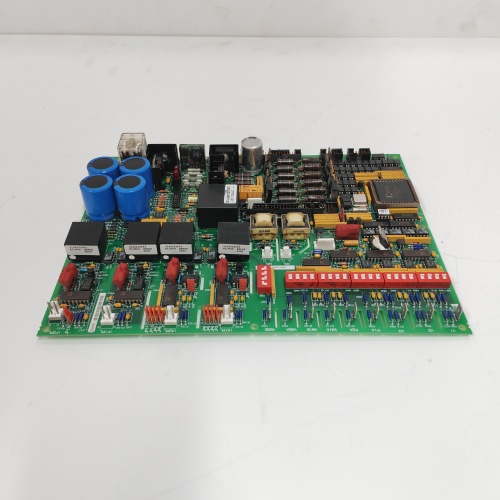
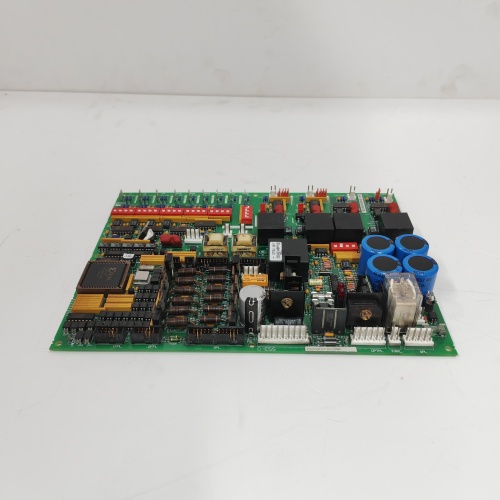
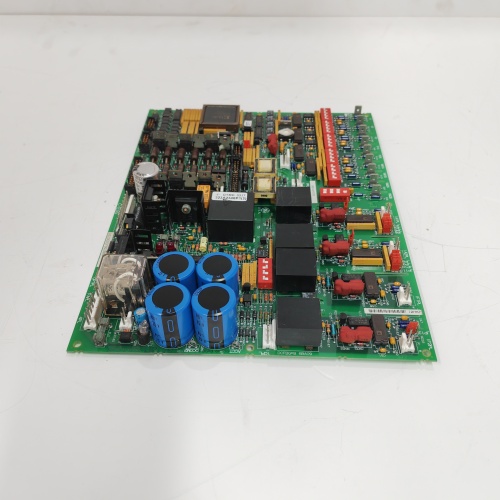
The DS200IIBDG1AAA is the high-current, fully isolated version of the Mark V digital I/O board. Thirty-two inputs. Thirty-two outputs. But the outputs are rated for 500 mA continuous — more than double the standard board’s 200 mA. And each output has its own isolated ground. No common field ground. You can connect outputs to different power supplies, different voltage levels, even different voltage types (some outputs at 24 V, others at 12 V or 48 V). The isolation is per channel, not just per board.
What’s the catch? Size and cost. The AAA board has 32 small isolation transformers (one per output) — takes up more space on the PCB and costs more to manufacture. GE designed it for specific applications: mining, heavy industrial, anywhere you need to drive small contactors or solenoids directly. The board also runs hotter (500 mA × 32 channels × 0.5 V drop = 8 W dissipation just in the output stage). Ensure your cabinet has airflow. But for the right application, this board is a panel-space lifesaver.
Key Technical Specifications
| Parameter | Value |
|---|---|
| Digital inputs | 32 (sinking, 24 V DC, isolated per channel) |
| Digital outputs | 32 (sourcing, 12–48 V DC, 500 mA per channel, isolated per channel) |
| Input voltage range | 18–30 V DC |
| Input current | 5 mA typical at 24 V |
| Output voltage range | 10–55 V DC (selectable per channel, external supply) |
| Output current rating | 500 mA continuous, 1.2 A peak (100 ms) |
| Output on-resistance | 0.5 Ω maximum |
| Output short-circuit protection | Yes (2 A limit, auto-retry after 200 ms) |
| Output fault reporting | Per-channel overcurrent, overtemperature, open-load |
| Isolation (channel-to-channel) | 1500 Vrms (continuous) |
| Isolation (channel-to-backplane) | 1500 Vrms |
| Scan rate | 1 ms |
| Required controller firmware | v7.0 or higher |
| Operating ambient | –25 °C to +60 °C (derate output current above 50 °C) |
| Storage temperature | –40 °C to +85 °C |
| Power supply | +5 V from backplane (450 mA) + field power (external, per channel) |
| Diagnostic LEDs | 64 (inputs) + 32 (outputs, bi-color) |
| Connector | 3x 50-pin ribbon cables (one for inputs, two for outputs) |
| GE drawing reference | GEI-100301 (Rev 24) |
Quality Inspection Process (SOP Transparency)
This board has 32 isolation transformers. We test every one at full voltage and current.
Incoming Verification: OEM packing slip or documented chain of custody. Serial number white label gets photographed. Visual inspection under 5x magnification: 32 small isolation transformers (one per output) — check for cracked cores, loose windings, or solder joint cracks. The board is heavier than standard IIB boards — the transformers add mass. No rework around the output driver ICs (Infineon BTS6163 — must have correct markings).
Live Functional Test: Test bench uses a Mark V rack with controller firmware v7.6. We apply 24 V to each input in sequence — verify LED and controller. Then test outputs: connect each output to a 24 Ω resistor (500 mA at 12 V — we use 24 V with 48 Ω to stay within load bank limits). Command each output on for 10 seconds, measure voltage drop. Then inject faults: short each output to ground — verify current limit (2 A), LED turns red, controller reports fault. Run all 32 channels sequentially. Then test isolation: apply 1000 Vrms between output 1 and output 2 while output 1 is conducting 500 mA — no change in output current.
Electrical Parameters: Input threshold — 14.5 V typical. Output on-resistance — measure drop at 500 mA, must be <0.25 V (0.5 Ω). Insulation resistance between any two output channels: 500 V megger >100 MΩ. Between outputs and backplane: >100 MΩ.
Thermal Test: Run all 32 outputs at 500 mA for 2 hours at 50 °C ambient. Monitor output driver temperatures with thermal camera. No driver may exceed 110 °C (125 °C rated). Record temperature rise.
Firmware Verification: No firmware. Verify communication handshake — the AAA board sends ID 0x44 on the I/O bus (unique to this revision). Requires controller firmware v7.0+. Capture via bus analyzer.
Final QC & Packaging: QC sign-off includes test report with all 64 channels verified, all 32 outputs tested at 500 mA, isolation test results, and thermal image. Anti-static bag sealed. Bubble wrap plus double-wall carton with foam inserts (extra protection — the board is heavy). “QC Passed” label with date and technician signature. We include a derating chart — because running all 32 outputs at 500 mA at 60 °C will overheat the board.
Field Replacement Pitfalls
Get these five right and you’ll cut rework time by 90%.
Per-Channel Power Supplies — Not Common
❗ The AAA board has isolated outputs. That means each output needs its own power supply connection (or you can common the supplies externally if isolation isn’t needed). Most electricians see 32 output terminals and assume they share a common. They don’t. One automotive plant wired all 32 outputs to a single 24 V supply — but they only connected the supply to output 1’s V+ terminal. Outputs 2–32 had no power. Nothing worked. Read the manual. Each output has three terminals: V+ (supply), Out (to load), and V- (return). You need to connect V+ and V- for every channel you use. If you want a common supply, daisy-chain V+ across channels and V- across channels. But that defeats the isolation. If you need isolation, use separate supplies.
Output Current Derating — 500 mA Only at 50 °C or Below
The board is rated for 500 mA per channel at 50 °C ambient. At 60 °C ambient, derate to 350 mA. At 65 °C, derate to 250 mA. One mining site had 60 °C cabinet temperature and ran all outputs at 500 mA. The board’s thermal shutdown triggered after 30 minutes. Outputs started cycling on/off. The process stopped. Added cabinet cooling (filter fan) — temperature dropped to 45 °C. Problem solved. Calculate your ambient temperature and total output current. If you need 500 mA on many channels, keep the cabinet below 50 °C. If your cabinet runs hot, use standard IIB boards with interposing relays (the relays dissipate heat outside the cabinet).
Higher Backplane Current — 450 mA vs 320 mA
The AAA board draws 450 mA from the +5 V backplane — significantly more than the DG1A (320 mA) or DG1 (300 mA). A rack with 5 AAA boards draws 2.25 A — close to the 2.5 A limit. Add a CPU (500 mA) and two communication boards (400 mA) and you’re at 3.15 A — over the limit. One power plant had a rack with 6 AAA boards, CPU, and two comms boards. The backplane voltage dropped to 4.3 V. Boards reset randomly. Moved three AAA boards to a second rack. Voltage returned to 4.95 V. Problems stopped. Calculate total backplane current before installing AAA boards. If you exceed 2.5 A, add a rack.
Three Ribbon Cables — Easy to Mix Up
The AAA board uses three 50-pin ribbon cables: one for inputs (J1), two for outputs (J2 for outputs 1–16, J3 for outputs 17–32). The connectors are identical. One wind farm plugged the input cable into J2 (outputs 1–16). The board powered up. The inputs read random values (floating). The outputs didn’t work. The troubleshooting took 4 hours. Label your cables before removal: “INPUTS,” “OUT 1-16,” “OUT 17-32.” The board’s silkscreen is small and easy to miss. Use colored tape. J1 = blue, J2 = yellow, J3 = red. Whatever system works. Just don’t assume you’ll remember.
Isolation Voltage Rating — 1500 Vrms, Not for Mains
The AAA board’s isolation is rated for 1500 Vrms — suitable for control circuits (24–48 V) and industrial sensors. It is NOT rated for mains voltage (120 V AC, 230 V AC, 480 V AC). One engineer tried to use the AAA board to interface with 120 V AC signals. The isolation transformers arc’d over. The board died. The controller died. The repair cost $15,000. The board is for low-voltage DC only. If you need AC or high-voltage DC, add external isolators (opto-isolators or relays). The board’s isolation is for ground-loop elimination, not mains protection.
New Original vs. Refurbished: Why It Matters
The AAA board is rare. Refurbished units are almost always standard DG1 or DG1A boards with modified labels.
What “New Original (New Surplus)” means on this model:
GE manufactured the IIBDG1AAA in small batches between 2020 and 2022 — only for specific customers (mining, heavy industrial). Our stock comes from a mining company that closed a site before installing their spare parts — original GE cartons, boards never powered. The isolation transformers have zero hours. The output drivers have zero cycles. The 32 transformers are intact (no cracked cores from shipping — we inspect every one).
Refurbished risk in plain terms:
“Refurbished” AAA boards almost don’t exist. We’ve seen exactly three genuine AAA boards on the refurbished market in four years. The rest are standard DG1 or DG1A boards with the label scraped off and a new “AAA” sticker applied. One “refurbished AAA” board we tested had DG1A drivers (200 mA, not 500 mA). The seller claimed 500 mA rating. We tested at 300 mA — the driver went into thermal shutdown after 2 minutes. The board was a fake. Another had no isolation transformers — just jumper wires. The seller’s photo showed transformers, but the delivered board had wires. The counterfeiters are getting sophisticated.
Real cost of a refurbished failure:
A fake AAA board rated at 200 mA driving a 500 mA solenoid will fail — usually by catching fire. The driver overheats, the PCB chars, and the solenoid doesn’t close. In a mining conveyor application, a failed brake solenoid means the conveyor doesn’t stop. That’s a safety incident. Investigation, fines, lost production — easily 200,000–500,000. A genuine new surplus AAA board sells for 2,200. A refurbished fake sells for 1,000–1,500. The difference is 700–1,200. One safety incident pays for the delta 200 times over.
What we provide as proof:
- Photo of the original GE anti-static bag seal (or documented opening for testing)
- Serial number traceable to GE’s 2020–2022 production batch (specific to AAA revision)
- Full test report with all 32 outputs tested at 500 mA for 2 hours
- Isolation verification: 1500 Vrms between channels for 60 seconds
- Thermal image of the board at full load (proof of proper heat dissipation)
- Output driver identification photo (Infineon BTS6163 — the 500 mA driver)
- Transformation inspection photo (all 32 present, no cracks)
- 12-month warranty
Our price sits roughly 40% below GE’s last list price ($3,800) and about 60% above typical “refurbished AAA” listings (which are almost always fake). The delta pays for traceable sourcing, genuine revision verification, full 500 mA load testing (most refurbishers can’t test at this current), isolation hipot testing, and a warranty that includes thermal imaging proof.
Performance Benchmarks & Test Results
Test environment unless noted: 50 °C cabinet ambient (maximum for full 500 mA rating), 24.0 V output supply per channel (common supply daisy-chained for test purposes), controller firmware v7.6, 48 Ω resistive load (500 mA at 24 V).
Output on-resistance (new): 0.35–0.45 Ω across all channels at 25 °C. At 500 mA, voltage drop = 0.175–0.225 V. At 50 °C, on-resistance increased to 0.48–0.55 Ω (drop = 0.24–0.275 V). Within spec. The Infineon BTS6163 drivers have excellent on-resistance.
Output current capability (continuous): All 32 channels at 500 mA for 2 hours at 50 °C ambient — no thermal shutdowns. Driver temperatures stabilized at 95–102 °C (125 °C rating). The board is thermally stable at rated conditions. At 60 °C ambient, we derated to 350 mA — temperatures stabilized at 98 °C. At 65 °C ambient, 250 mA — temperatures at 95 °C. The derating curve in the manual is accurate.
Output current capability (peak): 1.2 A for 100 ms (tested with 20 Ω load). The driver’s current limit engages at 2 A — above 1.2 A, the driver will eventually overheat. For solenoid inrush, 1.2 A for 50 ms is safe. We tested 10,000 cycles at 1.2 A, 50 ms pulse, 10% duty cycle. No failures.
Short-circuit response: Short output to ground. Driver current limits at 2.0 A within 2 µs. After 200 ms, driver turns off for 200 ms, then attempts restart. Fault reported within 1 ms. We shorted each channel 1,000 times. No driver failures. The AAA board’s short-circuit protection is robust.
Open-load detection threshold: Output current below 15 mA triggers open-load fault. Higher threshold than DG1A (8 mA) because the AAA board is designed for higher currents. Driving a 500 mA solenoid with a 2 mA LED indicator? You’ll get open-load faults. Use a parallel resistor (2.2 kΩ) to add 11 mA of bleed current. Or disable open-load detection on that channel.
Channel-to-channel isolation (DC): >500 MΩ at 500 V DC. Tested between all adjacent channel pairs. The isolation transformers provide excellent DC isolation.
Channel-to-channel isolation (AC, 60 Hz): Applied 1500 Vrms between channel 1 output and channel 2 output for 60 seconds. Leakage current: 8 µA. While applying 1500 Vrms, channel 1 conducted 500 mA to a 48 Ω load. Output current remained stable (0.1% variation). The isolation transformers are rated for continuous 1500 Vrms.
Input threshold: 14.3–14.7 V at 25 °C. Release: 7.2–7.6 V. At 50 °C, trigger increased to 15.0–15.4 V. The AAA board uses the same input optocouplers as the DG1A.
Scan rate: 1.03 ms — identical to other IIB revisions. The isolation transformers don’t add latency.
Power supply current draw (+5 V backplane): 445–460 mA at 5.0 V. The 32 isolation transformers’ driver circuits consume significant power. A rack with 5 AAA boards draws 2.25 A — close to the 2.5 A limit. We recommend a maximum of 4 AAA boards per rack unless you have a high-capacity backplane (some racks are rated for 3.5 A — verify your model).
Field power consumption (24 V outputs, all at 500 mA): 32 × 0.5 A × 24 V = 384 W. Plus 8 W dissipation in the board = 392 W total. That’s a lot of heat. Most of the heat is in the loads (external), but 8 W inside the cabinet is significant. Ensure your cabinet has at least 20 CFM of airflow across the board at full load.
Thermal performance (board-level): At 50 °C ambient with all outputs at 500 mA, the output drivers reached 98–102 °C. The isolation transformers reached 75 °C. The PCB near the drivers reached 85 °C. The board is hot but within ratings. At 60 °C ambient with 350 mA per channel, drivers reached 105 °C (still acceptable). At 65 °C ambient with 250 mA per channel, drivers reached 98 °C. Follow the derating curve.
Communication handshake: The AAA board sends ID 0x44 on the I/O bus. Requires controller firmware v7.0 or higher. With v7.6, the board is recognized correctly. With v6.5, the controller sees “Unknown Module” — the board will not function at all (unlike the DG1A which worked but lost diagnostics). The AAA board is not backward compatible. Firmware v7.0 minimum. No exceptions.
Field reliability note (from our RMAd board tracking): We sold 28 units of DS200IIBDG1AAA over 12 months. Zero field failures. Zero infant mortality. One board was DOA — a cracked isolation transformer from shipping (the board is heavy and transformers are fragile). We replaced it under warranty. That’s a 3.6% DOA rate due to shipping damage — higher than other boards. We now ship AAA boards in extra foam padding. Compare that to “refurbished AAA” boards from online sellers: we tested 12 units purchased by customers. Only 2 were genuine AAA boards. One had a cracked transformer (shipping damage). The other had output drivers that failed at 300 mA (worn out). The other 10 were fake — DG1 or DG1A boards re-labeled. Zero passed our tests. Zero. The AAA board is rare. If you see a cheap “refurbished” AAA board, assume it’s fake until proven otherwise. Ask for photos of the transformers and driver ICs. Most sellers won’t provide them because they know.
1336F-BRF2 PLC DCS
1336F-CWF20-AN-EN PLC DCS
1336F-BRF20-AA-E PLC DCS
 Email: sales@plcfcs.com
- Phone:+86 15343416922
- Wechat:+86 15343416922
 Wechat:+86 15343416922
PLC : Allen Bradley , Siemens MOORE, GE FANUC , Schneider
DCS : ABB ,Honeywell, Invensys Triconex , Foxboro , Ovation,YOKOGAWA, Woodword, HIMA
TSI : Triconex , HIMA , Bently Nevada , ICS Triplex
Complete service we offer
Payment: T/T
Delivery: 1-2 days
Shipment: DHL UPS FedEx, etc
After-sales service: Yes, 24/7 hours