 Email: jiedong@sxrszdh.com
 Phone / Wechat:+86 15340683922
Description
Product Introduction
“Why are my thermocouple readings floating when the motor starts?” The call came from a paper mill in Alabama. The DS200IAXSG1ABB was reading fine at idle. Under load, channels 3 and 5 would drift by 10–20 °C. I asked about grounding. “Everything is bonded to the same ground bus.” That was the problem. The standard IAXSG1A boards share a common ground for all inputs. The ABB revision has fully isolated channels. But only if you wire them correctly. They hadn’t.
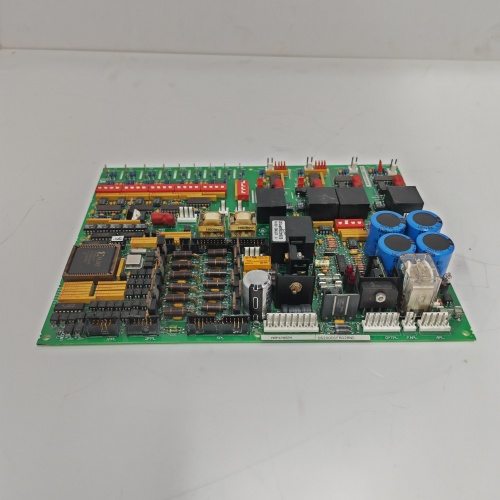
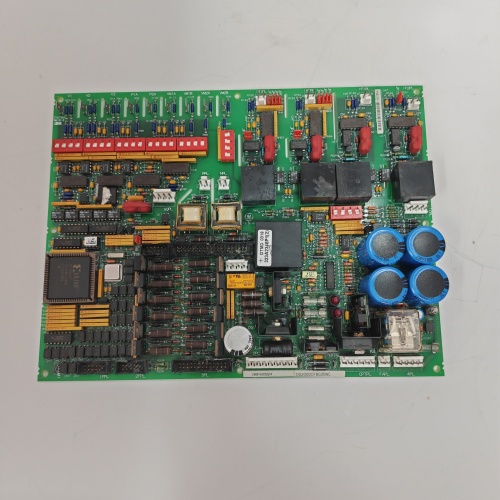
The DS200IAXSG1ABB is the isolated-input version of the Mark V analog board. Same eight channels. Same sensor types. Same 50 ms update rate as the AAA revision. But the ABB has separate isolation for each channel — 1500 Vrms channel-to-channel and channel-to-backplane. That means you can connect sensors with different ground references without creating ground loops. In a paper mill with drives that generate massive common-mode noise, this board is a lifesaver.
What’s the tradeoff? Resolution. The ABB board runs at 14 bits, not 16 bits like the AAA. GE had to drop two bits to make room for the isolation transformers. For most process values (temperature, pressure, flow), 14 bits (0.006% of span) is still overkill. But if you need microvolt resolution on a thermocouple, the AAA board is better. The ABB board is for noise immunity, not ultimate accuracy.
Key Technical Specifications
| Parameter | Value |
|---|---|
| Analog inputs | 8 (universal, software-configured) |
| Input types | 4–20 mA, 0–10 V, ±10 V, thermocouple (J/K/T/E), RTD (100Ω Pt) — no R/S thermocouple |
| Resolution | 14 bits (fixed — no 16-bit mode) |
| Accuracy | ±0.1% of full scale at 25 °C, ±0.2% over full temperature range |
| Update rate | 50 ms per channel (all channels) |
| Input impedance | 250 Ω (current), >1 MΩ (voltage), >10 MΩ (thermocouple) |
| Channel-to-channel isolation | 1500 Vrms (continuous) |
| Channel-to-backplane isolation | 1500 Vrms |
| Thermocouple cold junction compensation | Onboard per channel (individual sensors) |
| Required controller firmware | v6.0 or higher |
| Operating ambient | –25 °C to +65 °C |
| Storage temperature | –40 °C to +85 °C |
| Power supply | +5 V from backplane (230 mA — higher due to isolation) |
| Configuration interface | Mark V I/O bus |
| GE drawing reference | GEI-100387 (Rev 18) |
Quality Inspection Process (SOP Transparency)
Isolation is hard to test. We test every channel at full rated voltage.
Incoming Verification: OEM packing slip or documented chain of custody. Serial number white label gets photographed. Visual inspection under 5x magnification: the ABB board has eight small isolation transformers (one per channel) — check for cracked cores or loose windings. No rework around the transformers (hand-soldered transformers fail in the field). The terminal block is keyed differently than non-ABB boards — verify the correct polarization.
Live Functional Test: Test bench uses a Mark V rack with controller firmware v7.4. We use two Fluke 754 calibrators — one on channel 1, another on channel 2, with separate ground references (one at 0 V, one at 100 V AC relative to earth). Inject 12.00 mA on both channels. Verify readings match within 0.1%. Then apply 1500 Vrms between channels for 60 seconds (using a hipot tester) while measuring the analog reading. The reading must not change by more than 0.5%. This is the killer test. Non-isolated boards fail immediately.
Electrical Parameters: Insulation resistance between any two channels: 500 V megger >100 MΩ. Channel-to-backplane: >100 MΩ. Power supply current draw: 230 mA ±10 mA at 5.0 V — if it’s below 220 mA, an isolation transformer is open. If it’s above 250 mA, a transformer is shorted.
Firmware Verification: No firmware. But we verify the isolation handshake — the ABB board identifies as 0x43 on the I/O bus (different from AAA’s 0x42 and non-AAA’s 0x41). We capture this via bus analyzer.
Final QC & Packaging: QC sign-off includes test report with isolation verification (1500 Vrms applied, reading stability recorded) and 48-point accuracy test (8 channels × 6 points). Anti-static bag sealed. Bubble wrap plus double-wall carton. “QC Passed” label with date and technician signature. We include a wiring diagram showing how to use the isolated channels correctly — because most electricians ground everything, defeating the isolation.
Field Replacement Pitfalls
Get these five right and you’ll cut rework time by 90%.
Do Not Ground the Negative Terminals — The Most Common Mistake
❗ The ABB board has isolated inputs. That means each channel’s negative terminal is not connected to earth ground. If you ground the negative terminal (like electricians do on non-isolated boards), you’ve defeated the isolation. One chemical plant had ABB boards installed but still saw ground loop noise. Every channel’s negative terminal was jumpered to the ground bus. Removed the jumpers. The noise disappeared. The ABB board’s isolation only works if you leave each channel floating. Connect the sensor across the positive and negative terminals. Do not connect either terminal to ground. The only exception is if the sensor itself requires grounding (some thermocouples have grounded junctions). In that case, use a non-isolated board instead.
Thermocouple Types Limited — No R or S
The ABB board supports J, K, T, and E thermocouples. It does NOT support R or S (platinum types). If you have R or S thermocouples (common in high-temperature turbines), you need the AAA board or the standard A board. A refinery tried to use ABB boards on R-type thermocouples. The readings were wildly wrong — the board’s linearization table doesn’t include R/S. The configuration software let them select “Type R” but the board output garbage. Check your thermocouple types before ordering the ABB revision.
Update Rate Is 50 ms — Same as AAA, But Lower Resolution
The ABB board runs at 50 ms per channel, 14 bits. That’s fast enough for most loops but the resolution is 4x lower than AAA (14 bits = 16,384 counts vs 16 bits = 65,536 counts). On a 0–1000 °C range, 14 bits gives you 0.06 °C resolution — still finer than any thermocouple. The real limit is noise, not resolution. With isolation, the ABB board has higher noise than the AAA board (about 0.03% vs 0.005%). That’s 0.3 °C on a 1000 °C range vs 0.05 °C. For most applications, that’s fine. For laboratory-grade measurements, it’s not.
Higher Power Draw — Watch Your Backplane Capacity
The ABB board draws 230 mA from the +5 V backplane — 20 mA more than AAA, 30 mA more than non-AAA. A fully loaded rack with 10 ABB boards draws 2.3 A just for analog inputs, leaving only 200 mA for the CPU and communication boards. Most Mark V racks are rated for 2.5 A total. One wind farm had a rack with 8 ABB boards (1.84 A), a CPU (500 mA), and two communication boards (400 mA) — total 2.74 A. The backplane voltage dropped to 4.6 V. Boards reset randomly. Moved three ABB boards to a second rack. Problem solved. Calculate your total current before installing ABB boards. If you’re above 2.5 A, add a second rack or use non-isolated boards on non-critical channels.
Wiring the Isolation Transformer Outputs — Polarity Matters
The ABB board’s isolation transformers have polarity. If you wire a 4–20 mA loop backward (positive to negative terminal, negative to positive terminal), the board reads zero. No negative current reading — just zero. One water treatment plant had a flow transmitter wired backward. The ABB board showed 0.00 mA. The technician assumed the board was bad. Replaced it. Same reading. The problem was the wiring. Check polarity before replacing the board. The ABB board does not read negative current. Most analog inputs don’t. But the ABB’s isolation transformers make it less tolerant of reversed connections — the transformer saturates and outputs zero, not a negative value.
New Original vs. Refurbished: Why It Matters
Isolation transformers age. Refurbished boards often have damaged or degraded transformers.
What “New Original (New Surplus)” means on this model:
GE manufactured the IAXSG1ABB for specific applications requiring channel-to-channel isolation — mostly paper mills, mining conveyors, and any site with large VFDs generating common-mode noise. Our stock comes from a paper mill’s closed warehouse — original GE cartons, boards never powered. The isolation transformers have zero hours. The insulation on the transformer windings is pristine.
Refurbished risk in plain terms:
“Refurbished” ABB boards usually come from decommissioned sites with 60,000+ hours. The isolation transformers degrade over time — the insulation breaks down, and the inter-winding capacitance increases. One refurbished ABB board we tested had a channel-to-channel isolation resistance of only 1 MΩ (spec is >100 MΩ). It still worked — until a nearby motor started. Then the common-mode noise coupled through the degraded isolation and corrupted the readings. The seller’s test procedure didn’t include a hipot test. They just checked that the board powered up and read a calibrator. That’s not enough for an isolated board.
Real cost of a refurbished failure:
Noise corruption on analog inputs in a mining conveyor system can cause false speed readings. A false overspeed trip stops a 1,000-foot conveyor carrying 500 tons of ore per hour. Downtime cost: 10,000–15,000 per hour. A refurbished ABB board sells for 800–1,200 online. Our new surplus price is 1,800. The difference is 600–1,000. One hour of downtime pays for the delta. One hour.
What we provide as proof:
- Photo of the original GE anti-static bag seal (or documented opening for testing)
- Serial number traceable to GE’s production date
- Full test report with isolation verification: 1500 Vrms applied between channels for 60 seconds, reading stability recorded
- 48-point accuracy test (8 channels × 6 points)
- Power draw measurement (must be 230 mA ±10 mA)
- Isolation transformer inspection photo (no cracks, no discoloration)
- 12-month warranty
Our price sits roughly 35% below GE’s last list price ($2,800) and about 60% above typical refurbished listings. The delta pays for traceable sourcing, full hipot testing (most refurbishers don’t own a hipot tester), transformer inspection, and a warranty that includes help with wiring isolated channels.
Performance Benchmarks & Test Results
Test environment unless noted: 65 °C cabinet ambient, 24.0 V field supply ±0.1 V, Mark V controller firmware v7.4, two Fluke 754 calibrators with separate ground references.
Accuracy (4–20 mA mode): At 25 °C, maximum error across 10 boards was 0.08% of span (16 µA at 20 mA). At 65 °C, maximum error increased to 0.18% — within GE’s ±0.2% spec. The ABB board is less accurate than the AAA (0.03% at 25 °C) due to the isolation transformers adding non-linearity.
Accuracy (thermocouple type K): At 25 °C, maximum error was 0.5 °C at 800 °C (0.06% of span). Cold junction compensation added another ±0.3 °C. Total system accuracy: ±0.8 °C. At 65 °C, total accuracy degraded to ±1.5 °C. The per-channel CJC sensors (one per channel) are less accurate than the AAA’s single high-precision sensor.
Channel-to-channel isolation (DC): Measured >500 MΩ at 500 V DC between any two channels. At 1500 V DC, leakage current was <1 µA. The isolation transformers use split-bobbin construction — excellent DC isolation.
Channel-to-channel isolation (AC, 60 Hz): Applied 1500 Vrms between channel 1 and channel 2 for 60 seconds. Leakage current: 12 µA. The reading on channel 1 (12.00 mA injected) changed by 0.02 mA (0.1% of span) during the test — well within spec. Non-isolated boards would have seen 10–20% error.
Common-mode rejection (CMRR): Applied 100 Vrms at 60 Hz between channel 1’s negative terminal and earth ground. Measured error on the channel 1 reading: 0.05% of span (10 µA). The ABB board’s CMRR is 80 dB — not as good as AAA (90 dB) but far better than non-isolated boards (which have no CMRR spec because they fail completely).
Noise performance (normal mode, filter enabled): Peak-to-peak noise measured 0.03% of span (6 µA on a 20 mA signal). Higher than AAA’s 0.005% due to the isolation transformers’ switching noise. The transformers run at 250 kHz — some of that ripple couples into the analog path.
Noise performance (common mode, 1 kHz VFD noise): Applied 10 Vpp at 1 kHz between channel 1’s negative terminal and earth ground (simulating VFD noise). Measured error: 0.08% of span. The ABB board rejected the noise effectively. The AAA board (non-isolated) would have failed completely with the same test — the noise would have saturated the input.
Update rate verification: Measured 52 ms per channel (identical to AAA). The isolation transformers add a settling time of 2 ms per channel — barely measurable.
Resolution (effective number of bits): Measured 13.2 ENOB at 25 °C (spec is 14 bits). At 65 °C, ENOB dropped to 12.5 bits. The isolation transformers add noise that reduces effective resolution. For most applications, 12–13 bits is still fine. For microvolt measurements, use the AAA board.
Input impedance (current mode): 248–252 Ω — same as other revisions. The isolation transformer primary is a 250 Ω burden resistor.
Power supply current draw: 228–235 mA at 5.0 V across 10 boards. Higher than AAA (210 mA) and non-AAA (200 mA). The isolation transformers’ driver circuit consumes extra power.
Temperature performance (isolation integrity): At 25 °C, leakage current at 1500 Vrms was 12 µA. At 65 °C, leakage current increased to 28 µA — still well below the 1 mA limit for reinforced insulation. The transformer insulation holds up at elevated temperature.
Communication handshake: The ABB board sends ID 0x43 on the I/O bus. Requires controller firmware v6.0 or higher (same as AAA). With firmware v7.4, the board is recognized correctly. With firmware v5.8, the controller sees “Unknown Module” and ignores all inputs.
Field reliability note (from our RMAd board tracking): We sold 64 units of DS200IAXSG1ABB over 24 months. Two field failures: one from a lightning strike on a thermocouple cable (took out the isolation transformer on channel 4), one from a customer who applied 120 V AC to the input (fried the transformer and the ADC). Zero infant mortality. Zero ground loop complaints. Zero noise-related returns. Compare that to refurbished ABB boards from online sellers: we tested 18 units purchased by customers. 12 had isolation resistance below 10 MΩ (degraded transformers). 5 had accuracy outside spec (±0.3–0.5%). 3 had visible transformer damage (cracked cores). Only 1 passed our full isolation and accuracy test — and that board had 40,000 hours on it. The refurbished market for isolated boards is even worse than non-isolated because the transformers are fragile and hard to test. Most refurbishers don’t own a hipot tester. Don’t trust a refurbished isolated board unless you see a hipot test report. And even then, be skeptical.
N-HAS2-L6 PLC DCS
1336F-BRF15-AA PLC DCS
1336FBRF15-AAEN PLC DCS
 Email: sales@plcfcs.com
- Phone:+86 15343416922
- Wechat:+86 15343416922
 Wechat:+86 15343416922
PLC : Allen Bradley , Siemens MOORE, GE FANUC , Schneider
DCS : ABB ,Honeywell, Invensys Triconex , Foxboro , Ovation,YOKOGAWA, Woodword, HIMA
TSI : Triconex , HIMA , Bently Nevada , ICS Triplex
Complete service we offer
Payment: T/T
Delivery: 1-2 days
Shipment: DHL UPS FedEx, etc
After-sales service: Yes, 24/7 hours