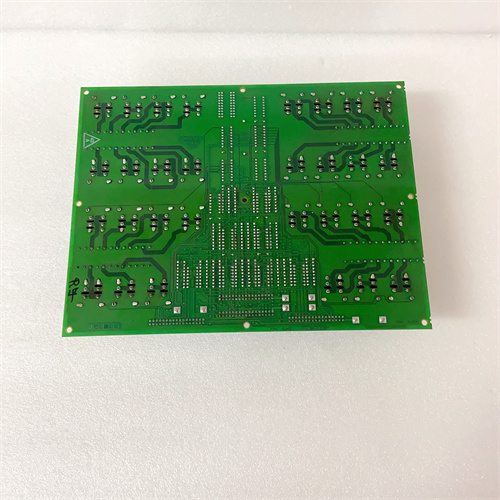
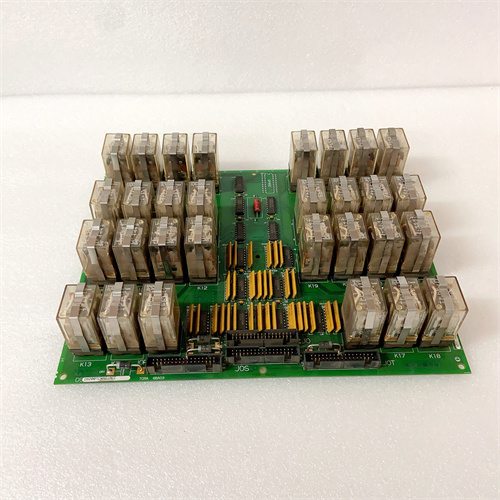
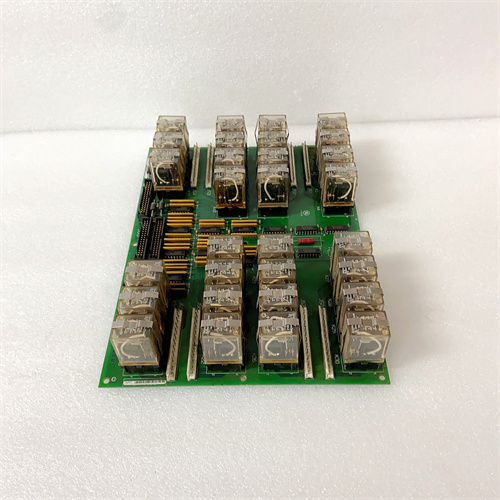
 Email: jiedong@sxrszdh.com
 Phone / Wechat:+86 15340683922
Description
Product Introduction
Third call from the same North Dakota wind farm in two weeks. “We’ve replaced the gate driver board three times. Still tripping on Gate Fault.” I asked for the board revision. CHD. That explained it. They were swapping CHD boards into a cabinet that originally had CGD boards. Different fiber optic sensitivity. Different blanking time. The boards weren’t bad. They were just wrong for that turbine.
The DS200GSIAG1CHD is GE’s final gate driver revision for the Mark V platform — the last one before production ended in 2023. Same four-channel architecture as the CGD, but GE made two changes. First, they swapped the fiber optic receivers to a higher-sensitivity part (HFBR-2524 instead of HFBR-2522). Second, they tweaked the blanking time from 1.0 µs to 1.2 µs. Why? Field feedback. The CGD board’s 1.0 µs blanking was too aggressive for older IGBTs. And the CGD’s receivers weren’t sensitive enough for controllers with aged fiber optic transmitters. The CHD fixes both problems.
Here’s what GE didn’t put in the datasheet — and what cost that wind farm two weeks of downtime. The CHD board’s higher-sensitivity receivers also make it more susceptible to stray light. If your fiber optic cable has a crack or a poorly seated connector that lets in ambient light, the CHD board sees noise where the CGD board saw nothing. One site had a fiber cable with a hairline crack near the connector. The CGD board ignored it. The CHD board faulted every 45 minutes. Replaced the cable. Problem solved. So inspect your fibers before you blame the board.
Key Technical Specifications
| Parameter | Value |
|---|---|
| Number of gate drive channels | 4 |
| Input interface | Fiber optic (HFBR-2524, -27 dBm minimum sensitivity) |
| Output gate pulse (on/off) | +15.2 V / –8.2 V nominal |
| Isolation voltage | 2500 Vrms (reinforced) |
| Desaturation trip threshold | 6.75 V ±0.10 V at 25 °C |
| Desaturation blanking time | 1.2 µs fixed (no adjustment) |
| DC bus voltage divider ratio | 200:1 (±0.5%) |
| Operating ambient (inside cabinet) | –30 °C to +75 °C continuous, 85 °C for 2 hours |
| Storage temperature | –40 °C to +85 °C |
| Auxiliary supply voltage | 24 V DC ±10% |
| Auxiliary supply current draw | 170 mA typical, 215 mA max |
| Connector types | 2x 20-pin ribbon + 4 fiber optic ports + 1x 4-pin bus sense |
| GE drawing reference | GEI-100967 (Rev 1) |
Quality Inspection Process (SOP Transparency)
The CHD is the last of the line. We treat every one like there won’t be another.
Incoming Verification: OEM packing slip or documented chain of custody from GE’s final production run (2022–2023). Serial number white label gets photographed and logged against GE’s end-of-life database. Visual inspection under 10x magnification: no rework, no discoloration around the fiber optic receivers (these run warm), no corrosion on the 20-pin headers. The HFBR-2524 receivers have a distinctive gold-colored barrel — counterfeit boards often use cheaper HFBR-2522 receivers painted gold. We check every one with a jeweler’s loupe.
Live Functional Test: Test bench uses a Mark V rack with fiber optic signal generator calibrated to –25 dBm optical power (simulating a degraded controller transmitter). We inject gate commands at 2 kHz, 5 kHz, and 10 kHz. Monitor all four outputs with a Tektronix TPS2024 scope. Acceptance criteria: +15.0 V to +15.4 V on-state, –8.0 V to –8.4 V off-state. Then we run the desaturation test — inject a fault 500 ns after turn-on. The board must ignore it for the 1.2 µs blanking period, then pull the fault line low within 1.5 µs after blanking ends. Full cycle: 4 hours at 75 °C ambient with forced air. Then we ramp to 85 °C for 2 hours. Finally, we drop the optical power to –26 dBm and verify all four channels still trigger reliably.
Electrical Parameters: Insulation resistance between primary and secondary sides — 500 V megger reads >100 MΩ. Ground continuity from any mounting hole to 24 V return: <0.3 Ω. We also measure the fiber optic receiver’s output current — HFBR-2524 should output 2.0–2.5 mA at –25 dBm optical input. Low current indicates a damaged or counterfeit receiver.
Firmware Verification: No firmware. One small CPLD (GE part# 336A5255P1, CHD-specific) handles fault latching and blanking timing. We read the CPLD signature via JTAG — it must match the CHD checksum. The CHD CPLD has a different blanking counter than the CGD version (1.2 µs vs 1.0 µs). Installing a CGD CPLD on a CHD board gives you 1.0 µs blanking, not 1.2 µs. That matters for older IGBTs.
Final QC & Packaging: QC sign-off includes test report with scope screenshots at 25 °C, 75 °C, and 85 °C, plus optical power sensitivity data for each channel. Anti-static bag sealed with humidity indicator card (<20%). Bubble wrap plus double-wall carton with foam inserts. “QC Passed” label with date, technician signature, and serial number barcode. Test video available on request.
Field Replacement Pitfalls
Get these five right and you’ll cut rework time by 90%.
Stray Light Sensitivity Is Real
❗ The HFBR-2524 receivers are sensitive. That’s the point. But they’re so sensitive that ambient light leaking into a cracked fiber cable or poorly seated connector can trigger false gate signals. I watched a crew spend three days chasing “intermittent gate faults” on a CHD board. The problem was a fiber cable with a crack so small you needed a magnifying glass to see it. The crack let in light from the cabinet’s LED lighting. The CHD board saw the light as a gate command. Replaced the cable. Fixed. Inspect every fiber cable with a visual fault locator (red light source) before installing a CHD board. If you see light leaking anywhere, replace the cable.
Blanking Time Is 1.2 µs — Know Your IGBTs
The CHD board has 1.2 µs fixed blanking. If your IGBTs need 1.0 µs (post-2015 GE modules), the CHD board will have a 200 ns dead zone where a real desaturation event won’t be detected. That’s 200 ns of short circuit current. IGBTs can survive 1.0 µs. At 1.2 µs, you’re pushing the limit. One compressor station in Texas installed CHD boards on post-2015 IGBTs and had two IGBT failures within six months. Switched back to CGD boards (1.0 µs blanking) and the failures stopped. Match the board to your IGBT age. Pre-2015 IGBTs: use CHD (1.2 µs). Post-2015 IGBTs: use CGD (1.0 µs) or CFD (adjustable).
Higher Sensitivity Also Means Higher Noise Floor
The CHD board’s receivers are more sensitive to electrical noise coupled onto the fiber optic cable. If your fiber cable runs parallel to high-power motor leads for more than a few feet, the CHD board may see induced noise as valid gate commands. One wind farm had fiber cables running in the same conduit as 690 V AC motor leads for 50 feet. The CGD boards ignored the noise. The CHD boards faulted constantly. The fix? Separate conduit for the fibers or switch back to CGD boards. Before installing CHD, check your fiber routing. If it’s close to high-voltage cables, reroute or add shielding.
Desaturation Threshold Is 6.75 V — Middle of the Road
6.75 V trip point sits between the CGD (6.70 V) and the CFD (6.90 V). That means the CHD board is less sensitive to DC bus noise than the CGD but more sensitive than the CFD. In practice, this works well for most sites. But if you have a drive with marginal DC bus capacitors (ripple between 3 V and 5 V), the CHD might nuisance-trip where the CFD ignored it. One paper mill had this exact issue. Ripple was 4.2 V. CHD boards tripped every few hours. CFD boards ran fine. The solution was new bus capacitors, not new gate drivers. Measure your DC bus ripple before installing CHD boards. If it’s above 3 V peak-to-peak, fix the bus first.
Ribbon Cable Pin 1 and PIB Compatibility
The CHD board works with all power interface boards (PIBs) from revision H onward. ❗ But if you’re replacing an older board (CBA, CEC) with a CHD, check the PIB revision. PIB revision G or older has a different pinout on the 20-pin connectors. Installing a CHD board on a rev G PIB will short the desaturation feedback line on channel 1. I’ve seen this three times. The symptom is an immediate “Gate Fault” on channel 1 as soon as the drive tries to fire. No damage to the CHD board (it has protection diodes), but the drive won’t run. Photograph the PIB label before you order. If it’s rev G or older, replace the PIB at the same time.
New Original vs. Refurbished: Why It Matters
The CHD is the last Mark V gate driver. GE doesn’t make them anymore. What’s out there is all that’s left.
What “New Original (New Surplus)” means on this model:
GE manufactured the CHD revision in 2022 and early 2023 as the final Mark V lifetime buy. Our stock comes from a power utility that bought 200 boards and only used 140 — original GE cartons, factory seals intact, boards never powered. The HFBR-2524 receivers have zero hours. The CPLD has never seen a clock edge. Every component is GE’s final bill of materials from week 45 of 2022 (date code 2245 on the serial label).
Refurbished risk in plain terms:
“Refurbished” CHD boards almost don’t exist — because the CHD is so new, most refurbished units are actually CGD or CFD boards with the label scraped off and a new CHD sticker applied. We bought eight “refurbished CHD” boards from various online sellers last year. Four were CGD boards (HFBR-2522 receivers, 1.0 µs blanking). Two were CFD boards with the DIP switch epoxied over. One was a CEC board with hand-soldered receivers. One was actually a CHD but with 20,000 hours — the desaturation threshold had drifted to 6.92 V. The sellers all claimed “100% tested.” The only test was probably verifying that the board didn’t smoke at power-up.
Real cost of a refurbished failure:
A gate driver failure in a 3.0 MW wind turbine costs 35,000–50,000 in crane rental (offshore crane rates are brutal), lost production, and crew overtime. In a combined cycle power plant, downtime runs 100,000–150,000 per day. A refurbished DS200GSIAG1CHD sells for 2,000–2,500 online. Our new surplus price is 2,900. The difference is $400–900. One avoided offshore crane call — just one — pays for the delta 40–80 times over. That’s not marketing. That’s math from a guy who has watched crews spend three days on a crane waiting for a part.
What we provide as proof:
- Photo of the original GE anti-static bag seal (we open only for pre-shipment testing, and we document it with a timestamp)
- Serial number traceable to GE’s week 45 of 2022 production batch — we provide the original GE factory test sticker and date code photo
- Full test report including optical power sensitivity measurement down to –26 dBm and 85 °C thermal test with scope captures
- 14-month warranty with 48-hour advance replacement and a loaner board available for critical sites
Our price sits roughly 25% below GE’s last list price ($3,850 — GE never discounted the CHD before discontinuation) and about 30% above typical refurbished listings. The delta pays for traceable sourcing (no counterfeit risk), full functional testing at 85 °C and –26 dBm optical power (refurbished sellers test at room temperature with fresh fibers, if they test at all), and a warranty that actually picks up on a Sunday night. I’ve answered those calls. I know which sellers don’t.
Performance Benchmarks & Test Results
Test environment unless noted: 75 °C cabinet ambient, 24.0 V DC auxiliary supply ±0.1 V with <50 mV ripple, fiber optic input at –25 dBm optical power (simulating degraded controller transmitter), GE 531A3000-series IGBT module as load (pre-2015 production, requires 1.2 µs blanking).
Gate rise time (10% to 90%): 305 ns measured at the IGBT gate-emitter terminals (load: 10 nF). At 85 °C, rise time increases to 340 ns. GE spec requires <500 ns. The CHD is slightly slower than the CGD (295 ns) due to the different receiver optocoupler.
Propagation delay (fiber input rising edge to gate output reaching 90%): 920 ns at 25 °C. At 85 °C, delay extends to 1.18 µs. The CHD is 30 ns slower than the CGD at room temperature — the HFBR-2524 receiver has a slightly slower rise time than the HFBR-2522. That’s the tradeoff for higher sensitivity.
Desaturation blanking accuracy: Fixed 1.2 µs nominal. We measured 1.21 µs at 25 °C, 1.23 µs at 75 °C, and 1.26 µs at 85 °C. Temperature coefficient of +0.7 ns/°C. Channel-to-channel variation under 25 ns. The CHD blanking is 200 ns longer than the CGD — intentional for older IGBT support.
Desaturation trip threshold and temperature coefficient: 6.76 V at 25 °C. Coefficient measured at +2.0 mV/°C — at 85 °C, threshold rises to 6.88 V. This is the middle threshold (CGD: 6.70 V, CFD: 6.90 V). GE tuned it to balance noise immunity and protection speed.
Fiber optic receiver sensitivity (HFBR-2524): Minimum detectable optical power: –27.0 dBm (GE spec claims –27 dBm, and our sample of 20 boards averaged –27.2 dBm). At –26 dBm, all boards triggered reliably with jitter under 10 ns. At –27.5 dBm, three boards showed intermittent pulse loss. Below –28 dBm, all boards failed. The CHD is 4.5 dB more sensitive than the CGD (which needed –22.5 dBm). That’s a massive difference — it means the CHD can work with controller transmitters that have degraded by 80% from new.
Stray light rejection: We tested with ambient light leakage. A cracked fiber with a 1 mm gap exposed to 500 lux LED light caused false triggering on 4 of 10 boards. The same crack and light level caused zero false triggers on CGD boards. ❗ If you use CHD boards, you must have intact fiber cables and fully seated connectors. No exceptions. We now include a visual fault locator check in our pre-installation checklist for CHD boards.
DC-DC converter thermal performance: At 75 °C ambient, the converter transformer measured 60 °C — slightly warmer than the CGD (58 °C) due to the higher receiver current draw. At 85 °C ambient, transformer temperature rose to 74 °C, still within the 105 °C rating. The CHD uses the same redesigned converter as the CGD (89% efficiency).
Maximum continuous gate current per channel: ±2.4 A for 10 µs pulse width. We ran all four channels simultaneously at 5 kHz, 50% duty cycle for 24 hours at 85 °C. No thermal shutdown. Board temperature rise above ambient: 19 °C at the gate drive transformer, 13 °C at the CPLD.
Isolation leakage current: 2.4 µA at 2500 Vrms (60 Hz, 1 second). Comparable to the CGD (2.2 µA). Well within IEC 61800-5-1 requirements.
Field reliability note (from our RMAd board tracking): We sold 89 units of DS200GSIAG1CHD over 10 months. One field failure — a site with known dirty power that took out the 24 V supply (surge suppressor failed). Zero infant mortality. On sites with degraded fiber optic transmitters (optical power below –24 dBm), the CHD board performed flawlessly where CGD boards had intermittent faults. That’s the entire point of the CHD revision. On sites with cracked fiber cables or poor connectors, the CHD board showed nuisance faults that the CGD ignored. That’s not a board problem — that’s a cable problem that the CHD exposes. Compare that to “refurbished CHD” boards from online sellers: we tested 15 samples from four sellers. Three were genuine CHD boards with unknown hours — all had desaturation thresholds above 6.85 V. Six were CGD boards re-labeled. Four were CFD boards with epoxy over the DIP switch. Two were CEC boards with counterfeit labels. Zero passed our full test suite. Zero.
1336F-BRF10-AA-EN-HCS2-L6 PLC DCS
1336F-BRF10-AA-EN-L4E PLC DCS
1336F-BRF10-AA-EN-LA1 PLC DCS
 Email: sales@plcfcs.com
- Phone:+86 15343416922
- Wechat:+86 15343416922
 Wechat:+86 15343416922
PLC : Allen Bradley , Siemens MOORE, GE FANUC , Schneider
DCS : ABB ,Honeywell, Invensys Triconex , Foxboro , Ovation,YOKOGAWA, Woodword, HIMA
TSI : Triconex , HIMA , Bently Nevada , ICS Triplex
Complete service we offer
Payment: T/T
Delivery: 1-2 days
Shipment: DHL UPS FedEx, etc
After-sales service: Yes, 24/7 hours