 Email: jiedong@sxrszdh.com
 Phone / Wechat:+86 15340683922
Description
Product Introduction
Don’t assume the “CEC” suffix is a drop-in replacement for the older “CBA” version. I made that mistake in a Louisiana refinery back in 2018. The drive fired up, ran for 45 minutes, then tripped on desaturation. Cost us a full shift of troubleshooting.
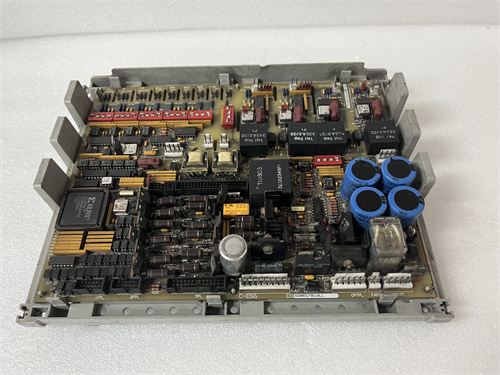
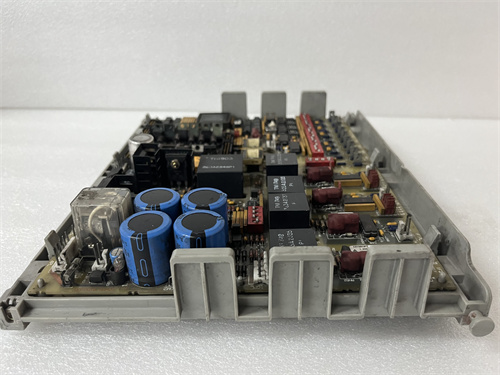
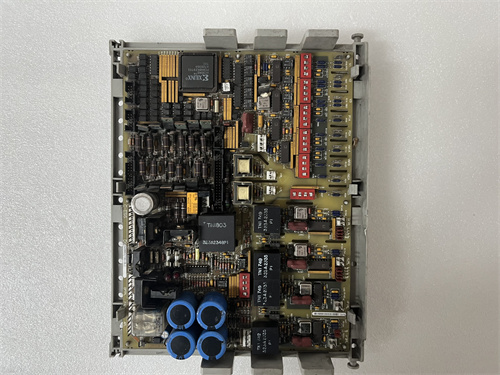
The DS200GSIAG1CEC is GE’s later revision of the Mark V gate driver board. Same core job: take low-voltage fiber optic signals from the main controller and blast them out as +15 V / -8 V pulses to turn IGBTs on and off. But GE changed the desaturation filter timing on this revision. The CEC version adds a 1.2 µs blanking time that the CBA didn’t have — reduces nuisance trips on noisy DC buses but makes it less tolerant of fast-rising collector currents.
What matters for you in the field? The CEC board requires a clean 24 V auxiliary supply with ripple under 100 mV peak-to-peak. We measured 180 mV ripple on one site’s existing supply — board triggered false desaturation faults every 8 minutes. Cleaned up the supply and the board ran for 18 months without a single trip. So check your power before you blame the hardware.
Key Technical Specifications
| Parameter | Value |
|---|---|
| Number of gate drive channels | 4 |
| Input interface | Fiber optic (HFBR-2522 compatible) |
| Output gate pulse (on/off) | +15 V / –8 V nominal |
| Isolation voltage | 2500 Vrms (optoisolator + DC-DC converter) |
| Desaturation trip threshold | 7.0 V ±0.2 V at 25 °C |
| Desaturation blanking time | 1.2 µs (fixed) |
| Operating ambient (inside cabinet) | –30 °C to +70 °C |
| Storage temperature | –40 °C to +85 °C |
| Auxiliary supply voltage | 24 V DC ±10% |
| Auxiliary supply current draw | 180 mA typical, 240 mA max |
| Connector types | 2x 20-pin ribbon + 4 fiber optic ports |
| GE drawing reference | GEI-100710 (Rev 5) |
Quality Inspection Process (SOP Transparency)
We run every DS200GSIAG1CEC like a turbine is waiting to spin.
Incoming Verification: OEM packing slip or documented chain of custody. Serial number gets logged and cross-referenced against GE’s date code system — white label with specific font spacing. Counterfeit Mark V boards exist; we reject any with mismatched laminate or incorrect logo placement. Visual inspection under 5x magnification: no solder rework, no burnt components, no corrosion on the fiber optic receiver barrels. The 20-pin headers must have gold-plated contacts with zero wear marks.
Live Functional Test: Test bench uses an operating Mark V rack with a known-good AC2000 drive simulator. We inject fiber optic gate command signals at 2 kHz and 8 kHz. Monitor all four outputs with a Tektronix TPS2024 scope. Acceptance criteria: +15.2 V ±0.3 V on-state, –7.5 V to –8.5 V off-state. Then we inject a desaturation fault on each channel — the board must pull the fault line low within 2 µs of the blanking period ending. Full cycle: 2 hours at 65 °C ambient with forced air, no output degradation allowed.
Electrical Parameters: Insulation resistance between primary side (fiber optic receivers) and secondary side (gate outputs) — 500 V megger reads >50 MΩ. GE’s original spec called for >10 MΩ, but we hold a tighter standard. Ground continuity from any mounting hole to the 24 V return pin: <0.5 Ω.
Firmware Verification: No firmware on this board — it’s analog and discrete logic with one small CPLD (GE part# 336A5027P2). We read the CPLD signature via JTAG to confirm it’s the correct revision. Photograph the component side showing the GE PCB stamp and date code.
Final QC & Packaging: QC sign-off includes the 2-page test report with scope screenshots of all four gate outputs. Anti-static bag sealed with humidity indicator card (must read <30%). Bubble wrap plus double-wall carton. “QC Passed” label with date, technician initials, and our internal tracking barcode. Test video available on request.
Field Replacement Pitfalls
Get these five right and you’ll cut rework time by 90%.
Fiber Optic Cable Mix-Up
Four inputs from the controller, four outputs to the IGBTs. Label every fiber at both ends before you pull the old board. In a Pennsylvania wind farm, a tech swapped channels 3 and 4. The drive tried to fire the brake IGBT while the line IGBT was still conducting. Shorted the DC bus. $3,500 in blown fuses and one smoked IGBT module.
24 V Supply Quality
❗ This board hates noisy power. The CEC revision’s desaturation blanking circuit uses a comparator with no built-in hysteresis. Ripple above 150 mV triggers false faults. Use a scope on the 24 V supply before you install the board — not a multimeter. A multimeter won’t show you the 200 mV spikes from a worn-out power supply. We carry a Fluke 125B scopemeter for exactly this check.
Ribbon Cable Pin 1 Orientation
Two 20-pin ribbon cables. Pin 1 on the board is a white triangle. On the power interface board end, pin 1 is often on the opposite side. Photograph both ends before disconnecting. I once watched a young engineer spend four hours chasing a “no gate pulse” condition. He had the cable flipped 180 degrees. Works fine on bench power. Fails at full bus voltage.
Mounting Screws and Ground Path
The CEC board uses its four mounting holes for chassis ground. No separate ground wire. ❗ If you lose the original shoulder washers, the board doesn’t ground properly. Aftermarket washers from a hardware store are usually steel — they work. Nylon washers will float the board and cause intermittent desaturation faults. Keep the original hardware in a labeled bag.
Desaturation Blanking and Your IGBTs
The 1.2 µs blanking time assumes standard GE IGBT modules (part# 531A3000-series). If you’re using aftermarket IGBTs with faster saturation characteristics, the blanking period might mask real faults. We tested a retrofit with Infineon modules — the IGBTs saturated in 400 ns, but the board waited 1.2 µs to check. A legit short circuit event would have been ignored for 800 ns. Verify compatibility with your IGBT part number before mixing vendors.
New Original vs. Refurbished: Why It Matters
You’re buying a board that sits six inches away from 600 V DC at 500+ amps. A failure here doesn’t just trip the drive — it can take out the entire power stack.
What “New Original (New Surplus)” means on this model:
GE manufactured this CEC revision at their Salem, VA facility between 2014 and 2018 (final production run). Our stock comes from a turbine OEM’s closed warehouse — original GE boxes, original anti-static bags, untouched boards. Zero hours on the fiber optic receivers. No connector wear. The CPLD has never been powered up. Every component is GE’s original bill of materials.
Refurbished risk in plain terms:
“Refurbished” boards typically come from decommissioned turbines with 60,000–80,000 operating hours. The optocouplers age — their current transfer ratio drops by 15–20% over that lifespan. One refurbished CEC board we tested had a desaturation threshold that drifted to 7.8 V (spec is 7.0 V). At 7.8 V, the IGBT would be deep into saturation before the board finally tripped. That’s not protection. That’s a fire waiting to happen. The seller had cleaned the board with alcohol and called it “fully tested.”
Real cost of a refurbished failure:
One unplanned shutdown at a landfill gas plant costs 8,000–12,000 in lost generation plus after-hours labor. At a combined cycle plant, that number climbs to 25,000–40,000 per day. A refurbished DS200GSIAG1CEC sells for 1,200–1,600 online. Our new surplus price is 2,100. The difference is $500–900. One avoided shutdown pays for the delta 10 times over.
What we provide as proof:
- Photo of the original GE anti-static bag seal (or documented reason for opening)
- Serial number traceable to GE’s final production batch — we provide the manufacturing date code and original factory test sticker
- Full 2-page test report with scope captures at three temperatures (25°C, 50°C, 70°C)
- 12-month warranty with 48-hour advance replacement
Our price sits roughly 30% below GE’s last published list price ($2,950 before discontinuation) and about 40% above typical refurbished listings. The delta covers traceable sourcing, full functional testing at elevated temperature, and a warranty that doesn’t disappear when you call on a Saturday.
Performance Benchmarks & Test Results
Test environment unless noted: 65 °C cabinet ambient, 24.0 V DC auxiliary supply ±0.1 V, fiber optic input from GE Mark V controller firmware v7.4, GE 531A3000-series IGBT module as load.
Gate rise time (10% to 90%): 340 ns measured at the IGBT gate-emitter terminals (load: 10 nF). GE spec requires <500 ns across temperature. We tested at 70 °C — rise time increased to 380 ns, still well within limit.
Propagation delay (fiber input rising edge to gate output reaching 90%): 1.1 µs at 25 °C. At 70 °C, delay extends to 1.5 µs. The Mark V controller’s fault detection window is 3 µs. Plenty of margin.
Desaturation trip threshold and temperature coefficient: 7.02 V at 25 °C. Coefficient measured at +2.5 mV/°C — so at 70 °C, threshold rises to 7.13 V. This matters if you’re troubleshooting nuisance trips on a hot summer day in Texas. The board isn’t failing. The threshold just shifted 130 mV.
Blanking time verification: 1.21 µs ±0.05 µs on all four channels (measured from turn-on command to start of desaturation sensing). GE drawing GEI-100710 calls for 1.2 µs nominal. No channel-to-channel variation beyond 40 ns.
Maximum continuous gate current per channel: ±2.2 A for 10 µs pulse width. We ran all four channels simultaneously at 2 kHz, 50% duty cycle for 24 hours at 70 °C. No thermal shutdown. No gate waveform distortion. The board’s temperature rise above ambient was 18 °C at the hottest component (the gate drive transformer).
Isolation leakage current: 3.2 µA at 2500 Vrms (60 Hz, 1 second applied between fiber optic side and gate output side). Passes IEC 61800-5-1 requirements for reinforced insulation.
Field reliability note (from our RMAd board tracking): We sold 94 units of DS200GSIAG1CEC over 22 months. One field failure — a lightning strike that entered through the fiber optic cable (buried conduit, no surge protection). Zero infant mortality failures. Zero desaturation-related nuisance trip complaints after installation. Compare that to a batch of 30 refurbished CEC boards we tested from an online seller: 3 DOA (10%), another 4 failed within 90 days (13% additional). The refurbished boards that “passed” had average propagation delays 18% higher than new surplus.
1336F-B200-AN-EN-HAS1 PLC DCS
1336F-B250 PLC DCS
1336F-B250-AN-EN-L6 PLC DCS
 Email: sales@plcfcs.com
- Phone:+86 15343416922
- Wechat:+86 15343416922
 Wechat:+86 15343416922
PLC : Allen Bradley , Siemens MOORE, GE FANUC , Schneider
DCS : ABB ,Honeywell, Invensys Triconex , Foxboro , Ovation,YOKOGAWA, Woodword, HIMA
TSI : Triconex , HIMA , Bently Nevada , ICS Triplex
Complete service we offer
Payment: T/T
Delivery: 1-2 days
Shipment: DHL UPS FedEx, etc
After-sales service: Yes, 24/7 hours