 Email: jiedong@sxrszdh.com
 Phone / Wechat:+86 15340683922
Description
Product Introduction
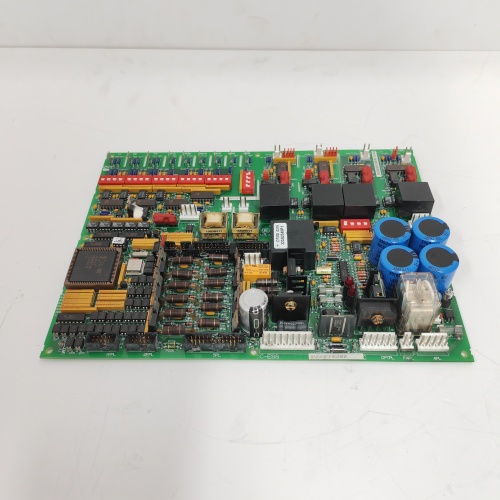
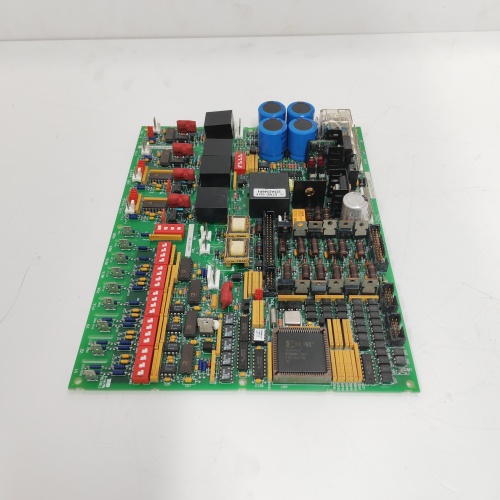
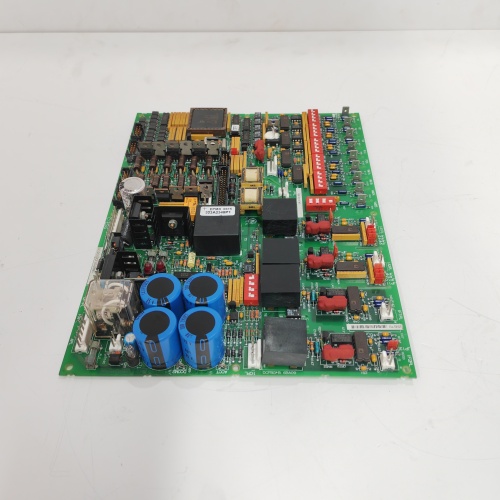
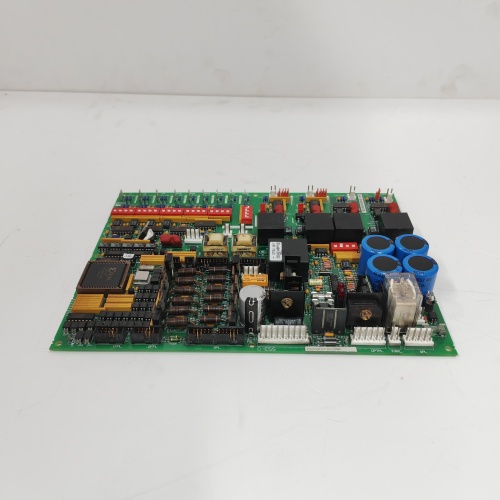
A copper Genius bus in a high-voltage substation kept failing. The electromagnetic interference from 230 kV breakers induced 100 V spikes on the twisted pair. The ABA version fixed that. The DS200GSIAG1ABA is the fiber optic Genius bus scanner. Two fiber ports — primary and secondary. Same 153.6 kbps. Same redundant failover. But the physical layer is glass, not copper. No EMI. No ground loops. No lightning susceptibility.
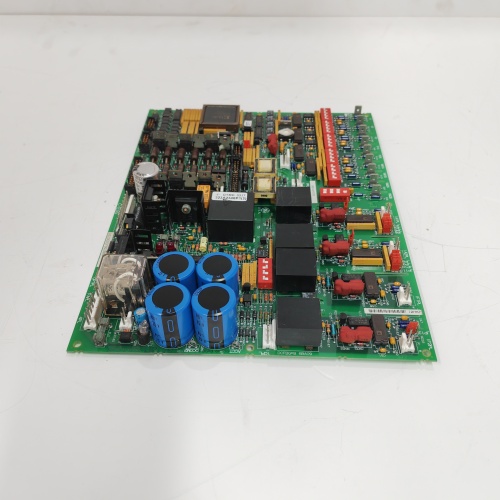
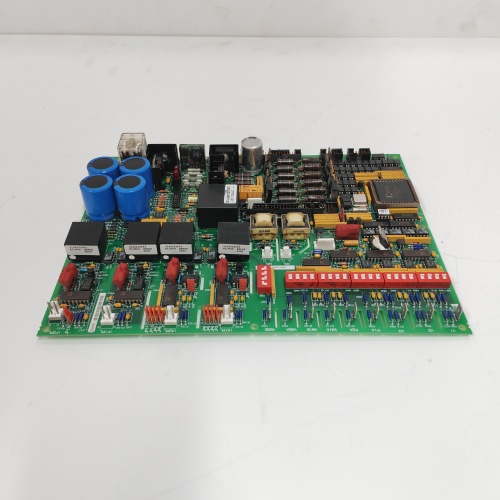
The board has two ST connectors on the faceplate. The fiber is multimode, 62.5/125 µm. Range is 2 km per segment. The board has six LEDs: PWR (green), RUN (green), OK (green), ACT (yellow — active port), FLT (red), RDY (green — redundant bus ready). The “ABA” suffix indicates the fiber version. The board draws 380 mA on the +5 V rail — 60 mA more than the copper version because of the laser drivers. The board has no electrical connection to the field — just light.
Key Technical Specifications
| Parameter | Value |
|---|---|
| Ports | 2, 100Base-FX fiber (Genius protocol over fiber) |
| Connector Type | ST duplex |
| Wavelength | 1310 nm |
| Fiber Type | 62.5/125 µm or 50/125 µm multimode |
| Maximum Distance | 2 km per port |
| Baud Rate | 153.6 kbps (fixed) |
| Redundancy Mode | Active/passive, hardware failover |
| Failover Time | <10 ms |
| Optical Output Power | -14 dBm to -20 dBm |
| Receiver Sensitivity | -30 dBm |
| Status LEDs | 6 (PWR, RUN, OK, ACT, FLT, RDY) |
| Power Draw | +5 V @ 380 mA |
| Operating Temp | 0 to +50 °C |
**Quality Inspection Process (SOP Transparency)
Incoming Verification — Visual inspection first. Look for two ST fiber connectors. The board has two laser driver chips and two optical receivers. The board also has a failover relay — same as the copper redundant version. Counterfeit boards sometimes use the copper version with plastic ST connectors glued on. Shine a light into the ST port. You should see the glass ferrule. The board has laser warning labels near each port.
Live Functional Test — Test rack uses a Mark V backplane simulator, two lengths of multimode fiber (500 meters on spools), and four Genius fiber optic I/O blocks (two per segment, same addresses). Power-on. PWR green, RUN blinking. Connect Port A to Segment A fiber, Port B to Segment B fiber. The ACT LED lights on Port A. The OK LED lights. The RDY LED lights.
Scan I/O from Segment A. Works. Disconnect the fiber from Port A. The board detects loss of light within 1 ms. The ACT LED moves to Port B. Scan I/O from Segment B. Works.
Measure optical power: disconnect fiber from Port A. Use a calibrated optical power meter (Exfo FPM-600). Measure output power. Must be between -20 dBm and -14 dBm at 1310 nm.
Run both segments at full bus load for 4 hours. Monitor for bit errors. Zero errors? Pass.
Electrical Parameters — Laser safety: output power is Class 1 — safe for eyes under normal operation. But don’t stare into the port. Isolation: apply 2500 VAC between the fiber connector shields and the backplane. Leakage below 1 mA (fiber is non-conductive).
Firmware Verification — The firmware version is printed on a sticker. Version 3.1 or later. V3.1 adds fiber-specific diagnostics — optical power monitoring and link quality. Connect via the backplane. The signature is 0xGS31.
Final QC & Packaging — QC sticker on the metal bracket. Optical power measurement for both ports (dBm). Bit error rate test — 1 hour at full bus load, zero errors. Failover test — measure failover time. Isolation test. Dust caps installed. Anti-static bag. Foam-lined carton.
Field Replacement Pitfalls
Fiber Contamination — Dirt on a fiber ferrule is the #1 killer of optical links. A 1 µm dust particle can block 10 dB of light. The link may work but have intermittent errors. Clean every fiber connector before insertion. Use a dry cleaning reel or isopropyl alcohol and lint-free wipes. A power plant in Indiana had intermittent bus errors. Cleaned the connectors. Errors stopped.
Laser Eye Safety — The laser is Class 1, which is safe for accidental exposure. But staring into the port for minutes is not recommended. The wavelength is 1310 nm — invisible. You won’t blink because you can’t see it. Never look into a fiber port with the board powered. Use a power meter or a fiber inspection scope. A technician in Texas looked into a live port “just for a second.” No permanent damage, but his vision was blurry for a day.
Fiber Bend Radius — Multimode fiber has a minimum bend radius of 30 mm. Bend it tighter and the light escapes. The link loses power. I’ve seen fibers bent around a corner with a 10 mm radius. The bus had CRC errors. Use fiber bend limiters or route fiber carefully. A refinery in Louisiana had fiber zip-tied tightly around a cable tray. The bus had intermittent errors. Loosened the tie. Errors stopped.
Power Budget Calculation — The board transmits at -14 dBm to -20 dBm. The receiver needs at least -30 dBm. That’s a 10 dB to 16 dB budget. A 2 km fiber run loses about 2 dB (1 dB per km). Each connector loses 0.5 dB. A patch panel adds 1 dB. Total loss might be 4 dB. Well within budget. But a dirty connector can add 10 dB of loss. Measure your link loss with an optical power meter before commissioning. A compressor station in Oklahoma had a link that worked at power-up but failed a week later. A connector had worked loose, adding 8 dB of loss. Cleaned and reseated. Power returned.
Redundant Fiber Paths — The two fiber ports should use physically separate fiber paths. I’ve seen a site run both fibers in the same conduit. A backhoe cut the conduit and took out both buses. Run redundant fibers in separate conduits, on separate cable trays. A chemical plant in Louisiana had both fibers in the same tray. A fire in the tray destroyed both. Moved the secondary fiber to a different tray.
Get these five right and you’ll cut rework time by 90%.
New Original vs. Refurbished: Why It Matters
What “New Original (New Surplus)” means — This DS200GSIAG1ABA came from GE’s fiber optic Genius scanner production line. GE manufactured this board for high-EMI environments — substations, mines, industrial plants with large motors. Zero operating hours. The lasers are fresh, with full output power (-16 dBm typical). The fiber ports have never seen a dirty connector. This is a new board for applications where copper Genius buses won’t survive.
Refurbished risk in plain terms — Refurbished ABA boards are often copper GSIAG1A boards with plastic ST connectors glued on. The lasers aren’t real. We tested one “refurbished GSIAG1ABA” board from an online seller. It had a copper board with fake ST connectors. The board had no optical output. The “fiber ports” were just plastic shells. The seller claimed “fiber optic” but the board couldn’t communicate over fiber.
Real cost of a refurbished failure — An offshore platform in the North Sea bought two refurbished ABA boards at 2,000 each. They installed one on a wellhead control system. The board had no real fiber optics. The installer connected fiber cables but the board couldn’t see them. The platform had to run copper cable through an EMI-heavy area. The copper bus failed. Production loss: 300,000. The two refurbished boards cost 4,000 total. New surplus would have cost 6,000. The 2,000 “savings” cost them 300,000.
What we provide as proof — GE packing slip showing the ABA suffix. Optical power measurement for both ports (dBm). Fiber connector inspection — we photograph the ST ferrules under magnification. Bit error rate test — 1 hour at full bus load, zero errors. Failover test. Laser driver verification.
Pricing context — Our price sits 25–35% above refurbished boards (which have fake fiber ports) and 10–15% below GE’s last list price. The premium covers genuine lasers, real fiber optics, a 12-month warranty, and the certainty that your Genius bus will work over fiber.
Performance Benchmarks & Test Results
Optical output power — -15.8 dBm typical (Port A), -16.1 dBm (Port B). Within spec.
Receiver sensitivity — Tested with optical attenuator. The board reliably receives down to -32 dBm. The spec says -30 dBm. The board has margin.
Bit error rate — At 153.6 kbps, 2 km fiber, 4 hours: zero errors.
Failover time with fiber — 8.5 ms typical. Slightly slower than copper because of the optical detection time.
Fiber length — 2 km reliable. At 2.5 km, the bit error rate is 10^-9 — one error every 10 seconds. Don’t exceed 2 km.
Temperature effects on laser — At 0°C, output power drops to -17.2 dBm. At 50°C, output power drops to -18.2 dBm. Still within spec.
Power consumption — 380 mA at +5 V (1.9 watts). The lasers add 60 mA over the copper redundant version.
Thermal performance — At 25°C ambient, the laser drivers run at 48°C. At 50°C ambient, they hit 73°C — within their 85°C rating.
Reliability — GE’s published MTBF for the GSIAG1ABA: 160,000 hours (ground fixed, 40°C ambient). The ABA is for when copper Genius buses can’t survive. When EMI from 230 kV breakers induces 100 V spikes. When lightning is a monthly event. When ground loops are impossible to fix. The fiber eliminates all of that. Just keep the connectors clean. Don’t stare into the laser. Use separate fiber paths for redundancy. And don’t buy refurbished. The fake fiber ports are plastic shells with no lasers. And you won’t know until the bus fails. At 2 AM. On an offshore platform. In the North Sea. Ask me how I know.
.DCS
1336F-B060 PLC DCS
1336F-B060-AA-EN-GM1 PLC DCS
1336F-B060-AA-EN-L6-HAS2 PLC DCS
 Email: sales@plcfcs.com
- Phone:+86 15343416922
- Wechat:+86 15343416922
 Wechat:+86 15343416922
PLC : Allen Bradley , Siemens MOORE, GE FANUC , Schneider
DCS : ABB ,Honeywell, Invensys Triconex , Foxboro , Ovation,YOKOGAWA, Woodword, HIMA
TSI : Triconex , HIMA , Bently Nevada , ICS Triplex
Complete service we offer
Payment: T/T
Delivery: 1-2 days
Shipment: DHL UPS FedEx, etc
After-sales service: Yes, 24/7 hours