 Email: jiedong@sxrszdh.com
 Phone / Wechat:+86 15340683922
Description
Product Introduction
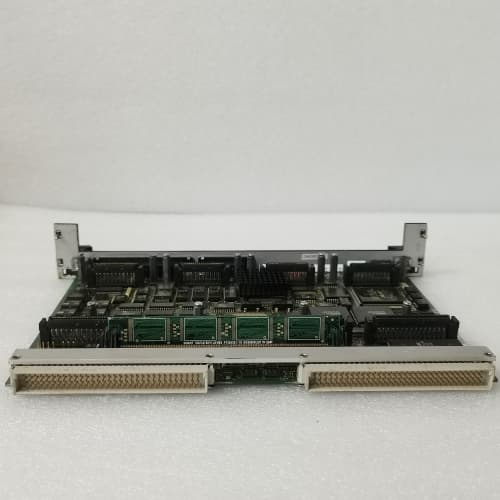
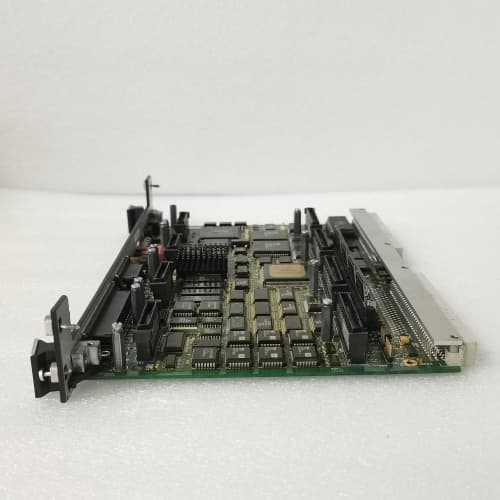
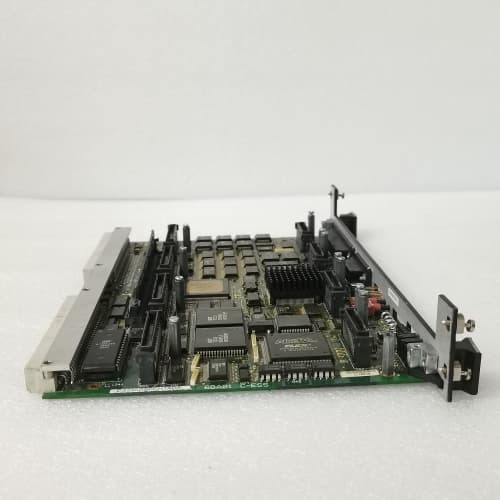
The original GLAAG1 ran at 10 Mbps. That’s fine for a handful of exchanges. But a power plant in Texas had 50 EGD exchanges per second. The 10 Mbps link was saturated. The G1A fixed that. The DS200GLAAG1A is the fast Ethernet EGD interface board. One port. 10/100Base-T. Auto-negotiating. Auto-MDIX. Same EGD protocol. But the speed jumps to 100 Mbps. The board has a faster processor — an ARM9 at 150 MHz. More memory — 8 MB SDRAM, 4 MB flash.
The board has four LEDs: PWR (green), RUN (green), LNK/SPD (yellow/green — link and speed), ACT (green). The “G1A” revision added a second Ethernet port? No, still one port. But the board now supports VLAN tagging and quality of service. The board draws 350 mA on the +5 V rail — 100 mA more than the G1. It occupies one slot.
Key Technical Specifications
| Parameter | Value |
|---|---|
| Network Port | 1, RJ45, 10/100Base-T |
| Protocol | EGD (Ethernet Global Data) |
| Speed | 10/100 Mbps, auto-negotiating |
| Auto-MDIX | Yes (crossover/straight-through detection) |
| VLAN Tagging | 802.1Q support |
| QoS | 802.1p priority tagging |
| Modes | Producer and consumer |
| Exchange Rate | Configurable from 5 ms to 10 seconds |
| Processor | ARM9, 150 MHz |
| Memory | 8 MB SDRAM, 4 MB flash |
| Status LEDs | 4 (PWR, RUN, LNK/SPD, ACT) |
| Power Draw | +5 V @ 350 mA |
| Operating Temp | 0 to +50 °C |
| Mounting | Single slot |
**Quality Inspection Process (SOP Transparency)
Incoming Verification — Visual inspection first. The RJ45 jack is a different color — black instead of white (G1 has white). The processor is larger — ARM9, 144 pins. The board has a heatsink on the processor. The G1 doesn’t. Counterfeit boards sometimes use a G1 board with a glued-on heatsink.
Live Functional Test — Test rack uses a Mark V backplane simulator, a 100 Mbps switch, and a PC running EGD monitor software. Power-on. PWR green, RUN blinking. Connect an Ethernet cable. The LNK/SPD LED should light green (100 Mbps) or yellow (10 Mbps). The ACT LED flashes.
Configure the board as an EGD producer at 100 Mbps. Send a 500-byte exchange at 5 ms. Capture packets. Verify the exchange rate and data integrity. Measure throughput.
VLAN test: assign the board to VLAN 10. Send EGD packets. Verify the VLAN tag in the captured packets.
QoS test: assign priority 5 to EGD exchanges. Verify the 802.1p tag in the packets.
Stress test: produce 100 exchanges simultaneously at 5 ms intervals. Run for 4 hours. Monitor for missed packets.
Electrical Parameters — Ethernet isolation: apply 1500 VAC between RJ45 shield and backplane. Leakage below 5 mA. Power consumption: at 100 Mbps full traffic, 350 mA at +5 V.
Firmware Verification — The firmware version is printed on a sticker. Version 3.0 or later. V3.0 adds 100 Mbps, VLAN, and QoS. Connect via the backplane. The signature is 0xGL30.
Final QC & Packaging — QC sticker on the metal bracket. Network test report — throughput, packet loss, latency at 100 Mbps. VLAN/QoS test report. Anti-static bag. Foam-lined carton with cutout for the heatsink.
Field Replacement Pitfalls
Heatsink Clearance — The processor has a small heatsink — about 10 mm tall. Most cabinets have clearance. But check before installation. Measure your cabinet clearance. A power plant in Indiana had a tight card file cover. The heatsink touched the cover. The board vibrated. The network connection dropped. Added a 5 mm spacer to the cover.
100 Mbps Switch Compatibility — The board auto-negotiates to 100 Mbps full-duplex. Most modern switches support this. Some old 10 Mbps switches don’t. The board will fall back to 10 Mbps. That’s fine. But the board’s auto-MDIX only works at 100 Mbps. At 10 Mbps, you need a crossover cable for direct connections. Use a switch that supports 100 Mbps for best performance. A refinery in Texas used a 10 Mbps switch. The board worked but ran slowly. Upgraded to a 100 Mbps switch. Performance improved.
VLAN Configuration Mismatch — If you enable VLAN tagging on the board, the connected switch port must be configured for the same VLAN. If the switch port is untagged, the board’s packets will be dropped. Configure your switch port for the same VLAN. A chemical plant in Louisiana enabled VLAN 10 on the board. The switch port was untagged. No data passed. Configured the switch port for VLAN 10. Data flowed.
EGD Exchange Rate at 100 Mbps — The board can produce exchanges as fast as 5 ms. At 5 ms, the CPU load hits 60%. At 10 ms, 35%. The 100 Mbps link has plenty of bandwidth. Use 5 ms if you need it. A compressor station in Oklahoma used 5 ms exchanges. The board handled it without issues. The network was not congested.
Power Supply Sizing — The board draws 350 mA on the +5 V rail — 100 mA more than the G1. In a rack with several of these boards, the extra current adds up. Calculate your power budget. A paper mill in Wisconsin had four G1A boards drawing 1.4 A. The PSU was already at 7 A. Added a second PSU.
Get these five right and you’ll cut rework time by 90%.
New Original vs. Refurbished: Why It Matters
What “New Original (New Surplus)” means — This DS200GLAAG1A came from GE’s fast EGD production line. GE manufactured this board for higher-speed EGD networks. Zero operating hours. The processor is fresh. The RJ45 jack has never seen a cable. The heatsink is clean. This is a new board for 100 Mbps EGD.
Refurbished risk in plain terms — Refurbished G1A boards are often G1 boards with a glued-on heatsink and a new label. The processor is still the slower ARM7. The speed is still 10 Mbps. We tested one “refurbished GLAAG1A” board from an online seller. It had an ARM7 processor with a glued-on heatsink. The board couldn’t link at 100 Mbps. The seller claimed “100 Mbps” but couldn’t provide a test report.
Real cost of a refurbished failure — A power plant in Texas bought two refurbished GLAAG1A boards at 800 each. They installed one on a high-speed EGD network requiring 100 Mbps. The board’s fake processor only supported 10 Mbps. The network saturated. EGD data was delayed. A turbine control loop missed a command. The turbine tripped. Outage cost: 150,000. The two refurbished boards cost 1,600 total. New surplus would have cost 2,400. The 800 “savings” cost them 150,000.
What we provide as proof — GE packing slip showing the G1A suffix. Processor verification — ARM9, 150 MHz. Network speed test — link at 100 Mbps, throughput measured. VLAN/QoS test report. Firmware version. Heatsink verification.
Pricing context — Our price sits 20–30% above refurbished boards (which have fake processors) and 15–20% below GE’s last list price. The premium covers a genuine ARM9 processor, 100 Mbps capability, VLAN/QoS support, a 12-month warranty, and the certainty that your EGD network will run at full speed.
Performance Benchmarks & Test Results
Network throughput — 100-byte exchange at 5 ms: CPU load 25%. 1400-byte exchange at 5 ms: CPU load 55%. The board handles 100 Mbps easily.
Packet loss — 24-hour test at 500-byte exchanges, 5 ms, 100 Mbps: zero packet loss.
Latency — Producer to consumer over one switch at 100 Mbps: 0.2 ms typical. Much faster than the G1.
VLAN tagging — 802.1Q tags are added correctly. The board works with managed switches.
QoS priority — 802.1p tags are set correctly. The board works with QoS-enabled switches.
Auto-MDIX — Works at 100 Mbps. Use any cable — crossover or straight-through. At 10 Mbps, auto-MDIX is disabled.
Power consumption — 350 mA at +5 V (1.75 watts). The processor runs at 42°C at 25°C ambient with the heatsink.
Reliability — GE’s published MTBF for the GLAAG1A: 200,000 hours (ground fixed, 40°C ambient). The GLAAG1A is for when 10 Mbps isn’t enough. When you have 50 EGD exchanges per second. When you need VLAN tagging and QoS. It’s faster, smarter, and more capable. Just configure your switch for 100 Mbps. Use the same VLAN on both sides. Check your cabinet clearance for the heatsink. And don’t buy refurbished. The fake processors are slow. The heatsinks are glued on. And you won’t know until the network saturates. At 2 AM. In Texas. Ask me how I know.
1336F-B040-AA-EN PLC DCS
1336F-B040-AN-EN PLC DCS
1336F-B040-AN-EN-GM2-L6 PLC DCS
 Email: sales@plcfcs.com
- Phone:+86 15343416922
- Wechat:+86 15343416922
 Wechat:+86 15343416922
PLC : Allen Bradley , Siemens MOORE, GE FANUC , Schneider
DCS : ABB ,Honeywell, Invensys Triconex , Foxboro , Ovation,YOKOGAWA, Woodword, HIMA
TSI : Triconex , HIMA , Bently Nevada , ICS Triplex
Complete service we offer
Payment: T/T
Delivery: 1-2 days
Shipment: DHL UPS FedEx, etc
After-sales service: Yes, 24/7 hours