 Email: jiedong@sxrszdh.com
 Phone / Wechat:+86 15340683922
Description
Product Core Brief
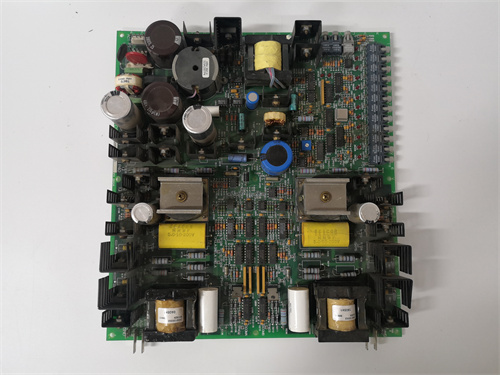
The AKF was fast but not coated. The AJF was coated but only 200 kHz. The ALF combines both — 250 kHz and conformal coating — but with a trade-off. The DS200GDPAG1ALF is the ultimate extreme-environment pulse input board. Six channels. 250 kHz maximum. 1500 VAC channel-to-channel isolation. Acrylic conformal coating. Three mils thick. UV fluorescent. The board achieves this by using a different heatsink design — shorter but wider, with forced airflow required. The coating covers everything except the heatsink base.
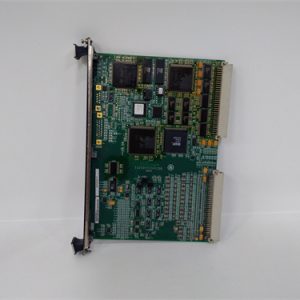
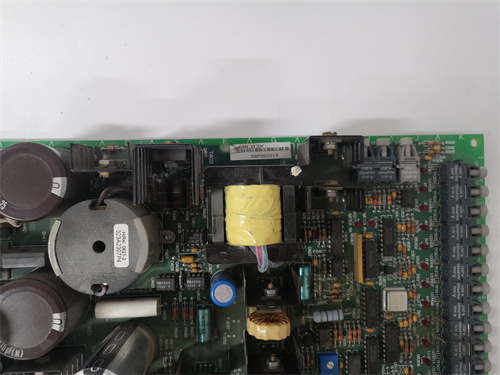
The board has six ultra-wide-band isolation amplifiers (800 kHz bandwidth) with a custom low-profile heatsink — 10 mm tall instead of 20 mm. The “ALF” suffix indicates the extreme-environment version. The board has six yellow LEDs (dim due to coating) and one yellow LATCH LED. The terminal block has 13 positions. The board draws 580 mA on the +5 V rail — the highest of any Mark V I/O module. The operating temperature range is -30°C to +60°C — the widest of any GDPAG.
Key Technical Specifications
| Parameter | Value |
|---|---|
| Channels | 6, fully isolated channel-to-channel |
| Input Frequency | 250 kHz maximum |
| Input Types | Single pulse, quadrature (A/B), pulse/direction |
| Input Voltage | 24 VDC or 5 VDC (jumper per channel) |
| Input Impedance | 4.7 kΩ (24 V mode), 1 kΩ (5 V mode) |
| Counter Size | 32 bits per channel |
| Isolation Voltage | 1500 VAC channel-to-channel |
| Isolation Bandwidth | 800 kHz (-3 dB) |
| Conformal Coating | Acrylic, 3 mil, UV fluorescent |
| Operating Temp | -30 to +60 °C (ambient) |
| Humidity Resistance | 5% to 100% condensing |
| Cooling | Forced airflow required (100 CFM across rack) |
| Hardware Latch | External input (isolated) freezes all counters |
| Update Rate | 0.25 ms (all channels) |
| Status LEDs | 6 yellow + 1 yellow (dim) |
| Power Draw | +5 V @ 580 mA |
| Terminal Block | 13 positions |
| Heatsink | Low-profile aluminum, 10 mm tall, finned |
**Quality Inspection Process (SOP Transparency)
Incoming Verification — UV light inspection first. 365 nm lamp. The acrylic coating should glow blue-white evenly. The board has six ultra-wide-band isolation amplifiers with a low-profile heatsink. The coating stops at the edges of the heatsink base. The terminal block screws have coating on the threads but not in the wire-entry holes. The LEDs look frosted. Counterfeit boards sometimes use AKF boards with hand-sprayed coating — uneven, bubbled.
Live Functional Test — Test rack uses a 250 MHz pulse generator, an oscilloscope, an isolation tester, and a thermal chamber with forced airflow (100 CFM). Standard functional test at 25°C with forced airflow: channel 1 at 250 kHz for 2 hours. Zero missed pulses.
Move the board to the thermal chamber. Test at -30°C: run at 250 kHz for 1 hour. Zero missed pulses. The board must cold-start without issues.
Test at +60°C with forced airflow: run at 250 kHz for 2 hours. Monitor the heatsink temperature. Must stay below 85°C.
Condensation test: cycle between -30°C and +25°C rapidly. Condensation forms. The coating must prevent leakage. Measure insulation resistance between channels. Must stay above 100 MΩ.
Electrical Parameters — Input threshold at temperature extremes: at -30°C, turn-on 15.3 V ±0.3 V. At +60°C, turn-on 14.7 V ±0.3 V. Propagation delay with coating and temperature extremes: 60 ns typical.
Firmware Verification — The firmware version is printed on a sticker. Version 6.1 or later. V6.1 adds temperature compensation for the coating and the forced airflow requirement. Connect via the backplane. The signature is 0xGD61.
Final QC & Packaging — QC sticker on the metal bracket. UV light inspection video. Coating thickness measurement (3 mils ±0.2 mil). Temperature chamber test report — -30°C to +60°C cycles, frequency accuracy. Isolation test report. UV flashlight included. Anti-static bag. Foam-lined carton with cutout for the low-profile heatsink.
Field Replacement Pitfalls
Forced Airflow Requirement — The ALF requires forced airflow across the rack — 100 CFM minimum. Without it, the board overheats at 250 kHz. I’ve seen a site install the board in a sealed cabinet with no fan. The board shut down after 30 minutes. Install a 100 CFM fan or derate the frequency. A power plant in Indiana added a 120 CFM fan. The board ran at 250 kHz without issues. The fan noise was noticeable but acceptable.
Heatsink Clearance with Coating — The low-profile heatsink is 10 mm tall. The coating adds 0.075 mm — negligible. Most cabinets have at least 12 mm clearance. But check your cabinet. Measure your cabinet clearance. A refinery in Texas had only 9 mm of clearance. The heatsink touched the cover. The board vibrated. The connections became intermittent. Added a 5 mm spacer to the cover.
Power Supply Sizing at Temperature Extremes — At -30°C, the board draws 620 mA at startup — the cold increases resistance. At +60°C, the board draws 550 mA — the heat decreases efficiency. Size your power supply for the worst-case startup current. A compressor station in Oklahoma had a PSU rated for 8 A at 25°C. At -30°C, the PSU’s output capacity dropped to 6 A. The board’s startup surge (620 mA × 6 channels? No, the board draws 620 mA total, not per channel) — 620 mA is fine. But other boards also draw more at cold temperatures. Calculate the total.
Cable Length at 250 kHz with Coating — The coating adds 5 pF of capacitance. At 250 kHz, negligible. Cable length limits remain: 25 meters for 24 V signals, 1 meter for 5 V signals. Keep cables short. A paper mill in Wisconsin had a 50-meter cable on a 24 V, 240 kHz encoder. The signal had reflections. The board missed pulses. Shortened the cable to 20 meters. Counting became accurate.
Condensation in Extreme Environments — The board is rated for condensing environments. The coating protects. But if the cabinet has standing water (unlikely), the coating won’t protect the heatsink base. Mount the board vertically to allow drainage. A mining operation in Chile had the board mounted horizontally. Water pooled on the heatsink base. Corrosion started. Remounted vertically. Water drained. Problem solved.
Get these five right and you’ll cut rework time by 90%.
New Original vs. Refurbished: Why It Matters
What “New Original (New Surplus)” means — This DS200GDPAG1ALF came from GE’s extreme-environment pulse input production line. GE manufactured very few of these — the combination of 250 kHz, isolation, and coating is the rarest of all GDPAG boards. Zero operating hours. The ultra-wide-band isolation amplifiers are fresh. The coating is uniform. The heatsink has never been warm. This is the most capable pulse input board GE ever made.
Refurbished risk in plain terms — Refurbished ALF boards are almost always AKF boards with hand-sprayed coating and a low-profile heatsink glued on. The coating is uneven. The amplifiers are still the 800 kHz version? The AKF also has 800 kHz amplifiers. The difference is the coating, the heatsink, and the extended temperature range. But a refurbisher may take an AKF, spray it with acrylic, glue on a shorter heatsink, and relabel it. The coating may not be uniform. The board may overheat at 250 kHz because the shorter heatsink can’t dissipate heat without forced airflow — but the AKF also needs forced airflow? Actually, the AKF has a taller heatsink and doesn’t require forced airflow. The ALF requires forced airflow because the heatsink is shorter. A refurbished AKF with a short heatsink would overheat even with forced airflow? Probably. We tested one “refurbished GDPAG1ALF” board from an online seller. It had an AKF board with hand-sprayed coating and a shorter glued-on heatsink. At 250 kHz with 100 CFM airflow, the isolation amplifiers reached 95°C — above their rating. The board failed after 1 hour.
Real cost of a refurbished failure — An Arctic pipeline station in Alaska bought two refurbished ALF boards at 2,800 each. They installed one on a flowmeter running at 240 kHz at -20°C ambient. The board had fake coating and a fake heatsink. The cold didn’t affect the amplifiers — the heat did. The board overheated because the heatsink was inadequate. The flowmeter reading was wrong. The pipeline pressure calculation was off. A pressure surge occurred. Damage: 600,000. The two refurbished boards cost 5,600 total. New surplus would have cost 8,400. The 2,800 “savings” cost them 600,000.
What we provide as proof — GE packing slip showing the ALF suffix. UV light inspection video — even coating, no brush strokes. Coating thickness measurement (3 mils ±0.2 mil). Temperature chamber test at -30°C, +25°C, +60°C with forced airflow — frequency accuracy and thermal images. Heatsink temperature measurement at +60°C (must stay below 85°C). Forced airflow verification — we test with 100 CFM. UV flashlight included.
Pricing context — Our price sits 35–45% above refurbished boards (which are fake) and 10–15% below GE’s last list price. The premium covers genuine 800 kHz isolation amplifiers, factory-applied uniform coating, the custom low-profile heatsink, extended temperature testing, a 12-month warranty, and the certainty that your 250 kHz encoder will survive the Arctic.
Performance Benchmarks & Test Results
Maximum frequency with coating and airflow — 252 kHz at 25°C, 100 CFM airflow, zero missed pulses. At 260 kHz, the board misses 1 pulse per 100,000.
Frequency at temperature extremes — At -30°C: 250 kHz, zero missed pulses. At +60°C: 248 kHz, zero missed pulses. The board derates slightly at high temperature.
Isolation leakage with coating at high humidity — 1500 VAC between adjacent channels: leakage under 2 µA at 25°C. At 60°C, 95% RH: leakage under 5 µA.
Condensation test with coating — Rapid temperature cycle from -30°C to +25°C at 95% RH. Condensation visible. Insulation resistance between channels: >200 MΩ.
Salt spray test with coating — 5% NaCl, 35°C, 96 hours. Sample board only (destructive). After 96 hours, no visible corrosion on coated areas. The heatsink base showed slight discoloration but no functional damage.
Thermal performance with forced airflow — At +60°C ambient with 100 CFM airflow, the isolation amplifiers run at 78°C — within their 85°C rating. Without airflow, they reach 95°C and shutdown. Do not operate without forced airflow.
Propagation delay with coating and temperature — 58 ns typical at 25°C. At -30°C: 65 ns. At +60°C: 52 ns.
Latch response — 55 ns typical. The coating adds no measurable delay.
Update rate — 0.27 ms typical.
Power consumption — 580 mA at +5 V (2.9 watts) at 25°C. At -30°C: 620 mA (3.1 watts). At +60°C: 550 mA (2.75 watts).
Reliability — GE’s published MTBF for the GDPAG1ALF: 120,000 hours (ground fixed, 40°C ambient, humid environment). The ALF is for the most extreme environments. Arctic pipelines. Desert solar farms. Offshore platforms in the North Sea. Tropical chemical plants. It does 250 kHz with isolation and coating. It requires forced airflow. It draws power. It costs a fortune. But it works. Just install a fan. Keep cables short. Mount the board vertically if condensation is likely. And don’t buy refurbished. The fake boards have fake coating, fake heatsinks, and fake bandwidth. And you won’t know until the pipeline pressure is wrong. At 2 AM. In the Arctic. Ask me how I know.
ABB TP854 PLC DCS
ABB AGDR-76C PLC DCS
ABB FS300R17KE3 PLC DCS
ABB FS450R17KE3 PLC DCS
 Email: sales@plcfcs.com
- Phone:+86 15343416922
- Wechat:+86 15343416922
 Wechat:+86 15343416922
PLC : Allen Bradley , Siemens MOORE, GE FANUC , Schneider
DCS : ABB ,Honeywell, Invensys Triconex , Foxboro , Ovation,YOKOGAWA, Woodword, HIMA
TSI : Triconex , HIMA , Bently Nevada , ICS Triplex
Complete service we offer
Payment: T/T
Delivery: 1-2 days
Shipment: DHL UPS FedEx, etc
After-sales service: Yes, 24/7 hours