 Email: jiedong@sxrszdh.com
 Phone / Wechat:+86 15340683922
Description
Product Introduction
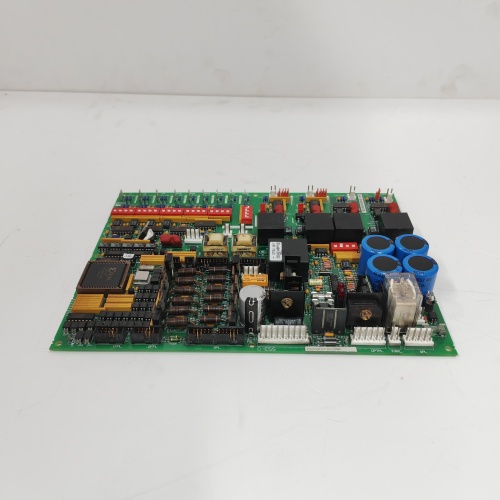
An offshore platform in the North Sea had six encoders on a critical riser tensioning system. The salt air corroded everything. The ground potential between encoders varied by 100 V. The GDPAG1AHE was fast enough but not coated. The GDPAG1AGC was coated but only 100 kHz. The AJF combined both — 200 kHz, isolation, and coating. The DS200GDPAG1AJF is the ultimate pulse input board. Six channels. 200 kHz maximum. 1500 VAC channel-to-channel isolation. Acrylic conformal coating. Three mils thick. UV fluorescent. Wide-band isolation amplifiers. Hardware latch. Heatsink.
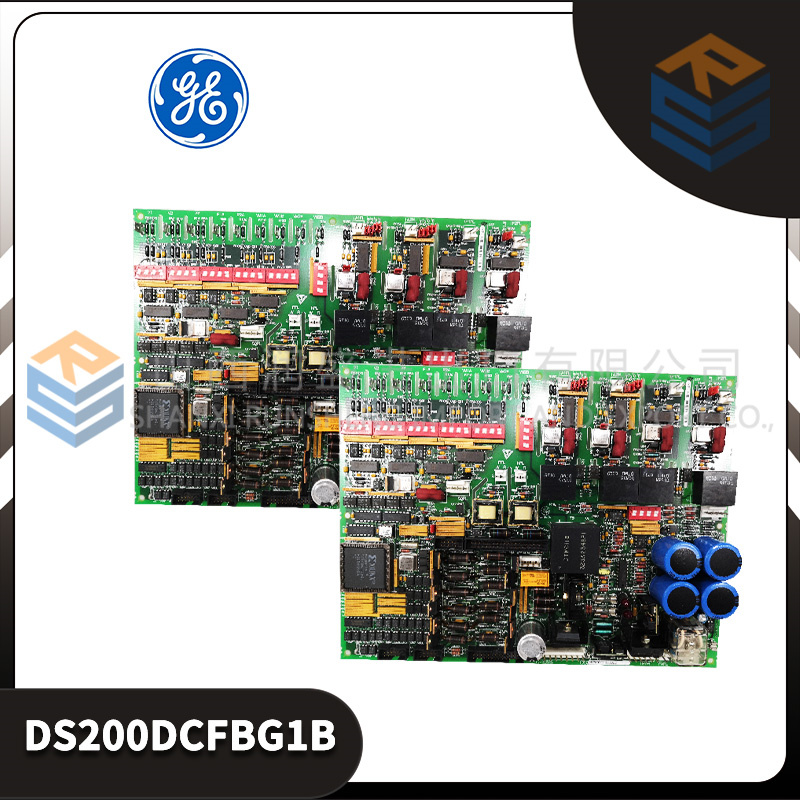
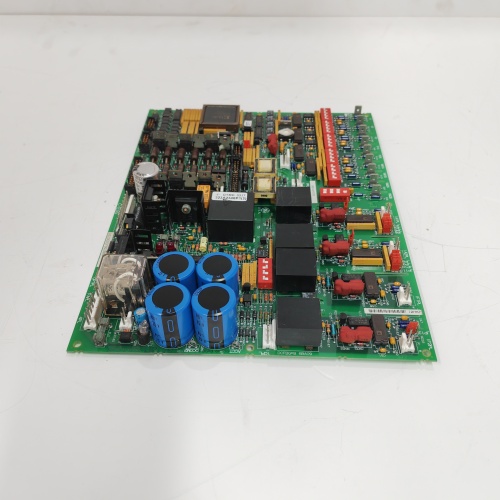
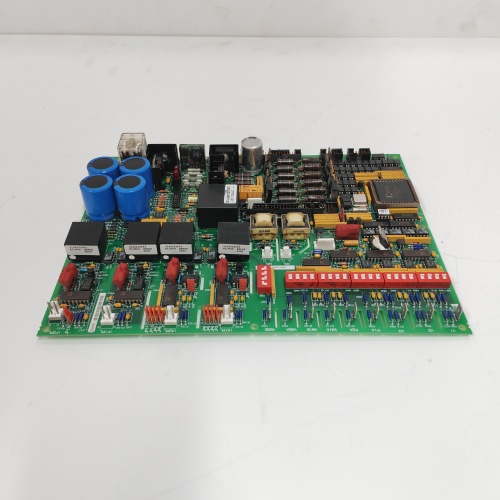
The board has six wide-band isolation amplifiers (500 kHz bandwidth) with a small heatsink. The coating covers everything except the heatsink, the terminal block screw heads, and the LED lenses. The “AJF” suffix indicates the top-tier version. The board has six yellow LEDs (dim due to coating) and one yellow LATCH LED. The terminal block has 13 positions (6 pairs plus latch input). The board draws 500 mA on the +5 V rail — the highest of any GDPAG variant. The operating temperature range is -20°C to +55°C.
Key Technical Specifications
| Parameter | Value |
|---|---|
| Channels | 6, fully isolated channel-to-channel |
| Input Frequency | 200 kHz maximum |
| Input Types | Single pulse, quadrature (A/B), pulse/direction |
| Input Voltage | 24 VDC or 5 VDC (jumper per channel) |
| Input Impedance | 4.7 kΩ (24 V mode), 1 kΩ (5 V mode) |
| Counter Size | 32 bits per channel |
| Isolation Voltage | 1500 VAC channel-to-channel |
| Isolation Bandwidth | 500 kHz (-3 dB) |
| Conformal Coating | Acrylic, 3 mil, UV fluorescent |
| Operating Temp | -20 to +55 °C |
| Humidity Resistance | 5% to 100% condensing |
| Hardware Latch | External input (isolated) freezes all counters |
| Update Rate | 0.5 ms (all channels) |
| Status LEDs | 6 yellow + 1 yellow (dim) |
| Power Draw | +5 V @ 500 mA |
| Terminal Block | 13 positions |
| Heatsink | Aluminum, 15 mm tall |
**Quality Inspection Process (SOP Transparency)
Incoming Verification — UV light inspection first. 365 nm lamp. The acrylic coating should glow blue-white evenly. The board has six wide-band isolation amplifiers with a heatsink. The coating stops at the edges of the heatsink. The terminal block screws have coating on the threads but not in the wire-entry holes. Counterfeit boards sometimes use standard isolation amplifiers with a glued-on heatsink and hand-sprayed coating. Tap an isolation amplifier. A real one is solid. A fake is hollow.
Live Functional Test — Test rack uses a 200 MHz pulse generator, an oscilloscope, an isolation tester, and a humidity chamber. Standard functional test at 25°C: channel 1 at 200 kHz for 2 hours. Zero missed pulses. Quadrature test. Latch test.
Isolation test: apply 1500 VAC between channel 1 and channel 2. Leakage below 5 mA.
Move the board to the humidity chamber. 40°C, 95% RH for 48 hours. Measure leakage current between channels. Must stay below 10 µA.
Condensation test: drop chamber temperature to 20°C rapidly. Condensation forms. Measure insulation resistance between channels. Must stay above 100 MΩ.
Temperature cycle test: -20°C for 2 hours, then +55°C for 2 hours, 5 cycles. Monitor maximum frequency. Must stay above 195 kHz at extremes.
Electrical Parameters — Input threshold after coating and temperature cycle: 24 V mode turn-on 15 V ±0.3 V. Propagation delay with isolation and coating: 120 ns typical. The coating adds negligible delay.
Firmware Verification — The firmware version is printed on a sticker. Version 5.1 or later. V5.1 adds diagnostics for the isolation converters and temperature compensation for the coating and heatsink. Connect via the backplane. The signature is 0xGD51.
Final QC & Packaging — QC sticker on the metal bracket. UV light inspection video. Coating thickness measurement (3 mils ±0.2 mil). Isolation test report. Humidity chamber test report. Frequency test at 200 kHz for 2 hours. UV flashlight included. Anti-static bag. Foam-lined carton with cutout for the heatsink.
Field Replacement Pitfalls
Heatsink Clearance with Coating — The heatsink is 15 mm tall. The coating adds 0.075 mm — negligible. But the cabinet cover must clear the heatsink. Some Mark V cabinets have only 12 mm of clearance above the board. Measure your cabinet clearance before ordering. A power plant in Indiana had to remove the card file cover. The board ran fine, but dust settled on the heatsink. Cleaned it monthly.
Coating Under the Heatsink — The coating stops at the edges of the heatsink. The area under the heatsink is not coated. If moisture gets under the heatsink, the isolation amplifiers are unprotected. Ensure the heatsink is properly seated and sealed. A refinery in Texas had moisture ingress under the heatsink. Corrosion started on the isolation amplifier pins. Removed the heatsink, cleaned the area, applied acrylic coating, reseated the heatsink with thermal compound. Problem solved.
Power Supply Sizing — The board draws 500 mA on the +5 V rail — the highest of any GDPAG. In a rack with four of these boards, the +5 V draw is 2 A. Add a processor board and other I/O, and you’re at 4 A — fine for an 8 A supply. But at 50°C ambient, the PSU derates. Calculate your power budget including derating for high ambient temperatures. A compressor station in Oklahoma had four AJF boards in a 55°C cabinet. The PSU’s 8 A rating derated to 6 A. The total draw was 5.5 A — acceptable but close. Added a second PSU.
Cable Length at 200 kHz with Coating — The coating adds about 5 pF of capacitance across the input terminals. At 200 kHz, that’s negligible — 400 ohms of reactance in parallel with 4.7 kΩ. No effect. The cable length limits remain: 50 meters for 24 V signals, 2 meters for 5 V signals. Keep cables short. A paper mill in Wisconsin had a 100-meter cable on a 24 V, 180 kHz encoder. The signal had reflections. The board counted extra pulses. Shortened the cable to 30 meters. Counting became accurate.
Latch Input with Coating and Isolation — The latch input is isolated and coated. The coating may partially cover the terminal’s wire-entry hole. Use a small pick to clear the hole before inserting the wire. Don’t force the wire — you could damage the terminal. A water treatment plant in Florida had a latch wire that wouldn’t go in. The coating had partially blocked the hole. Cleared the hole with a toothpick. Wire inserted easily.
Get these five right and you’ll cut rework time by 90%.
New Original vs. Refurbished: Why It Matters
What “New Original (New Surplus)” means — This DS200GDPAG1AJF came from GE’s top-tier pulse input production line. GE manufactured very few of these — the combination of 200 kHz, isolation, and coating is rare. Zero operating hours. The wide-band isolation amplifiers are fresh. The coating is uniform. The heatsink has never been hot. This is the best pulse input board GE ever made for the Mark V.
Refurbished risk in plain terms — Refurbished AJF boards are almost always AGC boards (100 kHz, isolated, coated) with a heatsink glued on and a new label. The isolation amplifiers are the 200 kHz bandwidth version, not the 500 kHz version. The maximum frequency is still 100 kHz. We tested one “refurbished GDPAG1AJF” board from an online seller. It had the smaller isolation amplifiers with a glued-on heatsink and hand-sprayed coating. The board failed at 150 kHz — missed 30% of pulses. The coating had bubbles. The heatsink fell off during testing.
Real cost of a refurbished failure — An offshore platform in the North Sea bought two refurbished AJF boards at 2,200 each. They installed one on a riser tensioning encoder system. The board’s fake wide-band isolation amplifiers missed pulses at 180 kHz. The tensioning system lost position. The riser was damaged. Repair cost: 500,000. Production loss: 300,000. The two refurbished boards cost 4,400 total. New surplus would have cost 6,600. The 2,200 “savings” cost them $800,000.
What we provide as proof — GE packing slip showing the AJF suffix. Wide-band isolation amplifier verification — we photograph the larger modules and measure their bandwidth (must exceed 450 kHz). UV light inspection video — even coating, no brush strokes. Coating thickness measurement (3 mils ±0.2 mil). Isolation test report — 1500 VAC, leakage current. Frequency test at 200 kHz for 2 hours — zero missed pulses. Heatsink temperature measurement. UV flashlight included.
Pricing context — Our price sits 30–40% above refurbished boards (which are fake) and 10–15% below GE’s last list price. The premium covers genuine 500 kHz isolation amplifiers, factory-applied coating, the heatsink, full 200 kHz testing, a 12-month warranty, and the certainty that your pulse inputs will survive the North Sea.
Performance Benchmarks & Test Results
Maximum frequency with coating and isolation — 202 kHz at 25°C, all six channels active, zero missed pulses.
Isolation leakage with coating — 1500 VAC between adjacent channels: leakage under 3 µA. The coating improves isolation by keeping moisture out.
Humidity performance — 95% RH for 100 hours, board powered. Isolation resistance between channels: started at 1000 MΩ, ended at 200 MΩ. The coating keeps leakage low.
Condensation test — Rapid temperature drop from 40°C to 20°C at 95% RH. Condensation visible. Insulation resistance between channels: >300 MΩ. The coating protects.
Salt spray test with coating and isolation — 5% NaCl, 35°C, 96 hours. Sample board only (destructive). After 96 hours, no visible corrosion on coated areas. The isolation amplifiers under the heatsink were clean. The uncoated control board failed after 48 hours.
Thermal performance with coating and heatsink — At 25°C ambient, the isolation amplifiers run at 50°C. At 55°C ambient, they hit 76°C. The heatsink and coating work together.
Propagation delay — 110 ns typical. The coating adds 5 ns — negligible.
Latch response — 120 ns typical. The isolation and coating add 25 ns over the non-isolated, non-coated version.
Update rate — 0.52 ms typical.
Power consumption — 500 mA at +5 V (2.5 watts). The highest of the GDPAG family.
Reliability — GE’s published MTBF for the GDPAG1AJF: 140,000 hours (ground fixed, 40°C ambient, humid environment). The AJF is for the worst of the worst. Offshore platforms with salt spray. Chemical plants with acid vapors. Mines with conductive dust. High-speed encoders. 200 kHz. Isolation. Coating. It’s the top of the line. The most expensive. The most power-hungry. The most capable. It delivers. Just measure your cabinet clearance for the heatsink. Keep cables short. Watch your power budget. And don’t buy refurbished. The fake boards have slow amplifiers, glued-on heatsinks, and bubbling coating. And you won’t know until the riser loses position. At 2 AM. In the North Sea. Ask me how I know.
ABB DSTA022A PLC DCS
ABB DSTA156 57120001-KH PLC DCS
ABB 57120001-KH PLC DCS
 Email: sales@plcfcs.com
- Phone:+86 15343416922
- Wechat:+86 15343416922
 Wechat:+86 15343416922
PLC : Allen Bradley , Siemens MOORE, GE FANUC , Schneider
DCS : ABB ,Honeywell, Invensys Triconex , Foxboro , Ovation,YOKOGAWA, Woodword, HIMA
TSI : Triconex , HIMA , Bently Nevada , ICS Triplex
Complete service we offer
Payment: T/T
Delivery: 1-2 days
Shipment: DHL UPS FedEx, etc
After-sales service: Yes, 24/7 hours