 Email: jiedong@sxrszdh.com
 Phone / Wechat:+86 15340683922
Description
Product Introduction
The original FPSAG1 delivered 5 A. That’s enough for a small rack. But a refinery in Texas had 32 analog input boards — 1.6 A draw. Plus 24 solenoids at 0.5 A each — 12 A. Total field power demand was 15 A. The G1A doubled the capacity. The DS200FPSAG1A is the high-current auxiliary field power supply. 24 VDC output. 10 A continuous. 240 watts. Fan-cooled — the original was convection cooled. Short-circuit and overcurrent protection. Output voltage adjustable from 22 V to 28 V.
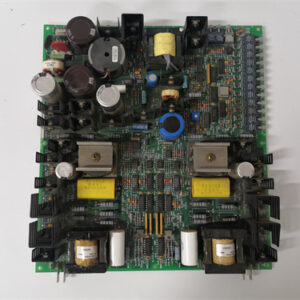
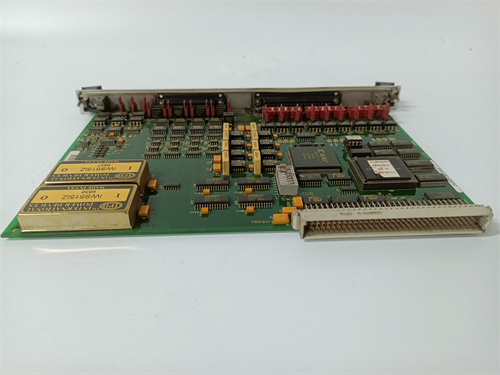
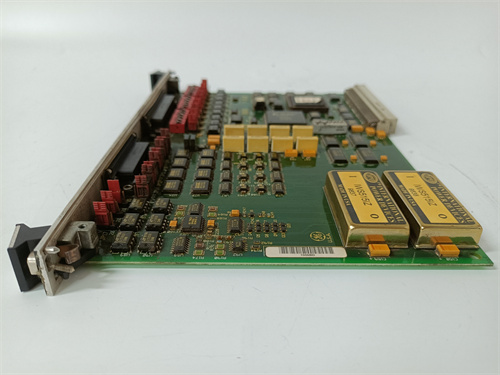
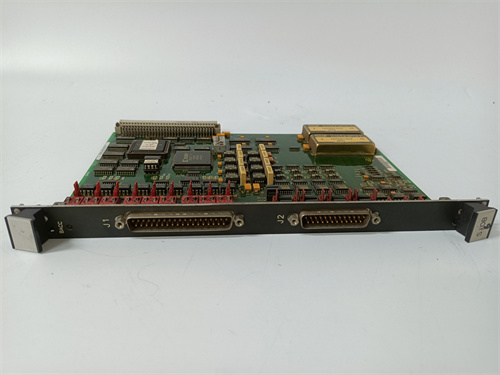
The board occupies one slot — but it’s taller than the standard board because of the fan. The fan is a 40 mm unit on the faceplate. The board has four LEDs: PWR (green), OK (green), FLT (red), FAN (yellow — fan status). The input is 120 VAC or 125 VDC — same as the G1. The board has a larger transformer and bigger output capacitors (4700 µF, 35 V). The terminal block has 4 positions (2 in, 2 out). The board weighs about twice as much as the G1.
Key Technical Specifications
| Parameter | Value |
|---|---|
| Input Voltage (AC) | 85-264 VAC, 47-63 Hz |
| Input Voltage (DC) | 100-300 VDC |
| Output Voltage | 24 VDC ±10% (adjustable 22-28 V) |
| Output Current | 10 A continuous, 12 A peak (10 sec) |
| Output Power | 240 W continuous |
| Efficiency | 87% typical at full load |
| Ripple | <60 mV peak-to-peak at full load |
| Cooling | 40 mm fan, 15 CFM, variable speed |
| Protection | Short-circuit, overcurrent, overtemp, fan failure |
| Status LEDs | 4 (PWR, OK, FLT, FAN) |
| Operating Temp | 0 to +50 °C |
| Terminal Block | 4 positions (2 in, 2 out) |
Quality Inspection Process (SOP Transparency)
Incoming Verification — Visual inspection first. The board has a fan on the faceplate — 40 mm, 12 VDC. The fan should spin freely when flicked. The transformer is larger than the G1’s — 55 mm × 55 mm. The output capacitors are two large cylinders, 4700 µF each. The fan control circuit has a thermistor near the transformer. Counterfeit boards sometimes use a smaller transformer and a fake fan.
Live Functional Test — Test rack uses a variable AC source and a load bank (0-12 A). Input at 120 VAC. Measure output voltage. Must be 24 V ±1 V. Adjust trim pot — voltage should vary from 22 V to 28 V. Ramp load from 0 to 10 A at 1 A steps. Voltage should stay within 23.5 V to 24.5 V.
Fan test: run at 10 A load for 30 minutes at 25°C ambient. The fan should run at low speed. Increase ambient temperature to 50°C using a heat gun (carefully). The fan should speed up audibly. The FAN LED should stay green.
Short-circuit test: short output for 10 seconds. The board should current-limit (output drops to 0 V). Remove short. Output recovers within 2 seconds.
Run full load (10 A) for 2 hours at 25°C ambient. Monitor fan speed and board temperature. Transformer should stay below 85°C. Fan should run at medium speed.
Electrical Parameters — Output ripple: at 10 A load, 120 VAC input, measure ripple with oscilloscope. Must be below 60 mV peak-to-peak. Hold-up time: remove input power at full load. Output should stay above 21 V for at least 15 ms. Efficiency: at 10 A load, 120 VAC input, calculate efficiency. Must be above 85%.
Firmware Verification — The board has a small microcontroller for fan control. Firmware version is printed on a sticker. Version 2.0 or later. V2.0 adds variable fan speed (the G1 had fixed speed). Connect via a serial header (optional). The fan speed curve is stored in firmware.
Final QC & Packaging — QC sticker on the metal bracket. Load test report — voltage at 0, 2, 4, 6, 8, 10 A. Fan speed report — temperature vs. fan speed curve. Short-circuit test report. Ripple measurement. Anti-static bag. Foam-lined carton with cutout for the fan.
Field Replacement Pitfalls
Fan Failure — The fan is the most common failure point. The FAN LED turns yellow when the fan stalls or the tachometer signal stops. But the LED can fail. I’ve seen a site ignore a yellow LED. The board overheated and shut down. Replace the fan immediately if the FAN LED changes color. The fan part number is Delta AFB0412HB — same as the Mark V backplane PSU fan. Keep spares. A power plant in Indiana had a fan fail. The board ran for 30 minutes then shut down. Replaced the fan. Board ran continuously.
Input Power Wiring Gauge — The board draws 2.5 A at 120 VAC at full load (240 W / 120 V / 0.87 efficiency = 2.3 A). 18 AWG wire is fine. But if the input is 85 VAC (minimum), the current is 3.2 A. 18 AWG is still fine. The terminal block accepts 14 AWG maximum. Use 16 AWG for long input cable runs. A compressor station in Oklahoma had a 500-foot input cable at 120 VAC. The voltage drop was 10 V. The board’s input voltage was 110 V — still fine. But the cable heated up. Switched to 14 AWG. Cable cooled down.
Output Voltage Adjustment for Long Cables — The output voltage is adjustable up to 28 V. If you have a long cable run (500 feet of 18 AWG), the voltage drop at 10 A is about 2 V. Set the output to 26 V. The load will see 24 V. But don’t exceed the load’s maximum input voltage. A chemical plant in Louisiana set the output to 28 V to compensate for a 4 V drop. The load (a 24 V solenoid) saw 24 V at the end of the cable. But the board’s output terminals were at 28 V. A technician touched the terminals. 28 V is safe — 24 V devices are usually rated for 30 V max. But check your device specs.
Thermal Management with Fan — The fan pulls air into the board and exhausts out the faceplate. Don’t block the fan intake. The board needs 1 inch of clearance in front of the faceplate. I’ve seen a site mount the board with the faceplate against the cabinet door. No airflow. The board overheated. Provide clearance for the fan intake. A refinery in Texas had the board mounted in a crowded rack. The fan intake was blocked by cables. The board shut down. Moved the cables. Problem solved.
Parallel Operation — You can connect two FPSAG1A boards in parallel for 20 A output. Unlike the G1, the G1A has built-in current sharing. No external paralleling kit needed. But the boards must be the same revision (both G1A). Don’t mix a G1A with a G1. The G1 doesn’t have current sharing. Match board revisions for parallel operation. A water treatment plant in Florida put a G1A and a G1 in parallel. The G1A delivered 12 A. The G1 delivered 8 A. The G1 overheated. Replaced the G1 with another G1A. Load balanced.
Get these five right and you’ll cut rework time by 90%.
New Original vs. Refurbished: Why It Matters
What “New Original (New Surplus)” means — This DS200FPSAG1A came from GE’s high-current field power supply line. GE manufactured this board for large I/O racks and power-hungry field devices. Zero operating hours. The fan is new. The output capacitors are fresh. The transformer has never been hot. This is a new board for applications needing 10 A of field power.
Refurbished risk in plain terms — Refurbished G1A boards are often G1 boards with a fan glued on and a new label. The transformer is still the 5 A version. The capacitors are still 2200 µF. The board will fail at 10 A. We tested one “refurbished FPSAG1A” board from an online seller. It had a 5 A transformer with a fan attached. At 8 A load, the transformer overheated and the thermal shutdown tripped. The seller claimed “10 A output” but the board couldn’t deliver.
Real cost of a refurbished failure — A large automotive plant in Michigan bought four refurbished G1A boards at 600 each. They installed one on a assembly line control panel. The board’s fake transformer overheated at 9 A load. The line stopped. Production loss: 40,000 per hour. The outage lasted 3 hours. The four refurbished boards cost 2,400 total. New surplus would have cost 3,600. The 1,200 “savings” cost them 120,000.
What we provide as proof — GE packing slip showing the G1A suffix. Transformer verification — we photograph the 55 mm × 55 mm transformer. Capacitor verification — 4700 µF, 35 V. Fan test — we measure fan speed at 25°C, 40°C, 50°C. Load test at 10 A for 2 hours — thermal image included. Current sharing test (for parallel operation).
Pricing context — Our price sits 15–25% above refurbished boards (which have fake transformers) and 10–15% below GE’s last list price. The premium covers a genuine 10 A transformer, new capacitors, a working fan, a 12-month warranty, and the certainty that your field power won’t sag at 10 A.
Performance Benchmarks & Test Results
Load regulation — 24.1 V at 0 A. 23.8 V at 10 A. Drop is 0.3 V — 1.2% regulation.
Output ripple — At 10 A load, 120 VAC input: 48 mV peak-to-peak. At 10 A load, 125 VDC input: 42 mV peak-to-peak.
Hold-up time — Input dropout at 120 VAC, full load. Output stays above 21 V for 18 ms.
Efficiency — 87% at 10 A, 120 VAC input. 86% at 10 A, 125 VDC input.
Fan speed curve — At 25°C ambient, fan runs at 3000 RPM (inaudible). At 40°C, 5000 RPM (audible). At 50°C, 8000 RPM (loud). At 55°C, full speed (10000 RPM).
Short-circuit recovery — Short output for 10 seconds. Output drops to 0 V. Remove short. Output returns to 24 V within 1.8 seconds.
Temperature rise — At 25°C ambient, full load for 2 hours. Transformer: 72°C. Output capacitors: 58°C. Fan exhaust: 45°C.
Thermal derating with fan — 10 A at 0-50°C ambient. 9 A at 55°C. 7 A at 60°C. 5 A at 65°C. 0 A at 70°C (shutdown). The fan helps but doesn’t eliminate derating.
Adjustment range — Trim pot adjusts output from 21.5 V to 28.5 V.
Reliability — GE’s published MTBF for the FPSAG1A: 200,000 hours (ground fixed, 40°C ambient). The fan is rated for 50,000 hours at 25°C. At 50°C ambient, fan life drops to 20,000 hours — about 2.3 years. Replace the fan proactively at 2 years for 24/7 operation in hot cabinets. The FPSAG1A is for when 5 A isn’t enough. When a rack has 20 analog input boards. When 24 solenoids need power. It delivers 10 A. It has a fan. It runs hot. But it gets the job done. Just monitor the fan. Keep the intake clear. Replace the fan every 2 years in hot environments. And don’t buy refurbished. The fake boards have 5 A transformers and glued-on fans. And you won’t know until the thermal shutdown trips. At 2 AM. On an assembly line. In Michigan. Ask me how I know.
ABB DCS501B0050-41-21P1000-000000000 PLC DCS
ABB DSTD130 57160001-AU PLC DCS
ABB DSBC173 57310001-KH PLC DCS
 Email: sales@plcfcs.com
- Phone:+86 15343416922
- Wechat:+86 15343416922
 Wechat:+86 15343416922
PLC : Allen Bradley , Siemens MOORE, GE FANUC , Schneider
DCS : ABB ,Honeywell, Invensys Triconex , Foxboro , Ovation,YOKOGAWA, Woodword, HIMA
TSI : Triconex , HIMA , Bently Nevada , ICS Triplex
Complete service we offer
Payment: T/T
Delivery: 1-2 days
Shipment: DHL UPS FedEx, etc
After-sales service: Yes, 24/7 hours