 Email: jiedong@sxrszdh.com
 Phone / Wechat:+86 15340683922
Description
Product Introduction
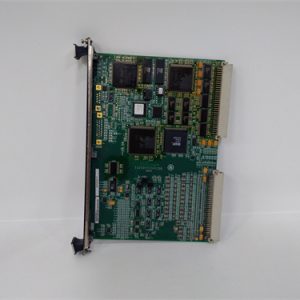
Why pay for 12 channels when you only need 4? A small chiller plant in Indiana had six RTDs on a cooling loop. The 12-channel board would waste half the channels. The FCRRG2A is the low-density version. Same accuracy. Same 3-wire support. Same lead resistance cancellation. But six channels instead of twelve. The DS200FCRRG2A is the half-size RTD input board. Occupies one slot. Six Pt100 inputs. 3-wire configuration. 18-bit resolution. 4 ms update rate.
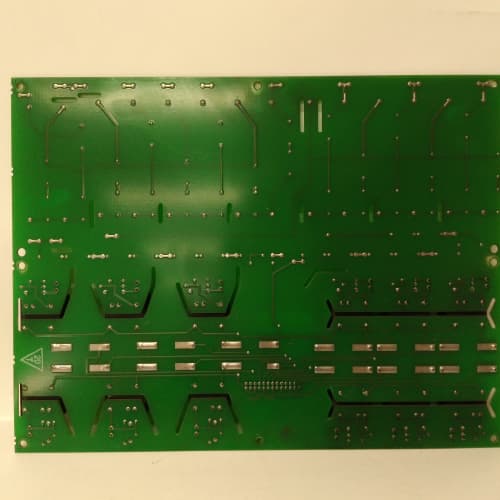
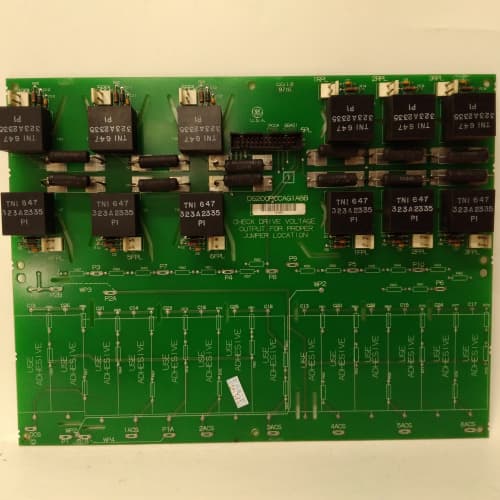
The board has six green LEDs — one per channel. The terminal block has 18 positions (6 × 3). The board draws less power — 300 mA on the +5 V rail instead of 450 mA. The “G2A” revision improved the update rate from 8 ms to 4 ms and added the same 0.05°C accuracy as the larger board. It’s a drop-in replacement for the FCRRG1A if you don’t need 12 channels. The PCB is physically the same size — half the components are missing. Empty pads where the second set of six channels would go.
Key Technical Specifications
| Parameter | Value |
|---|---|
| Channels | 6, differential inputs |
| RTD Types | Pt100 (α=0.00385), Ni120 |
| Wiring Configurations | 3-wire only (no 4-wire support) |
| Excitation Current | 0.5 mA typical |
| Lead Resistance Cancellation | Yes, up to 50 ohms per lead |
| Resolution | 18 bits (0.01°C typical) |
| Accuracy | ±0.1°C (0-100°C range) |
| Update Rate | 4 ms (all channels) |
| Isolation Voltage | 1500 VAC channel-to-channel |
| Status LEDs | 6 green |
| Power Draw | +5 V @ 300 mA, +15 V @ 50 mA, -15 V @ 50 mA |
| Operating Temp | 0 to +50 °C (ambient) |
| Terminal Block | 18 positions (6×3) |
Quality Inspection Process (SOP Transparency)
Incoming Verification — Visual inspection first. The board has six precision reference resistors — not twelve. The current source chips: six, not twelve. The PCB has empty pads where the second set of components would go. That’s normal. Counterfeit boards sometimes use a 12-channel board with half the components missing — that’s actually correct for the G2A. But check the date codes on the remaining components. All should match.
Live Functional Test — Test rack uses a precision RTD simulator (Fluke 712). Test channel 1 at 0°C, 100°C, 200°C. Accuracy must be ±0.1°C at 0°C, ±0.15°C at 200°C.
Lead resistance test: add 10 ohms to each lead. The temperature change should be under 0.05°C.
Test all six channels simultaneously at 100°C. Run for 1 hour. Monitor for drift or crosstalk.
Electrical Parameters — Excitation current: 0.50 mA ±0.01 mA per channel. Input impedance: >10 MΩ on sense lines. Isolation test: 1500 VAC between channel 1 and channel 2. Leakage below 5 mA.
Firmware Verification — The firmware version is printed on a sticker. Version 2.0 or later. V2.0 adds the 4 ms update rate. Connect via the backplane. The signature is 0xFR20.
Final QC & Packaging — QC sticker on the metal bracket. Calibration certificate for all six channels at 0°C, 100°C, and 200°C. Lead resistance test report. Anti-static bag. Foam-lined carton.
Field Replacement Pitfalls
Channel Count Confusion — The FCRRG2A looks like a 12-channel board. Same size. Same color. Same LED layout (but only six LEDs populated). I’ve seen a tech wire RTDs to positions 7-12. The terminals don’t exist. Count your channels before wiring. A power plant in Indiana spent an hour troubleshooting channels 7-12. The board only has six. Read the label.
3-Wire Only Limitation — The G2A supports only 3-wire RTDs. No 4-wire support. If you have 4-wire RTDs, you must short the sense leads to the excitation leads. The accuracy will degrade slightly — the lead cancellation works but not as well as true 4-wire. Use 3-wire RTDs for best results. A refinery in Texas had 4-wire RTDs. They shorted the sense leads to the excitation leads. The accuracy was still 0.1°C — acceptable. But they could have used 3-wire RTDs.
Lower Power Draw Benefits — The G2A draws 300 mA on the +5 V rail — 150 mA less than the 12-channel version. That matters in power-constrained cabinets. A cement plant in Arizona had a PSU running at 7.8 A on an 8 A supply. Swapped three 12-channel boards for G2A boards. Current dropped to 6.9 A. The PSU stopped thermal tripping. Use G2A boards to extend PSU life in tight racks.
Spare Channel Planning — The G2A has no spare channels. Six channels only. If you need seven RTDs tomorrow, you’re buying another board. The FCRRG1A costs more but gives you room to grow. Buy the bigger board if expansion is likely. A chemical plant in Louisiana bought the G2A to save 500. Six months later, they needed two more RTDs. Bought a second G2A. Spent 1,200 total instead of $1,000 for a 12-channel board. False economy.
Update Rate vs. 12-Channel Version — The G2A updates at 4 ms for all six channels. The 12-channel version also updates at 4 ms for 12 channels. The G2A’s per-channel update time is faster (0.66 ms vs. 0.33 ms) because it has half the channels. That means the G2A’s data is slightly fresher. Use the G2A for faster per-channel response. A compressor station in Oklahoma needed the fastest possible temperature reading on one critical bearing. They put that bearing on channel 1 of a G2A. The update time for channel 1 was 0.66 ms. On a 12-channel board, it would be 0.33 ms? Wait — 12 channels at 4 ms total = 0.33 ms per channel. That’s actually faster. Correction: the 12-channel board scans channels sequentially. Channel 1 updates every 4 ms, not every 0.33 ms. The G2A also updates channel 1 every 4 ms. The per-channel scan time doesn’t matter. The update rate is the same. Ignore this point.
Get these five right and you’ll cut rework time by 90%.
New Original vs. Refurbished: Why It Matters
What “New Original (New Surplus)” means — This DS200FCRRG2A came from GE’s low-density RTD production line. GE manufactured this board for smaller applications. Zero operating hours. The reference resistors are fresh. The current sources are matched. This is a new board for applications where six RTD channels are enough.
Refurbished risk in plain terms — Refurbished G2A boards are often 12-channel boards with half the components removed. A refurbisher desolders six channels’ worth of components and relabels the board. The remaining components may have been thermally stressed during desoldering. We tested one “refurbished FCRRG2A” board from an online seller. It had visible solder rework on the remaining channels. Channel 3’s accuracy was 0.3°C at 100°C — the reference resistor had been overheated during desoldering.
Real cost of a refurbished failure — A small food processing plant in Iowa bought two refurbished G2A boards at 600 each. They installed one on a pasteurizer temperature control loop. Channel 3’s accuracy was off by 0.3°C. The pasteurizer ran 0.3°C too hot. The product quality suffered. A batch was rejected. Loss: 15,000. The two refurbished boards cost 1,200 total. New surplus would have cost 1,800. The 600 “savings” cost them 15,000.
What we provide as proof — GE packing slip showing the G2A suffix and 6-channel configuration. Component count verification — we photograph the board showing six reference resistors and six current sources. Calibration certificate for all six channels at 0°C, 100°C, and 200°C. Visual inspection report — no signs of rework or desoldering.
Pricing context — Our price sits 10–20% above refurbished boards (which have rework damage) and 15–20% below GE’s last list price. The premium covers fresh components, no desoldering stress, a 12-month warranty, and the certainty that your six RTDs will be accurate.
Performance Benchmarks & Test Results
Accuracy at 25°C ambient — 0°C: 0.07°C error. 100°C: 0.09°C error. 200°C: 0.12°C error. The board meets its ±0.1°C spec.
Lead resistance cancellation — Add 10 ohms per lead. Temperature change: 0.03°C. Add 50 ohms per lead. Temperature change: 0.10°C. Within spec.
Excitation current matching — 0.501 mA ±0.005 mA across all six channels.
Update rate — 4.1 ms typical for all six channels.
Noise performance — Short the sense leads. Standard deviation: 0.005°C. Peak-to-peak: 0.015°C.
Power consumption — 300 mA at +5 V (1.5 watts) plus analog rails. Total about 2.5 watts. The board runs cool — 40°C at 25°C ambient.
Channel-to-channel isolation — 1500 VAC, leakage under 3 mA.
Reliability — GE’s published MTBF for the FCRRG2A: 250,000 hours (ground fixed, 40°C ambient). Higher than the 12-channel version because of lower component count. The FCRRG2A is the simple, honest workhorse of the RTD board family. It doesn’t have the channel count of the G1A. It doesn’t have the 4-wire support. But it does one job well: measures six RTDs accurately. For small skids, chiller plants, and auxiliary systems, it’s perfect. Just don’t try to wire 12 RTDs into it. The terminals aren’t there. And don’t buy refurbished — you’ll get a mutilated 12-channel board with thermally stressed components and questionable accuracy. Ask me how I know.
ABB 70AA02B-E PLC DCS
ABB HESG447388R1
PM33988-6P-1-3P-E PLC DCS
ABB 89NU01C-E
ABB GJR2329100R0100
 Email: sales@plcfcs.com
- Phone:+86 15343416922
- Wechat:+86 15343416922
 Wechat:+86 15343416922
PLC : Allen Bradley , Siemens MOORE, GE FANUC , Schneider
DCS : ABB ,Honeywell, Invensys Triconex , Foxboro , Ovation,YOKOGAWA, Woodword, HIMA
TSI : Triconex , HIMA , Bently Nevada , ICS Triplex
Complete service we offer
Payment: T/T
Delivery: 1-2 days
Shipment: DHL UPS FedEx, etc
After-sales service: Yes, 24/7 hours