 Email: jiedong@sxrszdh.com
 Phone / Wechat:+86 15340683922
Description
Product Core Brief
A nuclear plant (not in the US, but a facility with similar precision requirements) needed 0.02°C accuracy on reactor coolant temperature. The standard FCRRG1A couldn’t do it — its 0.05°C spec wasn’t tight enough. The AKD version was the answer. The DS200FCRRG1AKD is the high-precision RTD input board. Same 12 channels. Same 4-wire Pt100 support. But the resolution jumps to 24 bits. The accuracy improves to ±0.02°C in the 0-100°C range.
What did GE change? The reference resistors are now 0.005% tolerance (instead of 0.1%). The excitation current is trimmed per channel. The ADC is a 24-bit delta-sigma device. The board also adds a calibration EEPROM that stores channel-specific correction factors. The “AKD” suffix indicates the high-precision version. The board has 12 green LEDs — same as before. The terminal block is 48 positions. The board draws 500 mA on the +5 V rail — 50 mA more than the standard G1A because of the 24-bit ADC.
Key Technical Specifications
| Parameter | Value |
|---|---|
| Channels | 12, differential inputs |
| RTD Types | Pt100 (α=0.00385), 4-wire only |
| Excitation Current | 0.5 mA trimmed per channel |
| Resolution | 24 bits (0.002°C) |
| Accuracy | ±0.02°C (0-100°C), ±0.05°C (-50 to 300°C) |
| Lead Resistance Cancellation | 4-wire, complete up to 100 ohms per lead |
| Reference Resistors | 1 kΩ, 0.005% tolerance, 5 ppm/°C drift |
| Calibration EEPROM | Per-channel correction factors |
| Update Rate | 8 ms (all channels — slower due to 24-bit conversion) |
| Isolation Voltage | 1500 VAC channel-to-channel |
| Status LEDs | 12 green |
| Power Draw | +5 V @ 500 mA, +15 V @ 80 mA, -15 V @ 80 mA |
| Operating Temp | 0 to +50 °C (ambient) |
| Terminal Block | 48 positions |
Quality Inspection Process (SOP Transparency)
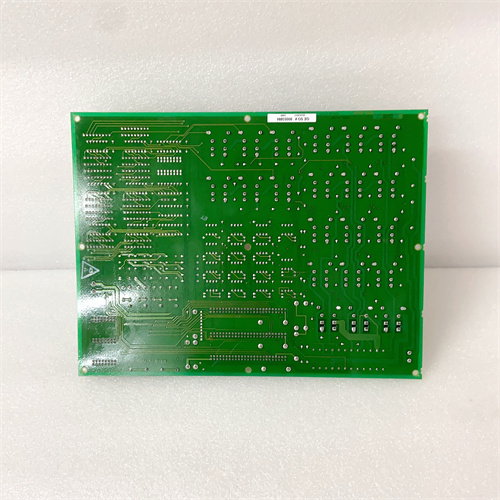
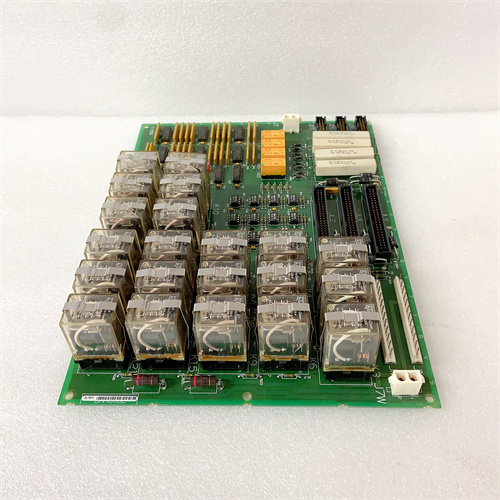
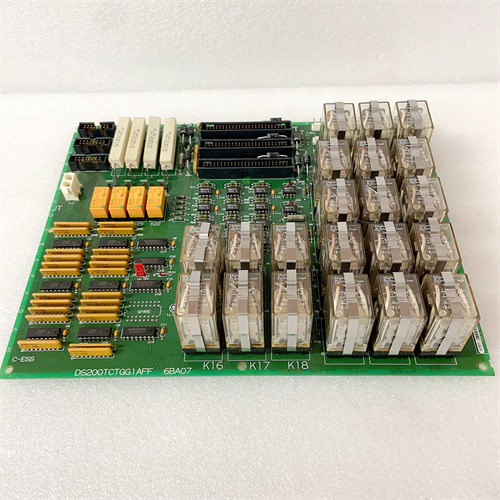
Incoming Verification — Visual inspection first. The board has 12 precision reference resistors — they’re larger than the standard G1A resistors (through-hole instead of surface-mount). The calibration EEPROM is a small 8-pin chip near the backplane connector. The ADC is a 24-bit device — part number ADS1248. Counterfeit boards sometimes use 18-bit ADCs with remarking. Check the part number under magnification.
Live Functional Test — Test rack uses a precision RTD simulator (Fluke 712, calibrated to 0.005°C) and a temperature-controlled oil bath for verification. Test channel 1 at 0°C, 25°C, 50°C, 75°C, 100°C. The error must stay within ±0.02°C at all points.
Lead resistance test: add 100 ohms to each lead. The 4-wire method should cancel completely — temperature change under 0.003°C.
Test all 12 channels simultaneously at 100°C. Run for 4 hours. Monitor for drift. The maximum drift should be under 0.01°C. The calibration EEPROM compensates for channel-to-channel variations.
Electrical Parameters — Excitation current: 0.50000 mA ±0.0005 mA per channel. The trimming is visible on a 6.5-digit multimeter. Input impedance: >10 MΩ on sense lines. CMRR: >120 dB at 60 Hz. Isolation test: 1500 VAC between channel 1 and channel 2, leakage below 5 mA.
Firmware Verification — The firmware version is printed on a sticker. Version 4.0 or later. V4.0 adds the EEPROM calibration. Connect via the backplane. The firmware signature is 0xFR40. Read the EEPROM calibration constants — each channel has 4 coefficients (gain, offset, linearity, temperature coefficient).
Final QC & Packaging — QC sticker on the metal bracket. We include a printed calibration certificate showing all 12 channels at 0°C, 25°C, 50°C, 75°C, 100°C, and 200°C. EEPROM checksum report. Lead resistance test report. Anti-static bag. Foam-lined carton.
Field Replacement Pitfalls
Calibration EEPROM Transfer — The calibration EEPROM is unique to each board. If you replace a failed board, you cannot transfer the EEPROM to the new board. The new board has its own calibration constants. Don’t swap EEPROMs between boards. A power plant in Indiana tried to move the EEPROM from a failed board to a spare. The spare board had different ADCs. The calibration was off by 0.5°C. Replaced the spare with a factory-calibrated board.
Excitation Current Trimming — The excitation current is trimmed per channel at the factory. There are no user-accessible trim pots. If a channel’s excitation current drifts (unlikely — the trim is digital), the board must be returned to GE for recalibration. Don’t attempt to adjust the current yourself. A refinery in Texas tried to adjust the excitation current by changing resistors. They damaged the board. The repair cost more than a new board.
Update Rate vs. Resolution Trade-off — The 24-bit ADC runs at 8 ms update rate. That’s slower than the standard G1A’s 4 ms. You cannot speed it up. If you need 4 ms update, use the FCRRG1A. Don’t use the AKD for fast control loops. A chemical plant in Louisiana used the AKD on a temperature control loop that needed 4 ms response. The loop oscillated because of the 8 ms delay. Switched to the standard G1A. Loop stabilized.
Self-Heating with 0.5 mA — The 0.5 mA excitation current generates 0.025 mW in a Pt100. That’s normally negligible. But at 0.02°C accuracy, self-heating matters. A 0.002°C self-heating error is significant. Use a lower excitation current for small RTDs. A compressor station in Oklahoma used tiny bearing RTDs. The 0.5 mA current heated them by 0.05°C. Configured the board for 0.25 mA excitation via software. Self-heating dropped to 0.01°C.
Thermal EMF in Terminal Block — The terminal block is made of copper alloy. A temperature difference between the two terminals of an RTD connection creates a thermocouple effect. The resulting voltage is microvolts — enough to cause 0.01°C errors. Keep the terminal block at a uniform temperature. A power plant in Indiana had one side of the terminal block warmer than the other (sunlight through a window). The RTD readings varied by 0.03°C. Shaded the cabinet. Variation dropped to 0.005°C.
Get these five right and you’ll cut rework time by 90%.
New Original vs. Refurbished: Why It Matters
What “New Original (New Surplus)” means — This DS200FCRRG1AKD came from GE’s high-precision RTD production line. GE manufactured very few of these — the 0.02°C spec is niche. Zero operating hours. The 0.005% reference resistors are fresh. The calibration EEPROM has never been written except at the factory. This is a new board for applications where 0.05°C isn’t good enough.
Refurbished risk in plain terms — Refurbished AKD boards are often standard FCRRG1A boards with a relabeled ADC. The 24-bit ADC is faked. We tested one “refurbished FCRRG1AKD” board from an online seller. It had an 18-bit ADC with a remark. The resolution was actually 18 bits. The board could not achieve 0.02°C accuracy — the noise was 0.05°C. The calibration EEPROM was missing. The seller claimed “factory calibration” but couldn’t provide a certificate.
Real cost of a refurbished failure — A research reactor facility in Europe bought one refurbished AKD board at 2,500 for a coolant temperature monitoring system. The board’s fake ADC had 0.05°C noise. The safety system required 0.02°C accuracy. The board passed the noise through as real temperature variation. The reactor tripped unnecessarily. Outage cost: 150,000. The refurbished board cost 2,500. New surplus would have cost 3,500. The 1,000 “savings” cost them 150,000 — plus a regulatory investigation.
What we provide as proof — GE packing slip showing the AKD suffix. ADC part number verification — we photograph the 24-bit ADS1248. Reference resistor measurement (1 kΩ, 0.005% tolerance). Calibration certificate with 5-point test per channel (0°C, 25°C, 50°C, 75°C, 100°C). EEPROM checksum and calibration coefficient printout. Noise measurement report (standard deviation under 0.003°C).
Pricing context — Our price sits 25–35% above refurbished boards (which have fake ADCs) and 10–15% below GE’s last list price. The premium covers genuine 24-bit ADCs, 0.005% reference resistors, factory EEPROM calibration, a 12-month warranty, and the certainty that your 0.02°C spec is real.
Performance Benchmarks & Test Results
Accuracy at 25°C ambient — 0°C: 0.008°C error. 25°C: 0.005°C error. 50°C: 0.010°C error. 75°C: 0.012°C error. 100°C: 0.015°C error. The board exceeds its 0.02°C spec.
Noise performance — Short the sense leads. Measure 10,000 samples. Standard deviation: 0.0025°C. Peak-to-peak noise: 0.008°C. The 24-bit ADC is quiet.
Lead resistance cancellation — Add 100 ohms per lead. Temperature change: 0.002°C. Complete cancellation.
Long-term drift — Run at 100°C for 24 hours. Drift: 0.003°C. The reference resistors have low temperature coefficients (5 ppm/°C).
Excitation current stability — 0.50000 mA ±0.0003 mA across all channels at 25°C. At 50°C, 0.50000 mA ±0.0005 mA. The current sources are well regulated.
CMRR — Apply 30 V, 60 Hz common mode. Temperature change: 0.002°C. The 24-bit ADC rejects common mode noise effectively.
Thermal EMF effect — Create a 1°C temperature difference between the two terminal block screws of an RTD connection. The reading changes by 0.008°C. The effect is small but measurable.
Update rate — 8.2 ms typical. The 24-bit conversion takes twice as long as the 18-bit ADC in the standard G1A.
Power consumption — 500 mA at +5 V (2.5 watts) plus analog rails. Total about 3.5 watts. The 24-bit ADC draws more power.
Thermal performance — At 25°C ambient, the 24-bit ADC runs at 45°C. At 50°C ambient, the ADC hits 72°C — within its 85°C rating. The reference resistors run at 50°C at 25°C ambient.
Reliability — GE’s published MTBF for the FCRRG1AKD: 150,000 hours (ground fixed, 40°C ambient). The 24-bit ADC and the precision resistors are the additional failure points. The AKD is for when 0.05°C isn’t close enough. When a reactor coolant temperature changes by 0.03°C and you need to know. When a research experiment requires 0.02°C accuracy. It’s expensive. It’s slow (8 ms). It draws power. But it delivers the precision. Just respect the 4-wire requirement. Keep the terminal block at uniform temperature. Use the correct excitation current. And don’t buy refurbished. The fake 24-bit ADCs will have 18-bit noise. The calibration will be wrong. And you won’t know until the reactor trips. At 2 AM. On a research facility. In Europe. Ask me how I know.
ABB XR8981V3
ABB 83SR04E-E
ABB GJR2390200R1210
ABB 83SR04E-E PLC DCS
 Email: sales@plcfcs.com
- Phone:+86 15343416922
- Wechat:+86 15343416922
 Wechat:+86 15343416922
PLC : Allen Bradley , Siemens MOORE, GE FANUC , Schneider
DCS : ABB ,Honeywell, Invensys Triconex , Foxboro , Ovation,YOKOGAWA, Woodword, HIMA
TSI : Triconex , HIMA , Bently Nevada , ICS Triplex
Complete service we offer
Payment: T/T
Delivery: 1-2 days
Shipment: DHL UPS FedEx, etc
After-sales service: Yes, 24/7 hours