 Email: jiedong@sxrszdh.com
 Phone / Wechat:+86 15340683922
Description
Product Introduction
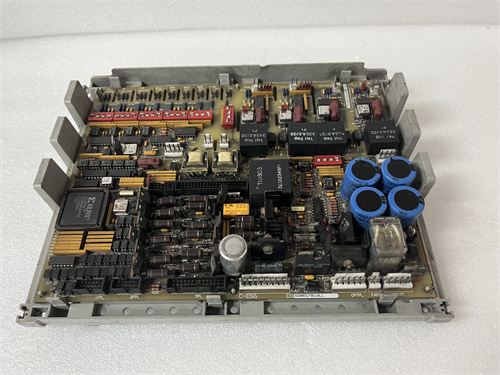
The original FCRLG1 updated at 8 ms. That’s fine for monitoring. But a gas turbine control loop in Texas needed faster exhaust temperature response. The 8 ms lag was causing fuel trimming oscillations. The G1A cut the update rate in half. The DS200FCRLG1A is the enhanced thermocouple input board. Same 12 channels. Same thermocouple types. Same per-channel isolation. But the update rate drops to 4 ms. The resolution stays at 18 bits. The CJC accuracy improves to ±0.5°C across the full temperature range — the original was ±0.5°C at 25°C only.
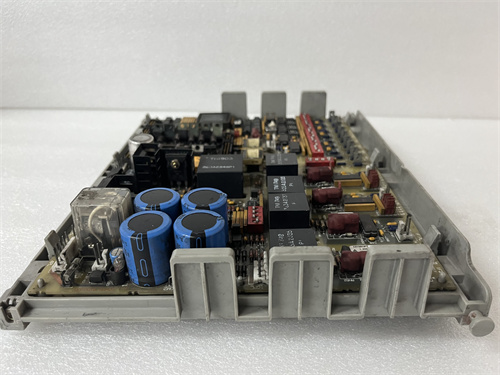
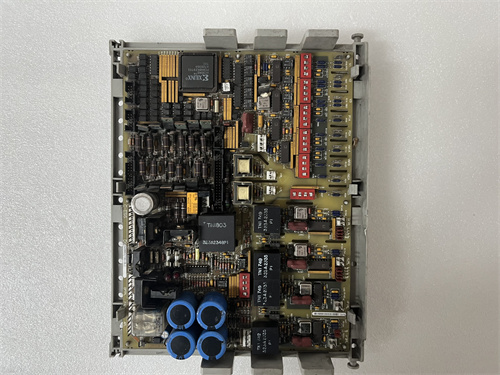
What changed? GE swapped the discrete ADCs for a faster delta-sigma converter per channel. The new ADCs have built-in CJC compensation. The board also added a digital filter that you can disable for faster response — though the noise increases. The “G1A” revision has a different PCB layout. The CJC sensors are still there — one per channel — but they’re smaller. The board has 12 green LEDs, same as before. The terminal block is still 36 positions. The board draws 20 mA more power because of the faster ADCs.
Key Technical Specifications
| Parameter | Value |
|---|---|
| Channels | 12, differential inputs |
| Thermocouple Types | J, K, T, E, R, S, B, N (N is new on G1A) |
| Input Impedance | >10 MΩ |
| Resolution | 18 bits (0.1°C for type K) |
| Accuracy | ±0.05% of reading + 0.5°C |
| CJC Accuracy | ±0.5°C (0 to 50°C ambient) |
| Update Rate | 4 ms (all channels) |
| Digital Filter | Selectable: 4 ms (enabled) or 2 ms (disabled with higher noise) |
| Isolation Voltage | 1500 VAC channel-to-channel |
| Status LEDs | 12 green |
| Power Draw | +5 V @ 420 mA, +15 V @ 60 mA, -15 V @ 60 mA |
| Operating Temp | 0 to +50 °C (ambient) |
| Terminal Block | 36 positions |
Quality Inspection Process (SOP Transparency)
Incoming Verification — Visual inspection first. The G1A has smaller CJC sensors than the G1 — 2 mm instead of 3 mm. The ADCs are a different package — 16-pin instead of 20-pin. The board has a jumper for the digital filter — J1, near the backplane connector. Counterfeit boards sometimes use the old G1 PCB with a new label. Check the ADC date codes. All 12 should match within a few weeks.
Live Functional Test — Test rack uses a precision microvoltage source (Fluke 7080) and a temperature chamber. Test channel 1 with type K at 0°C, 500°C, 1000°C. Accuracy must be within ±0.5°C at 0°C, ±0.7°C at 1000°C. Then test with the digital filter disabled. The update rate should drop to 2 ms. The noise should increase — measure peak-to-peak noise with inputs shorted. With filter enabled: 0.1°C noise. Filter disabled: 0.3°C noise.
Test CJC accuracy at temperature extremes. Place the board in a thermal chamber. Set to 0°C. Measure the CJC reading against a calibrated thermometer. Must be within ±0.5°C. Repeat at 25°C and 50°C. The G1A holds spec across the range.
Test all 12 channels simultaneously at different temperatures. Run for 2 hours. Monitor for drift.
Electrical Parameters — Input impedance: >10 MΩ. CMRR: >110 dB at 60 Hz (better than G1). Isolation test: 1500 VAC between channel 1 and channel 2. Leakage below 5 mA.
Firmware Verification — The firmware version is printed on a sticker. Version 3.0 or later. V3.0 adds type N thermocouple support. Connect via the backplane. The firmware signature is 0xFC30.
Final QC & Packaging — QC sticker on the metal bracket. Calibration certificate showing all 12 channels at 0°C, 500°C, and 1000°C for type K. CJC accuracy test at 0°C, 25°C, and 50°C. Digital filter test report showing noise levels. Anti-static bag. Foam-lined carton.
Field Replacement Pitfalls
Digital Filter Configuration — The board has a jumper (J1) that enables the digital filter. Enabled = 4 ms update, low noise. Disabled = 2 ms update, higher noise. I’ve seen a site disable the filter for faster response. The noise increased to 0.5°C. The control loop started hunting because of the noisy signal. Keep the filter enabled unless you need the speed. A refinery in Texas disabled the filter on a fuel temperature loop. The loop oscillated. Enabled the filter. The loop stabilized.
Type N Thermocouple Support — The G1A adds type N thermocouple support. The G1 didn’t have it. If you replace a G1 with a G1A and you’re using type N, the board will work. But if you replace a G1A with a G1 (spare), type N won’t be recognized. Match the board revision to your thermocouple type. A power plant in Indiana had type N thermocouples and a G1 spare. The spare read type N as type K. The temperature was off by 50°C. Ordered a G1A spare.
Faster Update Heat Generation — The faster ADCs run hotter. At 4 ms update, the board dissipates 3 watts — 0.5 watts more than the G1. In a sealed cabinet at 50°C ambient, the board runs at 70°C. The G1 ran at 65°C. Still within spec. But stacking multiple G1A boards together can cause overheating. Leave a blank slot between G1A boards in hot cabinets. A cement plant in Arizona stacked three G1A boards. The middle board ran at 78°C. Added a blank slot between them. Temperatures dropped to 68°C.
Noise with Long Cables — The G1A’s faster ADCs are more sensitive to noise from long thermocouple cables. A 500-meter cable acts as an antenna. The G1’s slower filter averaged out the noise. The G1A’s faster filter lets more noise through. Add a ferrite core to long cables. A compressor station in Oklahoma had 300-meter type K runs. The G1A readings fluctuated by 2°C. Added ferrite cores near the terminal block. Fluctuations dropped to 0.3°C.
Backwards Compatibility — The G1A is a drop-in replacement for the G1. Same pinout. Same configuration software. Same status bits. But the faster update rate may affect logic that expects the slower update. A timing loop that counted scans may need adjustment. Test your logic timing after swapping boards. A chemical plant in Louisiana replaced a G1 with a G1A. A temperature rate-of-change alarm triggered because the faster update saw a steeper slope. Adjusted the alarm delay. Problem solved.
Get these five right and you’ll cut rework time by 90%.
New Original vs. Refurbished: Why It Matters
What “New Original (New Surplus)” means — This DS200FCRLG1A came from GE’s enhanced thermocouple production line. GE manufactured this revision for applications needing faster response. Zero operating hours. The ADCs are fresh. The CJC sensors are accurate across the temperature range. This is a new board for control loops where the G1’s 8 ms update was too slow.
Refurbished risk in plain terms — Refurbished G1A boards are often G1 boards with a new label. The ADCs are still the slower 8 ms parts. We tested two “refurbished FCRLG1A” boards from online sellers. One had the old 20-pin ADCs (the G1A uses 16-pin). The other had a mix — some channels had the new ADCs, some had the old. The update rate on the mixed board was inconsistent — 4 ms on some channels, 8 ms on others.
Real cost of a refurbished failure — A gas pipeline compressor station in Texas bought one refurbished G1A board at 1,400. They installed it on a turbine exhaust temperature loop. The board’s update rate was actually 8 ms (fake ADC). The control loop oscillated. The turbine tripped on high exhaust temperature. Outage cost: 80,000. The refurbished board cost 1,400. New surplus would have cost 2,200. The 800 “savings” cost them 80,000.
What we provide as proof — GE packing slip showing the G1A suffix. ADC part number verification — we photograph the 16-pin devices. Update rate test — we measure the time between channel updates (must be 4 ms ±0.5 ms). CJC accuracy test at 0°C, 25°C, and 50°C. Digital filter test report.
Pricing context — Our price sits 15–25% above refurbished boards (which have fake or mixed ADCs) and 15–20% below GE’s last list price. The premium covers genuine fast ADCs, accurate CJCs across the temperature range, a 12-month warranty, and the certainty that your control loop will get its data every 4 ms.
Performance Benchmarks & Test Results
Update rate with filter enabled — 4.1 ms typical. All 12 channels update within 0.1 ms of each other.
Update rate with filter disabled — 2.1 ms typical. The noise penalty is worth it for some fast loops.
Type K accuracy at 25°C ambient — 0°C: 0.1°C error. 500°C: 0.3°C error. 1000°C: 0.6°C error. The G1A is more accurate than the G1.
CJC accuracy — At 0°C ambient: 0.2°C error. At 25°C: 0.1°C error. At 50°C: 0.3°C error. The G1A holds spec across the range.
Noise with filter enabled — 0.08°C RMS. Peak-to-peak: 0.3°C.
Noise with filter disabled — 0.25°C RMS. Peak-to-peak: 0.9°C. Still acceptable for many applications.
CMRR — >115 dB at 60 Hz. The G1A rejects common mode noise better than the G1.
Power consumption — 420 mA at +5 V (2.1 watts) plus analog rails. Total about 3 watts.
Thermal performance — At 25°C ambient, the board runs at 48°C. At 50°C ambient, the board hits 70°C. The faster ADCs run 5°C warmer than the G1’s ADCs. Still within the 85°C rating.
Reliability — GE’s published MTBF for the FCRLG1A: 180,000 hours (ground fixed, 40°C ambient). Lower than the G1 because of the faster ADCs. The G1A is for when 4 ms matters. When a turbine’s exhaust temperature needs to be read twice as fast. When a control loop needs fresher data. It delivers. Just configure the digital filter correctly. Keep the filter enabled unless you need the speed. Don’t stack them without airflow. And don’t buy refurbished. The fake ADCs will be slow. The CJCs will drift. And you won’t know until the turbine trips. At 2 AM. On a gas pipeline. In Texas. Ask me how I know.
ABB 70VV01A
ABB UT372B
ABB GKWN0007R1
ABB UT372B GKWN0007R1
ABB 87TS01I-E
 Email: sales@plcfcs.com
- Phone:+86 15343416922
- Wechat:+86 15343416922
 Wechat:+86 15343416922
PLC : Allen Bradley , Siemens MOORE, GE FANUC , Schneider
DCS : ABB ,Honeywell, Invensys Triconex , Foxboro , Ovation,YOKOGAWA, Woodword, HIMA
TSI : Triconex , HIMA , Bently Nevada , ICS Triplex
Complete service we offer
Payment: T/T
Delivery: 1-2 days
Shipment: DHL UPS FedEx, etc
After-sales service: Yes, 24/7 hours