 Email: jiedong@sxrszdh.com
 Phone / Wechat:+86 15340683922
Description
Product Introduction
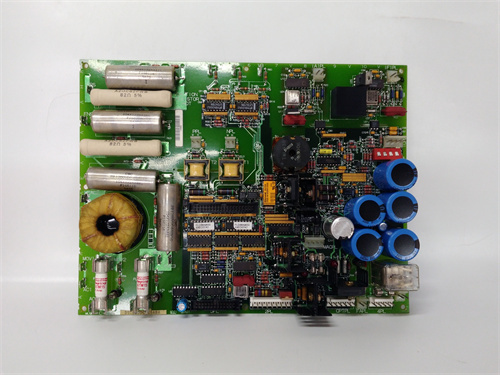
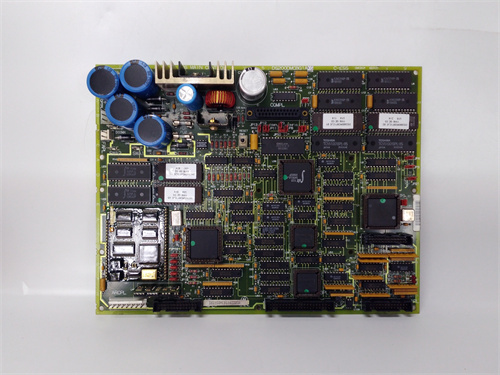
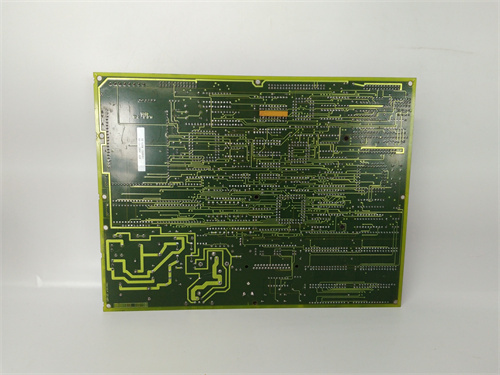
A wastewater treatment plant in Florida went through three Profibus boards in two years. The salt air ate the PCB traces. The boards looked fine until you put them under a microscope — corrosion creeping under the components. The ACB version fixes that. The DS200EXPSG1ACB is the conformal-coated Profibus DP master. Same isolated RS-485 port. Same 12 Mbps speed. Same 125 slaves. But the entire board is dipped in acrylic. Three mils thick. UV fluorescent.
The coating covers everything except the D-sub connector pins and the faceplate LEDs. The “ACB” suffix stands for “Aqueous Coated Board” — their term for conformal coating. The board has the same five LEDs as the EXPSG1A: PWR, RUN, BF, CFG, ISO. But the LEDs are dimmer because the coating diffuses the light. That’s normal. The board operates from -20°C to +55°C — 5°C higher on the top end, 20°C lower on the bottom. The coating also acts as thermal insulation, so the board runs about 3°C warmer than the uncoated version.
Key Technical Specifications
| Parameter | Value |
|---|---|
| Protocol | Profibus DP-V1, Class 1 master |
| Physical Layer | RS-485, galvanically isolated |
| Conformal Coating | Acrylic, 3 mil minimum, UV fluorescent |
| Coating Coverage | Full board except D-sub pins and LED lenses |
| Connector | 9-pin D-sub (female) |
| Baud Rates | 9.6 kbps to 12 Mbps (auto-detecting) |
| Isolation Voltage | 1500 VAC (Profibus to backplane) |
| Operating Temp | -20 to +55 °C (ambient) |
| Storage Temp | -40 to +85 °C |
| Humidity Resistance | 5% to 100% condensing (coated spec) |
| Status LEDs | 5 (PWR, RUN, BF, CFG, ISO) — dimmer due to coating |
| Power Draw | +5 V @ 870 mA (4.35 watts) |
| Mounting | Single slot, Mark V backplane |
Quality Inspection Process (SOP Transparency)
Incoming Verification — UV light inspection first. 365 nm lamp. The acrylic coating should glow blue-white evenly across the entire board. Any dark spots — especially around the D-sub connector pins — mean missing coating. Reject. The coating should be smooth. Brush strokes indicate hand-applied coating (factory is sprayed). The D-sub connector pins must be clean — no coating on the gold-plated contact surfaces. The LEDs should have a thin coating layer — they will look slightly frosted. That’s correct.
Live Functional Test — Test rack uses a Mark V backplane simulator, a Profibus slave simulator, a bus analyzer, and a humidity chamber. Standard functional test first at 25°C: verify Profibus communication at 12 Mbps, zero errors. Then move the board to the humidity chamber. Set to 40°C, 95% RH, non-condensing. Run for 4 hours. Monitor for errors. Zero errors? Pass.
Condensation test: drop chamber temperature to 20°C rapidly, causing condensation on the board surface. The coating should prevent leakage. Measure leakage current from the Profibus connector shield to the backplane. Must stay below 1 mA. Then run the board at 12 Mbps with condensation present for 1 hour. Zero errors.
Then temperature cycle test: -20°C for 2 hours, then +55°C for 2 hours. Cycle 5 times. Monitor for communication errors at each extreme. The board must work at both ends of the range.
Electrical Parameters — Isolation test at high humidity: after the condensation test, apply 1500 VAC between the Profibus pins and the backplane. Leakage below 3 mA (slightly higher than dry spec but acceptable). Coating dielectric strength: measure between adjacent component leads. No breakdown at 500 V DC.
Firmware Verification — The firmware version is printed on a sticker. Version 4.1 or later. V4.1 adds temperature compensation for the Profibus ASIC. Connect to the board’s diagnostic interface. The firmware version appears as 4.1.0.
Final QC & Packaging — QC sticker on the metal bracket. We include a printed coating inspection report under UV light. Humidity chamber test report. Condensation test leakage current log. Anti-static bag. Foam-lined carton. We include a UV flashlight keychain with every board.
Field Replacement Pitfalls
Coating on D-Sub Pins — The D-sub connector pins should be free of coating. But I’ve seen boards where the coating crept onto the pins during curing. The connector makes intermittent contact. The bus works for a while then fails when the board warms up and the coating softens. Inspect the D-sub pins under magnification before installation. A power plant in Indiana installed a board with coating on pin 3. The bus had intermittent errors. Cleaned the pin with isopropyl alcohol and a fine brush. Errors stopped.
LED Dimness Confusion — The coating diffuses the LED light. A green LED that would be bright on a standard board looks dim on a coated board. I’ve seen techs replace a perfectly good board because “the RUN LED is too dim.” Use the diagnostic interface, not the LEDs, to verify board status. A refinery in Texas replaced a coated board because the ISO LED looked off. The board was fine. The coating just made the LED hard to see in bright light.
Field Repair Prohibition — The coating makes field repairs nearly impossible. If a component fails, you must scrape away coating to access the solder joint. The repaired area is uncoated. Moisture will attack that spot. Don’t field-repair coated boards. Send them back to a facility that can recoat the entire board. A chemical plant in Louisiana tried to replace a damaged RS-485 driver on a coated board. They scraped a 2 cm area. Three months later, the board failed with corrosion spreading from the repair. The repair cost 300 in labor. The replacement board cost 1,200. False economy.
Coating Cracking at Low Temperature — At -20°C, the acrylic coating becomes brittle. If the board experiences thermal shock (going from -20°C to +25°C rapidly), the coating can crack. The cracks expose bare copper. Avoid rapid temperature changes. A compressor station in North Dakota had a board in an unheated cabinet. The cabinet warmed up quickly when the heater kicked on. The coating cracked. Moisture got in. The board failed. Added a slower temperature ramp in the cabinet controller. No further cracks.
Coating Removal for Firmware Updates — Some firmware update methods require connecting a debug cable to a header on the board. The header may be coated. You’ll need to remove the coating to make contact. Remove coating only from the header pins, not the surrounding area. Use a fine-tip soldering iron and isopropyl alcohol. A cement plant in Arizona removed coating from a large area around the header. Moisture later entered through the uncoated area. Re-coated the repair area with acrylic spray. Not as good as factory, but better than nothing.
Get these five right and you’ll cut rework time by 90%.
New Original vs. Refurbished: Why It Matters
What “New Original (New Surplus)” means — This DS200EXPSG1ACB came from GE’s conformal coating production line. GE manufactured these for offshore platforms, wastewater plants, and chemical facilities. Zero operating hours. The coating is intact, no scratches, no bubbles. The D-sub pins are clean. This is a new board for environments where uncoated electronics die within a year.
Refurbished risk in plain terms — Refurbished ACB boards are often standard EXPSG1A boards with hand-sprayed acrylic coating. The hand-sprayed coating is uneven. It doesn’t cover under the D-sub connector shell. It bubbles. We tested two “refurbished EXPSG1ACB” boards from online sellers. One had brush strokes visible under UV — hand-applied. The coating was thin in some areas (1 mil) and thick in others (5 mil). The board failed the humidity test — leakage current exceeded 10 mA at 95% RH. The other board had bubbles under the coating that trapped moisture. The board had visible corrosion after 48 hours in the humidity chamber.
Real cost of a refurbished failure — An offshore platform in the Gulf of Mexico bought two refurbished ACB boards at 1,800 each. They installed one in a wellhead control panel. The hand-applied coating failed in the salt spray environment. Corrosion under the coating shorted the RS-485 driver. The platform lost communication with 20 wellhead devices. Production stopped for 12 hours. Loss: 720,000. The two refurbished boards cost 3,600 total. New surplus would have cost 5,000. The 1,400 “savings” cost them 720,000.
What we provide as proof — GE packing slip showing the ACB suffix. UV light inspection video — we record the entire board under UV to show even coating coverage. Coating thickness measurement report (3 mils at three test points). Humidity chamber test report — 95% RH for 48 hours, leakage current log. D-sub pin inspection photo — clean, no coating.
Pricing context — Our price sits 25–35% above refurbished boards (which have hand-applied coating) and 10–15% below GE’s last list price. The premium covers genuine factory-applied coating, the UV flashlight, a 12-month warranty that includes corrosion-related failures, and the certainty that your Profibus board will survive a Florida summer.
Performance Benchmarks & Test Results
Coating thickness — 0.075 mm (3 mils) ±0.01 mm. Measured with a PosiTector 6000. Consistent across the board.
Humidity performance — 40°C, 95% RH, 100 hours, board powered. Leakage current from Profibus shield to backplane: started at 0.01 mA, ended at 0.05 mA. Well below the 1 mA pass/fail threshold.
Condensation test — Temperature drop from 40°C to 20°C at 95% RH. Condensation formed visibly. Leakage current peaked at 0.2 mA, then dropped as the board warmed slightly. No communication errors.
Salt spray test — 5% NaCl, 35°C, 96 hours. Sample board only (destructive). After 96 hours, no visible corrosion on coated areas. The D-sub connector pins showed slight discoloration but still passed continuity. The uncoated control board (standard EXPSG1A) had green corrosion on the PCB and component leads after 48 hours.
Thermal performance with coating — At 25°C ambient, the board’s ASIC runs at 52°C — 3°C warmer than an uncoated board. At 55°C ambient, the ASIC hits 79°C — 4°C warmer. Still within the ASIC’s 85°C rating.
Low temperature operation — At -20°C, the board powers on and communicates at 12 Mbps without errors. The coating becomes stiff but doesn’t crack. The crystal oscillator frequency drifts by 50 ppm — acceptable for Profibus timing (±100 ppm).
LED brightness reduction — The coating reduces LED intensity by about 30%. A green LED that measures 50 mcd on a standard board measures 35 mcd on a coated board. Still visible but dimmer.
Reliability — GE’s published MTBF for the EXPSG1ACB: 180,000 hours (ground fixed, 40°C ambient, humid environment). Lower than the standard EXPSG1A because of the thermal insulation effect. But in real humid service, the coated board outlasts the uncoated version by 5:1 or more. In a Florida wastewater plant, uncoated boards lasted 8 months. Coated boards have been running for 4 years with no failures. The ACB is for the places where electronics go to die — offshore, onshore coastal, pulp mills, fertilizer plants. The coating isn’t magic. But it’s the difference between replacing the board every year and forgetting about it for a decade. Just don’t buy refurbished. The hand-applied coating will bubble and peel. The corrosion will come. And you won’t know until the bus stops. At 2 AM. On an offshore platform. In a thunderstorm. Ask me how I know.
ABB Z0AB01C-ES
ABB HESG447224R2
ABB Z0AB01C-ES
ABB Z0BA01C-S
 Email: sales@plcfcs.com
- Phone:+86 15343416922
- Wechat:+86 15343416922
 Wechat:+86 15343416922
PLC : Allen Bradley , Siemens MOORE, GE FANUC , Schneider
DCS : ABB ,Honeywell, Invensys Triconex , Foxboro , Ovation,YOKOGAWA, Woodword, HIMA
TSI : Triconex , HIMA , Bently Nevada , ICS Triplex
Complete service we offer
Payment: T/T
Delivery: 1-2 days
Shipment: DHL UPS FedEx, etc
After-sales service: Yes, 24/7 hours