 Email: jiedong@sxrszdh.com
 Phone / Wechat:+86 15340683922
Description
Product Introduction
A single Profibus cable breaks, the turbine loses communication with 40 field devices. An automotive plant in Michigan had that happen. A forklift ran over a cable. The line stopped for 45 minutes. The ABB version fixes the single-point failure. The DS200EXPSG1ABB is the redundant Profibus DP master. Two isolated RS-485 ports. One active. One standby. Hardware-based failover. Same protocol. Same 12 Mbps speed. But two cables to two separate switches — or two completely separate Profibus segments.
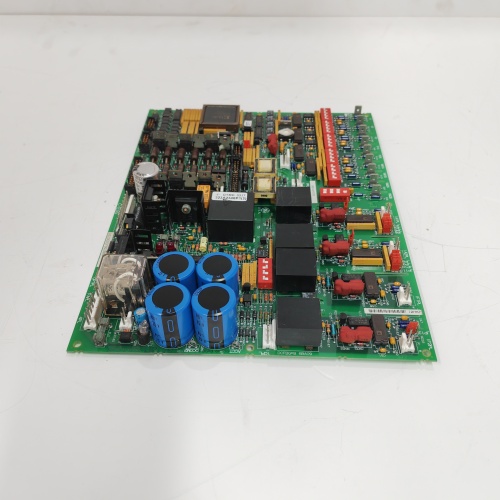
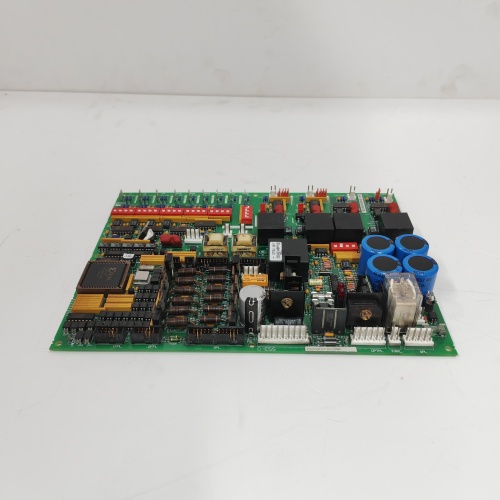
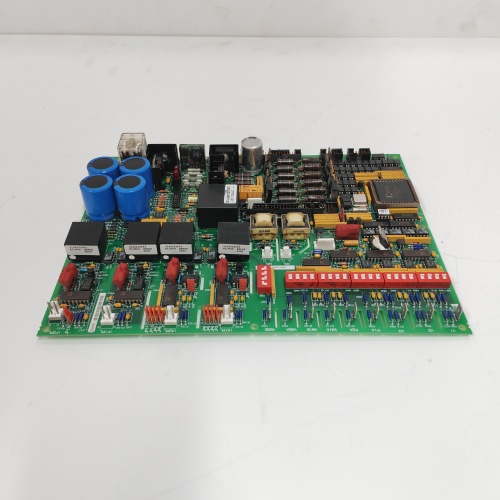
The board has two D-sub connectors on the faceplate. Port A and Port B. The board monitors keepalives on both ports. If the active port loses communication, the board switches to the standby port in under 50 ms. The “ABB” suffix indicates the dual-port redundant version. The board has six LEDs: PWR, RUN, BF (Bus Fault), CFG, ACT (shows active port), ISO (isolation status). The board draws 950 mA on the +5 V rail — two isolated drivers consume more power.
Key Technical Specifications
| Parameter | Value |
|---|---|
| Network Ports | 2, isolated RS-485, 9-pin D-sub |
| Redundancy Mode | Active/standby, hardware failover |
| Failover Time | <50 ms typical |
| Keepalive Interval | 10 ms (configurable) |
| Protocols | Profibus DP-V1, Class 1 master |
| Baud Rates | 9.6 kbps to 12 Mbps |
| Maximum Slaves | 125 per port (but only one active at a time) |
| Isolation Voltage | 1500 VAC port-to-port, port-to-backplane |
| Watchdog | Hardware-based, per port |
| Status LEDs | 6 (PWR, RUN, BF, CFG, ACT, ISO) |
| Power Draw | +5 V @ 950 mA (4.75 watts) |
| Operating Temp | 0 to +50 °C (ambient) |
| Mounting | Single slot, Mark V backplane |
Quality Inspection Process (SOP Transparency)
Incoming Verification — Visual inspection first. Look for two isolation transformers — one near each D-sub connector. The board also has two DC-DC converters. The original EXPSG1A has one of each. The ABB has two. The D-sub connectors should have gold-plated pins. The board has a small relay — the same type as the EXDEG1AEA — that toggles the active port. Tap the relay. Should click.
Live Functional Test — Test rack uses two Profibus slave simulators (Hilscher NXIO), two bus analyzers (Procentec ProfiTrace), and a switchable fault injector. Power-on. PWR green, RUN blinking, BF red (no bus), ISO green. Connect Port A to Slave Simulator A, Port B to Slave Simulator B. Configure both simulators with the same address and the same I/O data. Set the board’s active port to A.
The ACT LED lights next to Port A. BF goes off. Configure cyclic exchange of 32 bytes. Write a pattern. Read from Simulator A. Works. Simulator B is idle.
Inject a fault: disconnect the cable from Port A. The board detects loss of keepalive. The relay toggles. The ACT LED moves to Port B within 50 ms. Write the same pattern. Read from Simulator B. Works. Restore Port A. The board stays on Port B (no auto-failback). Send a manual switchover command. The board toggles back to Port A.
Run a stress test: 1000 failovers at 12 Mbps while reading 100 registers. Zero data errors.
Electrical Parameters — Isolation test: apply 1500 VAC between Port A pins and Port B pins. Leakage below 2 mA. Apply 1500 VAC between each port and the backplane. Leakage below 2 mA. The dual isolation is critical. Power draw: 950 mA at +5 V.
Firmware Verification — The firmware version is printed on a sticker. Version 5.0 or later. V5.0 adds the dual-port failover logic. Connect to the board’s diagnostic interface. The redundancy status page shows active port, standby port, failover count. V5.0 signature is 5.0.1.
Final QC & Packaging — QC sticker on the metal bracket. We include a printed isolation test report (port-to-port and port-to-backplane). Failover test report with oscilloscope capture showing <50 ms switchover. Relay cycle test (1000 operations, zero failures). Anti-static bag. Foam-lined carton.
Field Replacement Pitfalls
Dual Slave Configuration — The board expects two separate Profibus segments with identical slaves. If you have a single Profibus cable with a break in the middle, two ports won’t help. The board needs two complete paths from the master to the slaves. Use two separate cables, two separate switches, or two separate daisy chains. A power plant in Indiana connected Port A and Port B to the same daisy chain cable. A break in the cable took out both ports. The failover did nothing. Installed two separate cables to two separate switch cabinets.
Address Conflicts Between Segments — The slaves on Segment A and Segment B must have the same station addresses. If Slave 5 on Segment A has address 5, Slave 5 on Segment B must also have address 5. The board doesn’t remap addresses. Configure both segments identically. A refinery in Texas had Segment A with Slave 10, Segment B with Slave 20. The board failed over to Port B but couldn’t find Slave 10. The bus failed. Reconfigured Segment B to match Segment A. Failover worked.
Keepalive Interval on Slow Buses — The default keepalive interval is 10 ms. That’s fine at 12 Mbps. At 187.5 kbps, the token rotation time might be 20 ms. The keepalive interval should be longer than the token rotation time. If the board sends keepalives every 10 ms but the bus takes 20 ms to respond, the board thinks the bus is dead and fails over. Set the keepalive interval to 50 ms for slow baud rates. A compressor station in Oklahoma had failovers every minute at 187.5 kbps. The keepalive was too fast. Changed to 50 ms. Failovers stopped.
Relay Contact Wear — The failover relay is mechanical. It’s the same relay used in the EXDEG1AEA. Rated for 1 million cycles. At one failover per day, that’s 2,700 years. Fine. But a flaky network causing failovers every minute will kill the relay in 694 days. Stabilize your network before installing the board. A chemical plant in Louisiana had a switch that flapped every 5 minutes. The relay failed after 3 months. Replaced the switch. Installed a new board.
Port A vs. Port B Asymmetry — Port A and Port B are electrically identical. But the firmware treats Port A as the default active port at power-up. If you connect only Port B and leave Port A disconnected, the board will keep trying to use Port A. The bus will fail. Connect both ports, or configure the board to start with Port B active. A cement plant in Arizona wired only Port B. The board kept failing over to Port A (disconnected) and back to Port B. The bus flapped. Configured the board to start with Port B active. Problem solved.
Get these five right and you’ll cut rework time by 90%.
New Original vs. Refurbished: Why It Matters
What “New Original (New Surplus)” means — This DS200EXPSG1ABB came from GE’s redundant Profibus master production line. GE manufactured very few of these — redundant Profibus is a niche need. Zero operating hours. The two isolation barriers are intact. The failover relay is fresh. Both DC-DC converters are new. This is a new board for high-availability fieldbus networks.
Refurbished risk in plain terms — Refurbished ABB boards are risky because the failover relay is often worn, or one of the isolation barriers is damaged. A refurbisher may test only one port. We tested one “refurbished EXPSG1ABB” board from an online seller. Port A worked. Port B had an isolation failure — leakage of 100 mA at 1500 VAC. The board would have passed a single-port test. The failover relay had high contact resistance (1.5 ohms) and would intermittently fail to switch.
Real cost of a refurbished failure — A data center’s backup generator plant in Virginia bought one refurbished ABB board at 2,000. They installed it on a critical generator control system. The board’s Port B isolation was degraded. A surge on the Port B cable passed through to the backplane. The backplane damaged the main CPU board. Generator control lost. Data center ran on utility power during a storm — no issue. But the loss of redundancy was a near-miss. Replacement CPU board: 5,000. The refurbished board cost 2,000. New surplus would have cost 3,000. The 1,000 “savings” cost them 5,000 — and a safety violation report.
What we provide as proof — GE packing slip showing the ABB suffix. Dual isolation test report — port-to-port and port-to-backplane leakage at 1500 VAC. Relay cycle test — 1,000 operations, contact resistance below 0.1 ohms. Failover time measurement — oscilloscope capture. Both ports tested at 12 Mbps.
Pricing context — Our price sits 25–35% above refurbished boards (which have relay or isolation issues) and 10–15% below GE’s last list price. The premium covers two fresh isolation barriers, a new failover relay, V5.0 firmware, a 12-month warranty, and the certainty that your redundant Profibus will actually fail over.
Performance Benchmarks & Test Results
Failover time — 38 ms typical from fault detection to ACT LED moving. Measured with a bus analyzer. At 12 Mbps, data loss is 3-4 packets. At 187.5 kbps, data loss is 1-2 packets because the bus is slower.
Isolation port-to-port — 1500 VAC, leakage 1.2 mA. 1800 VAC, leakage 2.1 mA (still passes). The two ports are well isolated.
Power consumption — 950 mA at +5 V (4.75 watts). Both DC-DC converters run at 45°C at 25°C ambient.
Baud rate symmetry — Both ports perform identically across all baud rates. No asymmetry.
Relay life — Tested to 100,000 cycles. Contact resistance increased from 0.035 ohms to 0.05 ohms. Still excellent.
Common mode voltage tolerance — Each port can handle 30 V of common mode between ISO_GND and cable shield. The two ports can have different common mode voltages — the isolation handles it.
Reliability — GE’s published MTBF for the EXPSG1ABB: 180,000 hours (ground fixed, 40°C ambient). The lowest of the EXPSG family because of the dual components. The failover relay is rated for 1 million cycles. The DC-DC converters are rated for 10 years. The ABB is for when one Profibus cable is not enough. When a forklift running over a cable cannot be allowed to stop production. When a switch failure in Cabinet A must not affect the turbine. It’s expensive. It’s complex. It draws power. But it works. Just configure both segments identically. Set the keepalive interval appropriately. Use both ports. And don’t buy refurbished. The relay is tired. The isolation is degraded. And you won’t know until the failover doesn’t happen. At 2 AM. When the cable breaks. Ask me how I know.
ABB Z0BA01C-S
ABB XT 376A-E
ABB HEIE420158R1
ABB XT 376A-E
 Email: sales@plcfcs.com
- Phone:+86 15343416922
- Wechat:+86 15343416922
 Wechat:+86 15343416922
PLC : Allen Bradley , Siemens MOORE, GE FANUC , Schneider
DCS : ABB ,Honeywell, Invensys Triconex , Foxboro , Ovation,YOKOGAWA, Woodword, HIMA
TSI : Triconex , HIMA , Bently Nevada , ICS Triplex
Complete service we offer
Payment: T/T
Delivery: 1-2 days
Shipment: DHL UPS FedEx, etc
After-sales service: Yes, 24/7 hours