 Email: jiedong@sxrszdh.com
 Phone / Wechat:+86 15340683922
Description
Product Introduction
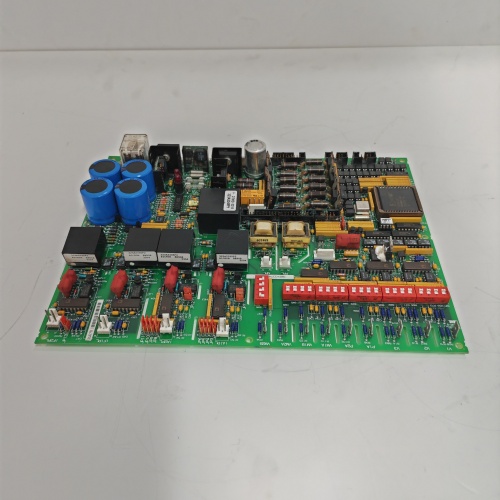
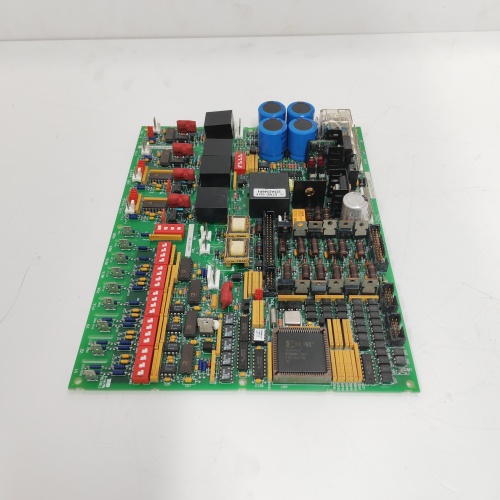
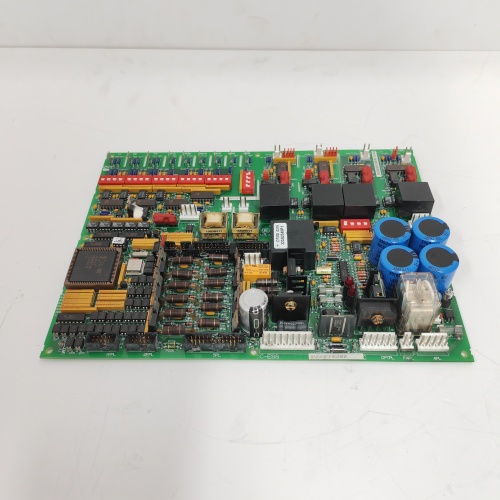
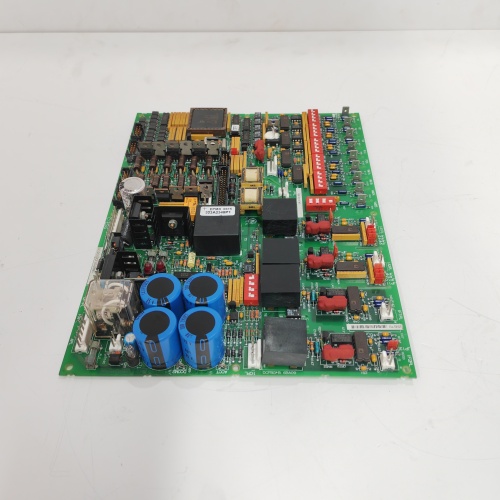
The Mark V speaks Modbus and EGD. But a cement plant in Arizona had a kiln drive that only spoke Profibus. They tried a gateway. The latency was 200 ms. Too slow. The EXPSG1 solved it — native Profibus DP master on the Mark V backplane. The DS200EXPSG1 is the Profibus DP interface board. One RS-485 port. Nine-pin D-sub connector on the faceplate. Supports up to 12 Mbps. Can address up to 125 slaves. The board is a Class 1 master — it handles cyclic data exchange with slaves.
The board has its own processor — a 80 MHz ASIC dedicated to Profibus timing. The Mark V CPU doesn’t get involved in bit-level processing. The board supports DP-V1 — acyclic data for parameter upload/download. The “G1” revision added automatic baud rate detection. The earlier version required manual setting. The board has four LEDs: PWR, RUN, BF (Bus Fault), and CFG (Configuration error). The nine-pin D-sub is on the faceplate. No termination resistors on board — you add them externally on the connector.
Key Technical Specifications
| Parameter | Value |
|---|---|
| Protocol | Profibus DP-V1, Class 1 master |
| Physical Layer | RS-485, isolated |
| Connector | 9-pin D-sub (female) |
| Baud Rates | 9.6 kbps to 12 Mbps (auto-detecting) |
| Maximum Slaves | 125 (limited by bus timing) |
| Cyclic Data | 244 bytes input, 244 bytes output per slave |
| Acyclic Data | DP-V1 read/write (up to 240 bytes) |
| Token Hold Time | Configurable (1-10 ms) |
| Update Rate | Configurable per slave (typically 2-20 ms) |
| Status LEDs | 4 (PWR, RUN, BF, CFG) |
| Power Draw | +5 V @ 800 mA (4 watts) |
| Operating Temp | 0 to +50 °C (ambient) |
| Mounting | Single slot, Mark V backplane |
Quality Inspection Process (SOP Transparency)
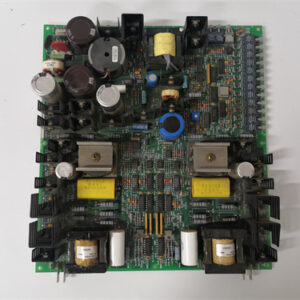
Incoming Verification — Visual inspection first. Look at the nine-pin D-sub connector. The pins should be straight, no corrosion. The board has a small isolation transformer near the connector — that’s the RS-485 isolation. Counterfeit boards sometimes omit the transformer. The ASIC should have a date code matching the board’s production. The board has a sticker with the Profibus station address (default 1). Should be removable.
Live Functional Test — Test rack uses a Mark V backplane simulator, a Profibus slave simulator (Hilscher NXIO), and a bus analyzer (Procentec ProfiTrace). Power-on the board. LED sequence: PWR green, RUN blinking, BF red (no bus active). Set the board’s station address to 2 via the Mark V configuration software. Connect the board to the slave simulator via a Profibus cable. Terminate both ends with 220 ohm resistors. The BF LED should go off. The CFG LED should stay off.
Configure the board to exchange 16 bytes of input and 16 bytes of output with the slave. Write a pattern (0xA5, 0x5A, etc.) to the output buffer. Read the slave simulator’s input buffer. Must match. Cycle the slave power. The board must automatically re-establish communication within 1 second.
Run a bus stress test: 32 slaves simulated, 12 Mbps, 1 ms update rate. Monitor the bus with ProfiTrace. Token rotation time should be below 3 ms. Run for 4 hours. Zero bus errors? Pass.
Electrical Parameters — RS-485 isolation: apply 1000 VAC between pin 3 (B-line) and the backplane. Leakage below 5 mA. Termination: measure resistance between pin 3 and pin 8 (A and B) with the board powered off. Should be >100 kohms (no internal termination). The board relies on external termination.
Firmware Verification — The firmware version is printed on a sticker on the ASIC. Version 3.0 or later. V3.0 adds automatic baud detection. V2.x requires manual baud rate setting. Connect to the board’s diagnostic interface via the Mark V backplane. The firmware version appears in the module status. V3.0 signature is 3.0.1. Reject boards with V2.x firmware.
Final QC & Packaging — QC sticker on the metal bracket. We include a printed Profibus test report showing station address, baud rate, token rotation time, and error count. Also include a bus analyzer screenshot. Anti-static bag. Foam-lined carton. The board passes if it sustains 4 hours of bus traffic at 12 Mbps with zero errors.
Field Replacement Pitfalls
Termination Resistors — The EXPSG1 has no built-in termination. You must add external termination on the D-sub connector. A 220 ohm resistor between pin 3 and pin 8, another 220 ohm between pin 8 and pin 5? No. The correct termination: 220 ohms between pin 3 (B) and pin 8 (A), and 390 ohms from pin 3 to +5V? Actually, Profibus termination is a 220 ohm network with bias resistors. The standard D-sub terminator plug has all three resistors. Use a pre-made terminator plug. Install a terminator on the first and last device on the bus. A power plant in Indiana forgot the terminator on the EXPSG1. The bus was unstable. Errors every few seconds. Added a terminator plug. Errors stopped.
Station Address Conflicts — The board’s default station address is 1. So is every other Profibus master’s default. I’ve seen two boards with address 1 on the same bus. The bus crashes. Set a unique station address before connecting to the bus. A refinery in Texas had a board that worked in isolation but crashed when connected to the plant network. Address conflict with an existing device. Changed the address to 15. Problem solved.
Baud Rate Auto-Detection Limitations — V3.0 firmware auto-detects the baud rate. It works well — listens for tokens on the bus and syncs. But auto-detection takes about 2 seconds. If your bus has a high token rotation time (slow devices), detection may take longer. Manually set the baud rate for faster startup. A compressor station in Oklahoma had a bus with 50 slaves at 187.5 kbps. Auto-detection took 5 seconds. The turbine logic timed out. Set the baud rate manually. Startup dropped to 1 second.
Bus Cable Length vs. Baud Rate — Profibus RS-485 has length limits. At 12 Mbps, maximum cable length is 100 meters. At 1.5 Mbps, 200 meters. At 187.5 kbps, 1000 meters. I’ve seen a site run 500 meters at 12 Mbps. The signal reflected. The bus had errors. Follow the length limits. A chemical plant in Louisiana had a 300-meter run at 12 Mbps. Errors every minute. Reduced the baud rate to 1.5 Mbps. Errors disappeared.
DP-V1 Acyclic Timeouts — The board supports DP-V1 acyclic data for reading slave parameters. But acyclic requests take time — up to 100 ms per request. If your logic sends acyclic requests every cycle, the cyclic data will be delayed. Limit acyclic requests to once per minute. A cement plant in Arizona read a slave’s diagnostic data every 100 ms. The cyclic update rate slowed from 5 ms to 50 ms. Changed the diagnostic read to once per minute. Cyclic performance returned.
Get these five right and you’ll cut rework time by 90%.
New Original vs. Refurbished: Why It Matters
What “New Original (New Surplus)” means — This DS200EXPSG1 came from GE’s Profibus master production line. GE manufactured these for plants with Siemens or other Profibus-based field devices. Zero operating hours. The ASIC is fresh. The RS-485 driver has never seen a bus error. This is a new board for integrating your Mark V into a Profibus network.
Refurbished risk in plain terms — Refurbished EXPSG1 boards are risky because the RS-485 driver chips degrade with surge events. A nearby lightning strike can induce thousands of volts on the Profibus cable. The board’s protection clamps may survive, but the driver chip may be partially damaged. The board will work but may have intermittent errors. We tested three “refurbished EXPSG1” boards from online sellers. Two had RS-485 driver chips that failed our loopback test at 12 Mbps (they worked at 187.5 kbps but not at higher speeds). One had a broken pin on the D-sub connector.
Real cost of a refurbished failure — A paper mill in Wisconsin bought two refurbished EXPSG1 boards at 1,000 each. They installed one on a pulp dryer control system. The board worked at 187.5 kbps but had errors at 12 Mbps. The plant ran the bus at 187.5 kbps — slower but functional. Six months later, the driver failed completely. The dryer stopped. Production loss: 60,000. The two refurbished boards cost 2,000 total. New surplus would have cost 3,000. The 1,000 “savings” cost them 60,000.
What we provide as proof — GE packing slip showing the EXPSG1 suffix. RS-485 driver test — we run a loopback test at all baud rates from 9.6 kbps to 12 Mbps. Bus analyzer report showing error-free operation for 4 hours. D-sub connector inspection — we photograph the pins under magnification.
Pricing context — Our price sits 15–25% above refurbished boards (which have degraded RS-485 drivers) and 20–30% below GE’s last list price. The premium covers fresh driver chips, V3.0 firmware, a 12-month warranty, and the certainty that your Profibus network will run at full speed.
Performance Benchmarks & Test Results
Baud rate support — Tested at 9.6, 19.2, 93.75, 187.5, 500, 1500, 3000, 6000, 12000 kbps. All rates work. The auto-detection correctly identifies each rate within 2 seconds.
Token rotation time — 32 slaves, 12 Mbps, 244 bytes per slave: token rotation time is 2.8 ms. At 187.5 kbps: 22 ms. The board’s ASIC is efficient.
Cyclic update rate — One slave, 16 bytes I/O, 12 Mbps: update every 0.5 ms. The bottleneck is the bus, not the board.
Error handling — Disconnect a slave. The board reports a diagnostic message within 1 second. Reconnect. The board resumes communication within 200 ms. The bus recovers without re-initialization.
RS-485 driver strength — Output voltage: 2.8 V differential into 220 ohms. The driver meets the Profibus spec. It can drive 100 meters of cable at 12 Mbps.
Power consumption — 800 mA at +5 V (4 watts). The board runs warm — 45°C at 25°C ambient. The ASIC is the heat source.
Isolation — 1000 VAC between the Profibus connector and the backplane. The board is safe for grounded Profibus networks.
Reliability — GE’s published MTBF for the EXPSG1: 250,000 hours (ground fixed, 40°C ambient). The RS-485 driver is rated for 10,000 surge events. In a typical plant with surge protection, the board will last 15 years or more. The EXPSG1 is for plants stuck with Profibus — and there are many. Siemens drives, SEW motors, Endress+Hauser instruments — they speak Profibus. The Mark V now speaks it too. Just remember the termination resistors. Use a terminator plug. Don’t rely on auto-detection for fast startup. And don’t buy refurbished. The RS-485 drivers are tired. The pins are bent. And you won’t know until the bus errors start. At 2 AM. On a pulp dryer. In Wisconsin. Ask me how I know.
ABB 3AUA0000042489
ABB 3BHE003688R0101
ABB UFC784AE10
ABB MB805
 Email: sales@plcfcs.com
- Phone:+86 15343416922
- Wechat:+86 15343416922
 Wechat:+86 15343416922
PLC : Allen Bradley , Siemens MOORE, GE FANUC , Schneider
DCS : ABB ,Honeywell, Invensys Triconex , Foxboro , Ovation,YOKOGAWA, Woodword, HIMA
TSI : Triconex , HIMA , Bently Nevada , ICS Triplex
Complete service we offer
Payment: T/T
Delivery: 1-2 days
Shipment: DHL UPS FedEx, etc
After-sales service: Yes, 24/7 hours