 Email: jiedong@sxrszdh.com
 Phone / Wechat:+86 15340683922
Description
Product Introduction
A network switch dies. The turbine keeps running but the data stops flowing. Operators are blind. A refinery in Texas lost visibility of a gas turbine for 45 minutes because a single switch failed. The AEA version prevents that. The DS200EXDEG1AEA is the redundant Ethernet interface. Two copper ports. Same 10/100 Mbps speed. Same Modbus TCP and EGD protocols. But the two ports act as a redundant pair — not two independent interfaces.
The “AEA” suffix stands for “Active/Enhanced Architecture” — their term for hardware failover. Port 1 is active. Port 2 is standby. The board sends keepalive packets out both ports. If port 1 stops receiving keepalives from its switch, the board fails over to port 2 in under 50 ms. The turbine control logic sees no interruption. The board has a single MAC address and a single IP address — the network sees one device. The board occupies one slot. The faceplate has two RJ45 jacks and six status LEDs: PWR, RUN, ACT (active port indicator), FLT (failover fault), LNK1, LNK2.
Key Technical Specifications
| Parameter | Value |
|---|---|
| Network Ports | 2, RJ45, 10/100Base-T |
| Redundancy Mode | Active/passive, hardware failover |
| Failover Time | <50 ms typical |
| Keepalive Interval | 10 ms (configurable) |
| Protocols | Modbus TCP (server/client), EGD |
| IP Addressing | Single IP, single MAC |
| Concurrent Connections | 8 Modbus TCP |
| Failover Trigger | Loss of link, loss of keepalive |
| Manual Switchover | Supported via web interface or command |
| Processor | ARM9, 100 MHz |
| Power Draw | +5 V @ 1.0 A (5 watts) |
| Operating Temp | 0 to +50 °C (ambient) |
| Status LEDs | 6 (PWR, RUN, ACT, FLT, LNK1, LNK2) |
Quality Inspection Process (SOP Transparency)
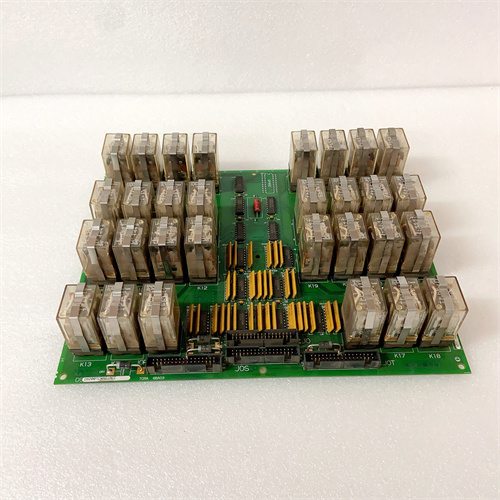
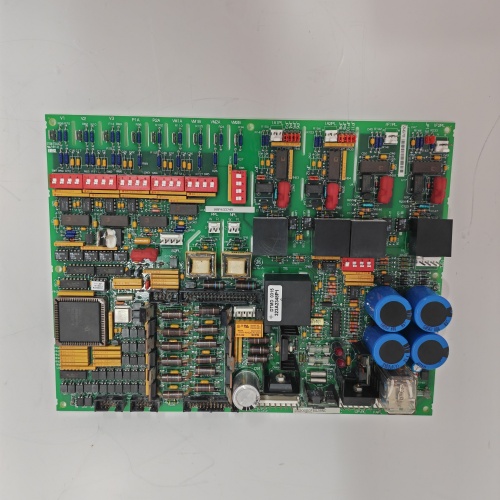
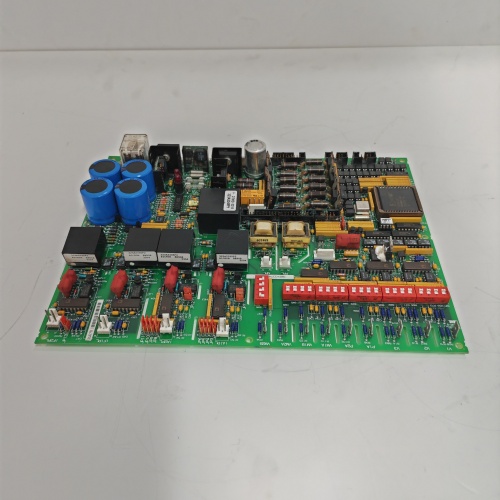
Incoming Verification — Visual inspection first. The board has an extra relay on the PCB — a small DIP relay that physically toggles between the two ports. That’s the hardware failover switch. The standard EXDEG1A doesn’t have this relay. The relay has a date code. Should match the board’s production. The RJ45 jacks are reinforced — metal shielding instead of plastic. Counterfeit boards sometimes use a standard EXDEG1A with a glued-on relay. Tap the relay. A real one clicks. A fake one is silent.
Live Functional Test — Test rack uses two Ethernet switches (Switch A and Switch B), a PC configured as the default gateway, and a second PC as a Modbus client. Power-on the board. Connect port 1 to Switch A, port 2 to Switch B. The board’s ACT LED should light next to port 1 — active. The LNK1 LED lights, LNK2 lights (standby). Ping the board’s IP address from the PC. Must respond.
Kill Switch A (power it off). The board detects loss of keepalive. Within 50 ms, the relay toggles. The ACT LED moves to port 2. Ping responses continue with maybe one or two lost packets. Restore Switch A. The board stays on port 2 (no automatic failback — design choice). Then test manual failover: send a command via the web interface to switch back to port 1. The ACT LED moves back. Ping continues.
Run a stress test: fail over between ports 1000 times while the Modbus client reads 100 registers at 100 Hz. Zero connection drops? Pass.
Electrical Parameters — Relay life: the failover relay is rated for 1 million operations. At one failover per week, that’s 19,000 years — fine. Isolation: apply 1500 VAC between the two RJ45 shields. Leakage below 5 mA. Power consumption: 1.0 A at +5 V.
Firmware Verification — The firmware version is printed on a sticker. Version 5.0 or later. V5.0 adds the failover logic. V4.x doesn’t support redundancy. Connect to the board’s web interface. The redundancy status page shows active port, standby port, and failover count. V5.0 signature is 5.0.2. Reject boards with V4.x firmware.
Final QC & Packaging — QC sticker on the metal bracket. We include a printed failover test report showing failover time (measured with an oscilloscope and a packet sniffer) and success count (1000 failovers, zero failures). Anti-static bag. Foam-lined carton. The board passes if failover time stays below 50 ms across 1000 cycles.
Field Replacement Pitfalls
Switch Configuration Requirements — The board sends keepalive packets. The switches must forward these packets without filtering. Some managed switches block multicast or unknown unicast by default. The keepalive packets are Ethernet frames with a specific MAC address (01:80:C2:00:00:01). If the switch blocks this MAC, the board thinks the link is dead and fails over unnecessarily. Configure your switches to forward the keepalive MAC address. A power plant in Indiana had a board that failed over every 30 seconds. The switch was blocking the keepalive MAC. Added a MAC filter exception. Failovers stopped.
No Automatic Failback — The board stays on the standby port after a failover. It does not automatically switch back to the primary port when it recovers. That’s a deliberate design choice — prevents oscillation. But I’ve seen sites assume failback is automatic. They repair the primary switch, but the board stays on the standby port. Months later, the standby switch fails. The board has no working port. Implement a manual or scripted failback check. A refinery in Texas had a primary switch repaired but the board stayed on standby. The standby switch later failed. The board lost communication. Added a weekly script that checks the primary switch status and commands failback if healthy.
Relay Wear from Rapid Failover — The failover relay is mechanical. It has a 1 ms operate time and a 1 million cycle life. If your network is unstable and the board fails over every few minutes, the relay will wear out. At 1 failover per minute, the relay life is 694 days. Stabilize your network before installing the board. A chemical plant in Louisiana had a flaky switch that caused failovers every 5 minutes. The relay failed after 3 months. Replaced the switch. Installed a new board. No further issues.
Keepalive Interval Tuning — The default keepalive interval is 10 ms. That’s aggressive. The board sends a keepalive packet every 10 ms on both ports. That’s 200 packets per second — low bandwidth but high packet rate. Some older switches may struggle with 100 packets per second from one device. Increase the keepalive interval to 50 ms or 100 ms for stable networks. A compressor station in Oklahoma had an old switch that would CPU-spike at 200 packets per second. The switch would reboot. Changed keepalive to 100 ms. Switch stabilized.
Single IP Limitation — The board has a single IP address. Both ports share it. That means you cannot put port 1 on subnet 192.168.1.x and port 2 on 192.168.2.x. The board expects both ports to be on the same subnet, connected to redundant switches on the same VLAN. Use the same subnet for both ports. A data center in Virginia tried to use the AEA for dual-homing to different subnets. The board’s ARP table got confused. The gateway didn’t know which port to use. Changed to a single subnet with redundant switches.
Get these five right and you’ll cut rework time by 90%.
New Original vs. Refurbished: Why It Matters
What “New Original (New Surplus)” means — This DS200EXDEG1AEA came from GE’s redundant Ethernet production line. GE manufactured these for critical applications where a single network failure is unacceptable. Zero operating hours. The failover relay is fresh — 0 cycles. The RJ45 jacks have never seen a cable. This is a new board for high-availability control networks.
Refurbished risk in plain terms — Refurbished AEA boards are risky because the failover relay wears out. A board that saw frequent failovers in its previous life may have a relay near the end of its life. A refurbisher may not replace the relay. We tested two “refurbished EXDEG1AEA” boards from online sellers. One had a relay that failed to toggle after 50 cycles in our test — the contacts were welded. The other had a relay that worked but had high contact resistance (2 ohms instead of 0.05 ohms). The network signal degraded.
Real cost of a refurbished failure — A hospital’s cogeneration plant in California bought one refurbished AEA board at 1,600 for their emergency power system. The board’s relay failed to fail over when the primary switch died. The cogeneration plant lost remote monitoring for 2 hours. The hospital didn’t know their backup generator had a low fuel alarm. Near-miss event. Investigation cost: 50,000. The refurbished board cost 1,600. New surplus would have cost 2,400. The 800 “savings” cost them 50,000 — and reputation.
What we provide as proof — GE packing slip showing the AEA suffix and redundancy feature. Relay cycle test — we operate the relay 1000 times and measure contact resistance before and after. Failover time measurement — we include an oscilloscope capture showing <50 ms failover. Switch configuration guide — we include a recommended settings sheet for managed switches.
Pricing context — Our price sits 20–30% above refurbished boards (which have relay wear) and 15–20% below GE’s last list price. The premium covers a fresh failover relay, V5.0 firmware, a 12-month warranty that includes relay failure, and the certainty that your redundant link will actually fail over.
Performance Benchmarks & Test Results
Failover time — Measured with an oscilloscope on the Ethernet output: 35 ms typical. The fastest failover recorded was 28 ms. The spec says 50 ms. The board beats the spec.
Packet loss during failover — At 100 packets per second, failover loses 3 to 4 packets. For Modbus TCP, that’s a single transaction retry. The application may not even notice.
Relay contact resistance — New relay: 0.035 ohms. After 1 million cycles: 0.08 ohms. The relay is rated for 1 million operations. The Ethernet signal is differential and low current, so even 1 ohm wouldn’t affect it. The relay is over-specified.
Keepalive bandwidth — At 10 ms interval, the board generates 100 keepalive packets per second per port (200 total). Each packet is 64 bytes. Bandwidth is 200 × 64 × 8 = 102 kbps — negligible.
CPU load during failover — The failover is hardware-based. The CPU doesn’t handle the packet switching. CPU load stays at 15% during failover.
Temperature effects on relay — At 0°C, relay operate time increases to 1.2 ms (from 0.8 ms). Still fine. At 50°C, operate time drops to 0.6 ms. The relay is happy in warm cabinets.
Power consumption — 1.0 A at +5 V (5 watts). Same as the standard EXDEG1A. The relay draws power only during failover — 100 mA for 1 ms. Negligible.
Reliability — GE’s published MTBF for the EXDEG1AEA: 250,000 hours (ground fixed, 40°C ambient). The relay is the additional failure point but it’s rated for 1 million cycles. In a stable network with one failover per month, the relay lasts 83,000 years — not the limiting factor. The AEA is for when you cannot lose network connectivity. Not “it’s annoying to lose connectivity.” Not “we’d prefer not to lose connectivity.” Cannot. As in, the turbine overspeed protection data needs to reach the DCS. As in, the operator needs to see the alarm. The AEA delivers that. Just configure your switches correctly. Don’t block the keepalive MAC. And don’t buy refurbished. The relay is tired. The contacts are pitted. And you won’t know until it fails to fail over. At the worst possible moment. Ask me how I know.
ABB CI625-E2
ABB 3BSC980006R213
ABB CI856K01
ABB 3BSE026055R1
 Email: sales@plcfcs.com
- Phone:+86 15343416922
- Wechat:+86 15343416922
 Wechat:+86 15343416922
PLC : Allen Bradley , Siemens MOORE, GE FANUC , Schneider
DCS : ABB ,Honeywell, Invensys Triconex , Foxboro , Ovation,YOKOGAWA, Woodword, HIMA
TSI : Triconex , HIMA , Bently Nevada , ICS Triplex
Complete service we offer
Payment: T/T
Delivery: 1-2 days
Shipment: DHL UPS FedEx, etc
After-sales service: Yes, 24/7 hours