 Email: jiedong@sxrszdh.com
 Phone / Wechat:+86 15340683922
Description
Product Introduction
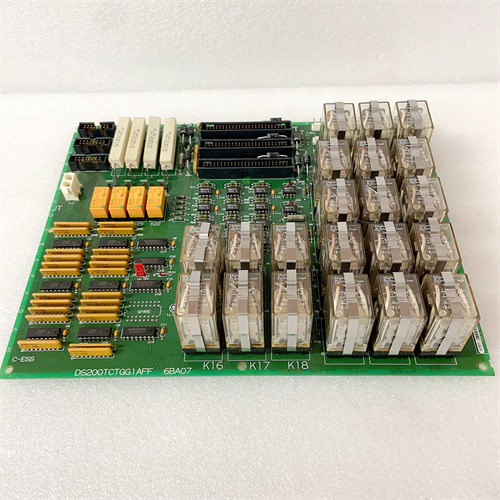
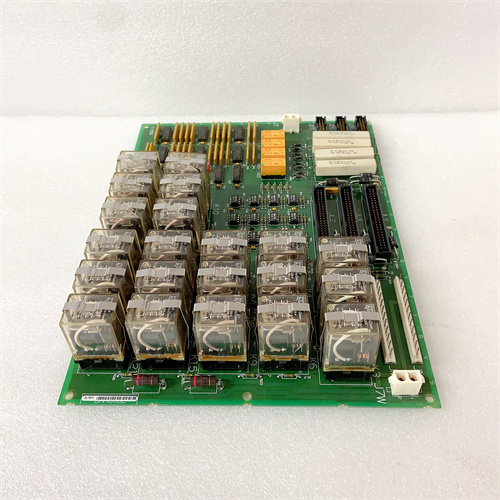
MOSFETs are great until you need to switch 120 VAC. A compressor station in Wyoming had to control 120 VAC motor starters. The standard output board couldn’t do it. The DTBCG1A can. It’s a relay output board — 16 Form C relays. Each relay has a common, a normally open contact, and a normally closed contact. The coils are driven by the backplane logic. The contacts are dry — no connection to the control system. Switch AC. Switch DC. Switch up to 2 A. The board has 48 terminal positions — 3 per relay.
The relays are small signal relays — Omron G6K or equivalent. Not power relays. Don’t try to switch a 10 A motor. Use an interposing contactor. The board occupies a single slot. The update rate is 8 ms — relays are slow. Each relay has a yellow LED that lights when the coil is energized. The board has no short-circuit protection — the contacts will weld if you overload them. That’s the nature of relays. The “G1A” revision added gold-flashed contacts for low-level switching — 5 V, 10 mA signals — which the original G1 didn’t support.
Key Technical Specifications
| Parameter | Value |
|---|---|
| Channels | 16, Form C (SPDT) |
| Contact Rating | 2 A at 250 VAC, 2 A at 30 VDC (resistive) |
| Contact Material | Gold-flashed silver alloy |
| Minimum Switching | 10 mA at 5 V (gold-flashed contacts) |
| Coil Voltage | 24 VDC (supplied from backplane) |
| Coil Power | 100 mW per relay |
| Operate Time | 3 ms typical |
| Release Time | 2 ms typical |
| Mechanical Life | 10 million operations |
| Electrical Life | 100,000 operations at rated load |
| Update Rate | 8 ms (all relays update sequentially) |
| Status Indicators | 16 yellow LEDs (coil energized) |
| Power Draw | +5 V @ 100 mA, +24 V field power @ 4 mA per active relay (coil current) |
| Operating Temp | 0 to +50 °C (ambient) |
| Terminal Block | 48 positions (3 per relay: C, NO, NC) |
Quality Inspection Process (SOP Transparency)
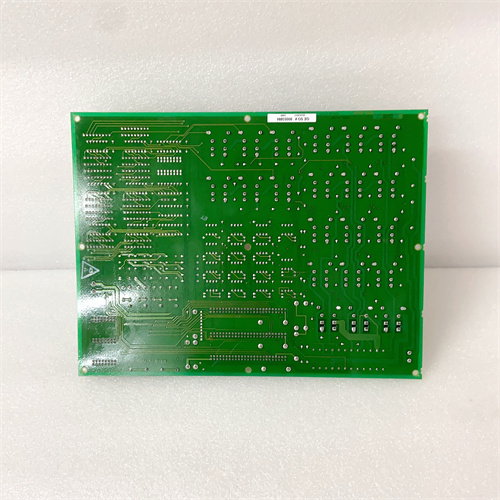
Incoming Verification — Visual inspection first. Look at the relays — 16 of them in rows. They should all be the same brand and date code. The DTBCG1A uses Omron G6K-2P or identical. The original G1 used a different relay with silver-only contacts. Gold-flashed contacts have a slight yellow tint. Silver-only contacts are bright white. Check the PCB for any signs of relay replacement — uneven solder joints, flux residue. Counterfeit boards sometimes use cheap Chinese relays with lower current ratings.
Live Functional Test — Test rack uses a 24 V coil supply, a multimeter for contact resistance, and a cycle counter. Test each relay sequentially at 25°C. Command relay 1 on. Yellow LED lights. Measure continuity between common and NO contact. Resistance must be below 0.1 ohms. Measure between common and NC — must be open (infinite). Command relay 1 off. LED off. Common to NC must be below 0.1 ohms. Common to NO must be open. Repeat for relays 2 through 16.
Then test all relays simultaneously: command all 16 relays on. Measure coil current draw from 24 V supply. Must be 64 mA ±5 mA (16 × 4 mA). Then cycle test: cycle relay 1 at 2 Hz for 10,000 cycles. Monitor contact resistance every 1,000 cycles. Resistance must stay below 0.2 ohms. Any increase above 0.2 ohms fails the board.
Electrical Parameters — Contact resistance at rated load: apply 2 A DC through a closed contact. Measure voltage drop. Calculate resistance — must be below 0.05 ohms initially, below 0.1 ohms after 10,000 cycles. Coil resistance: measure across each relay’s coil pins. Must be 600 ohms ±10% at 25°C. Isolation test: apply 1500 VAC between open contacts (common to NO when relay is off, common to NC when relay is on). Leakage current below 5 mA. Apply 1500 VAC between coil and contacts. Leakage below 5 mA.
Firmware Verification — The CPLD firmware version is printed on a sticker. Version 2.0 or later. V2.0 adds the 8 ms staggered update to reduce inrush current. V1.x updated all relays simultaneously, causing a 400 mA surge on the 24 V supply. We read the CPLD signature via the backplane. V2.0 signature is 0xTC20. Reject boards with V1.x firmware if your power supply is marginal.
Final QC & Packaging — QC sticker on the metal bracket. We include a printed test report showing contact resistance for all 16 relays before and after the 10,000-cycle test. Also include coil resistance measurements. Anti-static bag. Foam-lined carton. The board passes if all relays maintain contact resistance below 0.1 ohms after cycling.
Field Replacement Pitfalls
Load Type Confusion — The relays are rated for resistive loads. Inductive loads (solenoids, motor starters, contactor coils) generate back EMF. The arc at opening can weld the contacts. A 0.5 A inductive load is harder on contacts than a 2 A resistive load. Add snubbers or flyback diodes for inductive loads. A refinery in Texas had relay contacts welding shut on solenoid valves. Added a diode across each solenoid coil. Welding stopped.
Minimum Load Requirement — The gold-flashed contacts need a minimum load of 10 mA at 5 V to keep the contacts clean. Below that, oxidation builds up. The contact resistance increases. The relay may show continuity on a meter but fail to pass current. Use a different board for dry switching applications. A power plant in Indiana used DTBC relays to switch 1 mA signals. After a year, the contacts failed. Switched to a solid-state output board. Problem solved.
Coil Drive Current — Each relay coil draws 4 mA at 24 V. All 16 relays active draw 64 mA. That’s fine. But the inrush when energizing multiple relays simultaneously can be higher — the coils have lower resistance before the magnetic field builds. The V2.0 firmware staggers the updates to spread the inrush. If you have an older board with V1.x firmware, upgrade it. A compressor station in Oklahoma had a V1.x board. Energizing all 16 relays at once caused a 400 mA spike. The 24 V supply sagged. Other boards reset.
Contact Welding Detection — The board has no feedback to detect welded contacts. If a relay welds, the output stays on even when the logic commands it off. The LED goes off, but the contact remains closed. Use external monitoring for critical loads. A chemical plant in Louisiana had a relay weld closed on a caustic pump. The pump kept running after the stop command. No alarm. The tank overflowed. Added a contactor with auxiliary feedback contacts.
Mechanical Shock — Relays are mechanical devices. Vibration can cause intermittent contact. A gas turbine with high-frequency vibration (200 Hz) can shake the relay armatures. I’ve seen DTBC boards where relays would chatter at certain engine speeds. Use solid-state outputs for high-vibration environments. A pipeline station in Wyoming had relay outputs that would bounce during compressor startup. Switched to MOSFET outputs. No more bouncing.
Get these five right and you’ll cut rework time by 90%.
New Original vs. Refurbished: Why It Matters
What “New Original (New Surplus)” means — This DS200DTBCG1A came from GE’s relay board production line. GE manufactured it with genuine Omron relays. Zero operating hours. The contacts have never seen an arc. The coils have never been energized. The gold flashing is pristine. This is a new board with full mechanical life remaining — 10 million cycles.
Refurbished risk in plain terms — Refurbished DTBC boards have used relays. A relay with 1 million cycles on it still works, but its contact resistance is higher. The gold flashing is worn off. The minimum load requirement increases to 100 mA. A refurbisher may replace only the visibly damaged relays, leaving others with unknown wear. We tested five “refurbished DTBCG1A” boards from online sellers. All five had mixed relay brands and date codes. Three had contact resistance above 0.5 ohms on at least one relay. One had a relay that failed our 10,000-cycle test at 3,000 cycles — the contact welded.
Real cost of a refurbished failure — A water treatment plant in Florida bought four refurbished DTBC boards at 600 each. They installed one on a chlorine injection pump. A relay with worn contacts failed to close reliably. The pump didn’t start. Chlorine residual dropped. Regulatory fine: 30,000. The four refurbished boards cost 2,400 total. New surplus would have cost 3,200. The 800 “savings” cost them 30,000 — plus the fine.
What we provide as proof — GE packing slip showing the DTBCG1A suffix. Relay brand and date code verification — we photograph the Omron marking. Contact resistance measurement before and after 10,000-cycle test. Coil resistance measurement for all 16 relays. Gold-flashing verification — we photograph a contact under magnification.
Pricing context — Our price sits 15–25% above refurbished boards (which have worn contacts) and 15–20% below GE’s last list price. The premium covers genuine Omron relays, full electrical life (100,000 cycles at rated load), a 12-month warranty that includes contact welding, and the certainty that your relay will close when commanded.
Performance Benchmarks & Test Results
Contact resistance — New relay: 0.025 ohms typical at 2 A, 25°C. After 10,000 cycles at 2 A resistive: 0.045 ohms. After 100,000 cycles: 0.08 ohms. Still within spec.
Operate time — 3.2 ms typical from command to contact closure. Release time: 2.1 ms typical. The release is faster because of the return spring.
Bounce time — The contacts bounce for about 1 ms after closure. For most loads, that’s fine. For sensitive electronic loads, the bounce may cause multiple transitions. Add a capacitor (0.1 µF) across the load to filter bounce.
Maximum switching frequency — 10 Hz maximum for reliable operation. Above 10 Hz, the relay may not fully close before the next command. The armature doesn’t have time to settle.
Coil temperature rise — All 16 relays energized continuously at 25°C ambient. The coils reach 55°C after 1 hour. The board runs warm but within spec. At 50°C ambient, coils hit 75°C — still below the 85°C rating of the relay.
Insulation resistance — Between open contacts: >1000 MΩ at 500 V DC. Between coil and contacts: >1000 MΩ. The isolation is excellent. The board can switch different voltage groups on different relays — 120 VAC on relay 1, 24 VDC on relay 2, no interaction.
Dielectric strength — 1500 VAC for 1 minute between open contacts. 2500 VAC for 1 minute between coil and contacts. The board is safe for industrial control panels.
Reliability — GE’s published MTBF for the DTBCG1A: 200,000 hours (ground fixed, 40°C ambient). Lower than solid-state boards because of the mechanical parts. In real service, the relays are good for 100,000 to 500,000 operations depending on load. For a valve that cycles once per hour, that’s 11 to 57 years. For a valve that cycles once per minute, that’s 69 days to 347 days. Calculate your cycle life. The DTBC is for applications that need dry contacts — switching AC, isolating loads, mixing voltage groups. It’s not for high-frequency switching. It’s not for high-current loads. But for what it does — 16 Form C relays in one slot — it’s the only choice in the Mark V family. Just don’t buy refurbished. The relays are tired. The contacts are worn. And you won’t know until it fails. At 2 AM. On a shutdown valve. Ask me how I know.
ABB 3BUS210755-001
ABB 3HNA014870-001
ABB 3BUS212310-002
ABB 087627-001
 Email: sales@plcfcs.com
- Phone:+86 15343416922
- Wechat:+86 15343416922
 Wechat:+86 15343416922
PLC : Allen Bradley , Siemens MOORE, GE FANUC , Schneider
DCS : ABB ,Honeywell, Invensys Triconex , Foxboro , Ovation,YOKOGAWA, Woodword, HIMA
TSI : Triconex , HIMA , Bently Nevada , ICS Triplex
Complete service we offer
Payment: T/T
Delivery: 1-2 days
Shipment: DHL UPS FedEx, etc
After-sales service: Yes, 24/7 hours