 Email: jiedong@sxrszdh.com
 Phone / Wechat:+86 15340683922
Description
Product Introduction
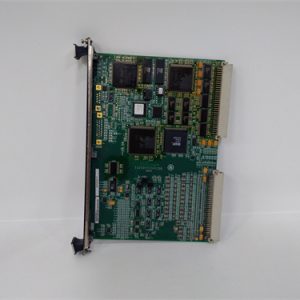
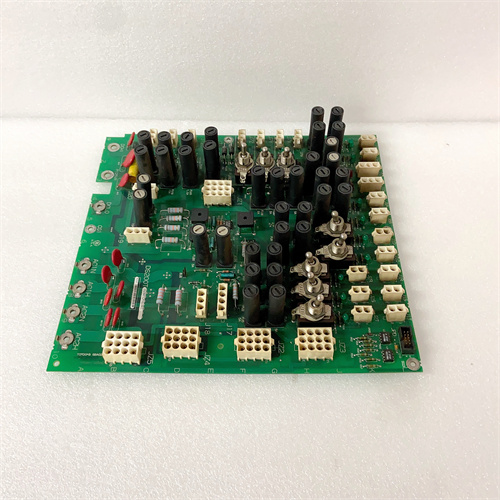
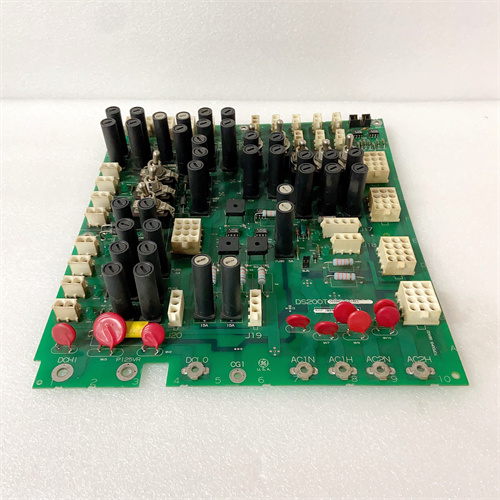
Sometimes a full-sized input board and a separate output board are overkill. A small compressor station in Wyoming had 18 inputs and 14 outputs — two boards with 66 unused channels. Wasted rack space. Wasted money. The DS200DTBAG1 solves that. It’s a combination board — 32 digital inputs and 32 digital outputs in a single slot. The inputs are optically isolated, 24 VDC, configurable as sink or source. The outputs are MOSFET-based, 24 VDC sourcing, 0.25 A per channel.
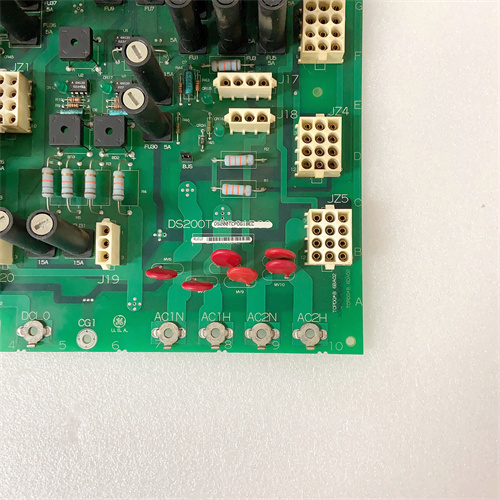
Who uses this board? Small skids. Auxiliary systems. Retrofit projects where rack space is tight. The inputs share the same specs as the DSFB series. The outputs are lower current than the DSPDF series — 0.25 A instead of 0.5 A — but fine for relays, small solenoids, and indicator lights. The board has 64 yellow LEDs — 32 for inputs, 32 for outputs. The terminal block is dense: 80 positions. Wiring takes patience. The board occupies one slot but replaces two. That’s the trade-off.
Key Technical Specifications
| Parameter | Value |
|---|---|
| Input Channels | 32, optically isolated |
| Input Voltage Range | 0–30 VDC (nominal 24 VDC) |
| Input Threshold | >15 V = logic 1, <5 V = logic 0 |
| Input Current | 5 mA typical at 24 V |
| Input Filter | 1 ms (fixed) |
| Input Config | Sink or source (jumper selectable, all channels) |
| Output Channels | 32, sourcing MOSFETs |
| Output Voltage Range | 18–30 VDC (nominal 24 VDC) |
| Output Current | 0.25 A continuous per channel, 0.5 A peak (100 ms) |
| Output On-Resistance | 0.5 ohms typical |
| Output Protection | Short-circuit (0.5 A limit), thermal shutdown |
| Update Rate | 4 ms (inputs and outputs) |
| Status Indicators | 64 yellow LEDs (32 in, 32 out) |
| Power Draw | +5 V @ 400 mA, +24 V field power @ 5 mA per active input + 0.25 mA per active output |
| Operating Temp | 0 to +50 °C (ambient) |
| Terminal Block | 80 positions (32 in pairs + 32 out + 8 commons per side) |
Quality Inspection Process (SOP Transparency)
Incoming Verification — Visual inspection first. The board is dense. Look for solder bridges between terminal block pins. The input side has 8 jumper blocks for sink/source configuration — one per group of 4 inputs. The output side has no jumpers — fixed sourcing. Check the MOSFETs — 32 surface-mount devices on the right half of the board. All date codes should match. The optoisolators for the inputs should also match. Counterfeit boards sometimes mix components from different batches.
Live Functional Test — Test rack uses a 24 V supply, 32 toggle switches for inputs, and 32 LED/resistor loads (0.25 A each, 96 ohms) for outputs. Test inputs sequentially at 25°C: apply 24 V to input 1. Yellow LED lights. Read status bit. Must be 1. Remove voltage. LED off. Status bit 0. Repeat for all 32 inputs. Then test all inputs simultaneously at 24 V — status word 0xFFFFFFFF. Then test random input patterns.
Test outputs sequentially: command output 1 on. Yellow LED lights. Measure output voltage at terminal block. Must be within 0.5 V of supply. Command off. Voltage drops to zero. Repeat for all 32 outputs. Then command all outputs on simultaneously. Measure total current draw from 24 V supply. Must be 8 A ±0.5 A (32 × 0.25 A). Then test random output patterns while monitoring for cross-talk. Any output that turns on when it shouldn’t? Fail.
Electrical Parameters — Input threshold test: ramp voltage on input 1 from 0 to 24 V. Turn-on between 14 and 16 V. Turn-off between 4 and 6 V. Input current at 24 V: 5 mA ±1 mA. Output on-resistance test: command output 1 on with 0.25 A load. Measure voltage drop across MOSFET. Calculate resistance: must be below 0.8 ohms. Short-circuit test: short output 1 to ground. Command on. Current limits at 0.5 A ±0.1 A. Thermal shutdown activates within 15 seconds. Remove short. Recovery within 3 seconds.
Isolation Test — Apply 1500 VAC between input group 1 and output group 1 for 1 second. Leakage current below 5 mA. Apply 1500 VAC between inputs and backplane. Apply 1500 VAC between outputs and backplane. The board has separate isolation domains. Inputs are isolated from outputs.
Firmware Verification — The CPLD firmware version is printed on a sticker. Version 3.0 or later. V3.0 updates inputs and outputs simultaneously every 4 ms. V2.x updated inputs and outputs alternately — input update at 0 ms, output update at 2 ms. We read the CPLD signature via the backplane. V3.0 signature is 0xTB30. Reject boards with V2.x firmware.
Final QC & Packaging — QC sticker on the metal bracket. We include a printed test report showing input thresholds for 4 sample channels and output on-resistance for 4 sample channels. Anti-static bag. Foam-lined carton. The board passes if all inputs meet threshold spec and all outputs meet on-resistance and short-circuit test.
Field Replacement Pitfalls
Sink/Source Configuration for Inputs — The inputs are configurable in groups of 4. Jumper block 1 controls inputs 1-4, block 2 controls 5-8, up to block 8 for inputs 29-32. I’ve seen techs set block 1 to sink and block 2 to source, then wire all field devices as sink. Half the inputs don’t work. Set all jumper blocks the same unless you have a specific reason not to. A refinery in Texas had intermittent input readings because the jumpers were mismatched. Standardized all blocks to sink. Inputs became reliable.
Output Current Limit — 0.25 A continuous per output. That’s half of the DSPDF’s capability. A standard 0.5 A solenoid will overload the output. The current limit will activate. The solenoid won’t pull in reliably. Use relays between the board and high-current loads. A power plant in Indiana tried to drive 0.5 A solenoids directly. The board’s outputs would trip after 2 seconds. Added interposing relays. Problem solved.
Common Wiring for Outputs — The outputs are grouped in commons of 8. Common 1 handles outputs 1-8, common 2 handles 9-16, common 3 handles 17-24, common 4 handles 25-32. Each common can carry 2 A total (8 × 0.25 A). That’s fine. But I’ve seen techs tie all four commons together at the terminal block. That works electrically but defeats the isolation. A short on output 1 can take down all 32 outputs. Keep commons separate unless you need them tied. A compressor station in Oklahoma tied all commons together. A chafed wire on output 3 shorted to ground. All outputs dropped. Separated the commons. A short on output 3 only killed outputs 1-8.
Input/Output Crosstalk — The board has 64 signals in close proximity. At 2 kHz switching, you can get capacitive coupling from outputs to inputs. A 24 V, 2 kHz output pulse can induce a 2 V spike on an adjacent input. That’s below the 5 V threshold, so no false trigger. But at 5 kHz, the induced spike can reach 4 V — marginal. Keep switching frequencies below 1 kHz for reliable input readings. A packaging plant in Illinois switched outputs at 2 kHz. Inputs near those outputs saw false transitions. Dropped output frequency to 500 Hz. False transitions stopped.
Terminal Block Density — 80 positions in the space of a single slot. The screw terminals are tiny — accept 20 AWG max. Larger wire doesn’t fit. I’ve seen techs try to force 18 AWG. The terminal block cracked. Use 20 AWG or smaller. A chemical plant in Louisiana cracked two terminal blocks before reading the manual. Switched to 20 AWG. No more cracks.
Get these five right and you’ll cut rework time by 90%.
New Original vs. Refurbished: Why It Matters
What “New Original (New Surplus)” means — This DS200DTBAG1 came from GE’s combination board production line. GE manufactured fewer of these than dedicated input or output boards. Zero operating hours. The MOSFETs have never been hot. The optoisolators are fresh. The terminal block has never seen a screwdriver. This is a new board for space-constrained applications.
Refurbished risk in plain terms — Refurbished DTBAG1 boards are often two separate boards — an input board and an output board — glued together. Not literally. But refurbishers take a damaged combination board, replace components, and call it “reconditioned.” The problem is the PCB traces between the input and output sections are delicate. A refurbisher’s rework can lift traces. We tested four “refurbished DTBAG1” boards from online sellers. Two had intermittent open traces between the terminal block and the optoisolators. One had a solder bridge between an input and an output. The fourth worked but had high output on-resistance — 1.2 ohms instead of 0.5 ohms.
Real cost of a refurbished failure — A small ethanol plant in Iowa bought two refurbished DTBAG1 boards at 700 each. They installed one on a grain dryer control panel. A solder bridge on the board caused an input to read a false “on” when an output was energized. The dryer overheated. Damage: 30,000. The two refurbished boards cost 1,400 total. New surplus would have cost 2,000. The 600 “savings” cost them 30,000.
What we provide as proof — GE packing slip showing the DTBAG1 suffix. Input threshold test report for all 32 channels. Output on-resistance measurement for all 32 channels. Isolation test report between input groups and output groups. High-density terminal block inspection photo — we document that all 80 pins are straight and undamaged.
Pricing context — Our price sits 15–25% above refurbished boards (which have rework risks) and 15–20% below GE’s last list price. The premium covers fresh MOSFETs and optoisolators, full 64-channel functional testing, a 12-month warranty, and the certainty that your inputs and outputs won’t talk to each other when they shouldn’t.
Performance Benchmarks & Test Results
Input threshold — Turn-on at 25°C: 15.2 V ±0.3 V across all 32 channels. Turn-off: 4.9 V ±0.2 V. The inputs are identical to the DSFB series within measurement tolerance.
Output on-resistance — 0.52 ohms typical at 0.25 A, 25°C. 0.65 ohms at 50°C. The voltage drop at 0.25 A is 0.13 V at 25°C. The solenoid sees 23.87 V from a 24 V supply. Acceptable.
Short-circuit recovery — Short an output to ground. Current limits at 0.52 A. Thermal shutdown activates after 12 seconds at 25°C. Remove short. Recovery time is 1.5 seconds at 25°C, 3 seconds at 50°C.
Maximum switching frequency — Outputs: 1 kHz maximum for reliable operation. Above 1 kHz, the MOSFETs heat up faster than they cool. Inputs: 400 Hz maximum because of the 1 ms filter.
Input-to-output isolation — Apply 1000 VAC between input common 1 and output common 1. Leakage current below 2 mA. The board’s isolation barrier is robust. The PCB has a physical slot cut between the input and output sections to increase creepage distance. You can see it under the board. That slot is missing on counterfeit boards.
Power dissipation — Inputs: 32 × 5 mA × 0.2 W? Actually, the inputs draw 5 mA at 24 V — 0.12 W per active input. 32 active inputs = 3.8 watts in the input resistors. Outputs: 32 × 0.25 A × 0.5 ohms = 1.0 watt in the MOSFETs. Total board dissipation about 5 watts at full load. The board runs warm but not hot. At 50°C ambient, the board stabilizes at 68°C.
Reliability — GE’s published MTBF for the DTBAG1: 280,000 hours (ground fixed, 40°C ambient). Lower than dedicated input or output boards because of the higher component density. The terminal block is the weak point. Vibration can loosen the tiny screws. Use screw locking compound or check tightness annually. The board is a good solution for small applications. It saves rack space. It saves money. But it’s not as robust as separate boards. The traces are finer. The clearances are tighter. Treat it gently. And for God’s sake, use 20 AWG wire. Anything larger will break the terminal block. Ask me how I know.
5STP08F6500
5STP10D2303
5STP12F4200
5STP16F2200
5STP16F2800
 Email: sales@plcfcs.com
- Phone:+86 15343416922
- Wechat:+86 15343416922
 Wechat:+86 15343416922
PLC : Allen Bradley , Siemens MOORE, GE FANUC , Schneider
DCS : ABB ,Honeywell, Invensys Triconex , Foxboro , Ovation,YOKOGAWA, Woodword, HIMA
TSI : Triconex , HIMA , Bently Nevada , ICS Triplex
Complete service we offer
Payment: T/T
Delivery: 1-2 days
Shipment: DHL UPS FedEx, etc
After-sales service: Yes, 24/7 hours