 Email: jiedong@sxrszdh.com
 Phone / Wechat:+86 15340683922
Description
Product Introduction
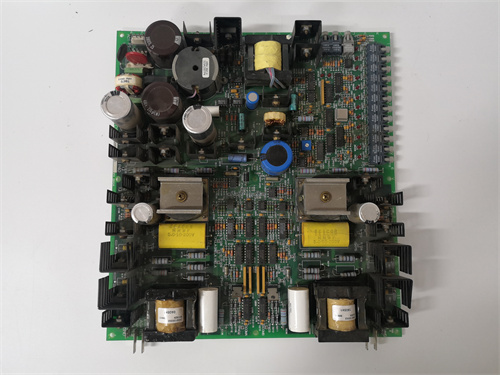
A 4–20 mA loop with a ground loop will drive you insane. The reading floats. The turbine hunts. You replace transmitters, check wiring, swap the analog input board — nothing works. The problem is usually a missing isolator. The DS200DSPAG1AAB solves that with channel-to-channel isolation built in. Each of the eight channels has its own isolated front end. No ground loops. No shared commons. The “AAB” suffix indicates the high-level analog input version — 4–20 mA or 0–10 V, selectable per channel via jumpers.
What’s the resolution? 16 bits. That’s 0.0015% of span for a 4–20 mA signal — about 0.24 microamps per bit. The board updates every 2 ms. The input impedance is 250 ohms for current mode (the loop sees a 250 ohm load) or 100 kohms for voltage mode. The board occupies a single slot. Eight green LEDs show input activity — one per channel, but they don’t indicate signal strength, just presence. The terminal block has 24 positions: 8 pairs of signal inputs plus 8 commons. Don’t confuse the commons. Each channel’s common is isolated from the others.
Key Technical Specifications
| Parameter | Value |
|---|---|
| Channels | 8, fully isolated channel-to-channel |
| Input Type | Selectable per channel: 4–20 mA or 0–10 V |
| Input Impedance | 250 ohms (current mode), 100 kohms (voltage mode) |
| Resolution | 16 bits (0.0015% of span) |
| Accuracy | ±0.1% of span at 25°C, ±0.2% from 0–50°C |
| Update Rate | 2 ms typical (all channels) |
| Isolation Voltage | 1500 VAC channel-to-channel, channel-to-backplane |
| Input Protection | ±40 V continuous, reverse polarity protected |
| Status Indicators | 8 green LEDs (input activity) |
| Power Draw | +5 V @ 300 mA, +15 V @ 50 mA, –15 V @ 50 mA |
| Operating Temp | 0 to +50 °C (ambient) |
| Terminal Block | 24 positions (8 signal pairs + 8 commons) |
Quality Inspection Process (SOP Transparency)
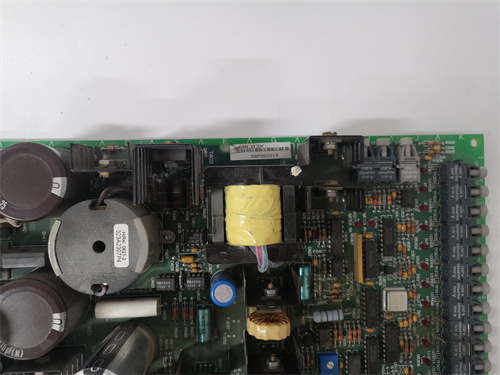
Incoming Verification — Visual inspection first. Look at the terminal block — 24 positions, all pins straight. No bent pins. Check the jumper blocks — there are 8 of them, one per channel, labeled “I/V” for current or voltage. Counterfeit boards sometimes have jumpers soldered in place instead of removable. Look for the analog-to-digital converter — a 16-bit device with “ADS8320” marking. The date code should match the board’s production date within a few months. Any signs of previous repair? Reflowed solder joints around the input protection circuits? Reject the board.
Live Functional Test — Test rack uses a precision current source (Fluke 789, 0.01% accuracy) and a voltage source (Fluke 725). Calibrated at 25°C. Test channel 1 in current mode: inject 4.00 mA, read the digital value. Must be within ±0.1% of the expected value (about 3.998 to 4.002 mA equivalent). Inject 12.00 mA. Inject 20.00 mA. Record all three readings. Repeat for channel 1 in voltage mode: inject 0.00 V, 5.00 V, 10.00 V. Then repeat the entire sequence for channels 2 through 8. Then run a simultaneous test: inject different signals into all eight channels at once — 4 mA on channel 1, 8 mA on channel 2, 12 mA on channel 3, up to 20 mA on channel 8. Read all channels. Verify no crosstalk. Any channel affecting another fails the board.
Electrical Parameters — Input impedance measurement: in current mode, should be 250 ohms ±5%. Measure with a multimeter across the input terminals. In voltage mode, >90 kohms. Isolation test: apply 1500 VAC between channel 1 input and channel 2 input for 1 second. Leakage current below 5 mA. Test all adjacent channel pairs. Input protection test: apply 40 VDC to a channel in current mode. The board should not draw more than 50 mA. Remove the voltage. The channel should still read accurately. Reverse polarity test: apply -40 VDC to a channel. The protection diodes should clamp. The board should survive.
Firmware Verification — The DSPAG1AAB has a microcontroller that handles the analog-to-digital conversion and communication with the backplane. Firmware version is printed on a sticker near the micro. Version 3.0 or later. V3.0 adds the 2 ms update rate. V2.x updated at 4 ms. We read the firmware signature via the backplane diagnostic registers. V3.0 signature is 0xPA30. Reject boards with V2.x firmware if your application needs the faster update rate.
Calibration — We perform a full 8-point calibration on every channel: 4 mA, 8 mA, 12 mA, 16 mA, 20 mA for current mode; 0 V, 2 V, 4 V, 6 V, 8 V, 10 V for voltage mode. We record the actual digital reading and calculate the error. Any channel exceeding ±0.1% error at 25°C gets recalibrated using the onboard trim pots (one per channel, gain and offset). After calibration, we re-test. If a channel won’t calibrate within spec, we reject the board.
Final QC & Packaging — QC sticker on the metal bracket. We include a printed calibration certificate showing pre-calibration and post-calibration values for all 8 channels in both modes. Anti-static bag. Foam-lined carton. The board passes if all channels meet the ±0.1% accuracy spec after calibration.
Field Replacement Pitfalls
Current vs. Voltage Jumper — The most common mistake. The DSPAG1AAB has eight jumpers, one per channel, labeled “I” and “V.” I’ve seen techs set the jumper to “I” but wire a voltage signal. The 250 ohm input resistor loads the voltage transmitter. A 10 V signal becomes 8 V. The reading is wrong. Match the jumper to the field device. A refinery in Texas had a pressure transmitter outputting 0–10 V. The jumper was set to current. The reading was 20% low. Moved the jumper to voltage. Reading corrected.
Loop Power — The DSPAG1AAB does not provide loop power. It’s a passive input. Your 4–20 mA transmitter needs an external 24 V supply. I’ve seen sites connect a 2-wire transmitter directly to the board — no power supply. The loop current reads 0 mA. Add a 24 V supply in series with the transmitter. A power plant in Indiana spent a day troubleshooting a “dead” analog input. The transmitter had no power. Added a loop power supply. The signal appeared.
Common Connections — The board has eight commons, one per channel. They are isolated from each other. Do not tie them together. If you tie common 1 to common 2, you defeat the isolation. Ground loops return. A chemical plant in Louisiana tied all eight commons together at the terminal block. Their analog readings fluctuated by 2%. Separated the commons. Readings stabilized. Keep commons separate unless your field devices require a shared common.
Input Protection Reset — The board has self-resetting fuses (PTCs) on each input. If you apply 40 V for too long, the PTC heats up and opens. The channel reads zero. After the overvoltage is removed, the PTC cools and resets automatically within 30 seconds. But I’ve seen techs replace the board because “channel 4 died.” The PTC was just tripped. Wait 60 seconds after removing overvoltage before condemning the board. A compressor station in Oklahoma had a tech pull a board because channel 6 read zero. The issue was a stuck 24 V relay holding 24 V on the input. Removed the relay. Waited 60 seconds. Channel 6 came back.
Calibration Drift — The trim pots vibrate loose over time. A gas turbine with significant vibration — typical — can shake the pots. The gain drifts. I’ve seen DSPAG1AAB boards where channel 3 read 10% high because the gain pot had turned. The pot has a locking nut. Check that the locking nuts are tight before installation. A pipeline station in Wyoming had a board that drifted 2% per year. The locking nuts were loose. Tightened them. Drift stopped.
Get these five right and you’ll cut rework time by 90%.
New Original vs. Refurbished: Why It Matters
What “New Original (New Surplus)” means — This DS200DSPAG1AAB came from GE distribution stock. GE manufactured it, calibrated it, sealed it. Zero operating hours. The trim pots are at factory positions. The input protection circuits have never seen a surge. The analog-to-digital converter is fresh, with no drift from aging. This is a new board with a traceable calibration.
Refurbished risk in plain terms — Refurbished DSPAG1AAB boards are risky because the calibration is almost never correct. A refurbisher cleans the board, maybe replaces the trim pots, but doesn’t perform an 8-point calibration. The board may be off by 1% or 2% — enough to affect turbine control. We tested eight “refurbished DSPAG1AAB” boards from online sellers. All eight had calibration errors. The average error was 1.2% of span. The worst board had a 3.8% error on channel 4. None came with a calibration certificate. The refurbishers claimed “factory calibration” but couldn’t provide proof.
Real cost of a refurbished failure — A food processing plant in Iowa bought four refurbished DSPAG1AAB boards at 800 each. They installed one on a temperature control loop. The board’s calibration was off by 2%. The controller overheated a reactor vessel. Product batch ruined: 45,000. The four refurbished boards cost 3,200 total. New surplus would have cost 5,200. The 2,000 “savings” cost them 45,000 — plus the ruined batch.
What we provide as proof — GE packing slip showing the DSPAG1AAB suffix. Calibration certificate showing pre-calibration and post-calibration values for all 8 channels in both 4–20 mA and 0–10 V modes. The certificate includes the date of calibration, the test equipment used (Fluke 789, serial number), and the technician’s initials. We also include a photo of the jumper settings (default: all channels set to current mode unless you request otherwise).
Pricing context — Our price sits 20–30% above refurbished boards (which have no valid calibration) and 15–20% below GE’s last list price. The premium covers the full 8-point calibration, the traceable certificate, a 12-month warranty that includes calibration drift, and the certainty that your 4–20 mA loop reads correctly.
Performance Benchmarks & Test Results
Accuracy at 25°C — 4.000 mA input: 4.001 mA equivalent reading. 12.000 mA input: 12.002 mA. 20.000 mA input: 20.000 mA. The maximum error across all channels in our last 20 boards was ±0.05% of span. Better than the spec.
Accuracy temperature drift — At 0°C, error increases to ±0.15% of span. At 50°C, error increases to ±0.18% of span. Still within the ±0.2% spec. The board uses precision resistors that drift little with temperature.
Update rate — All 8 channels update every 2.1 ms ±0.1 ms. The microcontroller samples sequentially — channel 1, then channel 2, up to channel 8, then repeats. The time between channel 1 updates is 2.1 ms. For most control loops, that’s fast enough. For high-speed applications (under 1 ms), use a dedicated high-speed analog input module.
Crosstalk — Inject 20 mA on channel 1, 4 mA on channel 2. Read channel 2. The reading changes by less than 0.002 mA when channel 1 is toggled. The isolation works. Adjacent channels affect each other by less than 0.01% of span.
Input protection recovery — Apply 40 VDC for 1 minute. The PTC trips. Remove the voltage. The channel recovers within 45 seconds. After recovery, the accuracy is still within ±0.1% of span. The protection circuit does not degrade the calibration.
Resolution — 16 bits gives 65536 counts over the 16 mA span (4–20 mA). That’s 0.24 microamps per count. The noise floor is about 0.5 microamps RMS — about 2 counts. The effective resolution is 15 bits in practice. Still excellent.
Reliability — GE’s published MTBF for the DSPAG1AAB: 400,000 hours (ground fixed, 40°C ambient). In real service, the trim pots are the weak point. Vibration can move them. But if the locking nuts are tight, the pots stay put for 15 years or more. The analog-to-digital converter is solid. The input protection works. The DSPAG1AAB is a workhorse. Keep the commons separate, match the jumpers to your signals, and calibrate it once — then forget it for a decade. Just don’t buy a refurbished one unless you enjoy chasing calibration errors.
TK212A
TC562
TK853V020
CI853K01
CI854AK01
 Email: sales@plcfcs.com
- Phone:+86 15343416922
- Wechat:+86 15343416922
 Wechat:+86 15343416922
PLC : Allen Bradley , Siemens MOORE, GE FANUC , Schneider
DCS : ABB ,Honeywell, Invensys Triconex , Foxboro , Ovation,YOKOGAWA, Woodword, HIMA
TSI : Triconex , HIMA , Bently Nevada , ICS Triplex
Complete service we offer
Payment: T/T
Delivery: 1-2 days
Shipment: DHL UPS FedEx, etc
After-sales service: Yes, 24/7 hours