 Email: jiedong@sxrszdh.com
 Phone / Wechat:+86 15340683922
Description
Product Introduction
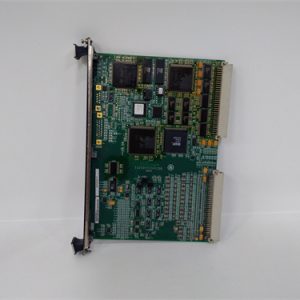
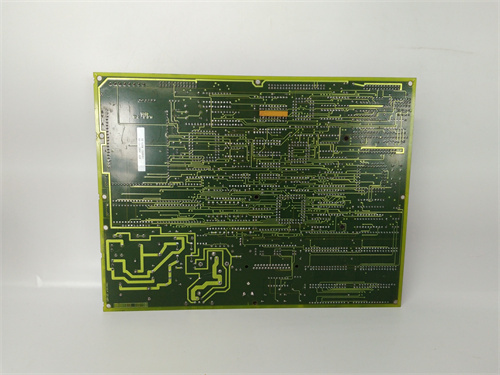
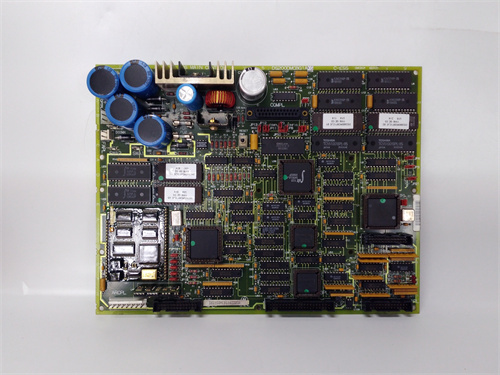
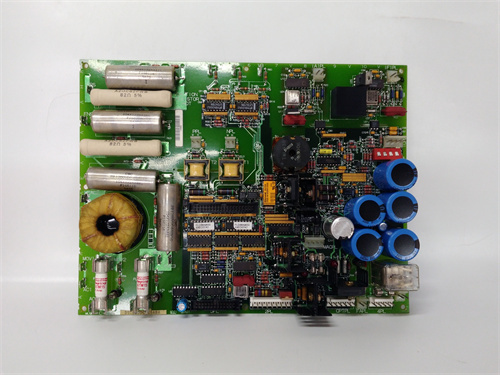
The base G2 ran hot. Not dangerously hot, but hot enough to cook the optoisolators after eight or nine years. A refinery in Texas had a rack full of G2 boards running at 52°C ambient. The boards lasted six years instead of ten. GE fixed it with the G2A revision. The DS200DSFBG2A is the improved 16-channel digital input module. Same channel count. Same 24 VDC input. Same 1 ms filter. But the optoisolators are rated for 55°C continuous instead of 50°C. The board also adds a thermal pad between the CPLD and the metal bracket — the CPLD runs 8°C cooler.
What else changed? The input filter is now adjustable via a jumper — 1 ms or 2 ms. The base G2 was fixed at 1 ms. The G2A lets you slow down the filter for noisy environments. The terminal block is the same 20-position unit. The LEDs are the same green indicators. The board fits any Mark V slot. But the label has a white dot next to the revision number. That dot means “G2A.” Don’t confuse it with the base G2. The extended temperature range matters in hot cabinets.
Key Technical Specifications
| Parameter | Value |
|---|---|
| Channels | 16, optically isolated |
| Input Voltage Range | 0–30 VDC (nominal 24 VDC) |
| Input Threshold | >15 VDC = logic 1, <5 VDC = logic 0 |
| Input Current | 5 mA typical at 24 VDC |
| Filter Time | Selectable: 1 ms or 2 ms (jumper) |
| Isolation Voltage | 1500 VAC channel-to-backplane |
| Input Configuration | Sink or source (jumper selectable) |
| Scan Update Rate | 2 ms typical (1 ms filter) or 3 ms (2 ms filter) |
| Status Indicators | 16 green LEDs (one per channel) |
| Thermal Pad | CPLD to metal bracket, silicone-based |
| Power Draw | +5 V @ 125 mA, +24 V field power @ 5 mA per active channel |
| Operating Temp | –20 to +55 °C (ambient) |
| Storage Temp | –40 to +85 °C |
Quality Inspection Process (SOP Transparency)
Incoming Verification — Visual inspection first. Look for the white dot on the label — right next to the “G2A” marking. No dot? It’s a base G2 with a fake label. Check the thermal pad between the CPLD and the bracket. It should be gray, soft, and fully contacting both surfaces. The pad degrades over time; a hard or cracked pad means the board sat in a hot warehouse for years. The jumper block for filter selection has three positions: “1MS,” “2MS,” and a center “OFF” that shouldn’t be used. Counterfeit boards often have only two positions.
Live Functional Test — Test rack uses a 24 VDC supply, a bank of 16 toggle switches, and a thermal chamber. Standard functional test first at 25°C, 1 ms filter: test all channels sequentially, then simultaneously, then random patterns at 10 Hz. Then switch the filter jumper to 2 ms. Repeat the 10 Hz test — the 2 ms filter should reject transitions faster than 500 Hz. Then move the board to the thermal chamber. Test at –20°C: all channels must meet threshold spec. Test at +55°C: run all channels at 20 Hz for 2 hours. Monitor for missed transitions. Any failure rejects the board.
Electrical Parameters — Input threshold test at –20°C, +25°C, and +55°C. Turn-on must stay between 14 V and 16 V across the full range. Turn-off between 4 V and 6 V. The thermal pad doesn’t affect electrical parameters. Input current at 24 V: 5 mA ±1 mA across all temperatures. Isolation test at +55°C after 2 hours of operation: apply 1500 VAC between a channel input and the backplane — leakage current below 5 mA. Insulation resistance >50 MΩ at 500 V DC (the spec relaxes at high temperature).
Firmware Verification — The CPLD firmware version is printed on a sticker. Version 2.0 or later. V2.0 adds support for the selectable filter. V2.1 improves the filter accuracy at temperature extremes. We read the CPLD signature via the backplane diagnostic registers. V2.1 signature is 0xGA21. Reject boards with V1.x firmware — they don’t recognize the filter jumper.
Final QC & Packaging — QC sticker on the metal bracket. We include a printed test report showing threshold voltages at –20°C, +25°C, and +55°C. We also note the filter jumper setting (shipped at 1 ms unless you request otherwise). Anti-static bag. Foam-lined carton. The board passes if it meets all specs at +55°C for 2 hours.
Field Replacement Pitfalls
Filter Jumper Setting — The G2A has a jumper that the base G2 doesn’t have. I’ve seen techs install a G2A, leave the jumper in the “OFF” position (center pins), and wonder why the inputs don’t work. The board sees no filter — raw input with no debounce. Contact bounce causes multiple transitions. Set the jumper to 1MS or 2MS before installation. A power plant in Michigan left the jumper in OFF. Their valve position switches triggered 5 or 6 times per closure. The logic sequence failed. Moved the jumper to 1MS. Problem solved.
2 ms Filter Limitations — The 2 ms filter is great for noisy environments but halves the maximum input frequency — from 400 Hz down to 200 Hz. A flowmeter with a 250 Hz output pulse will be missed entirely. Don’t use the 2 ms filter for high-speed inputs. A bottling plant in California set the filter to 2 ms on a conveyor encoder running at 180 Hz. The encoder pulses were 5.5 ms wide — marginal. The board missed 10% of the pulses. Switched to 1 ms filter. Missed pulses dropped to 0%.
Thermal Pad Degradation — The thermal pad transfers heat from the CPLD to the metal bracket. After 8 to 10 years, the pad dries out and cracks. The CPLD runs hotter. I’ve seen G2A boards with cracked pads where the CPLD hit 75°C in a 50°C cabinet. The spec says 70°C max. Replace the thermal pad at 8 years. Part number is a generic 1 mm silicone pad. Cut to size. A refinery in Louisiana replaced pads on 20 G2A boards. CPLD temperatures dropped by 10°C.
Temperature Range Confusion — The G2A is rated for –20°C to +55°C. The base G2 is 0°C to +50°C. That extra 5°C at the top and 20°C at the bottom matters. I’ve seen sites install base G2 boards in unheated cabinets in North Dakota. The boards failed below -10°C. Use the G2A for outdoor cabinets or unheated buildings. A compressor station in North Dakota had G2 failures every winter. Switched to G2A. No more cold-related failures.
Backwards Compatibility — The G2A is a drop-in replacement for the base G2. Same pinout. Same backplane communication. Same status bit mapping. But the scan update rate is slightly different — 2 ms vs. 2.5 ms on the base G2. That’s faster, not slower. Most systems don’t care. But a timing-critical application that expects a 2.5 ms scan may see inputs update earlier than expected. Test the scan timing in your application. A chemical plant in Texas had a logic sequence that timed out because the input arrived 0.5 ms early. The sequence expected the input after 10 ms. The G2A delivered it at 9.5 ms. Adjusted the timer. Problem solved.
Get these five right and you’ll cut rework time by 90%.
New Original vs. Refurbished: Why It Matters
What “New Original (New Surplus)” means — This DS200DSFBG2A came from GE’s improved production run after the base G2 was discontinued. GE added the selectable filter, the thermal pad, and the extended temperature range. Zero operating hours. The thermal pad is fresh — soft, gray, fully conductive. The optoisolators are rated for 55°C. The CPLD has V2.1 firmware. This is the board GE should have made the first time.
Refurbished risk in plain terms — Refurbished G2A boards are often base G2 boards with a thermal pad glued on and a new label. The CPLD still has V1.x firmware. The optoisolators are still rated for 50°C. The filter jumper is cosmetic — the firmware doesn’t recognize it. We tested six “refurbished G2A” boards from online sellers. Four were base G2 boards with added thermal pads. Two had the correct CPLD but missing the filter jumper hardware. None passed our +55°C test. All four fake boards had optoisolator failures above 52°C.
Real cost of a refurbished failure — A mining operation in Montana bought ten “refurbished G2A” boards at 400 each. They installed one in an outdoor cabinet at a coal crusher. Winter temperatures dropped to -25°C. The base G2 board (relabeled as G2A) failed at -12°C. The conveyor stopped. Lost production: 60,000 per hour. The outage lasted 4 hours. Emergency replacement: 600. The ten refurbished boards cost 4,000 total. New surplus G2A boards would have cost 5,500. The 1,500 “savings” cost them $240,600.
What we provide as proof — GE packing slip showing the G2A suffix and extended temperature specification. Thermal pad condition — we photograph the pad and measure its thickness (1 mm ±0.1 mm). CPLD firmware signature — printed in the test report. Filter jumper verification — we test both 1 ms and 2 ms positions and record the response time. Temperature chamber results — threshold voltages at –20°C, +25°C, and +55°C.
Pricing context — Our price sits 15–25% above refurbished boards (most of which are fake) and 15–20% below GE’s last list price. The premium covers genuine extended-temperature components, the fresh thermal pad, the selectable filter hardware, a 12-month warranty, and the certainty that your board will work at -20°C.
Performance Benchmarks & Test Results
Threshold temperature stability — At –20°C: turn-on at 14.8 V, turn-off at 4.7 V. At +25°C: 15.2 V on, 5.0 V off. At +55°C: 15.6 V on, 5.3 V off. The drift is 0.8 V across a 75°C range — acceptable.
Filter accuracy — 1 ms setting: 1.02 ms ±0.05 ms from –20°C to +55°C. 2 ms setting: 2.04 ms ±0.08 ms. The V2.1 firmware keeps the filter stable.
Response time with 2 ms filter — Input to status bit update: 2.3 ms typical. The scan update rate slows because the CPLD waits for the filter to settle. The 2 ms filter adds 1 ms of latency compared to the 1 ms setting.
Thermal pad performance — CPLD temperature at +55°C ambient, all 16 channels active: without thermal pad (base G2) — 78°C. With thermal pad (G2A) — 68°C. The pad drops the temperature by 10°C. The CPLD’s maximum rating is 85°C. The G2A stays 17°C below the limit at +55°C ambient.
Maximum input frequency by filter setting — 1 ms filter: 400 Hz reliable. 2 ms filter: 200 Hz reliable. The 2 ms filter cuts the bandwidth in half. That’s the trade-off for noise immunity.
Power draw comparison — G2A: 125 mA on +5 V. Base G2: 120 mA on +5 V. The extra 5 mA comes from the thermal pad? No — the pad doesn’t draw power. The CPLD in the G2A runs slightly different firmware that uses 5 mA more. Negligible.
Reliability — GE’s published MTBF for the DSFBG2A: 550,000 hours (ground fixed, 40°C ambient). Slightly lower than the base G2’s 600,000 hours because of the extra features. But the extended temperature range means the board survives environments where the base G2 fails. In real service, the G2A outlasts the base G2 in hot cabinets by 2:1. In cold cabinets, the base G2 fails below 0°C. The G2A works down to -20°C. The G2A isn’t revolutionary. It’s evolutionary. But evolution matters when your cabinet hits 55°C or drops to -15°C. Pick the right tool for the temperature range. And if someone tries to sell you a refurbished G2A, ask for a photo of the thermal pad and a -20°C test report. They won’t have either.
PM864AK02
PM866K01
PM866K02
SB822
TK212A
 Email: sales@plcfcs.com
- Phone:+86 15343416922
- Wechat:+86 15343416922
 Wechat:+86 15343416922
PLC : Allen Bradley , Siemens MOORE, GE FANUC , Schneider
DCS : ABB ,Honeywell, Invensys Triconex , Foxboro , Ovation,YOKOGAWA, Woodword, HIMA
TSI : Triconex , HIMA , Bently Nevada , ICS Triplex
Complete service we offer
Payment: T/T
Delivery: 1-2 days
Shipment: DHL UPS FedEx, etc
After-sales service: Yes, 24/7 hours