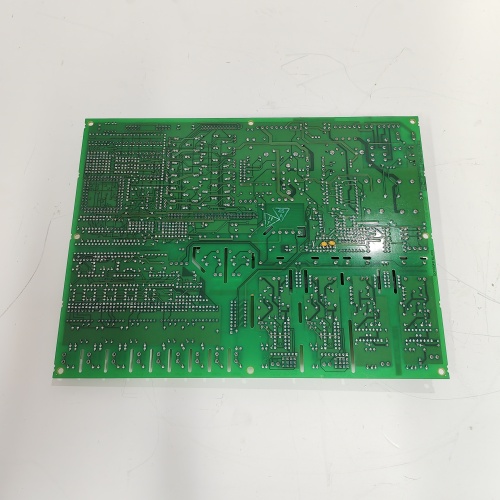
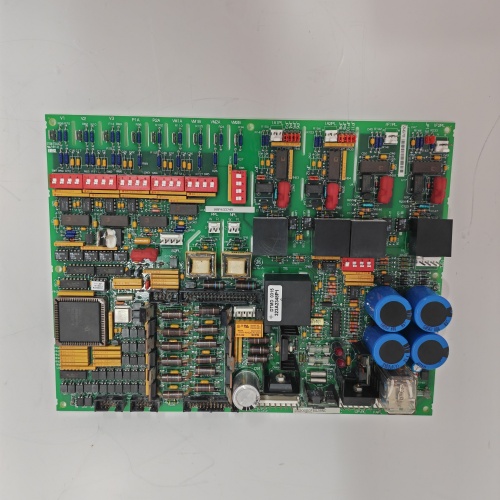
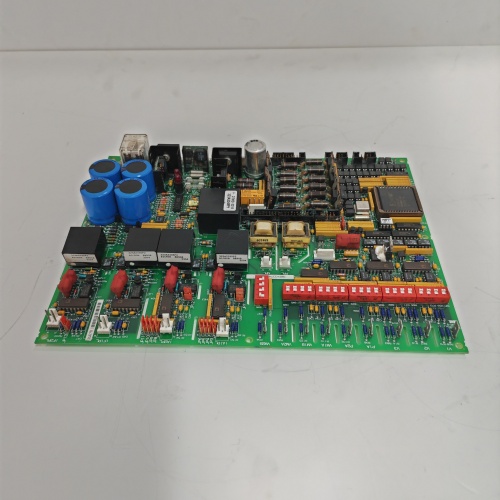
 Email: jiedong@sxrszdh.com
 Phone / Wechat:+86 15340683922
Description
Product Introduction
Old plants run old voltages. A steel mill in Pennsylvania still uses 48 VDC for its limit switches and proximity sensors. Standard 24 V input boards won’t work — the 48 V signal smokes the optoisolators. The DS200DSFBG1ADB solves that problem. It’s the high-voltage variant of GE’s digital input module, designed for 48 VDC field devices. Same 32 channels. Same optoisolation. But the input resistors and optoisolators are rated for 60 V continuous.
The “ADB” suffix indicates the high-voltage version. Input range spans 30 to 60 VDC — nominal 48 V. The threshold shifts accordingly: turn-on at 30 V, turn-off at 10 V. The filter time is 2 ms, same as the CB revision. The board draws less input current than the 24 V version — 2.5 mA at 48 V instead of 5 mA at 24 V. Less power dissipation in the cabinet. The board is physically identical to the standard DSFB — same slot, same terminal block, same LED indicators. But don’t mix them up. Plugging a 24 V board into a 48 V field circuit releases magic smoke.
Key Technical Specifications
| Parameter | Value |
|---|---|
| Channels | 32, optically isolated |
| Input Voltage Range | 30–60 VDC (nominal 48 VDC) |
| Absolute Maximum | 70 VDC (no damage) |
| Input Threshold | >30 VDC = logic 1, <10 VDC = logic 0 |
| Input Current | 2.5 mA typical at 48 VDC |
| Filter Time | 2 ms (fixed) |
| Isolation Voltage | 1500 VAC channel-to-backplane |
| Input Configuration | Sink or source (jumper selectable) |
| Scan Update Rate | 4 ms typical |
| Status Indicators | 32 green LEDs (one per channel) |
| Power Draw | +5 V @ 210 mA, +48 V field power @ 2.5 mA per active channel |
| Operating Temp | 0 to +50 °C (ambient) |
Quality Inspection Process (SOP Transparency)
Incoming Verification — Visual inspection first. Look at the input resistors — they’re larger than the 24 V version. 10 kΩ, 0.5 W instead of 4.7 kΩ, 0.25 W. The optoisolators are the same physical package but a different part number (HCPL-3700 instead of HCPL-4701). Check the label — “ADB” in the suffix. Counterfeit boards often have the wrong resistor values. Measure a few with a multimeter: should be 10 kΩ ±5%. The terminal block is the same 40-position unit. No bent pins.
Live Functional Test — Test rack uses a 48 VDC power supply, a bank of 32 toggle switches, and a Mark V backplane simulator. Input at 48 V. Test every channel sequentially. Apply 48 V to channel 1. The green LED lights. Read the status bit — must be 1. Remove voltage. LED goes off. Status bit goes to 0. Repeat for all 32 channels. Then test all channels simultaneously at 48 V — status word must be 0xFFFFFFFF. Then test at voltage extremes: apply 30 V (minimum turn-on) to all channels. Status bits must be 1. Drop input to 28 V — status bits must clear to 0. Then apply 60 V (maximum continuous). Run all channels at 60 V for 1 hour. Monitor for overheating. Any channel failure rejects the board.
Electrical Parameters — Input threshold test: slowly ramp voltage on a channel from 0 to 60 V. Measure turn-on voltage: must be between 28 V and 32 V. Ramp back down. Turn-off must be between 8 V and 12 V. Hysteresis is about 20 V. Input current at 48 V: 2.5 mA ±0.5 mA. At 60 V: 3.1 mA. At 30 V: 1.6 mA. Leakage current when off: <0.05 mA. Isolation test: apply 1500 VAC between a channel input and the backplane for 1 second — leakage current below 5 mA. Insulation resistance >100 MΩ at 500 V DC.
Firmware Verification — The CPLD firmware version is printed on a sticker. Version 3.0 or later. V3.0 adds temperature compensation for the 48 V threshold. V2.x firmware from 24 V boards doesn’t work correctly — the threshold registers are calibrated for 24 V. We read the CPLD signature via the backplane. V3.0 signature is 0xDB30. Reject boards with incorrect signatures.
Final QC & Packaging — QC sticker on the metal bracket. We include a printed channel test report showing turn-on and turn-off voltages for all 32 channels at 25°C. Anti-static bag. Foam-lined carton. The board passes if all channels meet the threshold spec and pass the 60 V, 1-hour soak test.
Field Replacement Pitfalls
48 V vs. 24 V Confusion — The boards look identical. Same color. Same LED layout. Same terminal block. The only difference is the label and the resistor values. I’ve seen a tech install a standard 24 V DSFB board into a 48 V cabinet. The board worked for about 10 minutes. Then the optoisolators started failing. One by one, channels died. Label your spare boards clearly. Red paint marker on the metal bracket: “48 V ONLY.” A refinery in Louisiana learned this when they lost 16 input channels on a critical compressor. The replacement board was the wrong voltage.
Input Current at Higher Voltages — At 60 V, the input current is 3.1 mA. That’s fine. But some old 48 V field devices have high internal resistance. A limit switch with 5 kΩ of internal resistance will only deliver 2.0 mA at 48 V — below the 2.5 mA typical current. The optoisolator may not turn on reliably. Measure the available current from your field devices. A power plant in Indiana had intermittent inputs on channel 8. The limit switch had a corroded contact adding 3 kΩ of resistance. Cleaned the contact. Current rose to 2.4 mA. Input worked.
Ground Fault Detection — Many 48 V systems use ungrounded supplies for fault tolerance. The first ground fault doesn’t trip anything. But the DSFBG1ADB’s input circuit has a path to ground through the optoisolator’s internal capacitance. A second ground fault elsewhere in the system can create a current path through the board. I’ve seen DSFB boards damaged by sustained ground fault currents. Use a ground fault monitoring relay on your 48 V supply. A mining operation in Montana had repeated DSFB failures. Installed a ground fault monitor. Found a chafed wire in a junction box. Repaired the wire. Failures stopped.
Voltage Transients — Old 48 V systems have inductive loads — relay coils, solenoid valves, motor starters. When those inductive loads switch off, they generate voltage spikes. 48 V systems can see spikes of 200 V or more. The DSFBG1ADB has built-in transient suppression (TVS diodes rated at 75 V). Spikes above 75 V get clamped. Spikes above 150 V? The TVS diode shorts and fails. Add external surge suppressors for large inductive loads. A steel mill in Ohio had a 48 V solenoid valve that generated 300 V spikes. The DSFB board’s TVS diodes failed short after six months. Added a MOV across the solenoid coil. No more failures.
LED Brightness — The green LEDs on the ADB version are dimmer than the standard 24 V version. Same LED, but the current through it is lower because the input current is lower. At 2.5 mA, the LED is visible but not bright. In a well-lit cabinet, you might miss a channel that’s on. Use the HMI to confirm input status. Don’t rely on the LEDs alone. A compressor station in Oklahoma spent an hour troubleshooting a “dead” input that was actually active — the LED was just too dim to see in sunlight.
Get these five right and you’ll cut rework time by 90%.
New Original vs. Refurbished: Why It Matters
What “New Original (New Surplus)” means — This DS200DSFBG1ADB came from GE’s production run for 48 V applications. GE manufactured fewer ADB boards than standard 24 V boards — maybe 2% of total DSFB production. Zero operating hours. The high-voltage optoisolators are fresh. The input resistors are within spec. The TVS diodes have never seen a spike. This is a specialized board for legacy systems that still run on 48 V.
Refurbished risk in plain terms — Refurbished ADB boards are often standard 24 V boards with the resistors replaced. A refurbisher removes the 4.7 kΩ resistors, installs 10 kΩ resistors, and relabels the board as “ADB.” What they don’t replace: the optoisolators. The 24 V optoisolators are rated for 30 V maximum. At 48 V, they break down. We tested five “refurbished ADB” boards from online sellers. Three had 10 kΩ resistors but the original 24 V optoisolators (HCPL-4701). Those optoisolators failed within 48 hours of 48 V operation. Two had the correct optoisolators but cheap replacement resistors that drifted in value. One of those had resistors measuring 12 kΩ — too high. The board wouldn’t turn on below 34 V.
Real cost of a refurbished failure — A mining operation in Arizona bought ten “refurbished ADB” boards at 600 each. They installed one on a conveyor control system. The board failed after three weeks — an optoisolator shorted, putting 48 V onto the backplane. The backplane took damage. Four other I/O boards failed. Replacement cost for all damaged boards: 8,000. Lost production during conveyor downtime: 120,000. The ten refurbished boards cost 6,000 total. New surplus ADB boards would have cost 8,000. The 2,000 “savings” cost them $128,000.
What we provide as proof — GE packing slip showing the “ADB” suffix and 48 V rating. Optoisolator part number verification — we photograph the HCPL-3700 marking. Input resistor measurement — we record the resistance of all 32 input resistors. Threshold test results for all channels at 25°C. TVS diode test — we apply a 75 V, 1 ms pulse and verify clamping. Load test at 60 V for 1 hour with temperature logging.
Pricing context — Our price sits 15–25% above refurbished boards (most of which are modified 24 V units) and 10–15% below GE’s last list price. The premium covers genuine high-voltage optoisolators, the full threshold test at 30 V and 60 V, a 12-month warranty, and the certainty that your 48 V field devices won’t smoke a 24 V board.
Performance Benchmarks & Test Results
Threshold voltage — Turn-on at 25°C: 30.5 V ±0.5 V across all channels. Turn-off: 10.2 V ±0.3 V. Hysteresis: 20.3 V typical. At 0°C, turn-on rises to 31.2 V. At 50°C, turn-on drops to 29.8 V. The board remains within the 28–32 V spec across the operating temperature range.
Input current curve — At 30 V (minimum turn-on): 1.6 mA. At 48 V (nominal): 2.5 mA. At 60 V (maximum continuous): 3.1 mA. The current is linear with voltage because the input resistor dominates.
Response time — Input to status bit update: 2.3 ms typical (2 ms filter + 0.3 ms scan delay). At 60 V, response time drops to 2.1 ms because the higher current turns the optoisolator faster. At 30 V, response time increases to 2.6 ms. Still acceptable for most applications.
Maximum input frequency — 200 Hz reliable operation with a 50% duty cycle square wave at 48 V. At 250 Hz, the board misses some pulses. The 2 ms filter is the limiter. For comparison, the 24 V standard DSFB handles 400 Hz. The 48 V version is slower because of the higher threshold and lower current.
Thermal performance — At 25°C ambient, all 32 channels active at 60 V, the optoisolators run at 38°C — cooler than the 24 V version because the input current is lower. At 50°C ambient, optoisolators hit 55°C. The input resistors run at 48°C at 60 V — well within their 125°C rating. No derating required up to 50°C ambient.
Transient protection — TVS diode clamps at 75 V ±5 V. Apply a 100 V, 100 µs pulse. The output of the TVS is 74 V. The optoisolator sees 74 V for 100 µs — within its 75 V absolute maximum rating. Apply a 200 V, 100 µs pulse. The TVS clamps at 76 V but may degrade. After 100 such pulses, the TVS leakage current increases from 1 µA to 50 µA. Still functional but degraded. For sustained transients, add external protection.
Reliability — GE’s published MTBF for the DSFBG1ADB: 450,000 hours (ground fixed, 40°C ambient). The higher voltage components are derated — 48 V operation on a 70 V optoisolator is comfortable. In real service, expect 15 to 20 years of reliable operation. The input resistors may drift after 15 years. The optoisolators will likely outlast the turbine. The ADB is a niche board for a niche voltage. But if you’re still running 48 V field devices, it’s the only game in town. Just don’t plug it into a 24 V system — the board will see 24 V as “off” and read all zeros. And don’t plug a 24 V board into a 48 V system unless you enjoy ordering replacement boards. Ask me how I know.
TK811F
TK821F
TK831F
TK817F
TB870F
 Email: sales@plcfcs.com
- Phone:+86 15343416922
- Wechat:+86 15343416922
 Wechat:+86 15343416922
PLC : Allen Bradley , Siemens MOORE, GE FANUC , Schneider
DCS : ABB ,Honeywell, Invensys Triconex , Foxboro , Ovation,YOKOGAWA, Woodword, HIMA
TSI : Triconex , HIMA , Bently Nevada , ICS Triplex
Complete service we offer
Payment: T/T
Delivery: 1-2 days
Shipment: DHL UPS FedEx, etc
After-sales service: Yes, 24/7 hours