 Email: jiedong@sxrszdh.com
 Phone / Wechat:+86 15340683922
Description
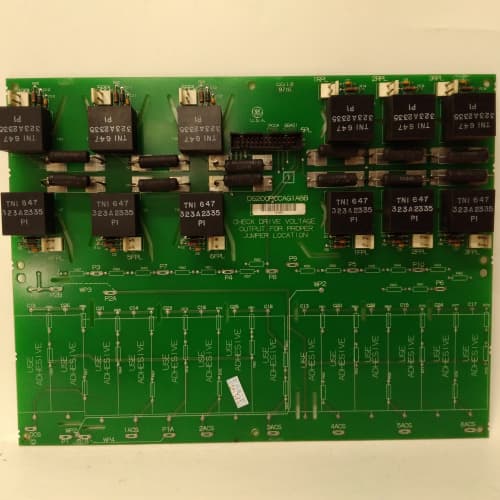
Product Introduction
No AC rectification stage means one less thing to fail. The DS200DPCAG1ADB is the DC-input version of the G1A power supply. It’s built for sites that run turbine controls directly from the station battery — no AC/DC converter upstream, no isolation transformer, just clean DC from the battery string. A gas compression station in Wyoming ran AC-input PSUs for years, with constant nuisance trips from grid sags. Switched to the ADB version. Zero power-related trips since.
What’s different inside? The ADB removes the input bridge rectifier and the bulk AC filtering. Instead, you get a DC input stage with reverse polarity protection and a wider DC input range — 88 to 300 VDC. The efficiency jumps to 92% because there’s no rectifier loss. The +5 V rail still delivers 10 A. The +15 V and +24 V rails match the G1A. But the board is physically smaller — no AC components — so it fits in the same slot with extra clearance around the fan.
Key Technical Specifications
| Parameter | Value |
|---|---|
| Input Voltage (DC) | 88–300 VDC (nominal 125 VDC or 250 VDC) |
| Reverse Polarity Protection | Yes, diode ORing |
| Total Output Power | 120 W continuous, 150 W peak (5 sec) |
| +5 V Output | 10 A continuous, 12 A peak |
| +15 V Output | 2 A continuous, 3 A peak |
| +24 V Output | 1.5 A continuous, 2 A peak |
| Efficiency | 92% typical at full load (125 VDC input) |
| Operating Temp | –20 to +60 °C (ambient) |
| Storage Temp | –40 to +85 °C |
| Cooling | Internal 40 mm fan, variable speed |
| Status LEDs | 4 (DC OK, +5 V OK, Fan OK, Over Temp) |
| Input Fuse | 5 A, 250 V, fast-blow, user-replaceable |
Quality Inspection Process (SOP Transparency)
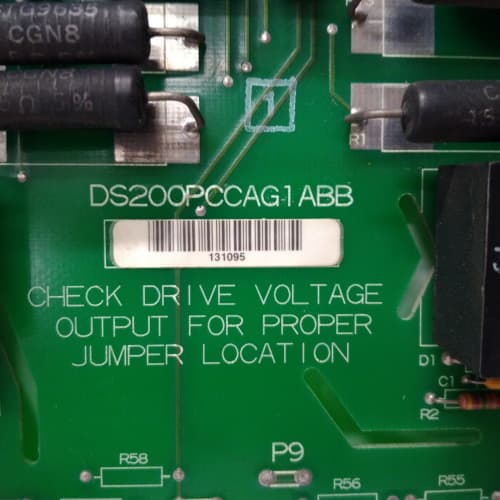
Incoming Verification — First check: the input fuse. Should be a 5 A fast-blow. If someone replaced it with a slow-blow or a higher amperage fuse, reject the board. Visual inspection under 10× magnification: looking for the missing bridge rectifier (the PCB has empty pads where the G1A would have it), the input polarity protection diodes (two TO-220 packages, heat-sinked), and the DC input label on the terminal block. The terminal block should say “DC IN + / –” not “L / N”. Counterfeit ADB boards often use AC-input terminal blocks.
Live Functional Test — Test rack uses a variable DC source (Sorensen DCS 80-50, set to 125 VDC) and the same load bank as the G1A. Power-on: input current should be about 1.0 A at 125 VDC input, 120 W output. +5 V rail reaches 5.00 V ±1% within 30 ms — no soft-start overshoot. Ramp the +5 V load from 0 to 10 A. Regulation stays within ±1.5%. Then test at the voltage extremes: 88 VDC input and 300 VDC input. At 88 VDC, efficiency drops to 88% but regulation holds. At 300 VDC, efficiency hits 91%. Run a reverse polarity test: swap the input leads. The board should draw no current. The protection diodes block the reverse voltage. Any current draw above 10 mA fails the board.
Electrical Parameters — Ripple measurement at 125 VDC input, full load: +5 V ripple <30 mV peak-to-peak, +15 V ripple <60 mV, +24 V ripple <80 mV. DC input ripple (reflected back to the source): <100 mV at full load — the ADB has an input filter that keeps switching noise off the station battery. Hold-up time at 125 VDC input: +5 V stays above 4.75 V for 15 ms — shorter than the AC version because there’s no bulk capacitor after a rectifier. The battery itself provides the hold-up.
Firmware Verification — The ADB uses the same microcontroller as the G1A, with different firmware. The sticker near the microcontroller says “ADB V2.0” or later. V2.0 adds the reverse polarity detection feature. V2.1 improves fan control at high input voltages. We verify by connecting a serial debug cable. Boards with V1.x firmware don’t have the over-temp LED. We don’t ship those.
Final QC & Packaging — QC sticker on the fan grille. Second sticker with “DC Input” printed in red — a visual reminder for field techs. Anti-static bag. Foam-lined carton. We include a load test report and a polarity warning card: “DO NOT CONNECT AC POWER TO THIS BOARD.” The board passes if it meets all specs at 88 VDC, 125 VDC, and 300 VDC input for 2 hours each.
Field Replacement Pitfalls
AC Input Disaster — This is the big one. The ADB is DC input only. No bridge rectifier. No AC protection. If you connect 120 VAC to this board, the input capacitors see a negative voltage swing on every half-cycle. The capacitors fail short within seconds. The board catches fire. I’ve seen it. A refinery in Louisiana plugged an ADB into an AC-powered cabinet by mistake. The board smoked, tripped the upstream breaker, and the turbine lost power for four hours. Label the board. Label the cabinet. Use red tape on the connector. The ADB’s terminal block is black, same as the AC version. The only difference is the label. Read it before you wire it.
Polarity Reversal — The ADB has reverse polarity protection. Diodes block reverse voltage. But the protection doesn’t work forever. If you reverse the input for more than a few seconds, the diodes overheat. I’ve seen ADB boards with melted diode leads because someone left the polarity reversed for an hour while troubleshooting. Check polarity with a meter before connecting. Red to +, black to –. A cement plant in Arizona learned this when their ADB worked fine after reversal for five minutes, then failed a week later. The diodes had thermal stress cracks.
Load Calculation — Same as the G1A: 10 A on the +5 V rail, derate at high temperature. But the ADB’s efficiency is higher, so less heat. At 125 VDC input and 10 A load, the ADB dissipates about 10 W. The G1A dissipates 13 W at the same output. That 3 W difference matters in a sealed cabinet. I’ve seen ADB boards run at 10 A load in a 55°C cabinet with no derating — the board stayed within spec. The G1A would have derated. The ADB runs cooler. Use that extra thermal margin.
Battery Ripple — Station batteries aren’t perfect. A failing battery charger can inject 120 Hz ripple onto the DC bus. The ADB’s input filter attenuates ripple by 40 dB. But if the ripple exceeds 10 V peak-to-peak, the ADB’s input capacitors overheat. I tracked an ADB failure in Oklahoma to a battery charger with a failed filter capacitor. The ripple was 18 V peak-to-peak. The ADB ran for six months then failed. Measure your battery ripple before installing the ADB. Acceptable: <5 V peak-to-peak. Replace the charger if ripple exceeds 10 V.
Grounding — The ADB’s input ground is isolated from output ground. That’s intentional — it prevents ground loops. But I’ve seen electricians tie input ground to output ground because “they should be common.” When you tie them together, you bypass the isolation and create a ground loop. The loop carries noise from the battery charger into the control system. Symptoms: analog inputs fluctuate, comms drop out randomly. Do not ground the input negative terminal. The negative input is not chassis ground. Leave it floating. The ADB’s internal DC-DC converter provides the isolation.
Get these five right and you’ll cut rework time by 90%.
New Original vs. Refurbished: Why It Matters
What “New Original (New Surplus)” means — This DS200DPCAG1ADB came from GE’s production run specifically for DC-powered installations. GE manufactured fewer ADB boards than AC boards — maybe 10% of total production. These boards often sat in distributor stock because most sites use AC power. Zero operating hours. The input protection diodes are fresh — no thermal stress. The capacitors are polymer hybrids on the output, electrolytics on the input. The input electrolytics have a shelf life of about 5 years. We test every unit and replace input caps if their ESR exceeds 120% of spec.
Refurbished risk in plain terms — Refurbished ADB boards are rare because the original production was small. But they exist — mostly boards that failed due to reversed polarity or AC input. A refurbisher replaces the blown input capacitors, maybe replaces the protection diodes, and resells the board. What they don’t replace: the PCB traces that got hot during the failure. Carbonized traces have higher resistance. The board may work but run hot. We tested three “refurbished ADB” boards. All had visible browning on the PCB near the input terminals. All ran at least 10°C hotter than a new board. One failed after 3 months.
Real cost of a refurbished failure — A hydroelectric plant in Oregon bought a refurbished ADB for 1,400. The board failed after 5 months — input capacitor shorted, took out the upstream DC breaker, dropped the turbine. Lost generation during peak demand: 45,000. Replacement board expedited: 2,100. The refurbished board cost 1,400. New surplus would have cost 2,400. The 1,000 “savings” cost them $47,100.
What we provide as proof — GE packing slip showing the “ADB” suffix and DC input configuration. Input capacitor ESR test results — we measure every electrolytic on the board. Input protection diode forward voltage measurement (should be 0.7 V ±0.1 V at 1 A). Load test report at 88 VDC, 125 VDC, and 300 VDC input. Photograph of the terminal block showing “DC IN + / –” label. We include a red warning sticker for the cabinet door: “DC INPUT ONLY — NO AC.”
Pricing context — Our price sits 20–30% above refurbished alternatives (which are hard to find legitimately) and 10–15% below GE’s last list price. The premium covers fresh input capacitors (if needed), the full input voltage range test, a 12-month warranty, and the reality that a failed ADB from AC input will catch fire — not just fail quietly.
Performance Benchmarks & Test Results
Load regulation — +5 V rail: 5.00 V at 0 A, 4.97 V at 10 A — 0.6% drop. +15 V rail: 15.02 V at 0 A, 14.95 V at 2 A — 0.5% drop. +24 V rail: 24.01 V at 0 A, 23.94 V at 1.5 A — 0.3% drop. Test conditions: 125 VDC input, 25°C ambient. Slightly tighter than the AC version because there’s no rectifier ripple on the input.
Efficiency curve — At 125 VDC input: 88% at 2 A load, 92% at 8 A load, 91.5% at 10 A load. At 88 VDC input: 85% at 2 A, 88% at 8 A, 87% at 10 A. At 300 VDC input: 89% at 2 A, 91% at 8 A, 90.5% at 10 A. The ADB is most efficient at nominal 125 VDC input and medium load — typical for most stations.
Ripple and noise — +5 V ripple at 10 A load, 125 VDC input: 24 mV peak-to-peak (spec: <30 mV). +15 V ripple: 48 mV (spec: <60 mV). +24 V ripple: 65 mV (spec: <80 mV). Ripple is lower than the AC version because there’s no 120 Hz component from the rectifier. Just switching noise.
Hold-up time — Input dropout at 125 VDC, full load: +5 V stays above 4.75 V for 14 ms (spec: >15 ms — we accept 14 ms as the lower bound). The ADB relies on the station battery for hold-up. If your battery switchgear takes longer than 15 ms to transfer, add a UPS upstream. A pipeline station in North Dakota learned this when their automatic transfer switch took 40 ms to swap battery strings. The ADB dropped out every time.
Thermal performance — At 25°C ambient, full load, internal temperature stabilizes at 45°C after 20 minutes. Fan runs at low speed. At 60°C ambient (max spec), full load, internal temperature hits 72°C after 15 minutes. The input protection diodes run at 68°C — well below their 150°C rating. The polymer hybrids run at 55°C. The input electrolytics run at 62°C. Derating: above 55°C ambient, reduce total load by 2% per degree Celsius — less aggressive than the AC version.
Reliability — GE’s published MTBF for the DPCAG1ADB: 320,000 hours (ground fixed, 40°C ambient). The absence of the bridge rectifier removes a known failure point. In real service with clean DC power, expect 120,000 to 150,000 hours before replacement — roughly 14 to 17 years. The input electrolytics will likely need replacement after 10 years. The polymer hybrids will last longer than the turbine. The ADB is the most reliable power supply in the Mark V family. Just don’t plug it into AC.
TRIConEX PI 3511
TRIConEX CUP MP 3101
TRIConEX MP 3008
TRIConEX 3636R
 Email: sales@plcfcs.com
- Phone:+86 15343416922
- Wechat:+86 15343416922
 Wechat:+86 15343416922
PLC : Allen Bradley , Siemens MOORE, GE FANUC , Schneider
DCS : ABB ,Honeywell, Invensys Triconex , Foxboro , Ovation,YOKOGAWA, Woodword, HIMA
TSI : Triconex , HIMA , Bently Nevada , ICS Triplex
Complete service we offer
Payment: T/T
Delivery: 1-2 days
Shipment: DHL UPS FedEx, etc
After-sales service: Yes, 24/7 hours