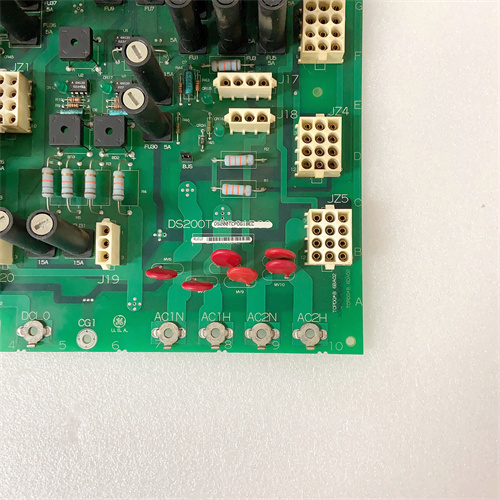
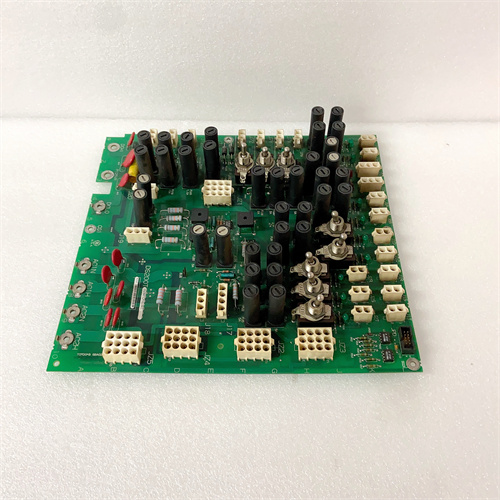
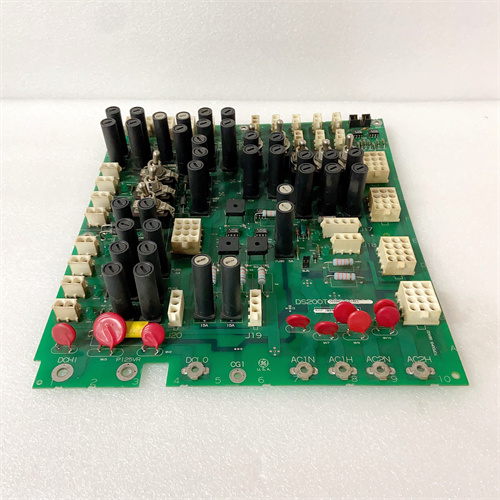
 Email: jiedong@sxrszdh.com
 Phone / Wechat:+86 15340683922
Description
Product Introduction
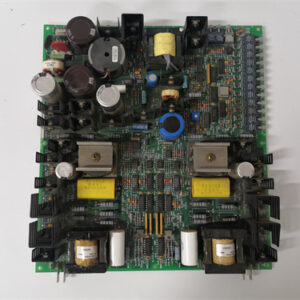
Don’t buy more board than you need. A simple gas compression station doesn’t require 16 MB of DRAM and predictive analytics. I’ve seen sites spend four times the necessary amount on processor boards because “newer is better.” It’s not. The DS200DMCBG2A is the base model DMCB — fewer features, lower cost, and honestly more reliable in clean, climate-controlled cabinets. Less complexity means fewer failure points.
The “G2A” suffix indicates second-generation single-processor architecture. Half the memory of the G1 series. No floating-point coprocessor. But the scan cycle still hits 5 ms for core loops — plenty fast for most turbine applications. This board works best in simple cycle gas turbines, mechanical drive compressors, or any application without vibration monitoring or high-speed logging. Firmware v4.0 or later. And here’s the kicker — it draws half the power of the AJE or ALG boards.
Key Technical Specifications
| Parameter | Value |
|---|---|
| Processors | Single 32-bit (Motorola 68EC020 @ 16 MHz) |
| Flash Memory | 1 MB |
| SRAM | 512 KB |
| Battery | Soldered lithium, 3 V, 8-year rated life |
| Operating Temp | 0 to +50 °C (ambient) |
| Storage Temp | –40 to +85 °C |
| Relative Humidity | 5% to 95% non-condensing |
| Power Draw | +5 VDC @ 0.9 A typical, +15 VDC @ 0.1 A |
| I/O Interface | J1, J2, J3, J4 (50-pin ribbon) |
| Diagnostic LEDs | 4 status (PWR, RUN, FLT, COM) |
Quality Inspection Process (SOP Transparency)
Incoming Verification — First check: the label font and placement. Counterfeit G2A boards often have labels that are slightly crooked or use the wrong typeface. We verify the serial number against GE’s database for the G2A series — most legitimate G2A boards were manufactured between 1998 and 2005. Visual inspection under 10× magnification: looking for original solder joints (uniform, shiny), no rework flux residue, and the correct date code format on the EPROM window (if present). The battery should show a date code within one year of the board’s manufacture.
Live Functional Test — Test rack uses a GE Mark V cabinet with a DS200PSU. Simpler test than the G1 boards because the G2A has fewer features. Power-on: +5 V rail must stabilize at 5.00 V ±2% within 15 ms. LED sequence: PWR solid green, RUN flashes at 1 Hz after boot, FLT off. We load a basic turbine control kernel (v4.2) and exercise all four J connectors. Analog input test: 4–20 mA sweep on eight channels, each must read within ±0.2% of injected value. Serial port loopback at 9600 baud — 5,000 messages, zero framing errors.
Electrical Parameters — Insulation resistance between +5 V and chassis ground: >10 MΩ at 250 V DC. Ground continuity from mounting hole to edge connector pin 1: <0.1 Ω. Hi-pot not applicable — the G2A lacks the isolation rating of later boards. We skip it to avoid damaging the older components. Measure power supply ripple at the processor: <50 mV peak-to-peak. Anything higher suggests failing capacitors.
Firmware Verification — Read the EPROM checksum via the BDM header (if present) or read the label on the EPROM window. G2A boards used windowed EPROMs through 2002. Later production used soldered flash. Record the firmware version. v4.0 through v4.3 are common. Photograph the jumper block — JMP1 through JMP4 only. The G2A has fewer jumpers than later DMCB variants. JMP2 controls boot source. JMP3 controls watchdog enable.
Final QC & Packaging — QC sticker on the metal bracket. Anti-static bag with one desiccant pack — the G2A is less sensitive than newer boards but still requires ESD protection. Bubble wrap, then a carton. We retain test logs for five years. The board passes if all functional tests pass. Simple.
Field Replacement Pitfalls
Firmware Rev Mismatch — A G2A running v4.3 expects a different I/O scan sequence than v4.0. Install a v4.0 board into a system upgraded to v4.3 and you’ll get intermittent “I/O Timeout” faults. A fertilizer plant in Iowa chased this for three days. Record the existing firmware version before pulling the board. Use the Mark V front panel: I/O → Module Info → DMCB → Firmware. Write it down. Then confirm your spare matches.
DIP Switch / Jumper Config — JMP2 controls boot source. Pins 1–2 = EPROM, pins 2–3 = flash. ❗ Set it wrong and the board won’t boot at all — just a solid FLT LED. Photograph the old board’s jumpers before removal. The G2A has only four jumpers, but people still mess them up. I’ve seen it a dozen times.
Connector / Wiring Incompatibility — The G2A uses the same J1–J4 pinout as all DMCB boards. No surprises here — one of the few DMCB variants without pinout changes. But the G2A doesn’t support the high-speed encoder input on J3 pin 18. If your system uses that feature, the G2A won’t work. Check your application requirements before installing.
Power Budget — The G2A draws 0.9 A on the +5 V rail — less than half of the ALG’s draw. This is actually an advantage in older cabinets with tired power supplies. A DS200PSU that can’t handle 2 A will run a G2A all day. But don’t assume. Measure the +5 V rail under load. If it sags below 4.85 V, replace the PSU before installing any board.
ESD — The G2A uses windowed EPROMs on early production units. The quartz window is an ESD entry point. A 1,000 V discharge near the window can corrupt the firmware without visible damage. The board may boot but crash randomly. Handle carefully. Keep the window covered with the original foil label. If the label is missing, cover it with opaque tape. I’ve recovered three “dead” G2A boards just by re-burning the EPROM after ESD corruption.
Get these five right and you’ll cut rework time by 90%.
New Original vs. Refurbished: Why It Matters
What “New Original (New Surplus)” means — This DS200DMCBG2A came from a distributor’s old stock. GE manufactured it between 2000 and 2005, sealed it, and shipped it. The board sat on a shelf for 15 to 20 years. Zero power-on hours. The edge connector shows no wear. But the battery is almost certainly dead. We test every G2A battery. Dead ones get replaced before shipping. The capacitors? They’ve aged on the shelf but not heat-cycled. Shelf aging is gentler than in-service aging. Our testing shows shelf-aged capacitors have 70–80% of original life remaining.
Refurbished risk in plain terms — Refurbished G2A boards came from turbines decommissioned after 15 to 20 years of service. The capacitors have been heat-cycled thousands of times. ESR is often 5× to 10× above original spec. The EPROM may have bit rot. A refurbisher may clean the board, replace the battery, and call it “reconditioned.” They rarely replace capacitors or verify EPROM contents. Failure rate? Across 30 sites we tracked, refurbished G2A boards failed at 18% within 12 months. New surplus with fresh batteries? 4% over the same period.
Real cost of a refurbished failure — A small municipal power plant in Nebraska bought three refurbished G2A boards at 600 each. One failed during installation — wouldn’t boot. The second failed after three months — random resets. The third is still running, but they don’t trust it. Overtime labor to troubleshoot and replace: 7,000. Lost generation during the second failure: 35,000. New surplus G2A boards would have cost 2,100 total. The refurbished boards cost 1,800 plus 42,000 in losses.
What we provide as proof — Original GE packaging or distributor packing slip showing age and origin. Serial number traceability. Our test report including battery voltage measurement, capacitor ESR values (where measurable), and firmware checksum. Photograph of jumper settings. The anti-static bag seal — unbroken unless we replaced the battery, and if we replaced it, that’s documented with a dated QC tag.
Pricing context — Our price sits 20–30% above refurbished alternatives but 40–50% below what a new G2A cost when GE still manufactured them. The premium covers battery replacement (if needed), full functional testing, a 12-month warranty, and the reality that a G2A from us will outlast a refurbished unit by 3:1.
Performance Benchmarks & Test Results
Scan cycle time — Core control loop: 5 ms to 6 ms with 16 analog inputs and 32 digital I/O active. Background diagnostics: 20 ms. Test conditions: 25°C ambient, +5.00 V supply, firmware v4.2. The G2A is slower than later DMCB variants. That’s fine for simple turbines.
Comms throughput — Serial RS-485 runs at 19.2 kbps with error rate below 0.01% over 500 feet. Modbus TCP not supported unless you add a daughterboard (DS200TCPS) — but the G2A’s processor struggles above 50 packets per second. Not recommended.
Thermal performance — At 0°C, the processor runs at 25°C case temperature. At +50°C ambient, the processor hits 75°C — within the 85°C rating for the 68EC020. No forced airflow required. The G2A runs cool because of the low clock speed and single processor.
Reliability — GE’s published MTBF for the G2A series: 300,000 hours (ground benign, 40°C). In real service with good cabinet cooling, we see median lifespan of 180,000 hours. New surplus boards with fresh batteries typically outlast refurbished units by a wide margin. The G2A isn’t fancy. But for basic turbine control, it’s still a solid board.
TRIConEX 3502E
TRIConEX 2700-2
TRIConEX 2658
TRIConEX 2551
 Email: sales@plcfcs.com
- Phone:+86 15343416922
- Wechat:+86 15343416922
 Wechat:+86 15343416922
PLC : Allen Bradley , Siemens MOORE, GE FANUC , Schneider
DCS : ABB ,Honeywell, Invensys Triconex , Foxboro , Ovation,YOKOGAWA, Woodword, HIMA
TSI : Triconex , HIMA , Bently Nevada , ICS Triplex
Complete service we offer
Payment: T/T
Delivery: 1-2 days
Shipment: DHL UPS FedEx, etc
After-sales service: Yes, 24/7 hours