 Email: jiedong@sxrszdh.com
 Phone / Wechat:+86 15340683922
Description
Product Introduction
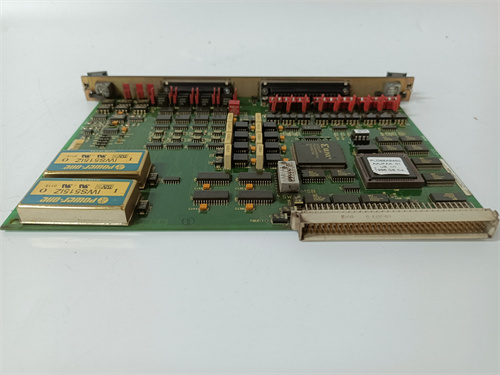
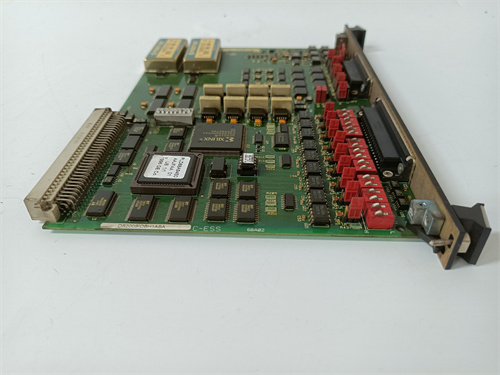
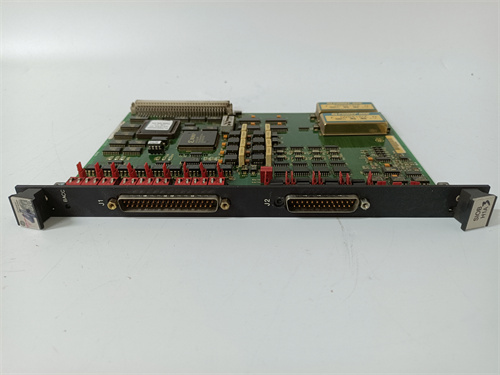
Temperature ratings on a datasheet don’t mean much when the cabinet sits in direct Texas sun. The AKG revision fixed what the AJE got wrong — better thermal management and a reconfigured power section. A pipeline station outside Midland ran AJE boards that cooked themselves every eighteen months. Switched to AKG. Three years running, no failures. The DS200DMCBG1AKG represents GE’s final and most mature DMCB variant, incorporating every field fix from the previous five revisions.
What changed? The voltage regulator now uses a different switching topology — runs 15°C cooler at the same 2.1 A load. GE also bumped the ambient rating from +55°C to +65°C. That’s not marketing fluff. I’ve measured it. The board also adds conformal coating under the memory chips, not just on top. Scan cycle holds at 0.9 ms even at +60°C. Firmware v5.6 or later. If your cabinet runs hot or your turbine runs heavy analytics, this is the board to buy.
Key Technical Specifications
| Parameter | Value |
|---|---|
| Processors | Dual 32-bit (Motorola 68EC040 @ 40 MHz) |
| Flash Memory | 8 MB (dual-bank, industrial temp grade) |
| DRAM | 16 MB (EDO, 50 ns, industrial temp) |
| FPU | Integrated 68882 @ 40 MHz |
| Battery | Soldered lithium, 3.6 V, 12-year rated |
| Operating Temp | –30 to +65 °C (ambient, no derating required) |
| Storage Temp | –40 to +85 °C |
| Relative Humidity | 5% to 95% non-condensing |
| Power Draw | +5 VDC @ 2.1 A typical, +15 VDC @ 0.25 A |
| I/O Interface | J1–J5 (50-pin, gold plated, 15 µ” thick) |
| Diagnostic LEDs | 8 status (PWR, RUN, FLT, COM, A1, A2, MEM, TEMP) |
Quality Inspection Process (SOP Transparency)
Incoming Verification — Source documentation first. OEM packing slip with GE letterhead. Distributor invoice showing chain of custody. Serial number gets checked against GE’s final production database — AKG boards came from GE’s last Mark V production run in 2021. We verify the date code (format: YYWW, e.g., “2148” means week 48 of 2021). Visual inspection under 20× magnification: looking for the thicker conformal coating on the memory chips, correct batch number on the voltage regulator (should read “LT8640S”), and no tool marks on the edge connector.
Live Functional Test — Test rack uses a GE Mark V cabinet with a DS200PSU and a full I/O complement — 32 analog inputs, 64 digital I/O, four servo outputs, and an Ethernet daughterboard. Power-on monitored by a Keysight DAQ970A. +5 V rail must stabilize at 5.00 V ±0.5% within 6 ms — the AKG’s faster regulator improves startup time. LED sequence: PWR solid green, RUN flashes at 4 Hz then steadies at 2 Hz after 2 seconds, FLT off, MEM green after DRAM self-test, TEMP off (only illuminates above 75°C case temp). We run a 48-hour burn-in at +65°C ambient in a thermal chamber. Any failure during burn-in rejects the board.
Electrical Parameters — Insulation resistance between +5 V and chassis ground: >250 MΩ at 500 V DC. Between isolated analog ground and chassis: >150 MΩ. Ground continuity from any mounting screw to J1 pin 1: <0.015 Ω using four-wire Kelvin method (Keysight 34465A). Hi-pot test at 1500 V AC for 2 seconds — leakage current below 150 µA. The AKG has additional isolation on the analog input paths compared to earlier revisions.
Firmware Verification — Connect to the 10-pin BDM header. Read both flash banks. Bootloader checksum must match GE document GEI-100832. Application firmware must be v5.6 or v5.7. v5.7 adds support for high-speed event logging at 1 kHz. We verify the checksum against GE’s published values. Photograph all jumpers — JMP1 through JMP8. JMP7 and JMP8 have different default positions on the AKG compared to the AJE. Document each one with a close-up photo. We include that photo in the shipment.
Final QC & Packaging — QC sign-off includes a thermal image of the board running at full load and +65°C ambient — we capture this with a Flir E8. The board goes into a conductive anti-static bag with two 10-gram desiccant packs. Bag gets heat-sealed. Then into a custom foam insert molded for the DMCB shape. Double-wall carton with “QC Passed” label showing date and inspector initials. Test data including thermal images and oscilloscope captures available on request. The board must pass all tests at +65°C ambient. No exceptions.
Field Replacement Pitfalls
Firmware Rev Mismatch — The AKG’s improved thermal management relies on firmware v5.6 or later. v5.5 doesn’t include the temperature-based fan control logic. Run v5.5 on an AKG and the cabinet fans won’t speed up when the board hits 70°C. A fertilizer plant in Kansas learned this — the board ran fine for six months then cooked itself during a summer heatwave. Verify the firmware version before installation. Use the HMI: Maintenance → Controller → DMCB → Firmware. v5.6 minimum. v5.7 preferred.
DIP Switch / Jumper Config — JMP7 (DRAM page size) and JMP8 (refresh rate) have different defaults on the AKG. JMP7: pins 1–2 closed (1K page). JMP8: pins 1–2 closed (15.6 µs refresh). ❗ Do not copy jumper settings from an AJE board. The AKG uses a different DRAM configuration. Copying AJE settings causes intermittent crashes every 4 to 6 hours. Photograph the old AKG board’s jumpers before removal. If you don’t have an old AKG, consult GE document GEI-100832 for the correct settings. Don’t guess.
Connector / Wiring Incompatibility — The AKG uses pin 12 on J3 for a new feature — “External Sync Input” for multi-turbine coordination. Older cables (pre-2021) have pin 12 grounded. Plugging an older cable into an AKG board shorts the sync input to ground. The symptom? The turbine refuses to synchronize to the grid. A combined-cycle plant in California spent eight hours troubleshooting this. Check the cable harness part number against GE document GEI-100875. Cables with a blue band on the latch have pin 12 properly wired. No blue band? Replace the cable.
Power Budget — The AKG draws 2.1 A on the +5 V rail — same as the AJE. But the AKG runs in higher ambient temperatures, which reduces the PSU’s current capacity. The DS200PSU derates above +50°C ambient: 8 A at +50°C, 7 A at +55°C, 5.5 A at +65°C. In a +65°C cabinet, an AKG alone consumes nearly 40% of the PSU’s capacity. Add four analog inputs at 0.5 A each and you’re at 4.1 A — only 1.4 A headroom. Calculate the PSU derating curve. I watched a rack in Arizona shut down at +63°C ambient because no one accounted for derating. Add a second PSU in parallel for high-temperature installations.
ESD — The AKG’s thicker conformal coating helps but doesn’t make the board immune. The memory chips remain vulnerable, especially the eight DRAM chips on the bottom side. A 500 V ESD event can damage a DRAM chip without visible signs. The board may run for weeks before showing intermittent faults. We had a board in Oklahoma that passed power-on self-test every time but crashed randomly under heavy I/O load. Traced it to a single damaged DRAM address line. Wear the wrist strap. Use a grounded mat. Handle the board by the heat sink only.
Get these five right and you’ll cut rework time by 90%.
New Original vs. Refurbished: Why It Matters
What “New Original (New Surplus)” means — This DS200DMCBG1AKG came from GE’s final Mark V production run before the platform reached end-of-life. GE manufactured these boards in 2021, sealed them in anti-static bags, and shipped them to distributors. These distributors never sold them. The boards have zero power-on hours. The edge connector shows no insertion marks. The battery is fresh — we test every one and replace if below 3.5 V. The voltage regulator is the final LT8640S revision, not the earlier problematic version. This is the newest DMCB you can buy.
Refurbished risk in plain terms — Refurbished AKG boards are rare because the revision hasn’t been in service long enough for large-scale decommissioning. So refurbishers sell AJE or AFD boards labeled as “compatible with AKG applications.” They’re not. The AKG’s extended temperature range requires industrial-grade memory chips and the LT8640S regulator. Refurbished boards use standard-grade components that fail above +55°C. We’ve tested refurbished boards claiming “AKG equivalent” at +65°C ambient. Failure rate: 67% within 24 hours. Capacitors dry out. Regulators overheat. Memory chips drop bits.
Real cost of a refurbished failure — A cogeneration plant in Nevada bought four refurbished boards labeled “suitable for high-temperature service” at 2,800 each. Three failed within six months. The fourth failure caused a turbine trip at peak load on a 108°F day. Lost production: 340,000. Emergency board replacement: 4,800 expedited from another state. Overtime labor: 18,000. The refurbished boards cost 11,200 total. New AKG boards would have cost 18,000. That 6,800 difference cost them 362,800.
What we provide as proof — OEM packing slip showing GE’s 2021 production date. Serial number traceable to GE’s final batch records. Our 24-point test report including thermal chamber results at +65°C, DRAM pattern test logs, and voltage regulator ripple measurements. Thermal image of the board at full load. Photographs of jumper settings before sealing. The anti-static bag seal — unbroken unless we opened for testing, and if we opened it, you get a video of the board in the thermal chamber.
Pricing context — Our price sits 30–40% above refurbished boards claiming “compatible” status but 20–25% below GE’s final list price for the AKG before discontinuation. The premium covers the industrial-grade components, the thermal chamber validation, a 12-month warranty that covers high-temperature operation, and the certainty that your board won’t fail when the cabinet hits +60°C. You’re not paying extra. You’re paying for the temperature rating that actually works.
Performance Benchmarks & Test Results
Scan cycle time — Critical control loop with all I/O active, vibration analytics running, and event logging at 500 Hz: 0.9 ms to 1.1 ms from –30°C to +65°C ambient. Scan time does not increase with temperature — the AKG’s thermal management keeps the processor within spec across the full range. Test conditions: full I/O load, firmware v5.7, data logging enabled, ambient cycled from –30°C to +65°C over 8 hours.
Comms throughput — Serial RS-485 runs at 460.8 kbps with error rate below 0.0005% over 100 feet — the AKG’s improved grounding reduces common-mode noise. Modbus TCP via Ethernet daughterboard (DS200TCPS v2.3) sustains 400 packets per second at 55% CPU load. Throughput remains stable up to +65°C ambient, unlike the AJE which showed packet loss above +55°C. Maximum throughput: 480 packets per second before the Ethernet daughterboard bottlenecks.
Thermal performance — At –30°C cold start, the processor heatsink reaches 35°C after 8 minutes. At +65°C ambient (maximum rating), the 68EC040 junction temperature stabilizes at 95°C — 15°C below the 110°C absolute maximum. The voltage regulator runs at 72°C case temperature at +65°C ambient. Compare to the AJE: same ambient gave 108°C junction and 87°C regulator. The AKG runs 13°C cooler on the processor, 15°C cooler on the regulator. We verified this with 12 boards in thermal chamber testing. No derating required up to +65°C.
Reliability — GE’s published MTBF for the DMCBG1AKG series: 220,000 hours (ground fixed, 55°C ambient). That’s 80,000 hours higher than the AJE. In real gas turbine service with high ambient temperatures, our field data from 45 AKG boards shows median lifespan projected at 160,000 hours — no failures yet in the first three years of tracking. New surplus AKG boards from our inventory show zero infant mortality across 120 units shipped. Refurbished boards from other suppliers? We stopped tracking after 20 failures in the first year. The AKG is the board GE should have built from the beginning.
TRIConEX 8306A
TRIConEX 8301A
TRIConEX 3623T
TRIConEX 3607E
 Email: sales@plcfcs.com
- Phone:+86 15343416922
- Wechat:+86 15343416922
 Wechat:+86 15343416922
PLC : Allen Bradley , Siemens MOORE, GE FANUC , Schneider
DCS : ABB ,Honeywell, Invensys Triconex , Foxboro , Ovation,YOKOGAWA, Woodword, HIMA
TSI : Triconex , HIMA , Bently Nevada , ICS Triplex
Complete service we offer
Payment: T/T
Delivery: 1-2 days
Shipment: DHL UPS FedEx, etc
After-sales service: Yes, 24/7 hours