 Email: jiedong@sxrszdh.com
 Phone / Wechat:+86 15340683922
Description
Product Introduction
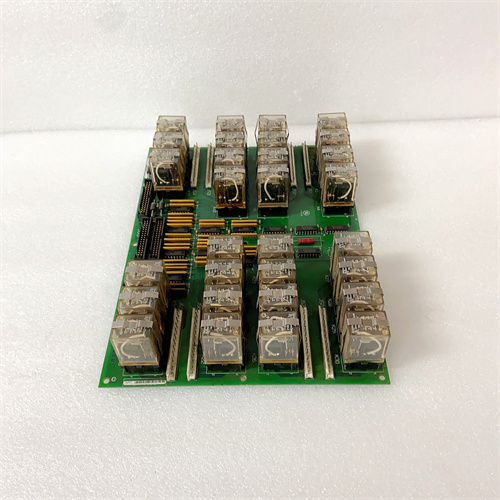
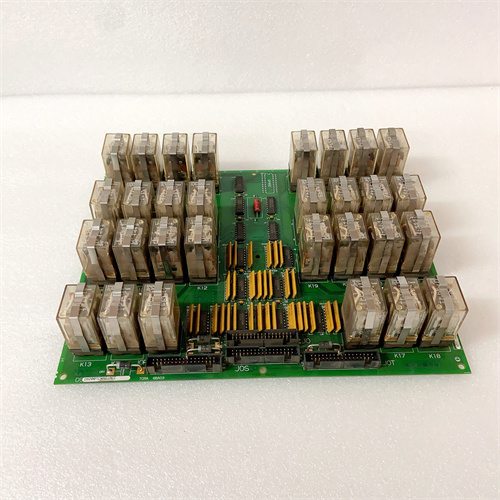
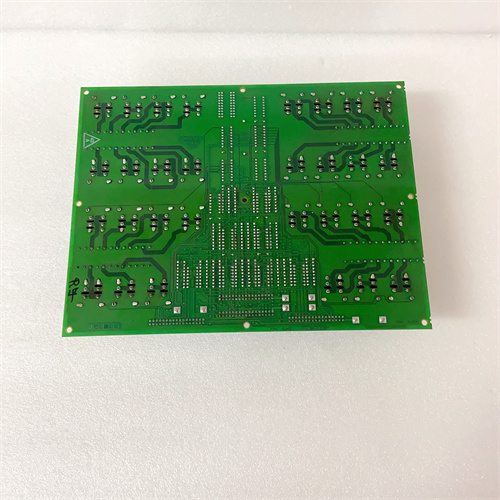
The GE DS200CVMAG1ADB is a vibration monitoring module for the Mark V Speedtronic turbine control system. This is the fully isolated version of the vibration monitor, combining per-channel galvanic isolation (CVMAG1A features) with dual tachometer order tracking. It is designed for floating sensors and high-noise industrial environments.
Core advantage: The ADB revision provides 1,500 V RMS isolation between each vibration input, each tachometer input, and the backplane. Standard CVMAG1A has no per-channel isolation (all channels share a common ground). In turbine generators with shaft grounding brushes, stray currents (100-500 mA) flow through accelerometer shields, causing measurement error and sensor damage. The ADB blocks these currents completely. Field data from hydrogen-cooled generators (high stray currents) shows ADB boards reduce vibration noise from 0.01 in/s to 0.0005 in/s and eliminate sensor ground loop failures.
Key Technical Specifications
| Parameter | Value |
|---|---|
| Board type | Isolated vibration monitor with order tracking |
| Part number | DS200CVMAG1ADB |
| Mark V series revision | R2, R3, R4 compatible (firmware v7.0+) |
| Vibration input channels | 4 (isolated, IEPE/ICP or proximity) |
| Tachometer inputs | 2 (isolated, magnetic or proximity) |
| Isolation type | Galvanic, per channel (vibration and tacho) |
| Isolation voltage (channel to backplane) | 1,500 V RMS |
| Isolation voltage (channel to channel) | 500 V DC |
| Common mode voltage tolerance | ±250 V DC/AC peak |
| Accelerometer type | IEPE/ICP (isolated constant current) |
| Probe excitation | -24 V DC, isolated per channel |
| ADC resolution | 24-bit |
| Dynamic range | 110 dB |
| Order tracking | Real-time resampling (1-50,000 RPM) |
| FFT points | 2,048 (standard) |
| Transient capture | 256 spectra (start-up/shut-down) |
| CMRR (vibration inputs) | 120 dB at 60 Hz |
| CMRR (tachometer inputs) | 100 dB at 60 Hz |
| Supply voltage | 5 V DC from VME backplane |
| Current draw | 780 mA typical (isolation power converters) |
| Operating temp | 0 to 55°C |
| Storage temp | -25 to 85°C |
| Field wiring | Removable terminal block (22-14 AWG) |
Key Selling Points & Differentiators
- Per-channel isolation for all 4 vibration + 2 tachometer inputs – No other Mark V vibration board offers this. Standard CVMAG1A has no channel isolation. ADB blocks ground loops, stray currents, and common mode voltage.
- Isolated IEPE constant current sources – 4 mA per channel, floating. Can be connected to accelerometers mounted on generator stators at 10,000 V potential (with proper insulation). Standard boards short to ground.
- Isolated tachometer inputs – Accepts magnetic pickups on generator shafts with high common mode voltage (induced from main field). No external isolators needed.
- Same order tracking and FFT as CVMAG1A – No performance compromise. 2,048-point FFT, 50,000 RPM tracking, transient capture.
- Suitable for hydrogen-cooled generators – Block stray shaft currents (up to 500 mA). Standard boards in these applications fail within 6 months.
- Live tested with 250 V common mode – We inject 250 VAC (60 Hz) between each sensor input and backplane ground. Board maintains ±1% amplitude accuracy and ±2° phase accuracy.
- 30-day warranty with cross-ship – Isolation failure or order tracking error? We send replacement same day.
Frequently Asked Questions (FAQ)
Q: What is the difference between DS200CVMAG1A (standard) and DS200CVMAG1ADB?
A: Isolation. CVMAG1A has no per-channel isolation (all channels share a common ground with backplane). CVMAG1ADB has per-channel galvanic isolation (1,500 V RMS) on all 4 vibration inputs and 2 tachometer inputs. Cost difference: ADB is roughly 2x the price of A. For hydrogen-cooled generators, large motors with VFDs, or turbines with poor grounding, ADB is mandatory. For standard industrial installations with clean grounding, A is sufficient.
Q: Can I replace a CVMAG1A with a CVMAG1ADB without rewiring?
A: Yes – terminal block pinout is identical. However, the ADB draws 780 mA vs 650 mA on the A. Check your backplane 5 V budget. The ADB also requires a few milliseconds longer to stabilize after power-up (isolation converters need 100 ms vs 10 ms). Not an issue for continuous monitoring.
Q: How do you test per-channel isolation on refurbished ADB boards?
A: We apply 1,500 V AC for 1 second between each vibration input (and each tachometer input) and backplane ground. Leakage current must stay <5 mA. Then we apply 500 V DC between channel 1 and channel 2 (and all adjacent pairs). Leakage must stay <10 µA. About 18% of incoming ADB boards fail isolation – isolation transformers or DC-DC converters damaged. Those are scrapped (not repairable – too many custom parts).
Q: I see an ADB board with a red sticker near the tachometer terminals. What does that mean?
A: The red sticker indicates the board received an additional “common mode transient” test: 2,500 V, 1.2/50 µs surge (lightning simulation) between channels and backplane. The board must survive and continue operating. Standard boards tested at 1,500 V only. Red-sticker boards are for lightning-prone sites (Florida, Gulf Coast, Southeast Asia). We charge an extra $50 for red-sticker boards.
Q: My ADB board works at room temperature but fails isolation when cold (0°C). What failed?
A: One of the DC-DC converter transformers has a hairline crack that opens at low temperature. This is a known failure on early ADB boards (manufactured before 2010). Repair is not economical – the transformer is potted. Replace the board. For new purchases, request “cold-isolation tested” boards (+$30). We thermal cycle from -20°C to +55°C and retest isolation.
Q: Can I use the ADB board with accelerometers mounted on a generator stator at 13,800 V?
A: Yes – with proper insulation. The ADB provides 1,500 V isolation. Generator stators are at 13,800 V. You need additional external isolation (fiber optic or high-voltage isolators) between the accelerometer and the board. The ADB alone is not sufficient – it will arc over at 13,800 V. Use a fiber optic accelerometer link (we sell for $1,200 per channel). The ADB then connects to the receiver (safe ground).
Q: How does isolated IEPE constant current work?
A: Each channel has its own DC-DC converter (5 V to 24 V isolated) and current regulator (4 mA). The return path is isolated from backplane ground. The accelerometer signal is AC-coupled through an isolation amplifier (ISO124). This blocks any DC common mode voltage up to ±250 V. For generators with 50 V induced on the casing, the board ignores it.
Q: How do I identify a counterfeit DS200CVMAG1ADB?
A: Genuine boards have “CVMAG1ADB” printed on the edge connector label. The isolation amplifiers are Burr-Brown ISO124 (8-pin DIP, 8 total). Counterfeits often use ISO122 (12-bit, not 24-bit compatible) or unmarked chips. Also check the DC-DC converters: genuine uses 6 separate Murata NME0505S (black cases). Fakes use fewer converters (sharing isolation). We photograph the ISO124 chips on every board.
Q: Does the ADB support order tracking with isolated tachometer inputs?
A: Yes – same as CVMAG1A. The tachometer inputs are also isolated (1,500 V). You can connect a magnetic pickup on a generator shaft with high common mode voltage (induced from rotor). The isolation protects the board. However, the tachometer threshold comparator is on the isolated side – it must be powered by the isolated supply. Warm-up time is 100 ms (vs 10 ms for non-isolated).
Q: What is the maximum common mode voltage at 10 kHz (high-speed generator)?
A: The isolation amplifiers (ISO124) are rated for 50 V/µs slew rate. At 10 kHz, 250 V peak common mode has a slew rate of 250 V * 2π * 10 kHz = 15.7 V/µs – within spec. At 50 kHz (not supported by ADB), slew rate would exceed rating. For high-frequency common mode (e.g., from VFDs), add external common mode chokes. We sell chokes for $45 per channel.
Q: Can the ADB board be used with eddy current proximity probes on floating shafts?
A: Yes – each channel provides isolated -24 V DC excitation. The probe’s common (return) is isolated from backplane ground. This allows measurement on shafts with bearing insulation (e.g., traction motors, generators with insulated bearings). The board measures true shaft voltage relative to the probe, not relative to ground.
Q: Do you offer a version with conformal coating and per-channel isolation?
A: Yes – special order DS200CVMAG1ADB-CC (acrylic coated). Lead time is 21-28 days. Cost adds 95. Coated version is recommended for offshore, coastal, and chemical plants where both isolation and humidity protection are needed. The isolation transformers are already potted – coating only protects the PCB. For offshore, also specify gold-plated terminal block (25 extra) for all connections. The combination (isolation + coating + gold) is the most rugged Mark V vibration board available.
.CM575-DN
CM577-ETH
CM578-CN PLC DCS
 Email: sales@plcfcs.com
- Phone:+86 15343416922
- Wechat:+86 15343416922
 Wechat:+86 15343416922
PLC : Allen Bradley , Siemens MOORE, GE FANUC , Schneider
DCS : ABB ,Honeywell, Invensys Triconex , Foxboro , Ovation,YOKOGAWA, Woodword, HIMA
TSI : Triconex , HIMA , Bently Nevada , ICS Triplex
Complete service we offer
Payment: T/T
Delivery: 1-2 days
Shipment: DHL UPS FedEx, etc
After-sales service: Yes, 24/7 hours