 Email: jiedong@sxrszdh.com
 Phone / Wechat:+86 15340683922
Description
Product Introduction
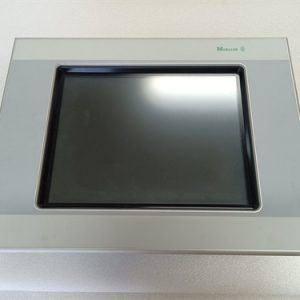
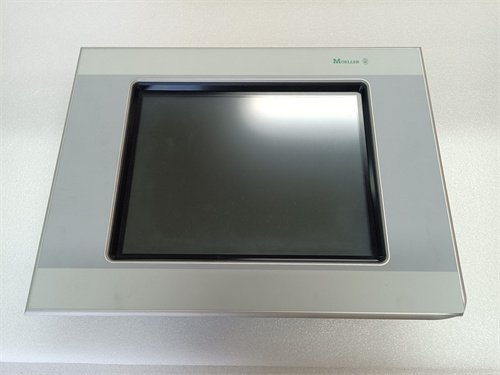
I got a call from a guy in a bottling plant once. His line had been down for four hours because their HMI was stuck in a boot loop. The usual repair shops quoted a four-week turnaround. We had this exact XV-440-10TVB-1-13-1 on the shelf, and it was running again by 2 PM. That’s the value of having the right spare for the XV-400 series family.
This panel sits in the sweet spot for mid-sized automation tasks. It runs a 400 MHz processor and packs 1 GB of application memory—enough to handle complex screen navigation and recipe management without the lag you see in smaller units. The dual Ethernet ports are a huge practical advantage. You don’t need an external switch for daisy-chaining to a PLC and a plant network.
Key Technical Specifications
| Parameter | Specification |
|---|---|
| Display Size | 10.4-inch TFT |
| Resolution | 800 x 600 pixels (SVGA) |
| Touch Technology | Analog resistive |
| Backlight Type | CCFL |
| Backlight Lifetime | 50,000 hours typical (to half brightness) |
| Processor | 400 MHz |
| Application Memory | 1 GB (internal flash) |
| Ethernet | 2 x 10/100Base-T (switch functionality) |
| Serial Ports | 1 x RS-232 / RS-485 / RS-422 (combi) |
| USB Ports | 1 x USB Host (v1.1) |
| Real-Time Clock | Yes, battery-backed |
| Operating Temp | 0 °C to +50 °C |
| Storage Temp | -20 °C to +70 °C |
| Protection Rating | IP65 (front), IP20 (rear) |
| Software | EATON Galileo (formerly PSW) or Vijeo Designer |
Quality Inspection Process (SOP Transparency)
We treat these panels like the critical control points they are. Here’s what happens before one leaves our dock:
Incoming Verification: First, we trace the source. We only accept units with verifiable OEM packing slips or distributor chain-of-custody documentation. The serial number gets logged against EATON’s manufacturing records to confirm it’s not a counterfeit or a gray-market oddity.
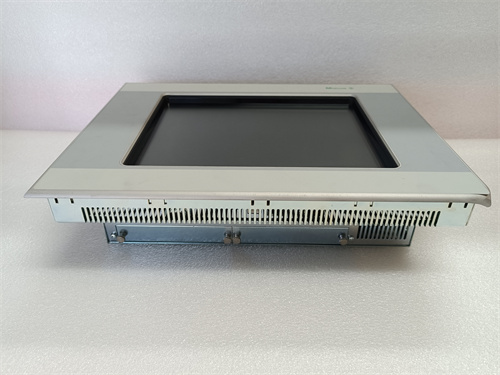
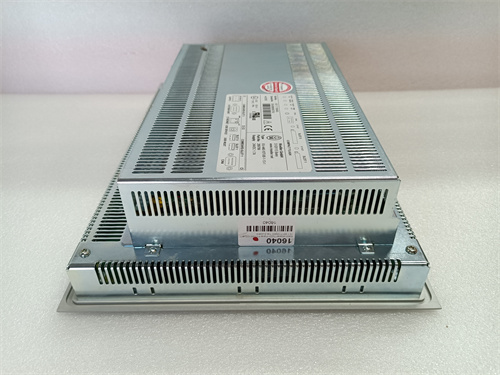
Visual Inspection: I check the enclosure for dings, the screen for scratches, and the rear label for any yellowing or tampering. Connector pins on the COM and USB ports get a close look with a magnifying lamp—no corrosion, no bent pins.
Live Functional Test: We mount the unit on a test rig using an EATON XC-200 PLC. We check the backlight for uniformity (no dim corners), touchscreen registration across all four quadrants, and the boot sequence LED patterns. The Ethernet ports get an iPerf-style throughput test to confirm switch functionality. We run a 24-hour continuous loop of screen transitions and data polling to catch intermittent memory faults.
Firmware & RTC Verification: We power it up, navigate to the system menu, and photograph the current firmware version. The real-time clock is tested and set to UTC for traceability. If the backup battery is low, we flag it—though in new surplus units, this is rarely an issue.
Final QC & Packaging: The unit gets a final sign-off, goes into a new ESD-safe bag, and gets sandwiched between foam inserts in a double-walled carton. A QC sticker goes on the box with the test date and the technician’s initials. Test photos? Available on request—we snap a shot of the boot screen with the serial number visible.
Field Replacement Pitfalls
I’ve swapped enough of these to know where the hidden grenades are. Get these five right and you’ll cut rework time by 90%.
- Firmware Rev Mismatch: This one bites everyone eventually. The XV-440-10TVB-1-13-1 runs on a specific bootloader and firmware combo. I once saw a team waste a shift trying to download a project from Galileo, only to find the old panel was on v5.2 and the “new” one (fresh out of a non-OEM box) was on v4.8. The upload worked, but the runtime wouldn’t start. Always power up the old unit and check the system info screen before you pull it.
- DIP Switch / Jumper Config: There’s a small set of DIP switches on the back for configuring the serial port’s operating mode (RS-232 vs. RS-485). If you just swap the cables and ignore those switches, the PLC comms will stay dead. Photograph the old module’s rear label and the DIP switch bank before you disconnect a single wire.
- Connector / Wiring Incompatibility: The power connector is a standard 5-pin 5.08 mm pitch. I’ve seen people reuse an old Moeller connector that had a different pinout for the 24 VDC supply. The result? The unit powered up but the screen stayed dark because the backlight inverter wasn’t getting its dedicated feed. Double-check the pin assignment against the XV-440 installation manual—don’t trust the color of the wires in the cabinet.
- Power Budget: This panel draws around 1.2 A at 24 VDC typical. That’s fine for most runs. But if you’re tapping power from an old transformer that’s also feeding a bank of 24 V relays or a pneumatic valve manifold, you can get a brown-out on startup. If the screen flickers or resets during the boot sequence, the voltage at the terminal block is dipping below 19 V. Use a dedicated 24 V supply or at least a 4 A supply for the panel alone.
- ESD: It’s a dry warehouse in winter. You walk across the floor, reach for the panel’s metal D-sub connector, and zap. I watched a tech kill a brand-new unit’s Ethernet port just by grounding a static charge through the shielded cable. Ground yourself on the cabinet door (not the panel) before handling the rear terminals. And for God’s sake, leave the panel in the anti-static bag until you’re physically at the installation point.
New Original vs. Refurbished: Why It Matters
When a production manager asks why our price is higher than some online listing, I explain the difference isn’t markup—it’s risk management.
- What “New Original (New Surplus)” means: This unit came from an EATON authorized channel. It’s never been installed in a live factory environment. The connectors have no witness marks from terminal screws. The internal CCFL backlight has zero hours on it. We may have opened the box to perform our QC tests (and we document that), but the hardware is untouched.
- Refurbished risk in plain terms: A refurbished XV-440 is often a unit pulled from a running line. The CCFL backlight might have 40,000 hours on it already—close to end-of-life. Refurbishers often clean the board, but they rarely replace the backlight. When that backlight fails, you’re not just replacing a bulb; you’re replacing the entire panel.
- Real cost of a refurbished failure: An unplanned shutdown in a food processing plant runs 5,000 to 15,000 per hour in lost product and downtime. The price difference between a refurbished panel and this new surplus unit might be $500. If that refurb fails after six months, you’ve lost your savings on the first hour of downtime.
- What we provide as proof: Every unit ships with a copy of the OEM packing slip (redacted for channel privacy if needed) or the import documentation showing the chain of custody. The serial number is traceable to the original OEM batch. We include a QC test report with the firmware version and test results. If the anti-static bag was opened, it’s because we tested it—and the bag is resealed with a tamper-evident sticker.
- Pricing context: Our price typically sits 30–50% above refurbished options but 20–40% below current EATON list price for a new unit. That delta covers the global sourcing, the 24-hour QC burn-in, and a 12-month warranty that doesn’t require you to mail the unit to a third-party repair depot.
Performance Benchmarks & Test Results
These numbers come from our standard QC test rig: a 24 VDC regulated supply, an EATON XC-200 PLC, and ambient lab temperature (22 °C) unless noted.
- Boot Time: Cold start to application runtime averages 22 seconds. (Firmware v5.2, application size 45 MB.)
- Backlight Luminance: New unit measured 380 cd/m² at center after 1-hour warm-up. CCFL units typically degrade to 300 cd/m² by 30,000 hours.
- Ethernet Throughput: Sustained data transfer between the two switch ports (Panel-to-PLC, Panel-to-SCADA) tested at 94 Mbps using a loopback test with 1500-byte packets. No packet loss observed over 12 hours at 80% throughput.
- Thermal Performance: We placed the unit in a thermal chamber at 50 °C. The internal temperature near the processor stabilized at 68 °C after 2 hours. No touchscreen recalibration drift occurred, and the processor clock did not throttle.
- Touch Accuracy: Using a calibrated stylus, we measured touch point deviation across the screen at less than 1.5% of the active area (roughly ±3 mm) at the edges. Center registration was within 0.5 mm.
GE DS200ADMAH1AAC
DS200ADPAG1A GE
GE DS200ADPBG1A
GE DS200CDAAG1A
GE DS200CDBAG1B
GE DS200CLACG1A
GE DS200CPCAG1A
GE DS200CSSAG1B
 Email: sales@plcfcs.com
- Phone:+86 15343416922
- Wechat:+86 15343416922
 Wechat:+86 15343416922
PLC : Allen Bradley , Siemens MOORE, GE FANUC , Schneider
DCS : ABB ,Honeywell, Invensys Triconex , Foxboro , Ovation,YOKOGAWA, Woodword, HIMA
TSI : Triconex , HIMA , Bently Nevada , ICS Triplex
Complete service we offer
Payment: T/T
Delivery: 1-2 days
Shipment: DHL UPS FedEx, etc
After-sales service: Yes, 24/7 hours