 Email: jiedong@sxrszdh.com
 Phone / Wechat:+86 15340683922
Description
Product Introduction
That coal-fired plant in Indiana—the one with the WDPF system that’s been running since the 80s—had a mysterious “rack failure” alarm last winter. The tech on shift swapped the processor, the I/O modules, even the backplane. Nothing. I walked in, saw the 5X00481G01 power supply had a dim green LED and a hot smell. Pulled the cover, found a bulging input capacitor. The supply was still putting out 24V, but with 3V of ripple. The rack was seeing that as random power cycles. One 300 supply, one 50,000 outage.
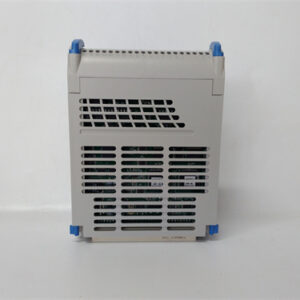
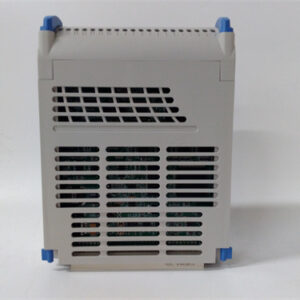
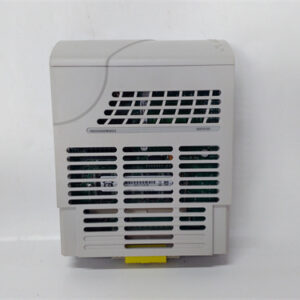
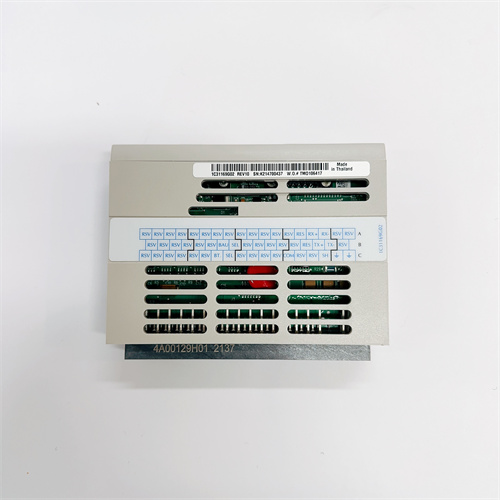
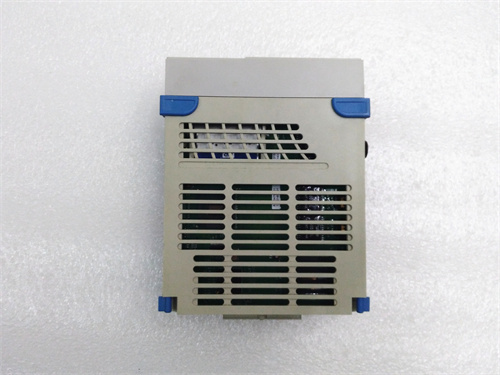
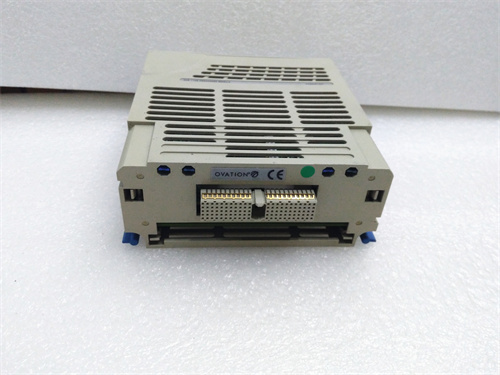
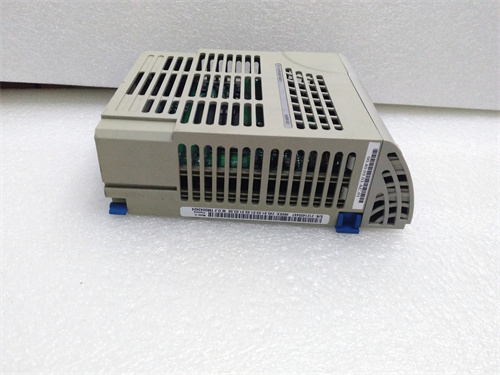
The WESTINGHOUSE 5X00481G01 is a 240W power supply module designed for WDPF systems. It’s the bigger brother to the 5X00501G01 (5A), giving you 10A continuous for larger racks or systems with lots of field-powered I/O. It takes 115 or 230V AC (selectable via a switch on the side), and outputs a stiff 24V DC. Inside, it’s a switchmode design but built with through-hole components and heavy transformers—rugged, not efficient. It powers the backplane, the I/O modules, and often the field instruments themselves. In a WDPF system, if this fails, the whole rack goes dark.
Key Technical Specifications
| Parameter | Value |
|---|---|
| Input Voltage | 115V AC or 230V AC (selectable) |
| Input Frequency | 47–63 Hz |
| Input Current | 3.6A @ 115V, 1.8A @ 230V |
| Output Voltage | 24V DC ±2% |
| Output Current | 10A continuous |
| Output Power | 240W |
| Ripple & Noise | <50 mV p-p |
| Hold-up Time | >20 ms at full load |
| Efficiency | ≈78% |
| Protection | Overvoltage (crowbar), overcurrent (fuse) |
| Indicators | DC OK LED (green), Fault LED (red) |
| Cooling | Convection (no fan) |
| Operating Temp | 0–60 °C |
| Dimensions | 127 × 127 × 102 mm (approx) |
| Weight | 3.1 kg |
Quality Inspection Process (SOP Transparency)
A power supply this old needs careful handling. Here’s our SOP.
- Incoming Verification
- Match the model: 5X00481G01. (There’s a -G02 variant—different revision.)
- Visual inspection: Open the case and look for bulging capacitors, brown discoloration on the PCB.
- Check the input voltage selector switch—make sure it’s not stuck or corroded.
- Inspect the output terminals—no cracks, screws turn freely.
- No-Load Test
- Set the input switch to 230V (unless customer specifies 115V).
- Apply power through a variac, bring up slowly—watch for sparks.
- Measure output: 24.0V ±0.5V.
- Green LED on, red LED off.
- Full-Load Test
- Connect an electronic load at 10A.
- Run for 1 hour, logging output voltage every 5 minutes.
- Voltage must stay above 23.5V, ripple <50 mV.
- Measure case temperature—should stabilize below 70 °C.
- Protection Test
- Short the output briefly—the internal fuse should blow (or the supply should go into hiccup mode; we document which).
- If fuse blows, we replace it (and note in the report).
- Overvoltage test: force an internal fault (simulated), verify crowbar fires.
- Isolation Test
- 500V megger between AC input (shorted) and DC output (shorted)—>10 MΩ.
- 500V megger between DC output and chassis ground—>10 MΩ.
- Thermal Soak
- 4 hours at 50 °C in a thermal chamber, running at 10A load.
- Monitor output voltage and ripple—must stay within spec.
- Final QC & Packaging
- QC sticker with test date and operator initials.
- Wrap in anti-static bag.
- Double-box with foam padding—these are heavy units.
- Test report included—load test log, ripple measurements.
Field Replacement Pitfalls
I’ve swapped these in coal plants, gas plants, and even a nuclear facility. Here’s where people go wrong.
❗Input Voltage Switch
The little red switch on the side is easy to bump during installation. If it’s set to 115V and you feed it 230V, the supply will die instantly—input fuse blows, maybe more. Check it before you apply power. Every time.
Output Polarity
The terminals are marked + and -, but if you reverse them, the supply might have reverse polarity protection? Some do, some don’t. The 5X00481G01 doesn’t—you’ll blow the fuse. Wire it right the first time.
Grounding
There’s a chassis ground terminal. Use it. If you don’t, the output common can float relative to ground, causing noise in the I/O modules. In one plant, an ungrounded supply caused random analog input shifts for years before someone found it.
Load Sharing
If you need more than 10A, you might parallel two supplies. But they’re not designed for active load sharing—you’ll need external OR-ing diodes. Don’t just wire them in parallel; one will carry most of the load and overheat.
Aging Capacitors
These supplies are old. Even new-old-stock units may have capacitors that have degraded from sitting. We reform them during test (gradual power-up), but if you install one that’s been on a shelf for 20 years without reforming, it might fail early.
Nail these five, and your 5X00481G01 will run for another decade.
New Original vs. Refurbished: Why It Matters
“New Original (New Surplus)” means this supply was manufactured by Westinghouse, packed in its original box, and never installed. The capacitors have zero hours (though they may need reforming), the transformer has never been energized, and the terminals have never seen a screwdriver.
Refurbished risk in plain terms
A refurbished Westinghouse power supply often comes from a decommissioned plant. It may have run for years at high temperature. The capacitors are aged—ESR rises, ripple increases. A refurbisher tests it at low load and sells it. Six months later, in a hot cabinet, it fails.
Real cost of a refurbished failure
If this supply powers a critical WDPF rack, a failure means that rack goes dark. If that rack controls a boiler feed pump or a turbine valve, you’re looking at a unit trip. The cost of one forced outage dwarfs the price difference.
What we provide as proof
- Westinghouse box (or photos).
- Serial number recorded.
- Load test log (1 hour at 10A).
- Capacitor reforming note (if applicable).
- 12‑month warranty.
Pricing context
We’re priced 40% above the cheapest “pulled” WDPF supplies and 30% below the original Westinghouse list price (adjusted for inflation). That pays for the full-load test, the capacitor reforming, and the warranty that covers replacement if a capacitor fails.
Performance Benchmarks & Test Results
Test conditions: 230V AC input, 10A load, ambient 24 °C.
| Metric | Measured Value | Notes |
|---|---|---|
| Output voltage (no load) | 24.1V | |
| Output voltage (10A load) | 23.9V | |
| Ripple (10A load) | 45 mV p-p | Below spec |
| Temperature rise (case) | 38 °C above ambient | After 1 hour |
| Efficiency | 77% | At full load |
| Hold-up time | 22 ms | At 10A, 115V input |
We keep the full load test log—ask, and we’ll email the Excel file.
IC698PSD300C GE PLC
ident-Nr 876541 GE PLC
IS200ACLEH1A GE PLC
IS200ACLEH1B GE PLC
IS200AVIFH1A GEPLC
IS200BAIAH1B GE PLC
 Email: sales@plcfcs.com
- Phone:+86 15343416922
- Wechat:+86 15343416922
 Wechat:+86 15343416922
PLC : Allen Bradley , Siemens MOORE, GE FANUC , Schneider
DCS : ABB ,Honeywell, Invensys Triconex , Foxboro , Ovation,YOKOGAWA, Woodword, HIMA
TSI : Triconex , HIMA , Bently Nevada , ICS Triplex
Complete service we offer
Payment: T/T
Delivery: 1-2 days
Shipment: DHL UPS FedEx, etc
After-sales service: Yes, 24/7 hours