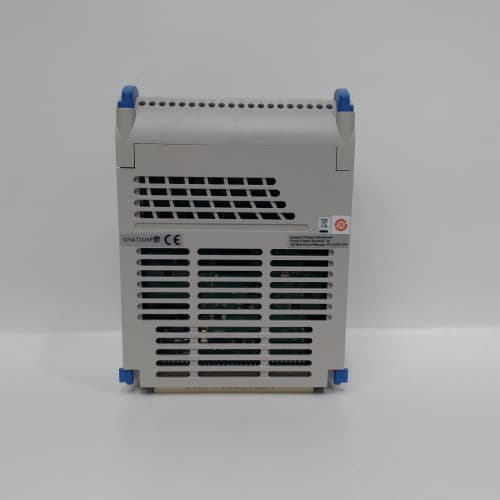
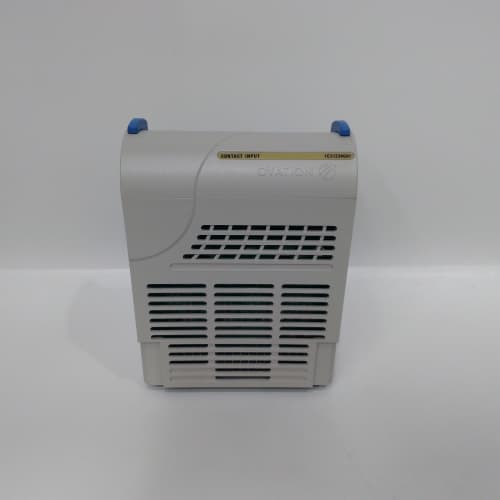
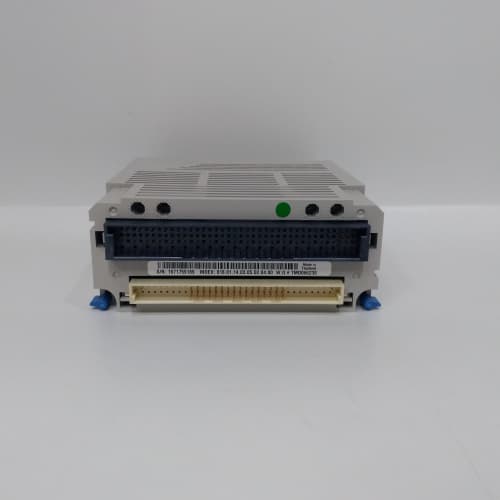
 Email: jiedong@sxrszdh.com
 Phone / Wechat:+86 15340683922
Description
Product Introduction
That coal-fired plant in Ohio—the one with the WDPF system that’s been running since Reagan was in office—had a unit trip traced to a “stuck” reheat spray valve. The control room watched the demand signal climb, but the valve position never changed. The young I&C tech had already swapped the positioner, the I/P, even the cable. I walked in, popped the 1C31234G01 out of the rack, and measured the output with the loop powered up. Dead channel. Not the valve, not the wiring—the output transistor on that channel had opened up. One card swap, forty-five minutes, unit back online.
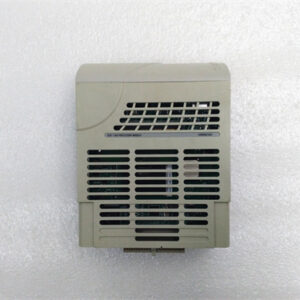
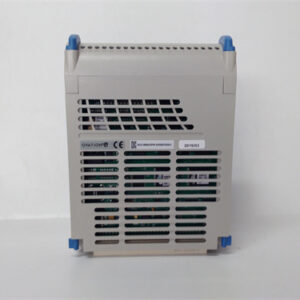
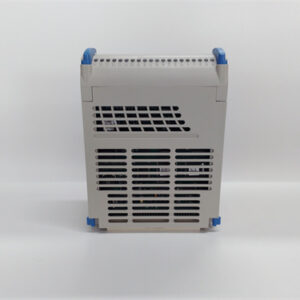
The WESTINGHOUSE 1C31234G01 is a four-channel analog output module from the WDPF I/O family. It’s a simple board: four independent 4-20 mA loops, each optically isolated from the backplane. The control processor writes a 12-bit value to the board, and a DAC converts it to a voltage that drives a voltage-to-current converter. The loop power comes from an external 24V supply—the board doesn’t power the loop, it just regulates the current. Inside, you’ll find through-hole components, heavy traces, and that distinctive Westinghouse conformal coating that smells faintly of solvent when you heat it with a soldering iron. It’s old-school, but it’s bulletproof. When it fails, it’s almost always one channel—the rest keep working, which is both a blessing and a trap (you might not notice until you need that loop).
Key Technical Specifications
| Parameter | Value |
|---|---|
| Output Channels | 4 |
| Output Signal | 4-20 mA (standard), 0-20 mA optional (jumper select) |
| Resolution | 12 bits (1/4096 of span) |
| Accuracy | ±0.25% of full scale at 25 °C |
| Load Resistance | 0–600 Ω |
| Isolation | Optical, 1500V RMS channel-to-backplane |
| Loop Supply | External 24V DC ±10% (not provided by module) |
| Update Rate | 5 ms per channel (typical) |
| Power Consumption | 5 W from backplane (logic only) |
| Backplane | WDPF proprietary |
| LED Indicators | Channel active (per channel), power OK |
| Operating Temp | 0–60 °C |
| Dimensions | 6U x 4HP (proprietary WDPF card) |
Quality Inspection Process (SOP Transparency)
A WDPF board this old needs a careful eye. Here’s our SOP.
- Incoming Verification
- Match the model: 1C31234G01. (There’s a -G02 variant—different firmware—so the suffix matters.)
- Visual inspection: Look for capacitor leakage (brown goo around electrolytics). Check the edge connector—gold should be bright, not worn to brass.
- Inspect the conformal coating: should be even, no bubbles, no burn marks.
- Verify the revision sticker (Rev. 01–04 are common).
- Power-On Self-Test
- Seat the board in a WDPF test rack with a known-good power supply.
- Apply backplane power (5V and ±15V from the rack).
- Watch the front-panel LEDs: “PWR” on steady, “ACT” off until we command outputs.
- Measure the onboard regulators—5V and ±15V should be within 2%.
- Output Functional Test
- Connect a 250 Ω load and 24V supply to each channel.
- From a WDPF simulator (we use an old PC with a custom ISA card), command each channel to 4 mA, 12 mA, 20 mA.
- Measure the current with a Fluke 773 clamp meter.
- Verify linearity: 4.00, 12.00, 20.00 mA ±0.05 mA.
- Test all four channels simultaneously at full load—monitor power supply voltage for droop.
- Isolation Test
- 500V megger between each channel’s output terminals (shorted) and backplane ground—must hold >10 MΩ.
- Repeat between channels—>10 MΩ.
- Thermal Soak
- 4 hours at 55 °C in a thermal chamber, all channels at 20 mA into 500 Ω load.
- Monitor output drift—must stay within ±0.5% of initial value.
- Firmware / Configuration
- There’s no user firmware, but there are jumpers for current range (4-20 vs 0-20). We photograph the jumper settings and set them per customer request.
- If no request, we leave them at factory default (4-20 mA).
- Final QC & Packaging
- QC sticker with test date and operator initials.
- Wrap in anti-static foam (the edge connector is static-sensitive).
- Double-box with foam padding.
- Test report included—channel accuracy, isolation values.
Field Replacement Pitfalls
I’ve swapped these in everything from coal plants to paper mills. Here’s where people trip.
❗Jumper Settings
The 1C31234G01 has jumpers to select 4-20 mA or 0-20 mA output. If you replace a board without copying the jumpers, your signals will be wrong—4 mA might become 0 mA, and your valve might stroke to the wrong position. Photograph the old board before you pull it. Every time.
Loop Power Polarity
The outputs are not loop-powered; they need an external 24V supply. The (+) and (-) terminals are marked, but if you reverse them, the output won’t source current—it’ll just sit there at 0 mA. Easy fix, easy mistake.
Dead Channel Diagnosis
If one channel stops working, the others usually keep going. That’s good for redundancy, but bad for troubleshooting—you might not notice until the process goes out of control. We recommend checking all four channels during every maintenance outage.
Conformal Coating Rework
If you need to replace a component on this board, that conformal coating is a bear. You have to scrape it off, make your repair, then recoat. Use a proper coating pen (MG Chemicals 422C) or leave it to us.
Backplane Compatibility
The 1C31234G01 only works in WDPF racks with the right backplane pinout. There are at least three different WDPF rack styles. If you’re moving a board from one rack to another, check the keying pins on the backplane connector.
Nail these five, and your WDPF loops will run another twenty years.
New Original vs. Refurbished: Why It Matters
“New Original (New Surplus)” means this board was manufactured by Westinghouse, packed in its original box, and never installed. The electrolytic capacitors have zero hours, the DAC has never been exercised, and the edge connector has never been mated.
Refurbished risk in plain terms
A refurbished WDPF board often comes from a decommissioned plant. It may have run 24/7 for decades. The capacitors are aged—electrolyte dries out, ESR rises. The board might pass a quick functional test but fail after a few weeks in service due to a marginal power supply rail. The optoisolators also age—their current transfer ratio drops over time.
Real cost of a refurbished failure
If this board controls a critical loop—say, a spray valve that keeps a superheater from melting—a failure can trip the unit. One forced outage on a 500 MW coal plant costs more in replacement power than the price of a thousand new boards.
What we provide as proof
- Westinghouse box (or photos).
- Serial number recorded (on the PCB silkscreen).
- Test report with channel accuracy and isolation values.
- QC sticker with date.
- 12‑month warranty.
Pricing context
We’re priced 40% above the cheapest “pulled” 1C31234G01s and 30% below the original Westinghouse list price (adjusted for inflation). That pays for the fresh capacitors (if we find any
DS2020FEANRP020A GE
TRICONEXAI3351 PLCPLC
TRICONEX4329 PLC
TRICONEX4210
 Email: sales@plcfcs.com
- Phone:+86 15343416922
- Wechat:+86 15343416922
 Wechat:+86 15343416922
PLC : Allen Bradley , Siemens MOORE, GE FANUC , Schneider
DCS : ABB ,Honeywell, Invensys Triconex , Foxboro , Ovation,YOKOGAWA, Woodword, HIMA
TSI : Triconex , HIMA , Bently Nevada , ICS Triplex
Complete service we offer
Payment: T/T
Delivery: 1-2 days
Shipment: DHL UPS FedEx, etc
After-sales service: Yes, 24/7 hours