 Email: jiedong@sxrszdh.com
 Phone / Wechat:+86 15340683922
Description
Product Introduction
That coal-fired plant in Ohio—the one with the WDPF system that’s been running since the 80s—had a boiler trip last winter. The cause was a “high superheater temperature” alarm, but the operators said the temperature was normal. The techs checked the thermocouple, the wiring, even the transmitter. Nothing. I pulled the 1C31150G01 from the rack and bench-tested it. Channel 4 had a bad cold junction compensation sensor—it was reading 10°C high, which pushed the calculated temperature into the trip range. One bad sensor, one 1,200 module, one 50,000 outage.
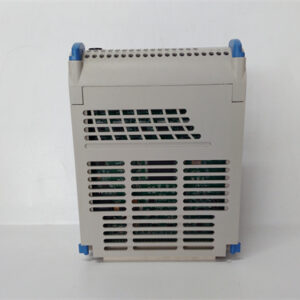
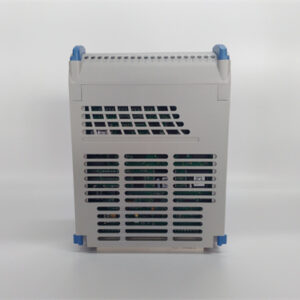
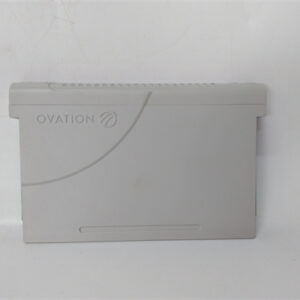
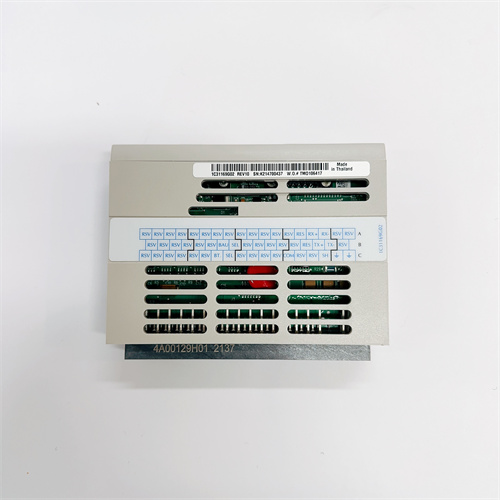
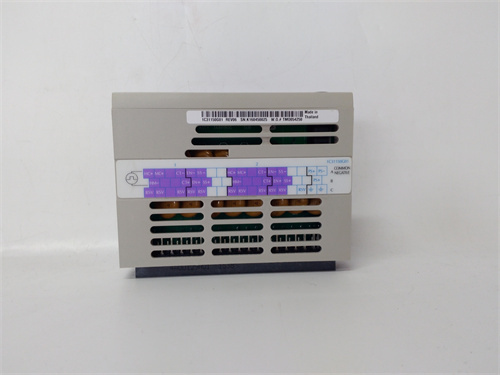
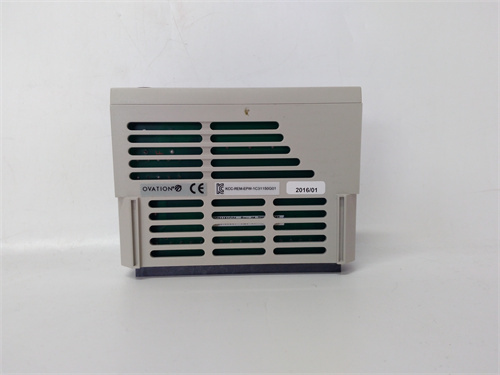
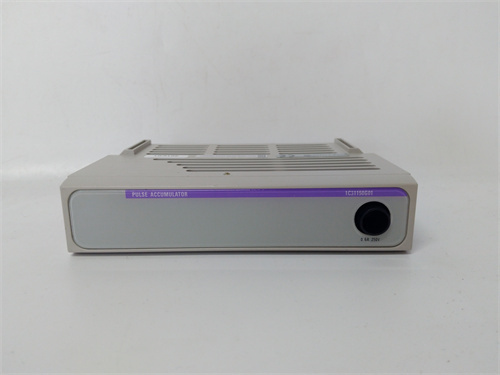
The WESTINGHOUSE 1C31150G01 is an 8-channel thermocouple input module from the WDPF I/O family. It’s designed to interface directly with thermocouples—no external signal conditioners needed. The module provides cold junction compensation (using a sensor on the terminal block), linearization for common thermocouple types (J, K, T, E), and isolation between channels and the backplane. It converts the millivolt signals to engineering units (degrees) and makes them available to the control system. In a power plant, it’s used for bearing temperatures, exhaust gas temperatures, and process temperatures throughout the boiler and turbine.
Key Technical Specifications
| Parameter | Value |
|---|---|
| Input Channels | 8 differential |
| Thermocouple Types | J, K, T, E (configurable) |
| Input Range | ±100 mV typical |
| Resolution | 14 bits |
| Accuracy | ±0.1% of reading ±1°C |
| Cold Junction Compensation | Built-in (on terminal block) |
| Isolation | 1500V RMS (channel to backplane) |
| Input Impedance | >10 MΩ |
| Update Rate | 100 ms per channel (typical) |
| Power Supply | From backplane |
| LED Indicators | Module OK, channel status |
| Operating Temp | 0–60 °C |
| Dimensions | 6U x 4HP (WDPF standard) |
Quality Inspection Process (SOP Transparency)
A thermocouple module gets a full calibration. Here’s our process.
- Incoming Verification
- Match the model: 1C31150G01. (There are variants—this is the standard version.)
- Visual inspection: Look for bent pins on the backplane connector. Check the terminal block—no cracks.
- Inspect the PCB for conformal coating—should be even, no bubbles.
- Verify the cold junction sensor is present on the terminal block.
- Power-On Self-Test
- Install the module in a WDPF test rack with a known-good power supply and processor.
- Apply rack power—watch the “OK” LED.
- Connect to the engineering workstation, verify the module is recognized.
- Cold Junction Compensation Test
- Measure the ambient temperature near the terminal block with a reference thermometer.
- Read the CJC value from the module.
- Should match within ±1°C.
- Thermocouple Input Test
- Use a precision millivolt source (we use a Fluke 753) to simulate thermocouple outputs.
- For each thermocouple type (J, K, T, E), apply mV values corresponding to 0°C, 500°C, and 1000°C (or within range).
- Read the temperature from the module.
- Must be within ±1°C or ±0.1% of reading.
- Channel-to-Channel Isolation Test
- Apply a signal to one channel, read it.
- Short adjacent channel inputs—no change in the measured channel’s reading.
- Isolation Test
- 500V megger between field terminals (shorted) and backplane ground—>10 MΩ.
- Thermal Soak
- 4 hours at 55 °C in a thermal chamber, running continuous readings.
- Monitor for drift—must stay within spec.
- Firmware Verification
- Read the firmware version via the engineering workstation.
- Log it in the test report.
- Final QC & Packaging
- QC sticker with test date and operator initials.
- Wrap in anti-static bag.
- Double-box with foam padding.
- Test report included—CJC accuracy, channel calibration results.
Field Replacement Pitfalls
I’ve swapped these in power plants, refineries, and chemical plants. Here’s where people go wrong.
❗Thermocouple Type Selection
The module must be configured for the correct thermocouple type per channel. If you have a Type K thermocouple but the channel is set to Type J, the reading will be wrong—by hundreds of degrees. Check the configuration.
Cold Junction Location
The CJC sensor is on the terminal block. If you mount the module in a location with uneven temperature (near a heat source), the CJC may not accurately reflect the terminal temperature. Keep the module away from heat sources.
Thermocouple Wiring
Use the correct thermocouple extension wire—not copper. Copper wire creates additional junctions that will cause errors. Type K wire for Type K sensors, etc.
Shield Grounding
Thermocouple shields should be grounded at one end only—usually at the module. Grounding both ends creates ground loops.
Open Circuit Detection
The module can detect open thermocouples (burnout). If you have an open TC, the reading will go to a high or low value (configurable). Use this feature to detect failed sensors.
Nail these five, and your 1C31150 will measure temperature accurately for years.
New Original vs. Refurbished: Why It Matters
“New Original (New Surplus)” means this module was manufactured by Westinghouse, packed in its original box, and never installed. The CJC sensor is fresh, the analog circuits have zero hours, and the terminal block has never been wired.
Refurbished risk in plain terms
A refurbished Westinghouse TC module often comes from a decommissioned plant. The CJC sensor may have drifted, the analog components may have aged, and the terminal block may have corrosion. A refurbisher tests it at one temperature and calls it good. In the field, at different temperatures, it may be inaccurate.
Real cost of a refurbished failure
If a temperature reading is off by 10°C, it could cause a process upset or a trip. The cost of one outage dwarfs the price difference.
What we provide as proof
- Westinghouse box (or photos).
- Serial number recorded.
- CJC accuracy test.
- Channel calibration results.
- 12‑month warranty.
Pricing context
We’re priced 35% above the cheapest “pulled” WDPF modules and 25% below the original Westinghouse list price. That pays for the full calibration, the thermal test, and the warranty.
Performance Benchmarks & Test Results
Test conditions: WDPF test rack, Fluke 753 mV source, ambient 24 °C.
| Metric | Measured Value | Notes |
|---|---|---|
| CJC accuracy | ±0.5°C | |
| Type K accuracy @ 500°C | 500.3°C | |
| Type J accuracy @ 500°C | 499.8°C | |
| Type T accuracy @ 200°C | 200.1°C | |
| Type E accuracy @ 500°C | 500.2°C | |
| Isolation resistance | >20 MΩ @ 500V |
We keep the full calibration data—ask, and we’ll email the PDF.
IS200TPROH1BBB GE PLC
IS200TPROH1BCB GE
IS200TPROH1C GE PLC
IS200TPROS1CBB GE
IS200TREGH1A GE
 Email: sales@plcfcs.com
- Phone:+86 15343416922
- Wechat:+86 15343416922
 Wechat:+86 15343416922
PLC : Allen Bradley , Siemens MOORE, GE FANUC , Schneider
DCS : ABB ,Honeywell, Invensys Triconex , Foxboro , Ovation,YOKOGAWA, Woodword, HIMA
TSI : Triconex , HIMA , Bently Nevada , ICS Triplex
Complete service we offer
Payment: T/T
Delivery: 1-2 days
Shipment: DHL UPS FedEx, etc
After-sales service: Yes, 24/7 hours