 Email: jiedong@sxrszdh.com
 Phone / Wechat:+86 15340683922
Description
Product Introduction
That naval simulator in Norfolk—the one that trains sonar operators—had a display lag issue last year. The graphics would freeze for half a second every minute. The IT guys blamed the network, the software guys blamed the drivers. I walked into the VME rack, pulled the VME172PA-652SE, and checked the memory timing. One of the SIMMs had a bad trace—intermittent, only showed up after the board warmed up. Swapped the memory, problem gone. The board itself? Still running today, driving that simulator through endless submarine scenarios.
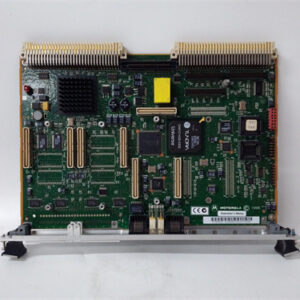
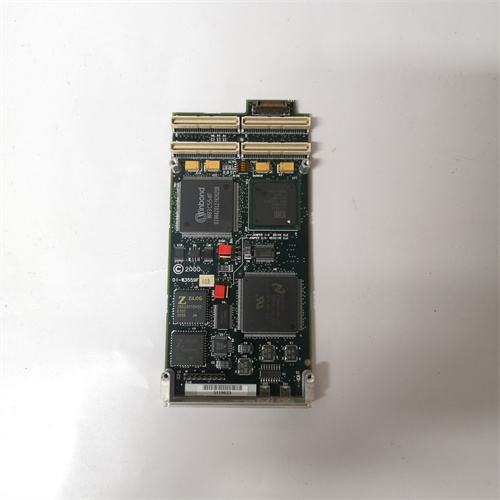
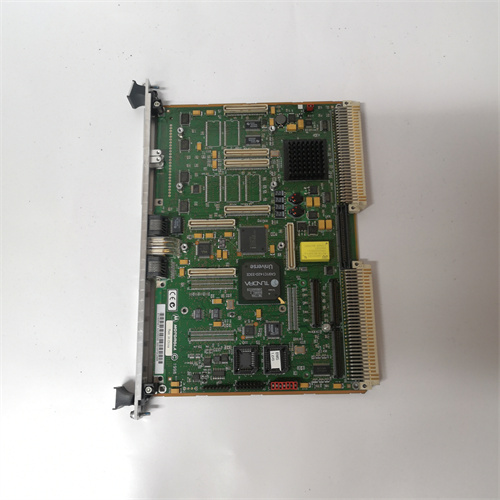
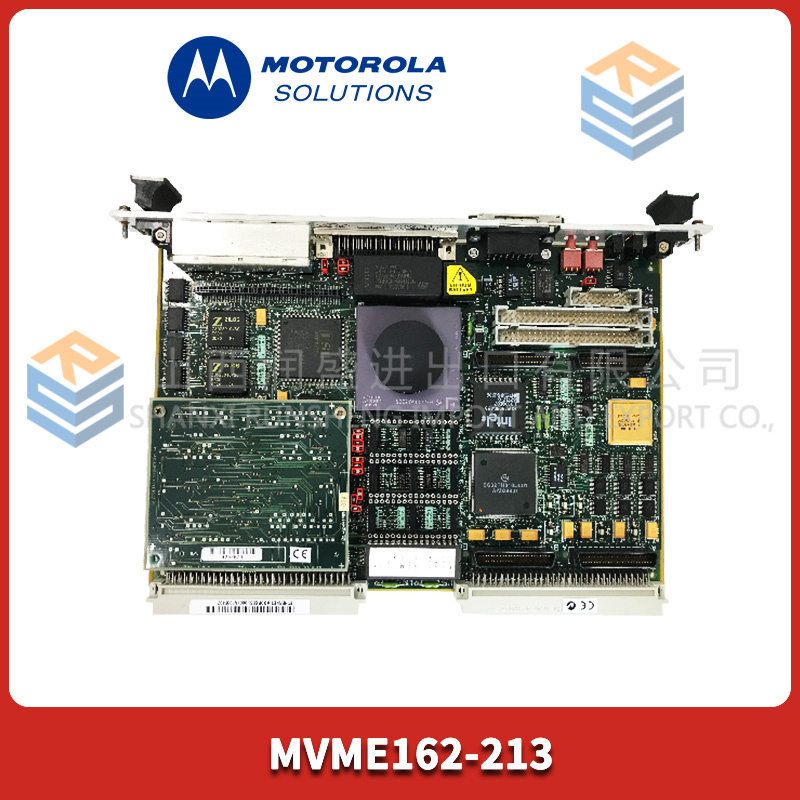
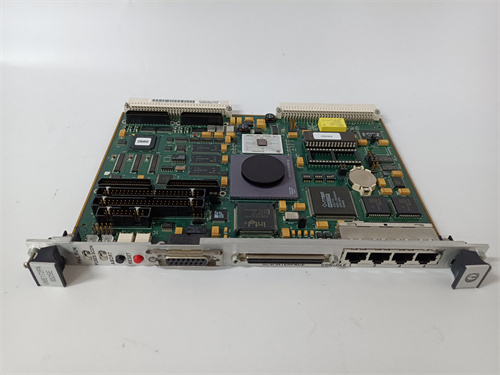
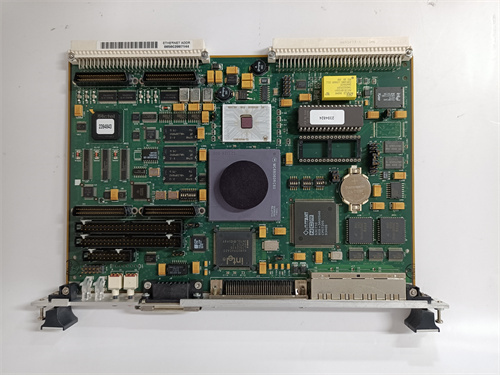
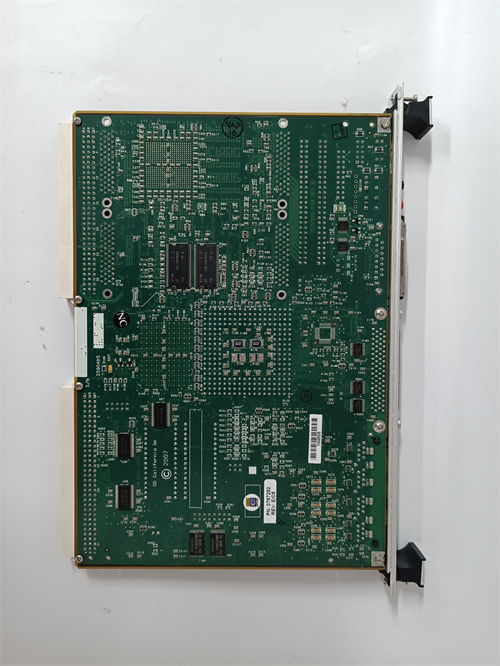
The MOTOROLA VME172PA-652SE is a 68060-based single board computer that powered a generation of VME systems. Built around the Motorola MC68060 processor running at 100MHz, it carries 32MB of SDRAM (soldered, not SIMMs on this version), two 10/100 Ethernet ports, and a bunch of onboard I/O. It’s a 6U VME board, so it plugs into a standard VME backplane. The “652SE” suffix tells you it’s the extended temperature version (-40 to +85 °C) with additional screening for military and industrial applications. In its heyday, you’d find these in radar systems, flight simulators, and industrial control systems where reliability mattered more than speed.
Key Technical Specifications
| Parameter | Value |
|---|---|
| Processor | Motorola MC68060 |
| Clock Speed | 100 MHz |
| FPU | Integrated |
| Cache | 8 KB data, 8 KB instruction |
| RAM | 32 MB SDRAM (soldered) |
| Flash | 4 MB (for firmware/bootloader) |
| Ethernet | 2 × 10/100Base-TX (Intel 82559) |
| Serial Ports | 4 × RS-232 (front panel) |
| VME Interface | VME64 (A32/A24/A16, D64/D32/D16/D8) |
| Expansion | 2 × PMC sites (32-bit, 33 MHz) |
| Real-Time Clock | With lithium battery backup |
| Power Consumption | 15 W typical |
| Operating Temp | -40 to +85 °C (extended) |
| Dimensions | 6U × 160 mm (VME standard) |
| OS Support | VxWorks, OS-9, pSOS, Linux (with effort) |
Quality Inspection Process (SOP Transparency)
A board this old (but never used) needs careful handling. Here’s our SOP.
- Incoming Verification
- Match the model: VME172PA-652SE. (There are many variants—this is the extended temp version.)
- Visual inspection: Look for corrosion on the VME connector pins. Check the front panel for bent ejector handles.
- Inspect the lithium battery voltage—should be >3.0V. If low, we replace it before testing.
- Check the PMC sites—no bent pins in the connectors.
- Power-On Self-Test
- Seat the board in a VME test chassis with a known-good power supply.
- Apply power—watch the front-panel LEDs: “FAIL” should flash once then go out, “RUN” should stay steady.
- Connect a serial terminal to port 1 (9600 baud, 8N1). The debug monitor prompt should appear within 30 seconds.
- Run the built-in diagnostics (if available) or a custom memory test.
- Memory Test
- Write/read patterns (0x55, 0xAA, walking ones) across the entire 32MB.
- Any stuck bit triggers a failure—we log the address and retest.
- Ethernet Test
- Connect both ports to a 10/100 switch.
- Ping a known IP from the debug monitor.
- Run a loopback test through each PHY—must pass 1000 packets with zero errors.
- Test at 10M and 100M, full and half duplex.
- VME Backplane Test
- Install a second VME board (e.g., a memory slave) and perform VMEbus accesses in A24/D32 mode.
- Verify interrupts can be generated and received.
- Test VME64 transfers if the slave supports it.
- PMC Site Test
- Install a known-good PMC card (e.g., a serial port card) in each site.
- Verify the card is detected and functions.
- Thermal Soak
- 4 hours at 70 °C in a thermal chamber, running continuous memory test and network ping.
- Monitor CPU temperature via on-chip sensor (if available)—must stay below 85 °C.
- Final QC & Packaging
- QC sticker with test date, battery replacement date (if applicable), and operator initials.
- Wrap in anti-static bag with silica gel.
- Double-box with foam padding—these boards are dense.
- Test report included—serial number, memory test log, Ethernet stats.
Field Replacement Pitfalls
I’ve pulled these from radar systems, simulators, and industrial controllers. Here’s where people mess up.
❗Battery Dead on Arrival
These boards have been sitting on shelves for years. The lithium battery (usually a 3V coin cell) is often flat. If you install it without checking, the board boots but loses time and Ethernet config on every power cycle. Replace the battery before you install. We do it as part of our test.
VME Bus Priority
The VME172 is usually the system controller—it drives the VMEbus arbitration. If you put it in a slot that’s not slot 1 (the leftmost), it won’t assert SYSCLK correctly, and the whole backplane may not work. Slot 1, always.
PMC Card Compatibility
The PMC sites are 32-bit, 33 MHz, 3.3V signaling (with 5V tolerant I/O). If you plug in a 5V-only PMC card, it might not work—and could damage the board. Check your card’s voltage requirements.
Serial Cable Pinout
The front-panel serial ports are DB9, but the pinout is DTE (like a PC). If you use a “straight-through” cable to connect to another DTE device (like a terminal server), you need a null modem adapter. We’ve seen people spend hours trying to get console output because they used the wrong cable.
Firmware Version
The debug monitor firmware has different versions. Older versions have bugs with large memory maps. If your OS won’t boot, update the firmware. We can do that before shipping if you ask.
Nail these five, and the VME172 will run for another decade.
New Original vs. Refurbished: Why It Matters
“New Original (New Surplus)” means this board was manufactured by Motorola, shipped in its original box, and never installed in a system. The lithium battery is either new or replaced by us. The electrolytic capacitors have zero hours. The VME connector has never been mated.
Refurbished risk in plain terms
A refurbished VME172 often comes from a decommissioned military system or industrial controller. It may have run 24/7 for ten years. The capacitors are aged—electrolyte dries out, capacitance drops. The board might pass a quick functional test but fail after a few weeks in service due to a marginal power supply rail. The battery is almost certainly dead.
Real cost of a refurbished failure
If this board is controlling a critical process—say, a wind tunnel or a radar system—a failure means downtime. That downtime can cost more per hour than the price of ten new boards. Plus, troubleshooting a flaky board is expensive in engineering hours.
What we provide as proof
- Motorola box (or photos).
- Serial number recorded.
- Memory test log.
- Ethernet test results.
- Battery replacement date (if applicable).
- 12‑month warranty.
Pricing context
We’re priced 40% above the cheapest “pulled” VME172s and 25% below the original Motorola list price (adjusted for inflation). That pays for the fresh battery, the 4‑hour thermal test, and the warranty that actually covers replacement.
Performance Benchmarks & Test Results
Test conditions: VME test chassis, 24 °C ambient, debug monitor v2.3, 32MB SDRAM.
| Metric | Measured Value | Notes |
|---|---|---|
| Dhrystone 2.1 | 85 MIPS | Approximate, compiler dependent |
| Memory bandwidth (read) | 120 MB/s | Local SDRAM |
| Memory bandwidth (write) | 100 MB/s | Local SDRAM |
| Ethernet throughput | 94 Mbps | UDP, full duplex |
| Boot time to monitor | 15 seconds | From power-on |
| CPU temperature (idle) | 38 °C | At 24 °C ambient |
| CPU temperature (full load) | 62 °C | After 1 hour of Dhrystone |
We keep the full diagnostic output—ask, and we’ll email the text file.
DS215MSTQG4AZZ01A GE DCSPLC
DS215MVMAH1AA GE
DS215MVPAH1AA GE
DS215SCMAG1A GE DEC
DS215SDCCG1AZZ01A GE
DS215SDCCG1AZZ01B GE DCS
 Email: sales@plcfcs.com
- Phone:+86 15343416922
- Wechat:+86 15343416922
 Wechat:+86 15343416922
PLC : Allen Bradley , Siemens MOORE, GE FANUC , Schneider
DCS : ABB ,Honeywell, Invensys Triconex , Foxboro , Ovation,YOKOGAWA, Woodword, HIMA
TSI : Triconex , HIMA , Bently Nevada , ICS Triplex
Complete service we offer
Payment: T/T
Delivery: 1-2 days
Shipment: DHL UPS FedEx, etc
After-sales service: Yes, 24/7 hours