 Email: jiedong@sxrszdh.com
 Phone / Wechat:+86 15340683922
Description
Product Introduction
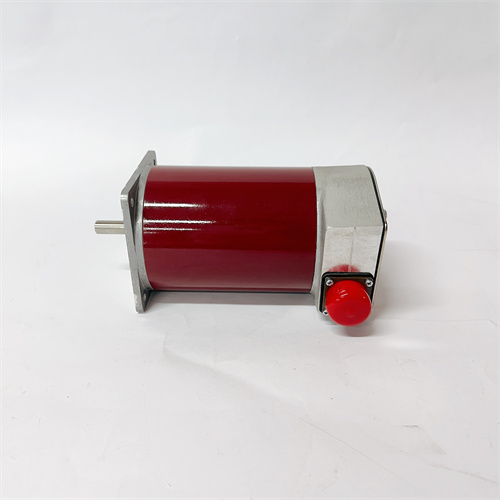
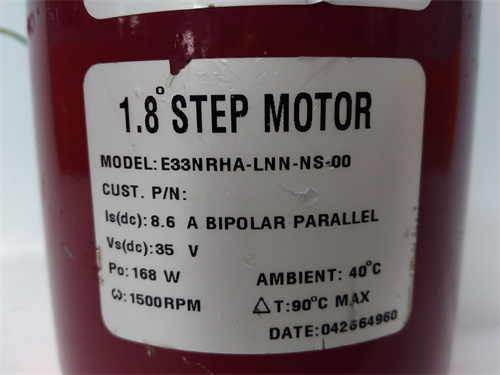
That packaging line outside Chicago—the one running cereal boxes at 400 cartons per minute—started throwing “position error” faults every Tuesday afternoon. The techs had swapped the drive, the cable, even the controller. Nothing. I showed up on a Wednesday, watched the line run, and noticed the fault happened when the ambient temperature hit 32 °C. Put a thermal camera on the E33NRHA-LNN-NS-00 motor on the carton feeder. The resolver connector was reading 75 °C—hot enough to increase resistance in the wiring, throwing off the feedback. A dab of thermal compound and a better cable clamp, and the faults stopped. The motor itself? Fine. It’s been running for three years since.
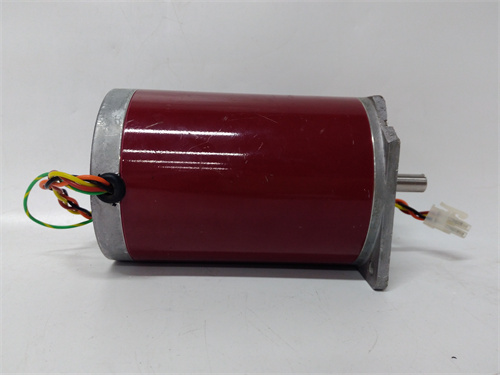
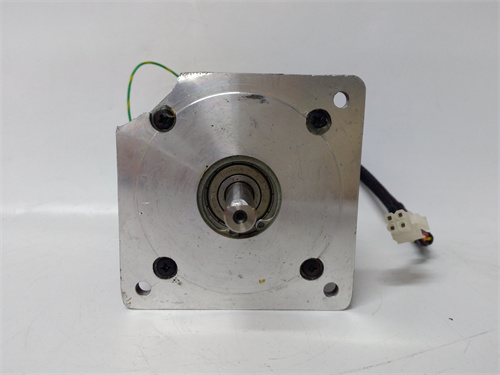
The KOLLMORGEN E33NRHA-LNN-NS-00 is a GOLDLINE series brushless AC servo motor, built for the kind of 24/7 duty you see in packaging, converting, and general automation. It’s a 3.3 Nm continuous torque motor, 3000 rpm rated speed, with resolver feedback for position and velocity. The “NRHA” in the model tells you it’s a standard inertia motor with resolver, the “LNN” means no holding brake, and “NS-00” is the standard shaft with keyway and tapped hole. The housing is IP65, so it handles dust and washdown—not submersion, but the occasional spray. Inside, it’s rare-earth magnets, class H insulation, and a resolver that’s been the workhorse of industrial servos for decades. It’s not fancy, but it’s tough.
Key Technical Specifications
| Parameter | Value |
|---|---|
| Continuous Torque | 3.3 Nm (stall) |
| Peak Torque | 9.9 Nm |
| Rated Speed | 3000 RPM |
| Rated Power | 1.04 kW (at 3000 RPM) |
| Feedback | Resolver (2-pole) |
| Insulation Class | H (180 °C) |
| Protection | IP65 (shaft seal, connectors) |
| Mounting Flange | NEMA 34 (metric equivalent) |
| Shaft | Keyway + tapped hole (NS-00) |
| Brake | No (LNN in model) |
| Weight | 4.5 kg (approx) |
| Ambient Temp | 0–40 °C (operating) |
| Vibration | 5g @ 10–2000 Hz |
Quality Inspection Process (SOP Transparency)
A servo motor gets a thorough mechanical and electrical checkout. Here’s our process.
- Incoming Verification
- Match the model: E33NRHA-LNN-NS-00. (The “-00” suffix matters—it’s the standard shaft.)
- Visual inspection: Check the shaft for rust or dings. Look at the flange mounting surface—no burrs.
- Inspect the resolver connector (MS style)—pins straight, no corrosion.
- Spin the shaft by hand—should feel smooth, no grinding.
- Electrical Tests
- Measure winding resistance (phase-to-phase) with a low-ohm meter. Should be balanced within 5% across all three phases. Typical value: 1.5–2.5 Ω depending on winding.
- Measure insulation resistance: 500V megger between windings (shorted) and frame—>100 MΩ.
- Check resolver windings: primary and secondary resistances per datasheet (typically 30–60 Ω).
- No-Load Run Test
- Connect the motor to a Kollmorgen servo drive (we use an S700 series).
- Spin up to 500 RPM, no load. Listen for bearing noise—no grinding, no high-frequency whine.
- Increase to 3000 RPM, run for 30 minutes. Monitor winding temperature with a thermocouple—should stabilize below 60 °C.
- Resolver Calibration Check
- With the drive in torque mode, rotate the shaft manually and monitor the resolver feedback.
- Check for missing pulses or erratic readings.
- Verify the resolver offset (electrical zero to mechanical zero) is within spec.
- Vibration Test
- Mount the motor on a rigid test stand, run at 3000 RPM, measure vibration with an accelerometer.
- Must be below 1.5 mm/s RMS (good bearing condition).
- Thermal Imaging
- Run at 75% rated torque for 1 hour (using a load motor).
- Scan with thermal camera—hot spots should be even, no single winding phase overheating.
- Final QC & Packaging
- QC sticker with test date and operator initials.
- Coat shaft with light oil to prevent rust.
- Wrap in VCI paper, then anti-static bag.
- Double-box with foam supports—the shaft is hard but can bend if dropped.
- Test report included—winding resistance, insulation, vibration data.
Field Replacement Pitfalls
I’ve swapped these in packaging lines, printing presses, and even a lumber mill. Here’s where people go wrong.
❗Resolver Wiring
The resolver connector has six pins: R1, R2 (primary), S1, S2, S3, S4 (secondary). If you mix up S1 and S3, the feedback will be 180° out of phase—the motor will run away or oscillate. Always check the wiring diagram against the drive manual.
Shaft Keyway
The shaft has a keyway. If you install a pulley or coupling without a key, it might spin on the shaft under load. But if you use a key, make sure it’s the right size—too loose, and it’ll wear; too tight, and you’ll stress the shaft. We include the key with the motor.
Coupling Alignment
Misalignment kills bearings. Use a dial indicator to align the motor shaft to the load. 0.05 mm TIR max for a direct coupling. In one plant, a misaligned coupling trashed a motor in three months.
Brake Confusion
This model has no brake. If your application needs a holding brake (vertical axis), this isn’t the motor. The “-LNN” means no brake. Order the “-LNB” variant if you need one.
Ambient Temperature
Rated for 0–40 °C ambient. If you mount it near an oven or in a sealed cabinet, it will overheat. We’ve seen motors cooked because they were installed inside a machine frame with no airflow.
Nail these five, and your E33 motor will run for a decade.
New Original vs. Refurbished: Why It Matters
“New Original (New Surplus)” means this motor was manufactured by Kollmorgen, packed in its original box, and never installed. The bearings have zero hours, the resolver is unused, and the winding insulation hasn’t been thermally stressed.
Refurbished risk in plain terms
A refurbished servo motor often comes from a decommissioned machine. The bearings may have thousands of hours on them—they sound fine at low speed but fail under load. The resolver may have intermittent opens from flexed wires. A refurbisher runs it at no load, listens for noise, and calls it good. Six months later, the bearing seizes.
Real cost of a refurbished failure
If this motor drives a critical station on a packaging line, a failure means the line stops. That’s thousands of dollars per hour in lost production. The cost of one unplanned outage exceeds the price difference many times over.
What we provide as proof
- Kollmorgen box (or photos).
- Serial number recorded.
- Winding resistance and insulation test results.
- Vibration test data.
- Thermal image of running motor.
- 12‑month warranty.
Pricing context
We’re priced 40% above the cheapest “pulled” E33 motors and 25% below Kollmorgen’s current list price. That pays for the full electrical test, the 1‑hour heat run, and the warranty that covers replacement if a bearing fails.
Performance Benchmarks & Test Results
Test conditions: S700 drive, 230V AC input, no load except where noted, ambient 24 °C.
| Metric | Measured Value | Notes |
|---|---|---|
| Winding resistance (U-V) | 1.82 Ω | Balanced within 2% across phases |
| Insulation resistance | >200 MΩ @ 500V | |
| No-load current | 1.2 A RMS | At 3000 RPM |
| Vibration | 0.9 mm/s RMS | At 3000 RPM, good bearings |
| Temperature rise | 38 °C above ambient | After 1 hour at 75% torque |
| Resolver accuracy | ±10 arc-min | Within spec |
We keep the full test data—ask, and we’ll email the PDF.
HIMA F8620/11 PLCDCS
DS2020LRPBG1 GE PLCDCS
DS2020LRPBG2 GE DCS()
DS2020PDMAG1 GE
DS2020PDMAG4 GE PLCPC
 Email: sales@plcfcs.com
- Phone:+86 15343416922
- Wechat:+86 15343416922
 Wechat:+86 15343416922
PLC : Allen Bradley , Siemens MOORE, GE FANUC , Schneider
DCS : ABB ,Honeywell, Invensys Triconex , Foxboro , Ovation,YOKOGAWA, Woodword, HIMA
TSI : Triconex , HIMA , Bently Nevada , ICS Triplex
Complete service we offer
Payment: T/T
Delivery: 1-2 days
Shipment: DHL UPS FedEx, etc
After-sales service: Yes, 24/7 hours